Trump's China trip spurs investment deal hopes and fears

Add Axios as your preferred source to
see more of our stories on Google.
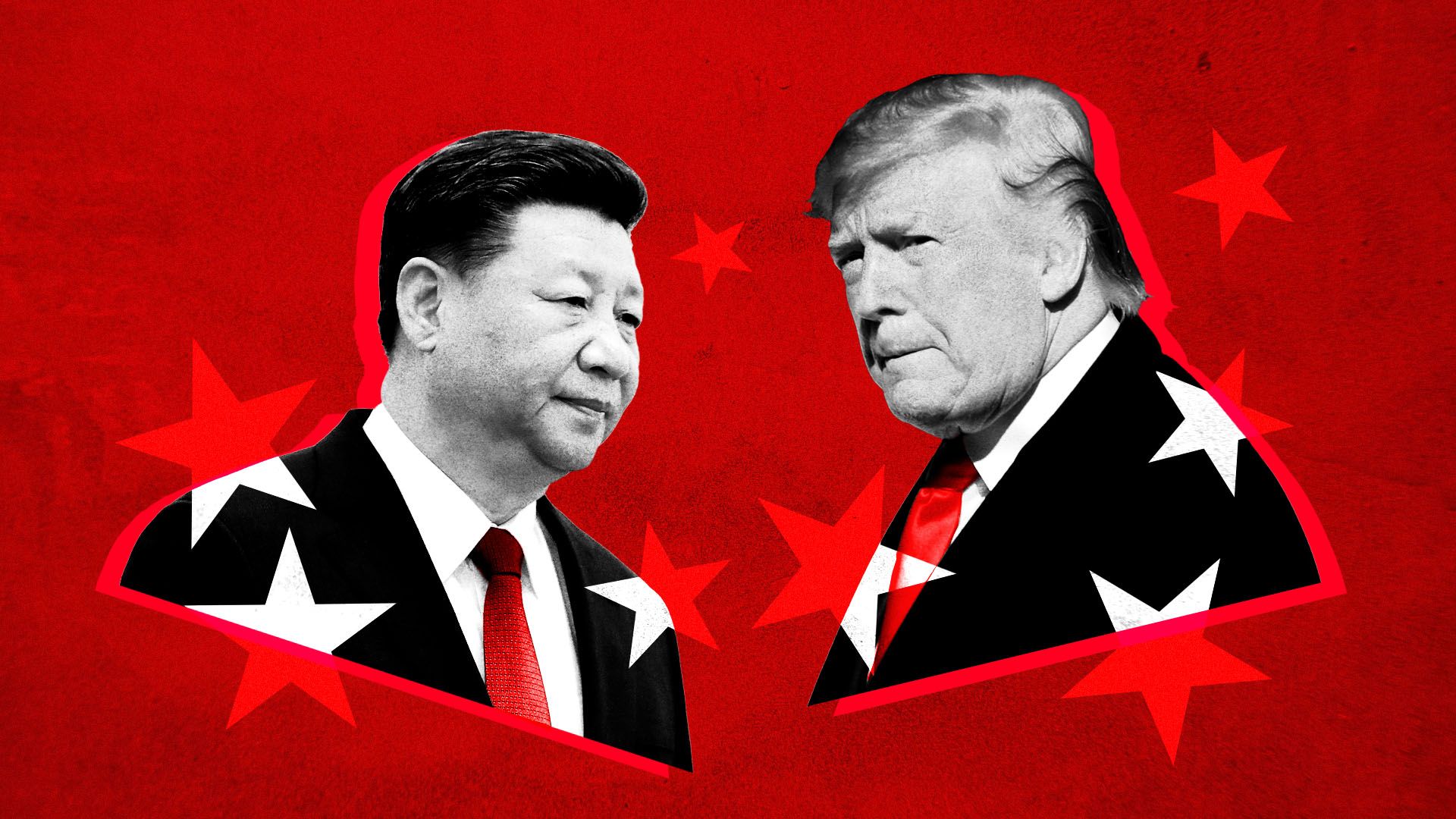
Photo Illustration: Sarah Grillo/Axios. Photos: Alex Wong/Getty Images and Lintao Zhang/Getty Images
Business leaders and lawmakers are closely watching whether President Trump returns from Beijing with a splashy Chinese investment commitment.
Why it matters: Such a deal would go further than the agricultural and aircraft purchases that have so far anchored U.S.-China negotiations.
- Trump has made big-dollar investment pledges a trademark of his second term, giving him numbers to tout back home, even as earlier commitments from the likes of Japan and Europe have yet to fully materialize.
The intrigue: Top White House officials have downplayed the possibility that China will commit investment dollars to sell and manufacture goods here.
- But the buzz in part stems from Trump himself, who raised the prospect in a speech earlier this year.
Flashback: "If they want to come in and build a plant and hire you and hire your friends and your neighbors, that's great, I love that. ... Let China come in, let Japan come in," Trump said in January at the Detroit Economic Club, referring to building auto factories.
The big picture: Chinese foreign direct investment into the U.S. has collapsed over the past decade.
- The sectors at the heart of the speculation — EVs, batteries, solar — are precisely the ones the U.S. has tried to wall off from China.
What they're saying: "Trump has sporadically suggested that he would like China to invest in the U.S., specifically for Chinese companies to build manufacturing facilities for automobiles and other products here," Wall Street research firm Fundstrat wrote in a note to clients on Monday.
- "There's a reason they say to keep your friends close, and your enemies closer. Chinese companies building manufacturing in the U.S. eliminates much of the supply chain vulnerability that has vexed sovereign-security experts in recent years."
Zoom in: Ahead of the summit, both parties — Democrats led by Rep. Debbie Dingell of Michigan and Republicans led by Rep. Mike Kelly of Pennsylvania — separately warned Trump against any commitment that would give China a larger manufacturing foothold in the U.S.
- "As negotiations with China continue to develop, we urge the Administration to reject any attempts by China to establish vehicle and battery manufacturing facilities in the United States or the broader North American market," the Republicans wrote in a letter.
- "Any effort to lower barriers for Chinese automobiles or otherwise facilitate their entry into the U.S. market would pose a direct threat to American manufacturing, workers, and national security," House Democrats wrote in a letter.
The other side: A senior White House official said a major Chinese investment program has not been on the negotiating table. The official pushed back on speculation ahead of the summit, noting that private sector entities that want to see such a commitment were projecting their own hopes.
- The official said the talks will focus on purchase commitments in agriculture and aerospace. Two U.S.-China working groups — the Board of Trade and Board of Investment — will be charged with implementing any commitments.
What to watch: Given the low point of the U.S.-China economic relationship over the past year, there is a low bar to clear for the trip to be a success.
- "If the president puts out that positive Truth Social post, or they have some announcements related to the Board of Trade, that should be considered as successful as these other bilateral relationships where you've seen really eye-popping investments," Allison Smith, a former U.S. Trade Representative official, tells Axios.
The bottom line: The speculation reveals a key economic tension of the Trump 2.0 era.
- Trump has made decoupling from China one cornerstone of his economic agenda. But he has also dangled the prospect of Chinese factories on American soil as a potential win for his hopes to revive domestic manufacturing.
- In a similar vein, Trump has allowed China access to some AI chips — despite national security objections — in exchange for the U.S. government taking a cut of the revenue.
