Investors see elevated prices well into next year

Add Axios as your preferred source to
see more of our stories on Google.
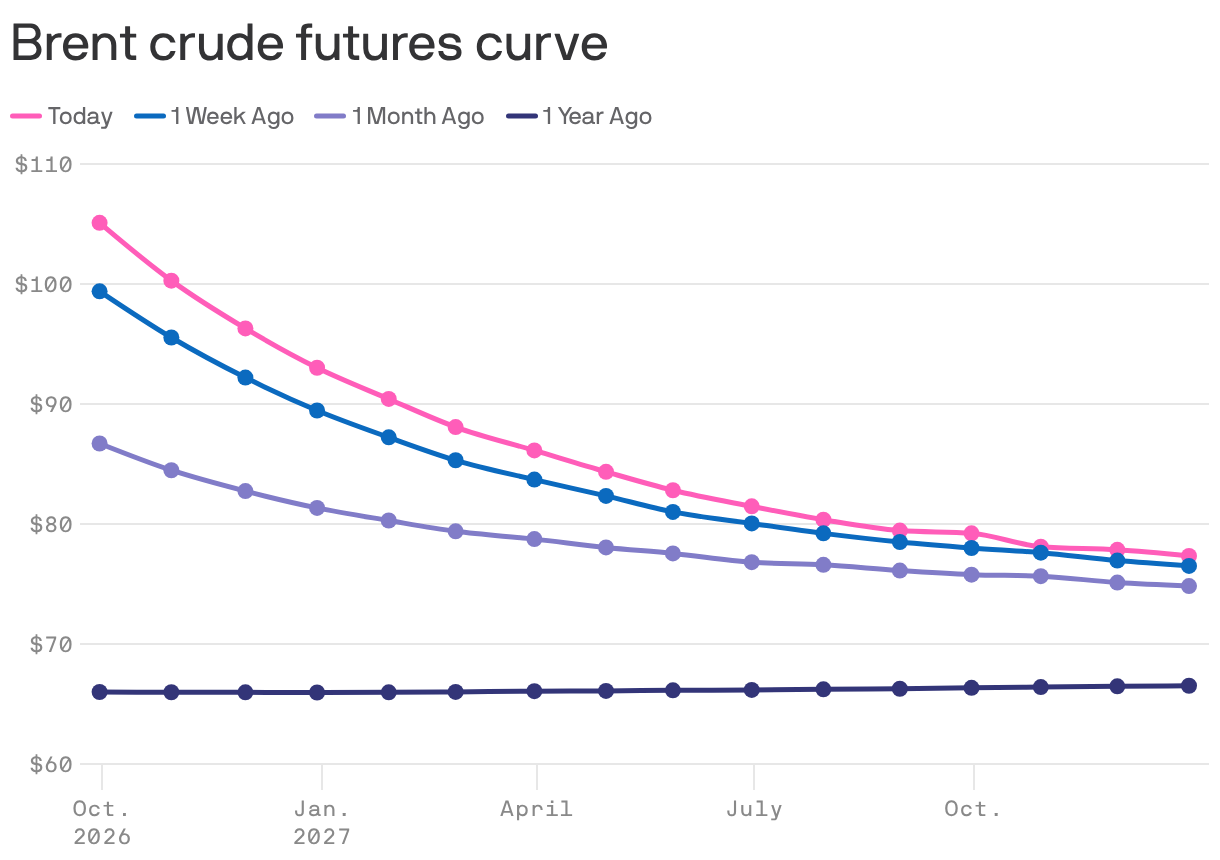
Markets are slowly coming to the view that the disruptions to the energy markets — the Iran war foremost among them — will keep energy prices elevated well into next year.
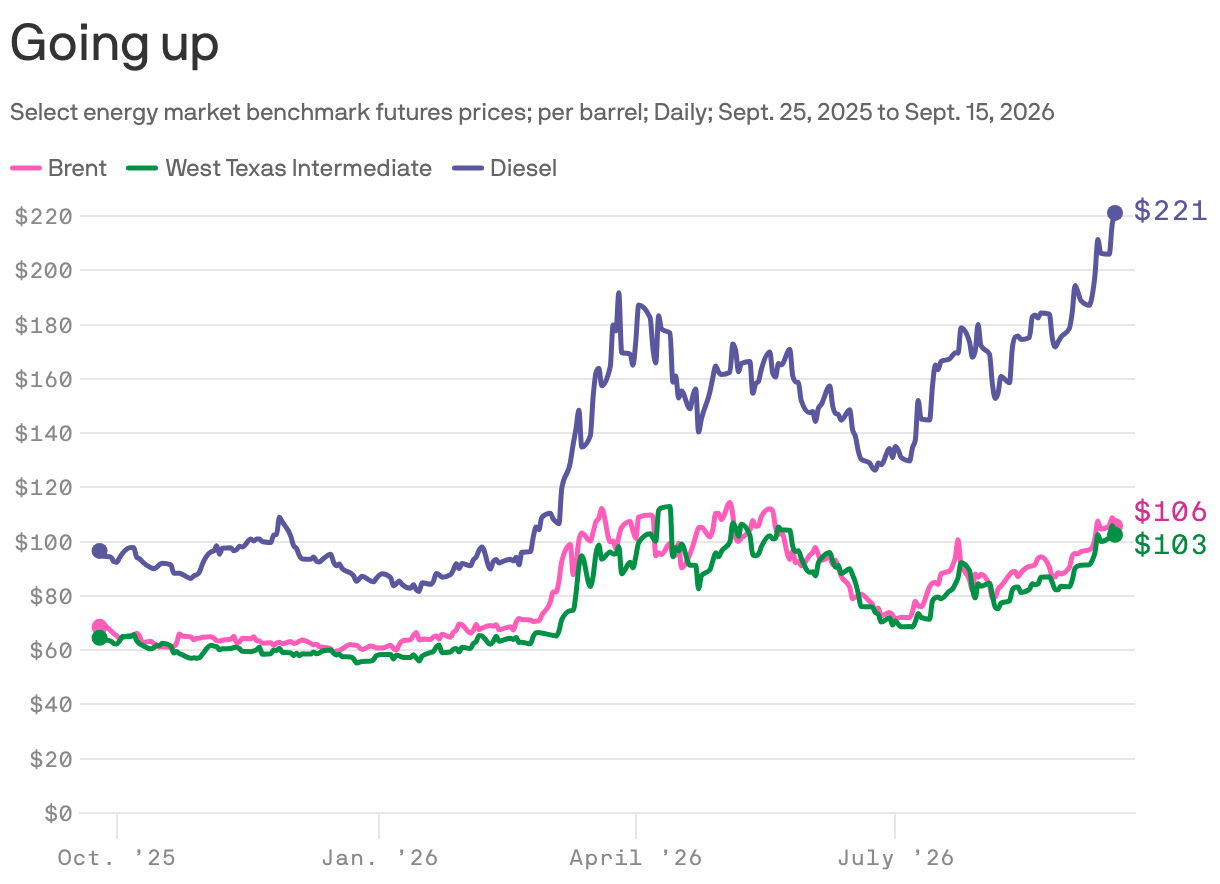
Why it matters: Unlike surging spot prices for crude oil — cash paid to get actual deliveries of products ASAP — prices in the energy futures markets have been slower to price in a long-lasting impact of the conflict.
- That could be changing.
The latest: Brent crude futures contracts for April 2027 jumped to more than $85 a barrel this week, the highest since the war began at the end of February and higher than they were during the peak for oil prices back in early May.
Zoom out: The upswing is part of a broader adjustment in market expectations, after drone attacks on an alternative crude oil export route to the Red Sea and attacks on a key pipeline.
- The East-West pipeline, which had been moving as much as 4 million barrels of oil per day to the Saudi Arabian city of Yanbu on the Red Sea, is expected to be out of service for weeks after drone attacks.
- The latest prices of Brent oil futures set for delivery over the next six months or so have jumped higher in recent days. (That's the pink line in the chart above, compared with the same contract prices a week, a month and a year ago.)
What they're saying: "You can see how the curve is actually shifting upward, as we see more escalation," Joe DeLaura, senior energy strategist at Rabobank, tells Axios.
- Traders are now considering an increasing chance of attacks on other diversionary export points, such as the United Arab Emirates' pipeline leading to its export terminal in Fujairah, he says.
- "That's what I see as the next stage of escalation. If those probabilities go from 2% to 5% to 10%, then, yeah, we need to start pricing crude much more aggressively."
- Independent energy analyst Rory Johnston, writer of the Commodity Context Substack, stresses that the main thing the futures curve now shows is extreme tightness in the market for near-term deliveries.
- "But because this crisis has lasted longer, I think the effect is beginning to, kind of, spread further down the curve," Johnston says.
- "You can interpret it as being seen as something that is more generally durable and long-lived. "
Yes, but: Johnston adds that too much shouldn't be read into the movement of the futures curve.
The bottom line: "No one knows what's going to happen. All we know is that we really need crude and diesel today," he says.
