Fed raises rates a quarter point in first move of Warsh era

Add Axios as your preferred source to
see more of our stories on Google.
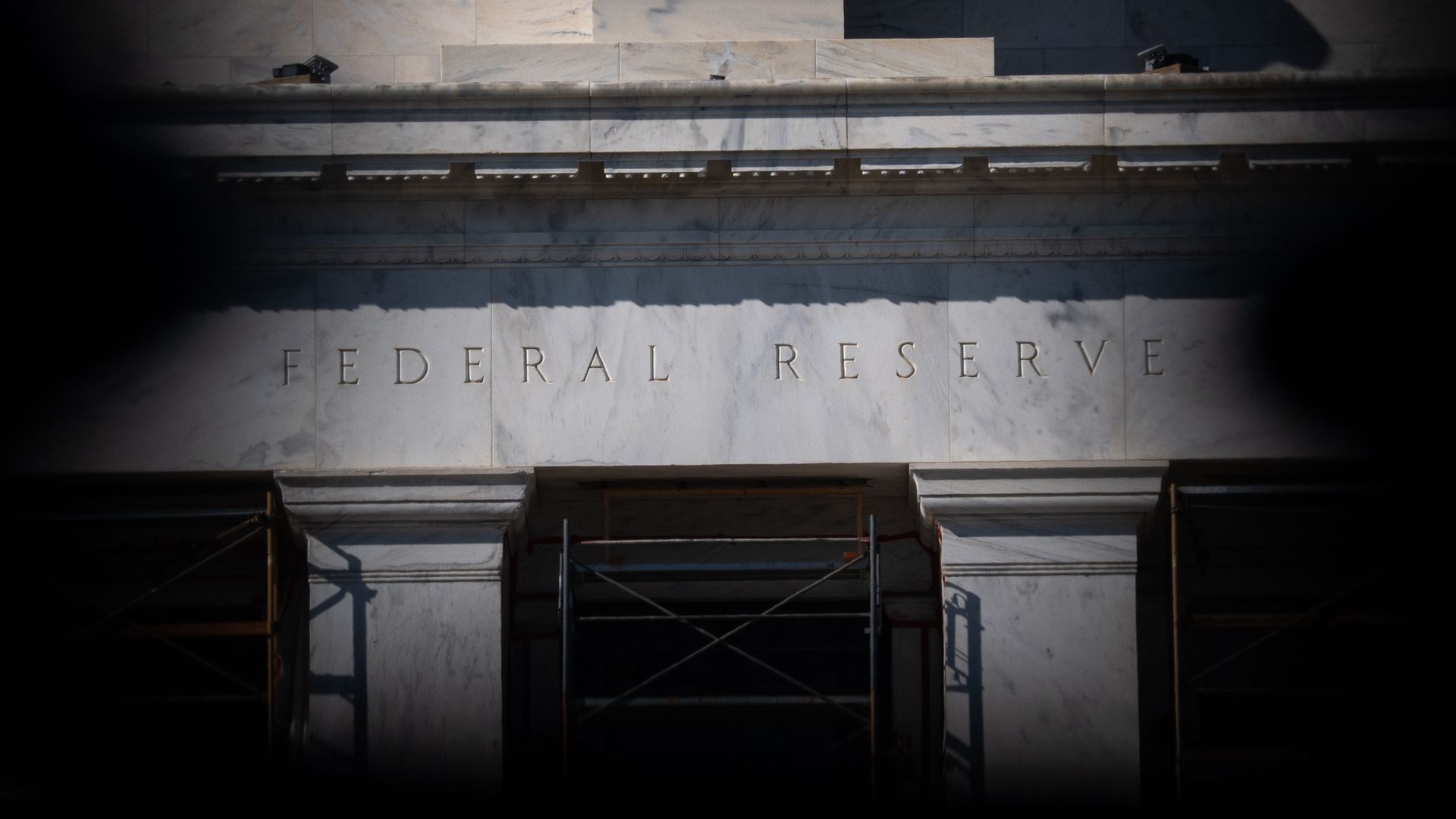
The Federal Reserve building in Washington, D.C. Photo: Mehmet Eser/Anadolu via Getty Images
The Federal Reserve raised interest rates a quarter point Wednesday, the first policy adjustment of Kevin Warsh's chairmanship, and hinted that another rate hike is on the way this year, as it seeks to bring inflation down more quickly.
The big picture: The action could bolster Warsh's credibility as an inflation-fighter, but risks putting him in the crosshairs of President Trump, who has long demanded lower interest rates and pilloried Warsh's predecessor for failing to deliver them.
Driving the news: The policy-setting Federal Open Market Committee voted unanimously to raise its target range for the federal funds rate to between 3.75% and 4%, reversing a rate cut that took place last December.
- The announcement was accompanied by new projections that show a healthy majority of top Fed officials — 12 of 18 — anticipate one more rate hike this year. Another four see two more hikes as likely to be justified.
- The rate hike, the first since 2023, was a response to inflation that has been stubbornly above the Fed's 2% target for nearly six years — and which has reaccelerated this year after an energy price surge driven by the Iran war.
What they're saying: "This summer's inflation readings do not tell me that underlying trends have meaningfully improved," Warsh told reporters on Wednesday afternoon.
- "We must be confident that underlying inflation is moving to our objective, clearly and at sufficient speed. Today, the FOMC decided that this standard has not been satisfied," he said.
State of play: Inflation was 3.3% in the 12 months ended in July by the Fed's preferred measure, the core Personal Consumption Expenditures Price Index, and the August inflation data released so far points to it remaining elevated through the summer.
- Warsh, speaking in Jackson Hole last month, said that unless the Fed is "confident that underlying inflation is moving to our objective, clearly and at sufficient speed," the committee will "have work to do," implying a rate hike.
- Since then, energy prices have surged further, long-term bond yields have risen, a trade war with Canada has escalated, and President Trump threatened to cut off many trade ties unless interest rates are lowered.
Between the lines: Warsh faced a tension between backing his own tough talk on inflation with action and disappointing the president who nominated him — or conversely holding the line on rates but undermining his own credibility as an inflation-fighter with markets and his own colleagues.
- He elected to deliver higher rates, which paradoxically could help keep long-term borrowing costs steady if it strengthens the Fed's perceived political independence.
- Asked about Trump's threat to halt trade with countries with which the U.S. runs a deficit if the Fed did not lower rates, Warsh said the central bank's independence also means staying out of decisions made elsewhere in government.
- "Part of the independence of the Federal Reserve is we stay in our lane — independence is a two-way street," Warsh said. "We let people that do trade policy and fiscal policy stay in their lane, too."
The intrigue: In speaking with reporters on Wednesday, Warsh gave succinct answers, a contrast with his predecessor, Jerome Powell, who tended to elaborate more on his views of the economy and monetary policy.
- The press conference was shorter than in the past, lasting just 30 minutes.
By the numbers: In the quarterly Summary of Economic Projections, the median Fed official saw the unemployment rate at 4.1% by year-end, compared with 4.3% in June.
- Inflation projections ticked up, with the median official now seeing 3.7% overall inflation and 3.4% core inflation this year, up from 3.6% and 3.3% in June.
- Officials continue to anticipate that inflation will fall further next year, to 2.3%, within sight of the central bank's 2% target.
- The median official anticipates that after one more rate hike this year, rates will be on hold throughout 2027.
What to watch: "We removed a dose of accommodation so that financial and credit conditions would be more consistent with our ultimate objectives," Warsh said.
- But in keeping with his recent practice of avoiding forward guidance, the Fed chairman said he would not "prejudge any future decisions we make."
Editor's note: This story has been updated with details from Fed chairman Kevin Warsh's press conference.
