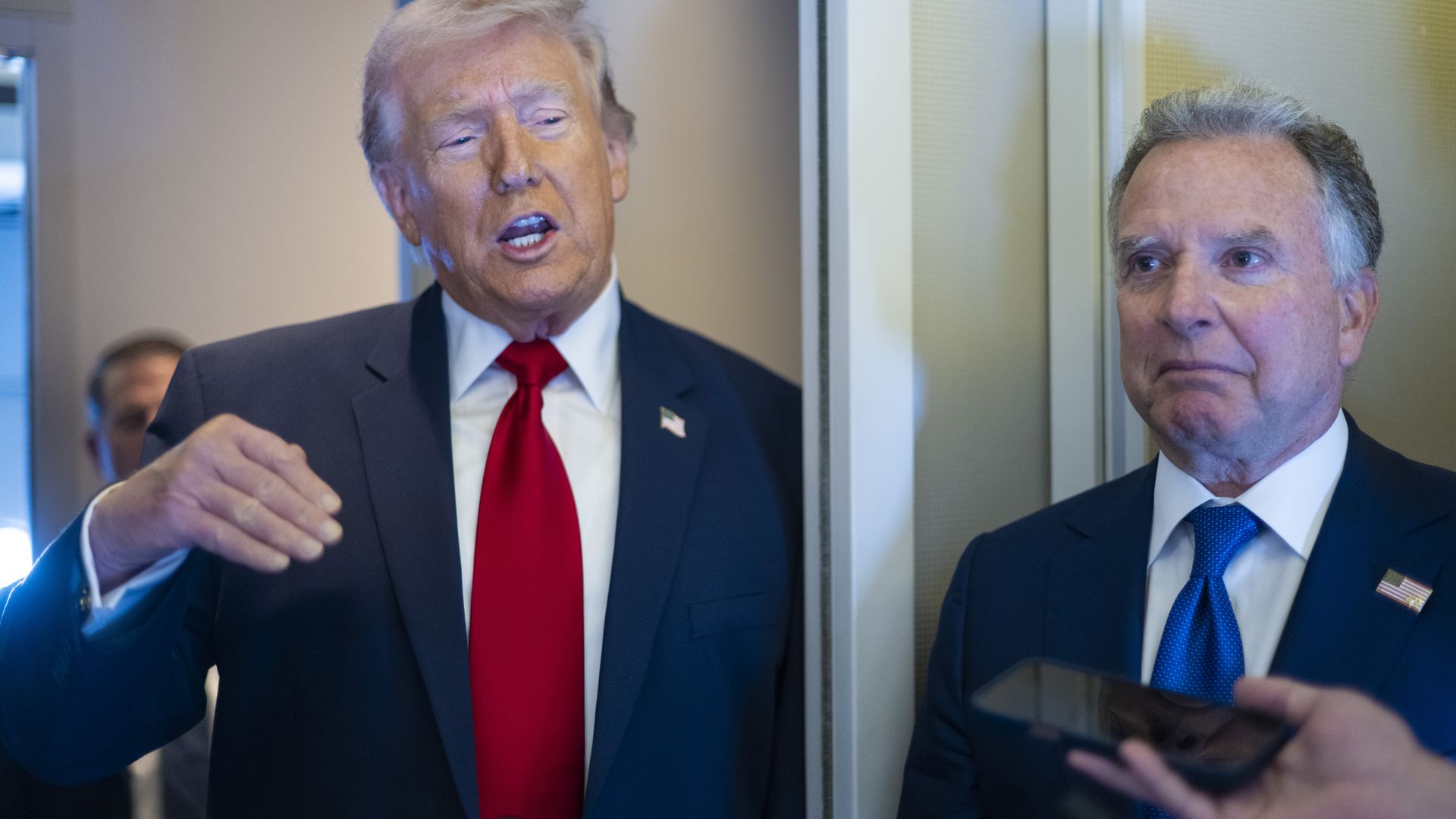
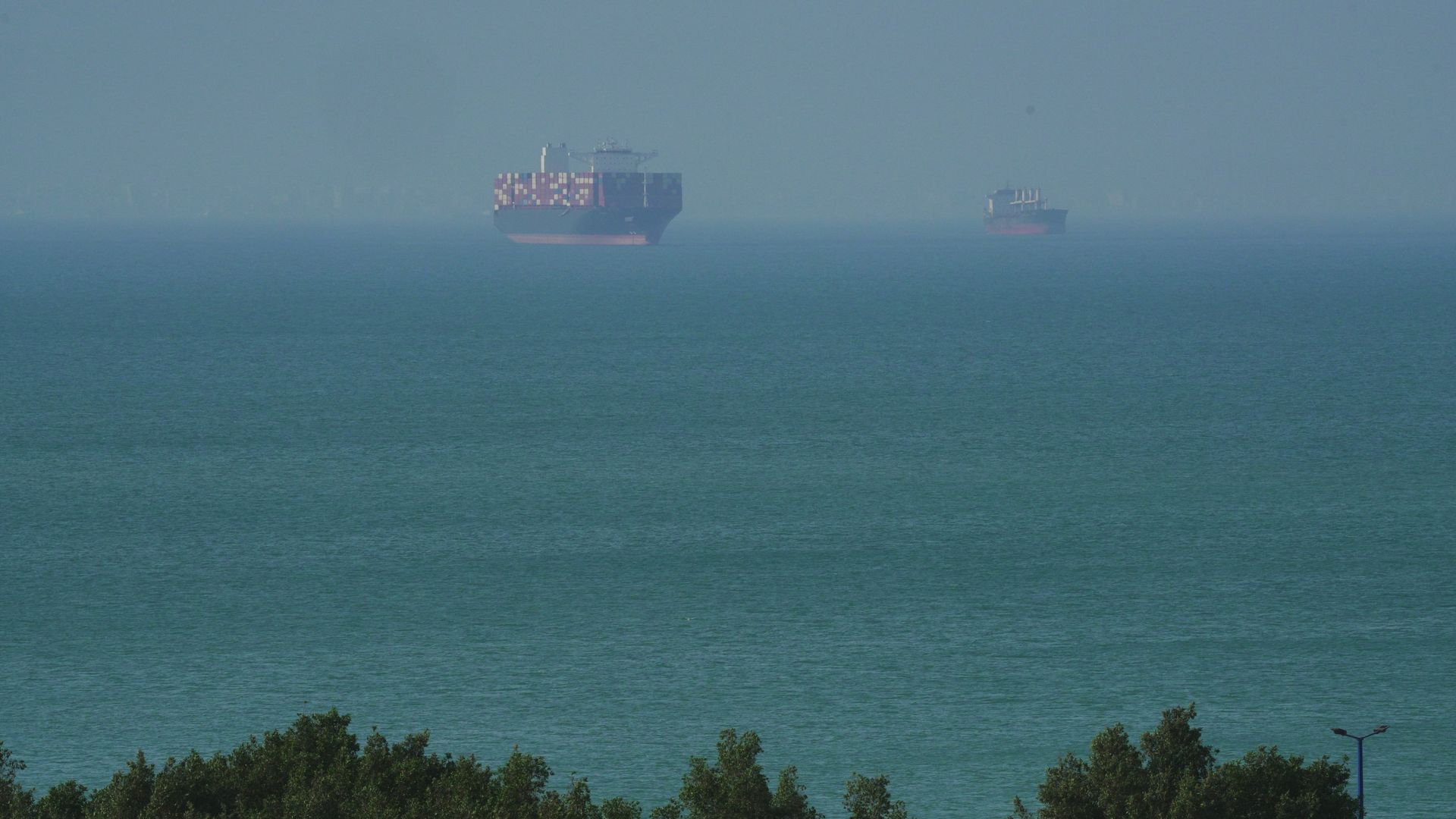
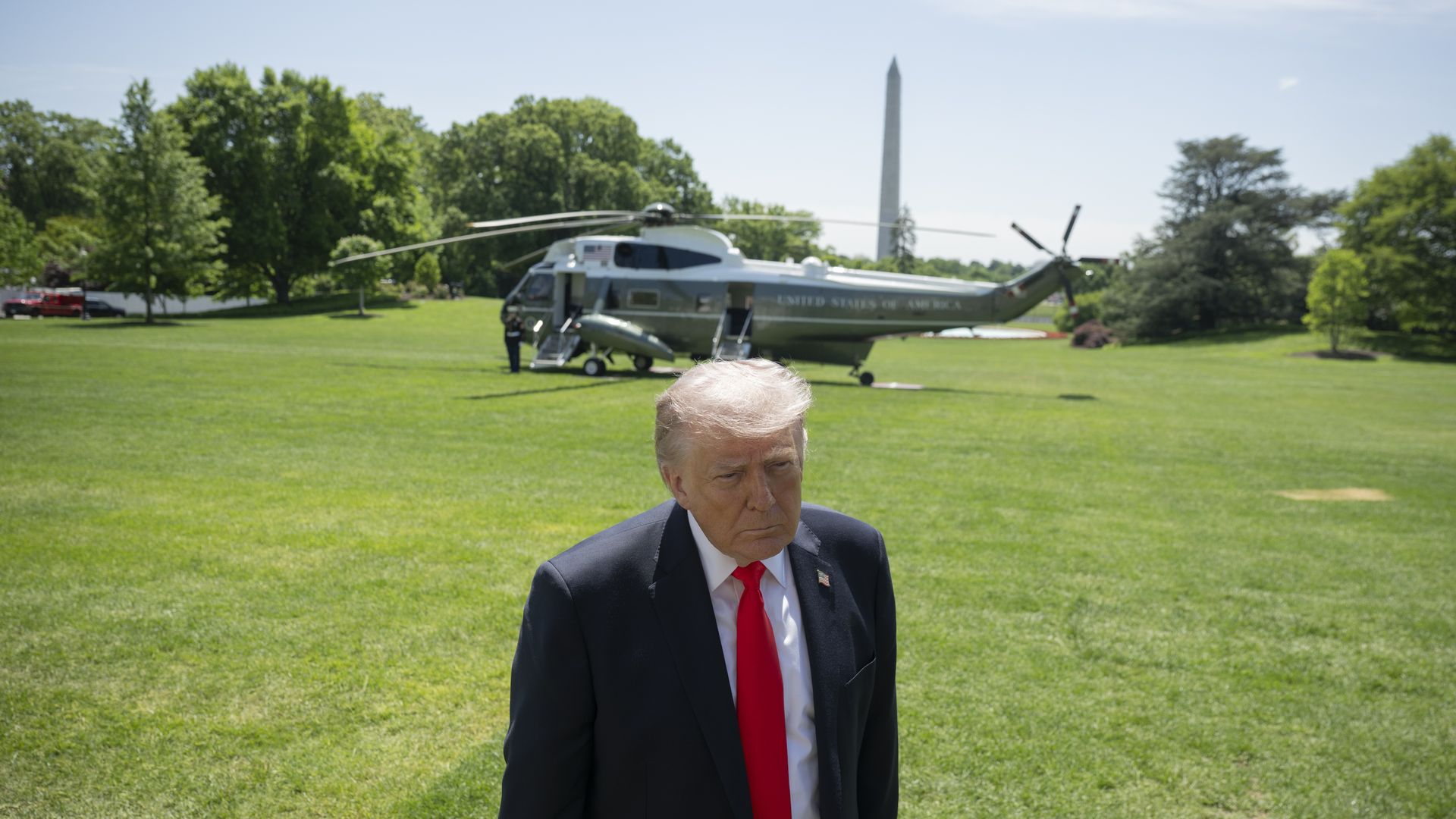
President Trump said Tuesday he's suspending the new U.S. military operation in the Strait of Hormuz due to progress in the negotiations with Iran on an agreement to end the war.
Why it matters: The operation to "guide" ships through the Strait of Hormuz, which was launched Monday, led to an exchange of fire between the U.S. and Iran and to Iranian missile attacks on the United Arab Emirates for the first time since the ceasefire was announced a month ago.
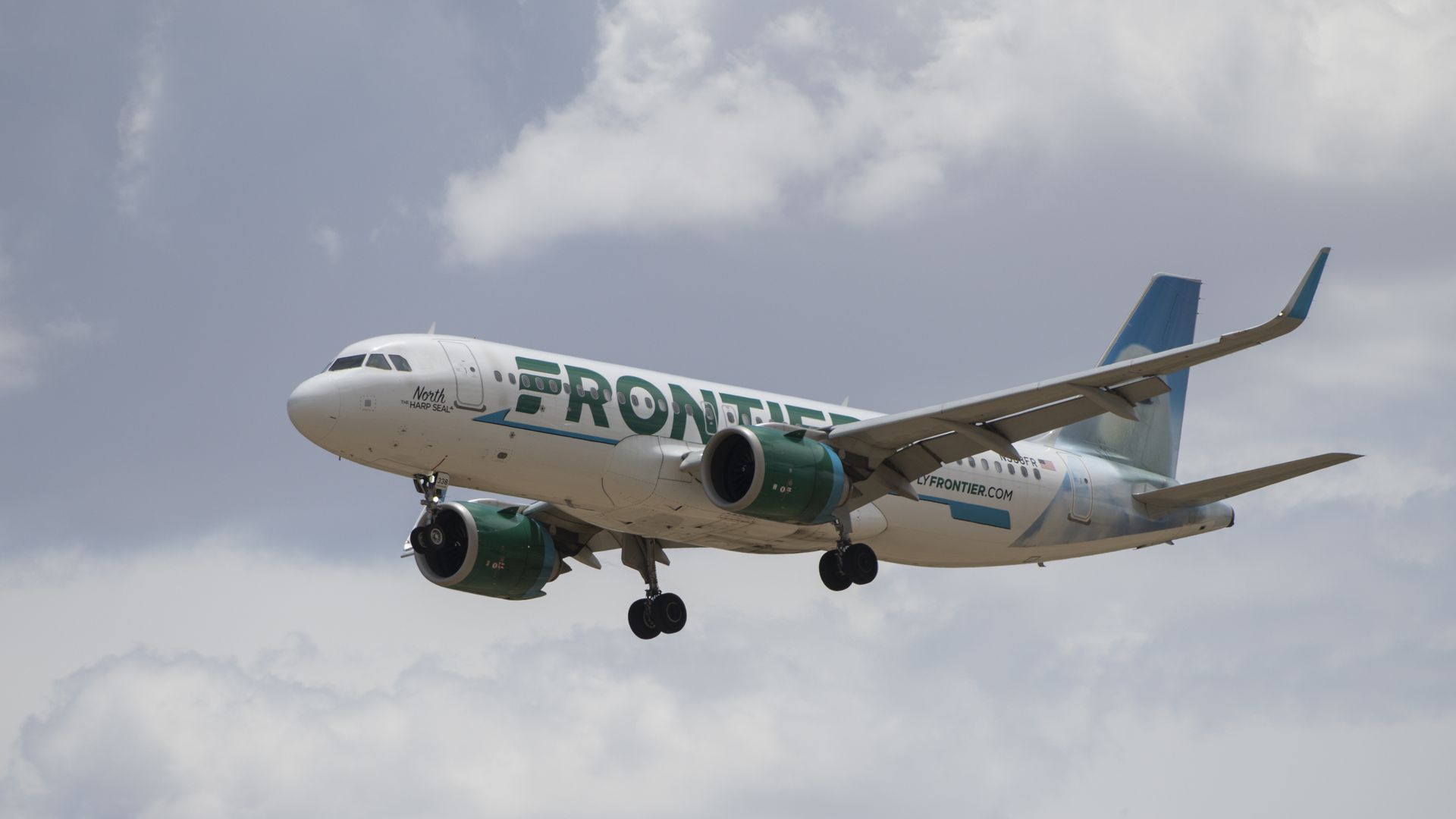
The downfall of Spirit Airlines is casting a spotlight on the future of its budget carrier rival, Frontier Airlines, which is facing many of the same challenges.
Why it matters: The jet fuel price spike was the last straw for Spirit — which ceased operations early Saturday — and it's posing a serious challenge to Frontier, as well.
President Trump's immigration crackdown has not expanded job opportunities for American workers, a new study found — in fact, it's associated with an employment drain for some U.S.-born men.
Why it matters: The narrative of undocumented immigrants "taking" Americans' jobs has long been a propelling force behind the president's ICE enforcement push. But research suggests his mass deportations aren't clearing the way for U.S.-born workers in the job market.
Even with rising inflation, uncertainty around the war in Iran and surging oil prices, advertising-based companies continue to forecast strong growth, thanks to broad optimism in the markets fueled by AI.
Why it matters: For now, forecasters aren't baking macroeconomic chaos — including possible constraints on the supply chain — into their projections, but that could change if the Strait of Hormuz remains blocked.
A high-level Trump administration official informed Iran on Sunday of the impending U.S. operation to "guide" ships through the Strait of Hormuz and warned Tehran not to interfere, according to a U.S. official and a source with knowledge.
Why it matters: The private message suggests the White House wanted to mitigate the risk of potential escalation. But despite the warning, the Iranians launched a string of attacks on U.S. Navy ships, commercial vessels and the United Arab Emirates.
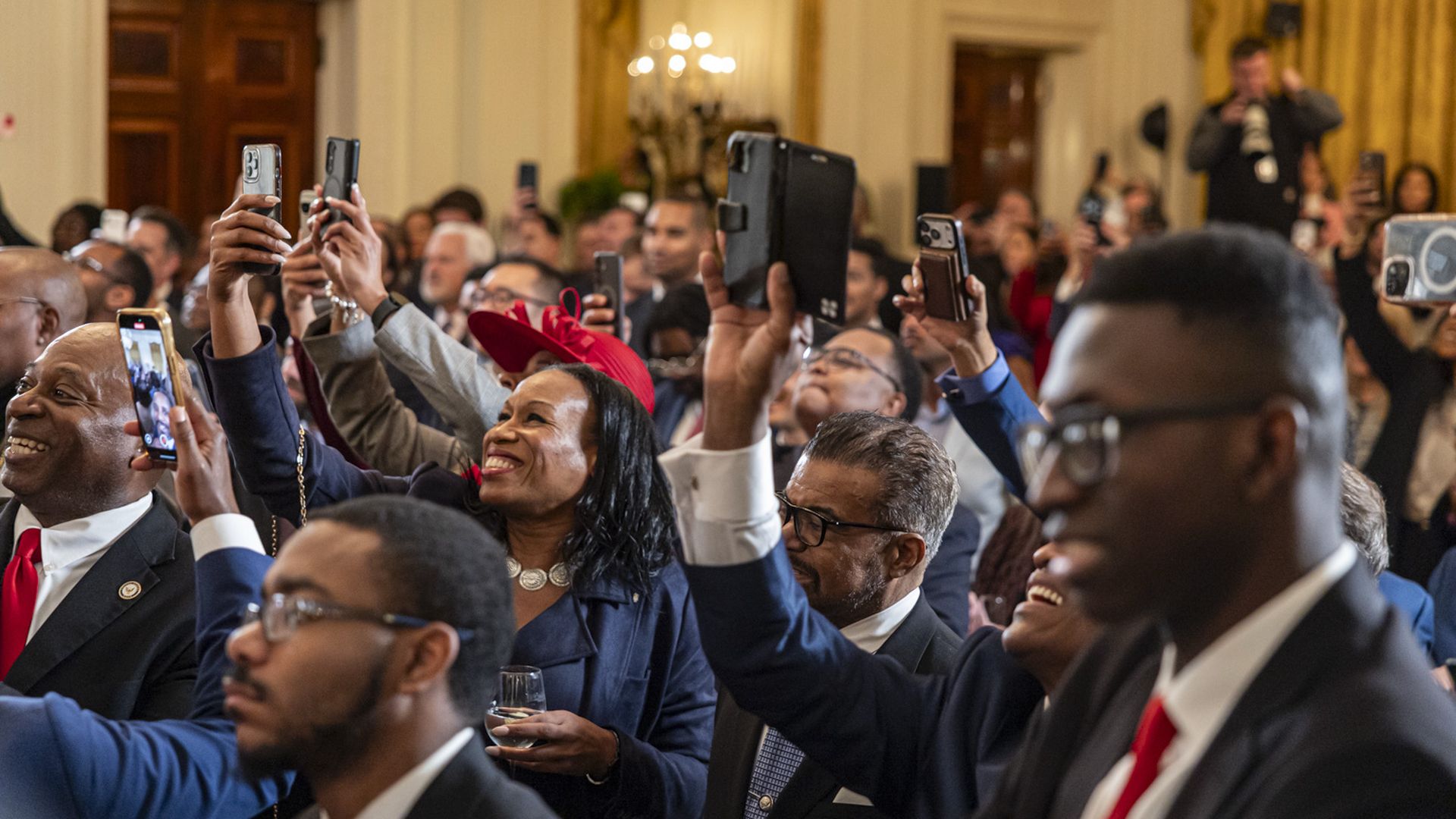
A generational and structural shift is decoupling Black identity from Democratic Party loyalty, transforming a once-reliable voting bloc into a cohort of "political free agents" that the GOP is uniquely positioned to exploit.
Why it matters: Even modest GOP gains — combined with weakening party loyalty — could make a big difference in close elections in a post-Voting Rights Act world.
The gasoline price surge is reigniting political chatter about suspending the federal tax on the fuel to help consumers, thanks to a recent round of populist proposals from high-profile Democrats.
Why it matters: It's one of those go-to ideas that never actually happens, but often surfaces when prices climb.
The United Arab Emirates reported that four missiles were fired toward its territory from Iran on Monday, and that it was actively engaging with another "missile and drone attack."
There were also fires reported at a fuel facility in the UAE and on ships off its coast. Iran has not claimed responsibility for any of the apparent attacks.
Why it matters: This would be the first time Iran attacked a Gulf state since the ceasefire was announced nearly a month ago. The U.S. and Iran may now be on the precipice of a return to war.
Spirit Airlines is dead, but the finger-pointing is very much alive.
Trump administration officials spent the weekend blaming former President Biden, whose Justice Department successfully blocked JetBlue from buying Spirit for $3.8 billion.
Spirit told the White House to look in the mirror, saying its insolvency was sparked by an Iran war that's caused jet fuel prices to spike.
Why it matters: Around 17,000 people just lost their jobs, and thousands of passengers found themselves stranded.
President Trump was fed up with the "no deal, no war" stalemate in Iran. The operation he ordered to change that dynamiccould ultimately lead back to war.
"The president wants action. He doesn't want to sit still. He wants pressure. He wants a deal," a senior U.S. official told Axios.
The intrigue: Trump was presented with a plan on Thursday night to send naval vessels through the Strait of Hormuz to open it by force. At the last minute, he opted for a more cautious approach, at least initially.
A fully closed Strait of Hormuz was long seen as unthinkable — and unmanageable if it happened — based on past modeling and interviews with energy experts.
Why it matters: That conventional wisdom underscores just how unprecedented today's closure is — and how little playbook exists for what could come next.