Frontier Airlines facing the same pressures that destroyed budget rival Spirit Airlines

Add Axios as your preferred source to
see more of our stories on Google.
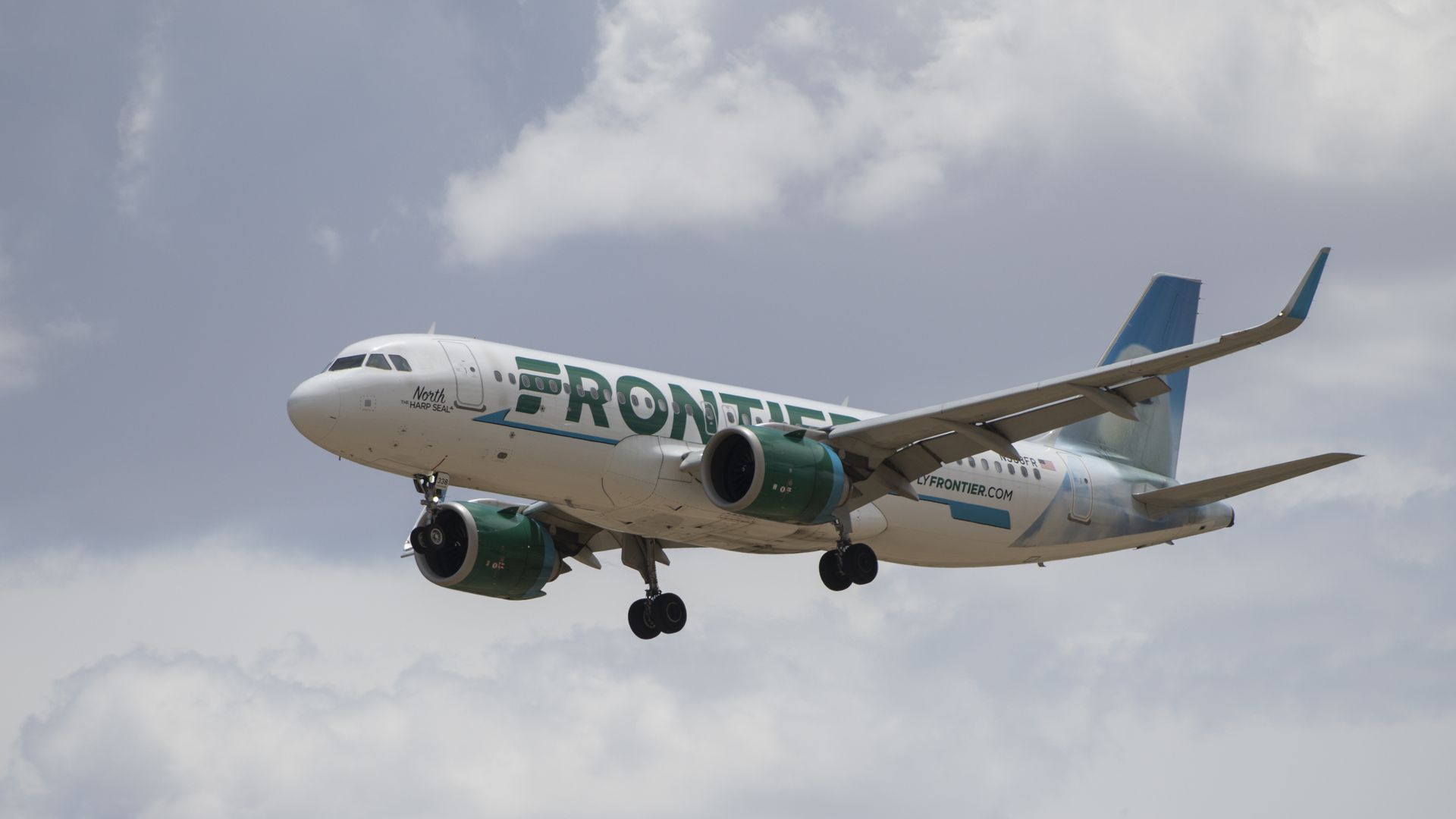
A Frontier Airlines flight prepares to land at Denver International Airport in June 2022. Photo: Daniel Brenner/Bloomberg via Getty Images
The downfall of Spirit Airlines is casting a spotlight on the future of its budget carrier rival, Frontier Airlines, which is facing many of the same challenges.
Why it matters: The jet fuel price spike was the last straw for Spirit — which ceased operations early Saturday — and it's posing a serious challenge to Frontier, as well.
The big picture: Frontier's identity as an ultra-low-cost carrier is so obvious that it's embedded in the company's stock ticker — ULCC — but bigger, healthier airlines have been snapping up budget travelers.
- "Frontier may be the clearest remaining test as to whether or not the ultra-low-cost carrier model can survive," Georgetown University business professor and aviation executive Shye Gilad tells Axios. "That model is under a lot of pressure."
Zoom in: In the short run, Spirit's demise spells opportunity for Frontier.
- Frontier overlapped with Spirit on about 30% of its routes and expects a 3% to 5% boost in revenue per available seat mile now that Spirit is gone, CEO Jimmy Dempsey said Tuesday on an earnings call.
- The company is expanding service to nine additional routes previously served by Spirit and adding 15 daily departures on 18 existing routes, including Las Vegas, Dallas-Fort Worth, Fort Lauderdale and Detroit.
- "Given our network, low-cost structure and disciplined approach to capacity deployment, Frontier is best positioned to provide low fares and the best value in those markets," Dempsey said.
By the numbers: The upbeat news for Frontier is that on Tuesday it reported record adjusted revenue of $1.1 billion in the first quarter of 2026, up 17% from a year earlier.
- Dempsey said the company is making progress on reducing excess flight capacity, improving ticket counter operations and adopting perks like WiFi.
- Investors liked what they heard, sending Frontier shares up 6.9%, though the company's market capitalization remains only about $1 billion.
Yes, but: The same challenges that hounded Spirit are confronting Frontier, including rising labor costs and competitive pressures from the bigger airlines, which can squeeze more revenue out of premium cabins while still offering lower fares in the back of the plane.
- "Frontier just reported that it's generating record revenue and filling planes, but they're still losing money," Gilad said. "This ultra-low-cost model has very little margin for error. And right now there is no margin."
The margin that existed has been undermined by the spike in jet fuel prices.
- Before the Iran war triggered the increase, the Frontier CEO said the airline had expected to come "very close" to breaking even in the first quarter and then expected to turn a profit in the second quarter.
- Now, the company is expected to continue losing money while only making up for about 35% to 45% of the higher fuel prices in the second quarter.
The intrigue: Frontier and Spirit had agreed to merge in 2022 in a move that might have given them better ability to weather an energy shock.
- But that merger later fell apart when JetBlue offered Spirit better terms — a deal that itself was eventually blocked by the Biden administration.
The bottom line: Frontier isn't going anywhere for now — but the company has to work hard to overcome the same industry pressures that befell its one-time rival.
