"He wants action": Trump's frustration with Iran stalemate sparked Hormuz gambit


Add Axios as your preferred source to
see more of our stories on Google.
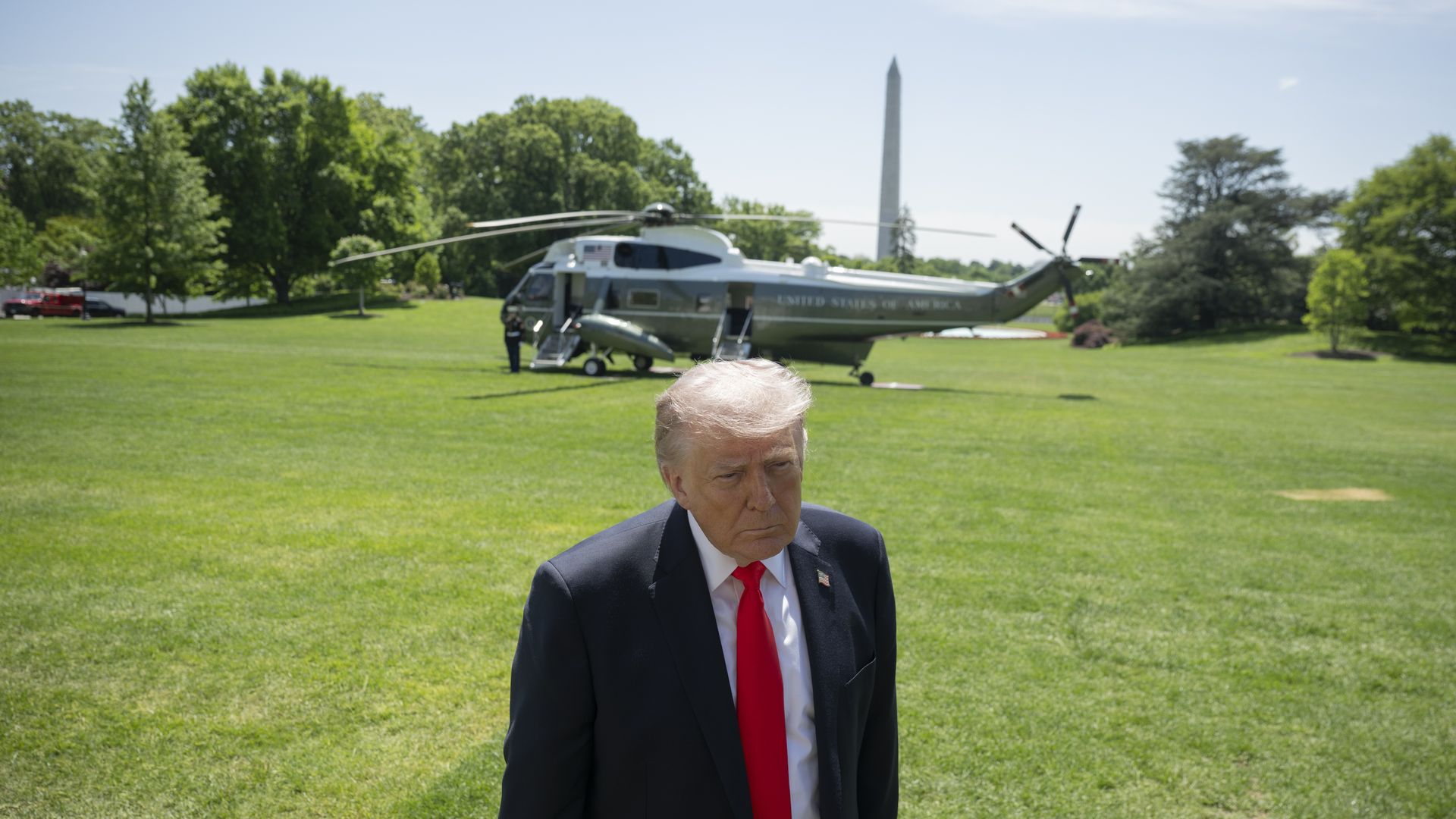
Trump at the White House on Friday. Photo: Celal Gunes/Anadolu via Getty Images
President Trump was fed up with the "no deal, no war" stalemate in Iran. The operation he ordered to change that dynamic could ultimately lead back to war.
- "The president wants action. He doesn't want to sit still. He wants pressure. He wants a deal," a senior U.S. official told Axios.
The intrigue: Trump was presented with a plan on Thursday night to send naval vessels through the Strait of Hormuz to open it by force. At the last minute, he opted for a more cautious approach, at least initially.
Driving the news: Starting Monday, the U.S. Navy will help U.S.-flagged and other commercial ships cross the strait by advising them on how to avoid mines and standing ready to intervene if Iran attacks them.
- U.S. officials say there's no current plan for full-fledged naval escorts.
- Instead, Navy ships will be "in the vicinity" and at the ready, alongside U.S. military aircraft.
- U.S. military support to "Project Freedom" will include guided-missile destroyers, drones, over 100 land and sea-based aircraft and 15,000 troops, CENTCOM said.
- A U.S. official said the rules of engagement for U.S. forces in the region have been changed and they were authorized to strike immediate threats against ships that cross the strait, like IRGC fast boats or Iranian missile positions.
Between the lines: A source close to the president described this as the "beginning of a process that could lead to a confrontation with the Iranians."
- The "humanitarian" mission to free ships stranded in the strait means "if the Iranians do something, they will be the bad guys and we will have the legitimacy to act," the source contended.
Behind the scenes: CENTCOM Commander Adm. Brad Cooper presented Trump on Thursday with a more ambitious plan to send Navy ships through the strait.
- A U.S. official with knowledge of that plan said the U.S. would have taken out any missiles or fast boats the Iranians launched in response, and resumed the war with full force if Iran escalated by attacking Gulf countries.
- The current version carries less risk of immediate escalation but could also leave the stalemate largely in place.
The other side: The Iranian reaction will determine how "Project Freedom" develops.
- Iran attacked vessels trying to pass through the strait almost every day over the past week.
- Ebrahim Azizi, chairman of the Iranian parliament's national security committee, threatened retaliation for Trump's move on X.
- "WARNING. Any American interference in the new maritime regime of the Strait of Hormuz will be considered a violation of the ceasefire. The Strait of Hormuz and the Persian Gulf would not be managed by Trump's delusional posts!" he wrote.
The latest: On Monday, the Iranian armed forces said in a statement that "U.S. aggressive actions will only complicate the current situation" and endanger security of vessels in the Gulf.
- It called on all commercial ships and tankers to refrain from passing through the strait without coordination with the Iranian military.
- Several U.S. Navy ships started moving from the Arabian sea towards the strait on Monday afternoon local time. Iran's Fars news agency, which is affiliated with the IRGC, claimed two Iranian missiles hit a U.S. navy ship.
- CENTCOM denied that claim and said "U.S. forces are supporting Project Freedom and enforcing the naval blockade on Iranian ports."
The big picture: The diplomacy is not entirely frozen. Trump's envoys Jared Kushner and Steve Witkoff are still exchanging drafts with Iran's foreign minister, Abbas Araghchi.
- "There are talks. There are offers. We don't like theirs. They don't like ours. We still don't know the status of the [supreme leader]. And they're carrying messages by hand to caves or wherever he or whoever is hiding. It slows the process down," one senior U.S. official said.
- Witkoff has been advising Trump to continue the negotiations and presenting an optimistic assessment about the odds of a deal, but other senior officials are far more pessimistic, several U.S. officials said.
The bottom line: "It's either we're looking at the real contours of an achievable deal soon, or he's going to bomb the hell out of them," the senior official said.
