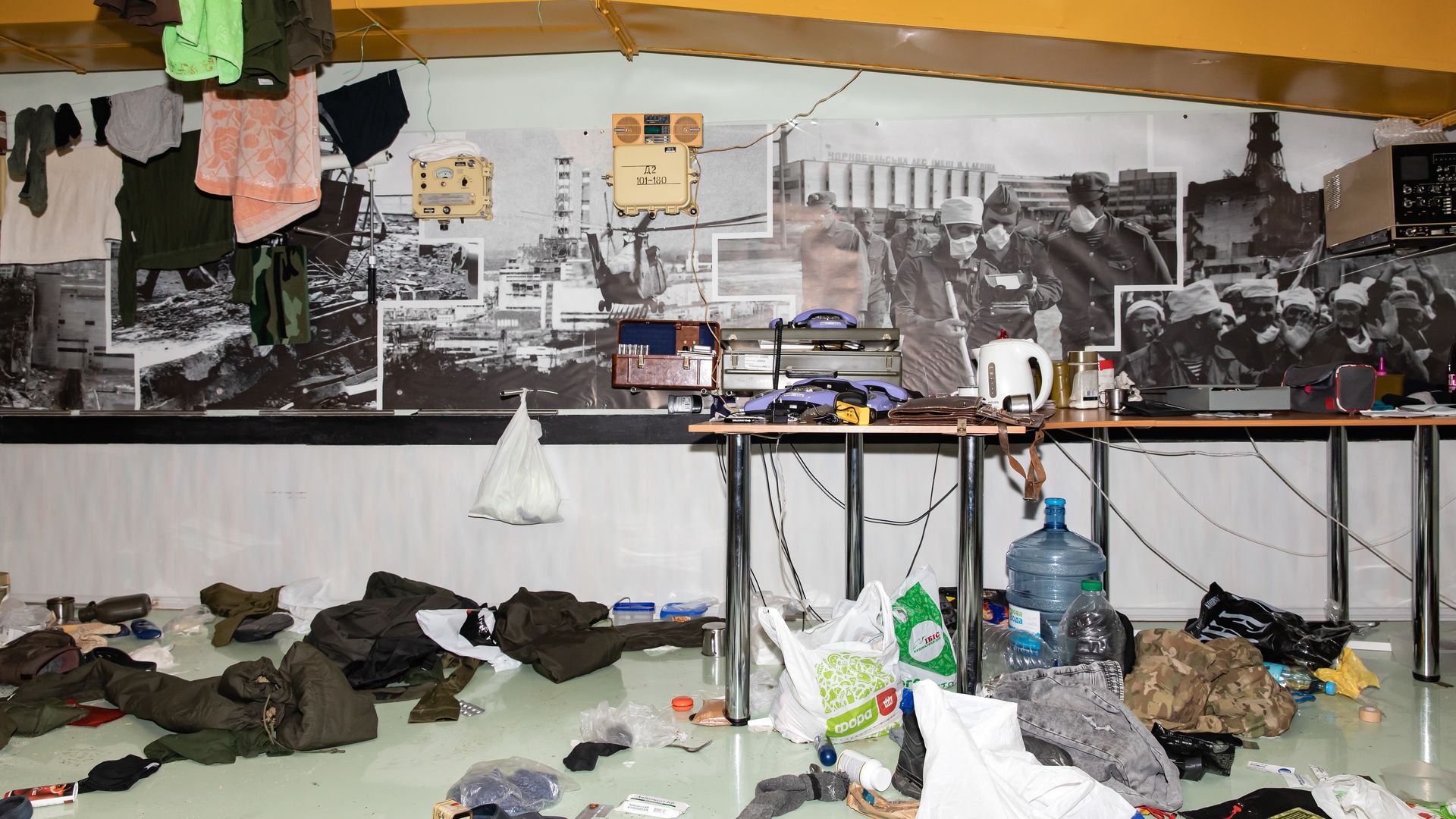
Ukrainian officials reported Saturday "abnormally high" radiation in areas of the Chernobyl Exclusion Zone, where they say Russian troops dug trenches and tried to build fortifications when they occupied the site until late last month.
Why it matters: It's one of the world's most toxic places due to the 1986 Chernobyl Nuclear Power Plant disaster. The International Atomic Energy Agency (IAEA) could not immediately verify claims of radioactive dust in areas of the zone known as the "Red Forest," but is due to send a team to the region to assess damage.
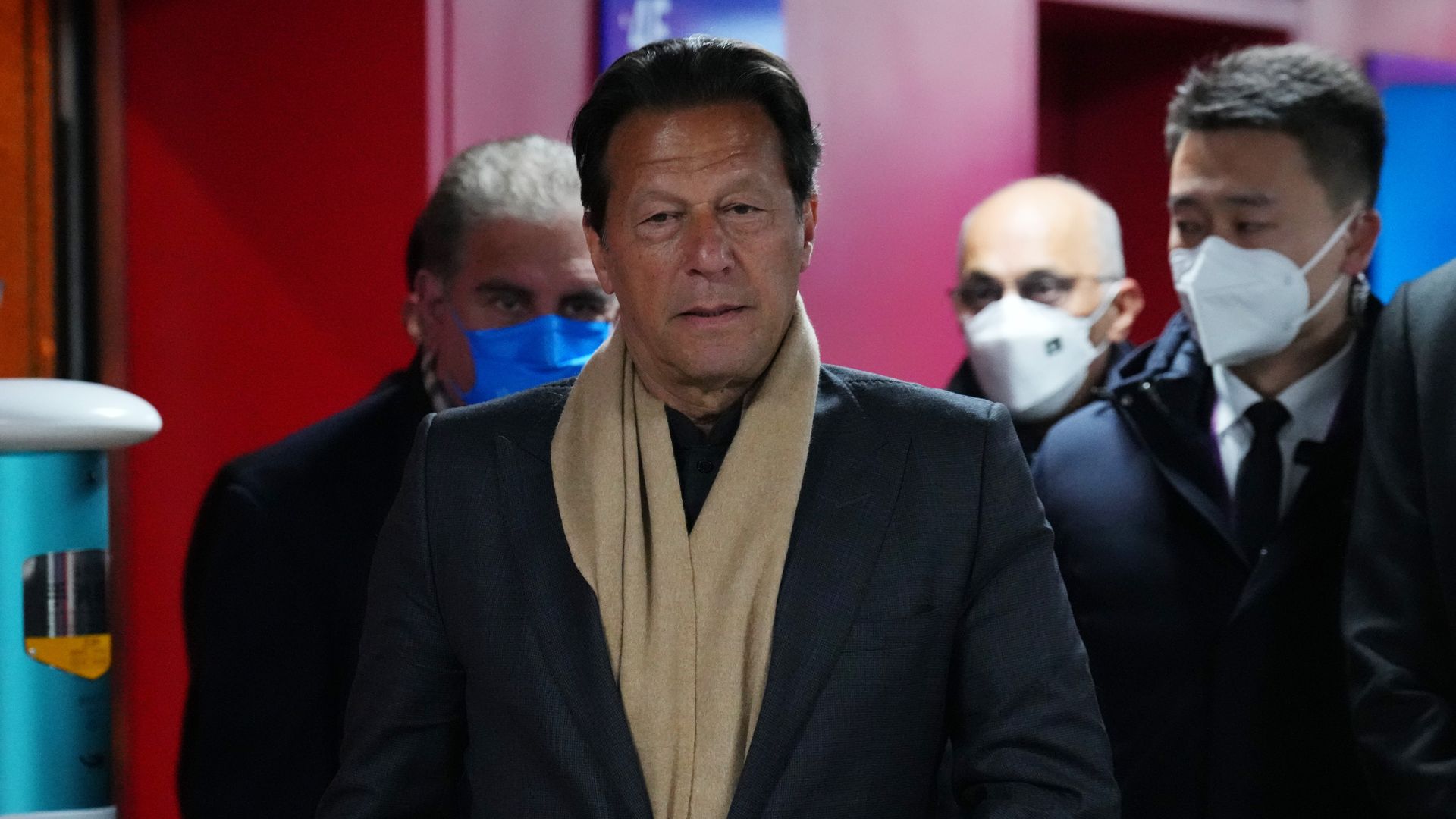
Pakistan's Parliament has passed a no-confidence vote to remove Imran Khan as prime minister.
Why it matters: While no previous Pakistani prime minister has completed a full five-year term, the former cricket star is the first to be removed from office in a no-confidence vote, the New York Times notes.
The humanitarian emergency in Ukraine has led to a global outpouring of support. In times of crisis, the feeling that you're looking on helplessly at atrocities is partially assuaged when there are actually ways to help, at least a little.
Why it matters: That impulse is a philanthropic one. All philanthropies are constantly on the hunt for government funding — and in this case the government funding is already there, to the tune of many billions of dollars. That can change the calculus of where to give.
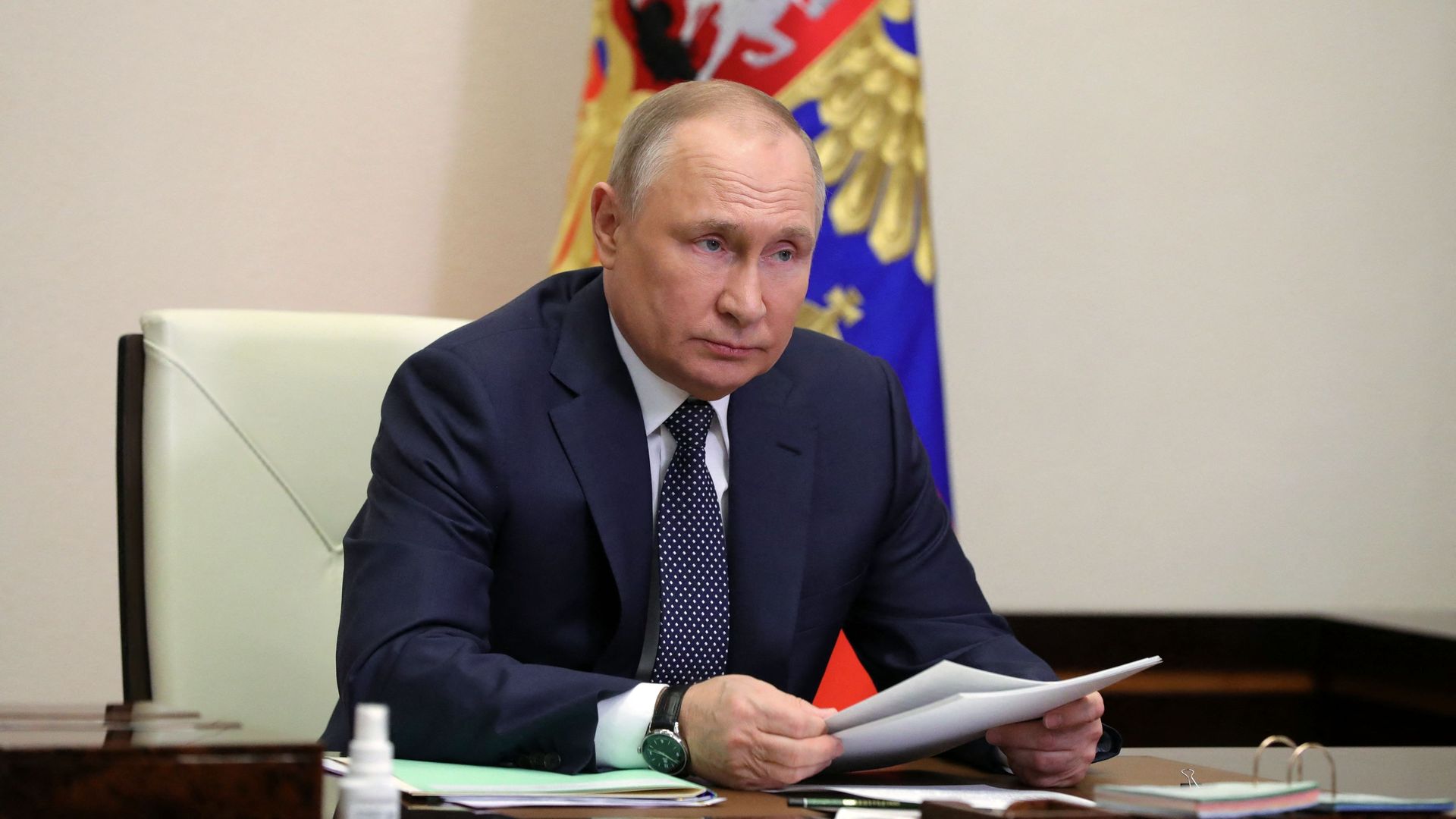
S&P on Friday lowered its gauge of the Russian government's ability to pay foreign debt, citing increased sanctions imposed over alleged war crimes during the country's invasion of Ukraine.
Why it matters: The downgrade is another sign that the country could soon default on its foreign debt for the first time since the Bolshevik Revolution.
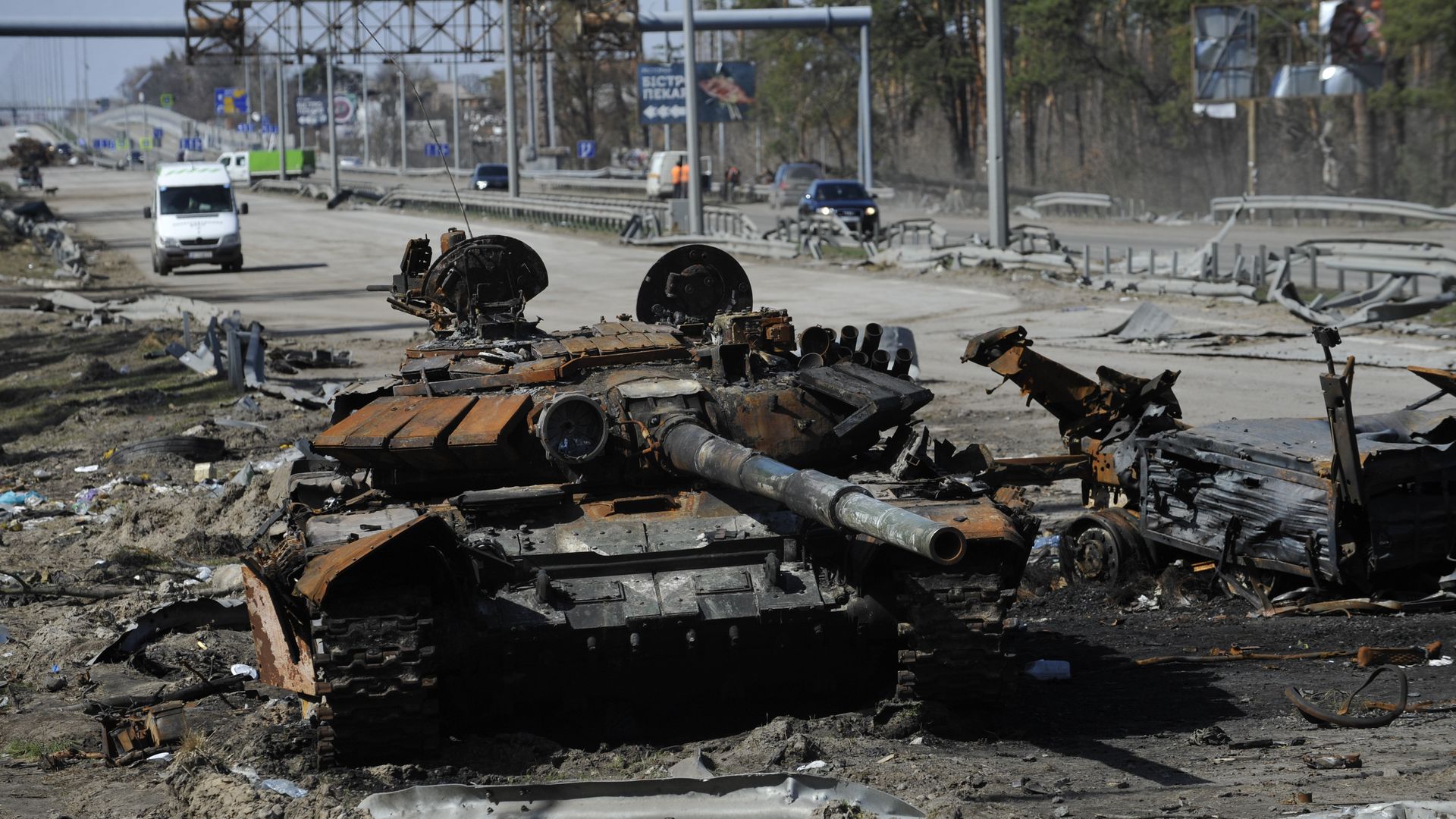
Russia on Saturday tapped a general with significant combat experience in Syria to oversee its military operations in Ukraine, a U.S. official confirmed.
Driving the news: Gen. Aleksandr V. Dvornikov will lead the Russian forces with the goal of increasing coordination between various units. Up until this point, the Russian forces have been commanded separately, the New York Times reports.
For months, French President Emmanuel Macron looked like a shoo-in to become France's first president in 20 years to win a second term. But far-right leader Marine Le Pen, Macron's political nemesis, is surging ahead of tomorrow's election, AP reports.
Why it matters: The centrist Macron's landslide win against Le Pen in 2017 was a defeat for populist, nationalist politics after Donald Trump's election and Britain's Brexit vote. Now, the right is risingglobally.
Under mounting international pressure for reported war crimes, Russia on Friday forced the closure of several prominent human rights groups' offices, CNN reported.
Driving the news: The Russian Ministry of Justice rescinded the registrations of 15 offices belonging to foreign NGOs and international aid organizations, including Human Rights Watch, Amnesty International and the Carnegie Endowment for International Peace.
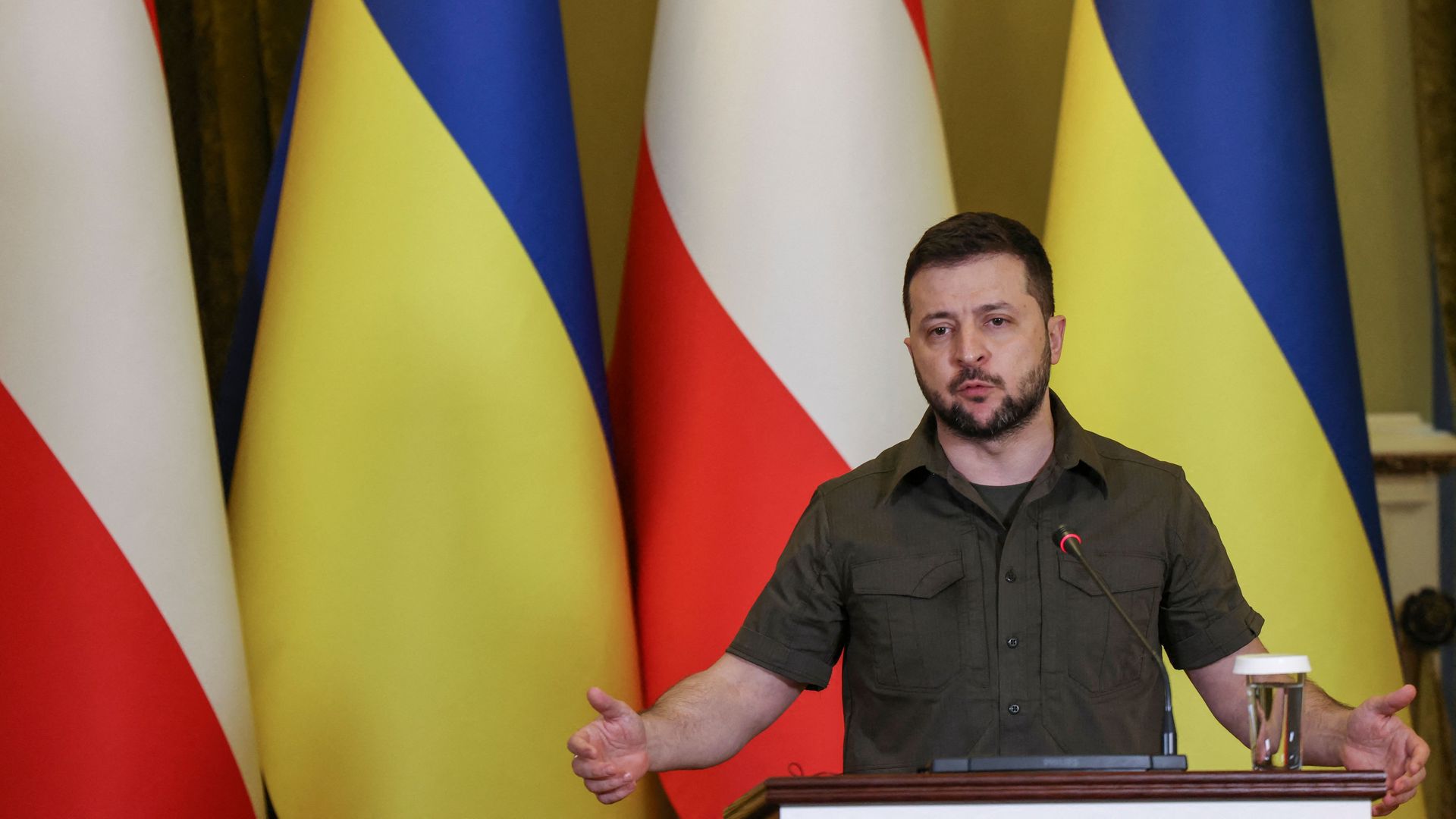
Ukrainian President Volodymyr Zelensky said Friday that the Russian missile attack on a train station in the city of Kramatorsk was "another war crime of Russia."
Driving the news: "Like the massacre in Bucha, like many other Russian war crimes, the missile strike on Kramatorsk must be one of the charges at the tribunal, which is bound to happen," Zelensky said during a Friday speech.
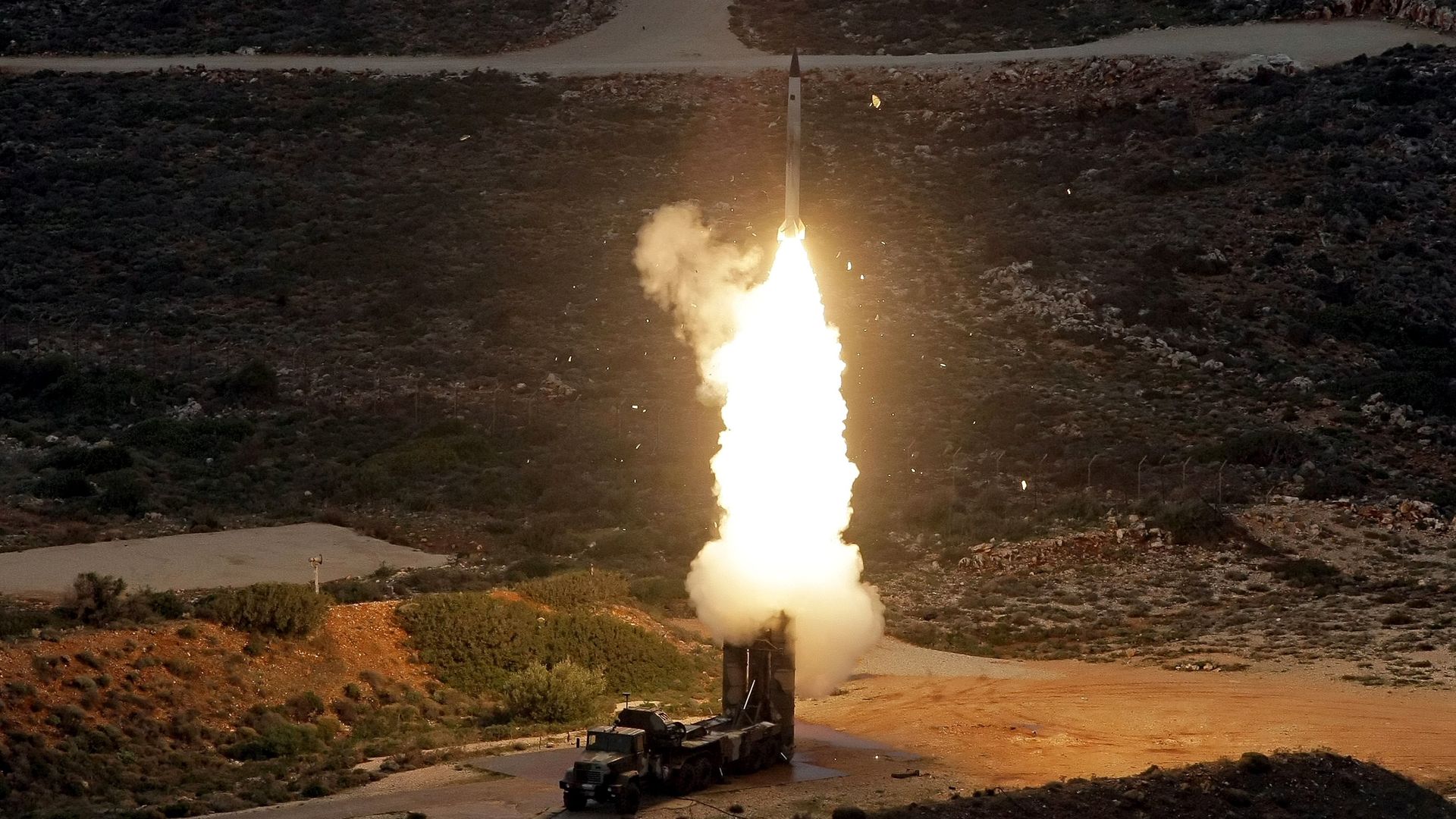
Slovakia has transferred an S-300 missile defense system to Ukraine, fulfilling one of Ukrainian President Volodymyr Zelensky's top requests to help the country defend itself against Russia's bombing campaign.
Why it matters: Zelensky pleaded in an address to the U.S. Congress last month for the U.S. and its European allies to impose a no-fly zone or give Ukraine the ability to "close the skies" itself by facilitating the transfer of Soviet-era fighter jets or anti-aircraft systems.
Prices for grains, vegetable oils and other food commodities soared to the highest levels on record last month, the UN Food and Agriculture Organization said Friday.
Driving the news: The organization's Food Price Index, which tracks monthly changes in the international prices of a basket of commonly traded food commodities, averaged 159.3 points in March. That's up 12.6% from February, when the index reached its highest level since its inception in 1990.
A new report concludes — tentatively — that Europe's push to boost its energy security won't thwart the continent's climate push.
The big picture: The advisory firm DNV says more security "does not come at the cost of decarbonization and there is likely to be a small acceleration in Europe’s energy transition."
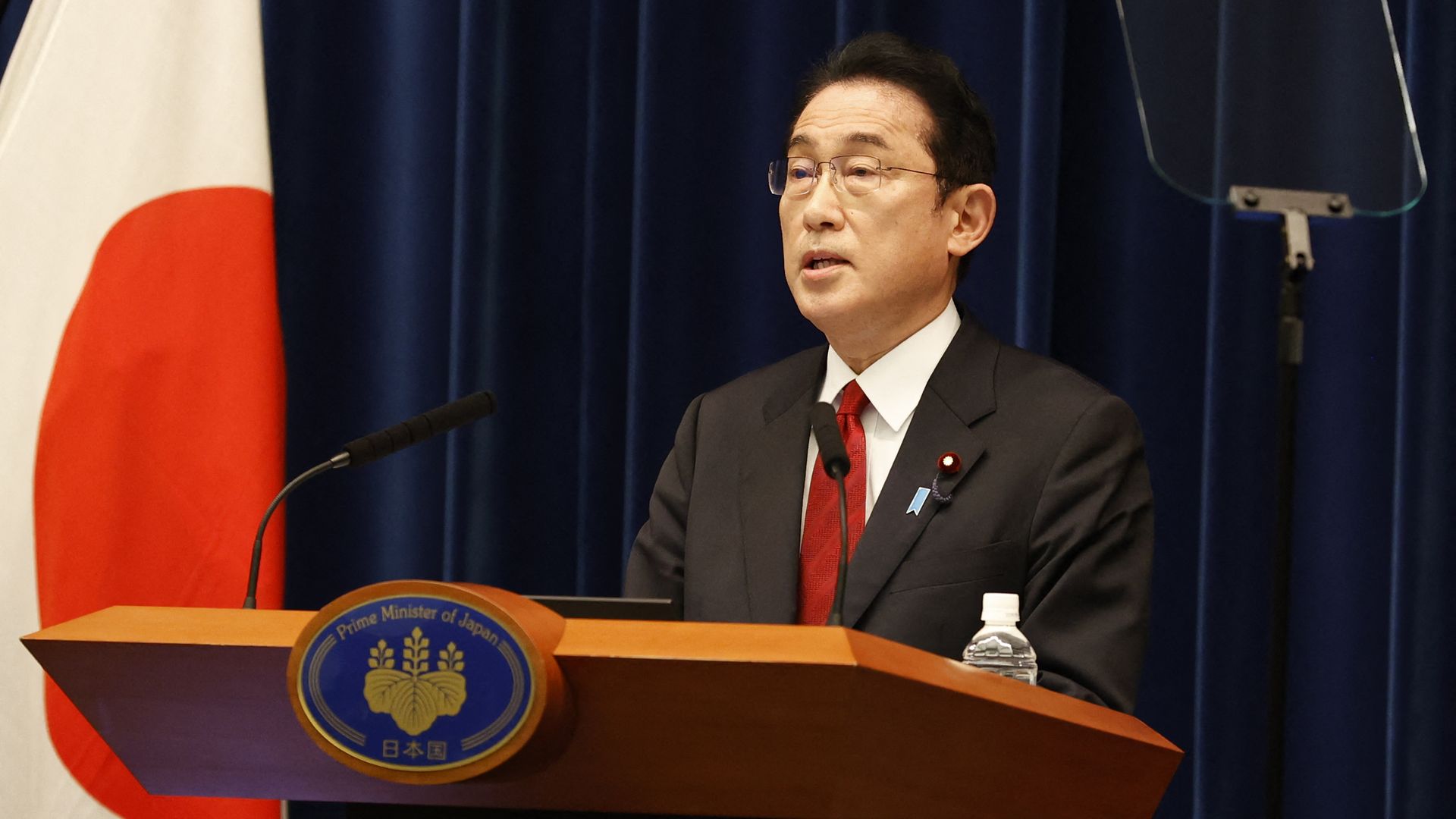
Japan announced Friday it plans to expel eight Russian diplomats and phase out imports of Russian coal and oil over Moscow's invasion of Ukraine, AP reports.
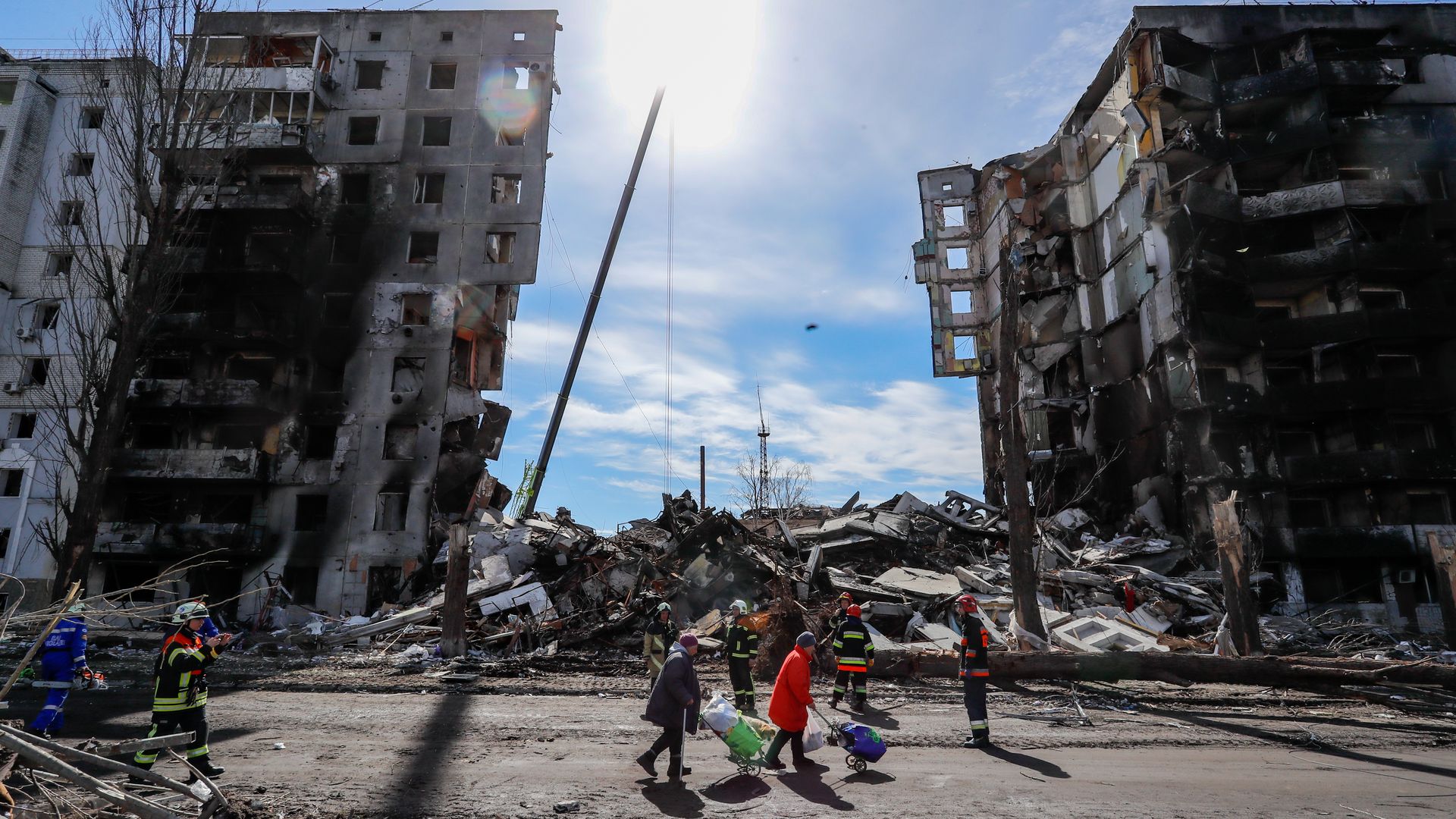
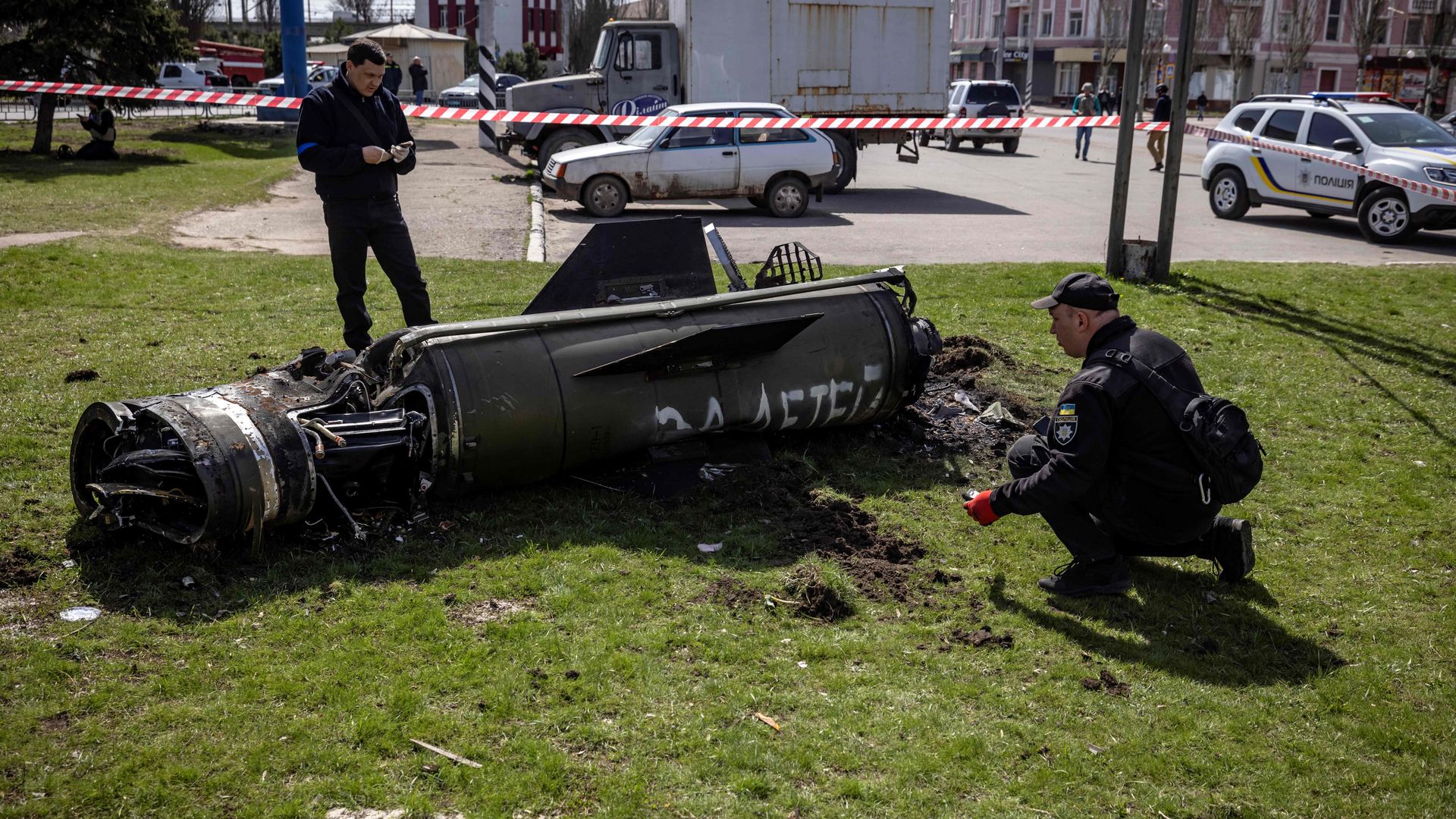
At least 50 people were killed and nearly 100 were hospitalized after a Russian missile struck a train station in the city of Kramatorsk in eastern Ukraine on Friday, Ukrainian officials said.
What they're saying: Ukrainian President Volodymyr Zelensky said in a statement that "thousands" of people fleeing the fighting in Ukraine's Donbas region were at the station awaiting evacuation at the time of the strike. It's another apparent instance of Russia bombing civilian targets during its invasion of Ukraine.
An American citizen detained by the Taliban says he was wrongfully accused of espionage butthat his release can be a case study for U.S. diplomacy with the still-unrecognized Afghan government.
Driving the news: Safi Rauf, 27, whose non-profit helped evacuate thousands of at-risk Afghans during the fall of Kabul — including an interpreter who once helped President Biden — shared new details of his 105-day detention in an interview with Axios.
The Chinese government financed a $300,000 social media influencer campaign that reached millions of Americans — featuring a U.S. Paralympic athlete and a "Real Housewives" reality TV star — to promote this year's Beijing Olympics, new records show.
Why it matters: Beijing's efforts to influence U.S. public opinion are under scrutiny over concerns about propaganda and misinformation.
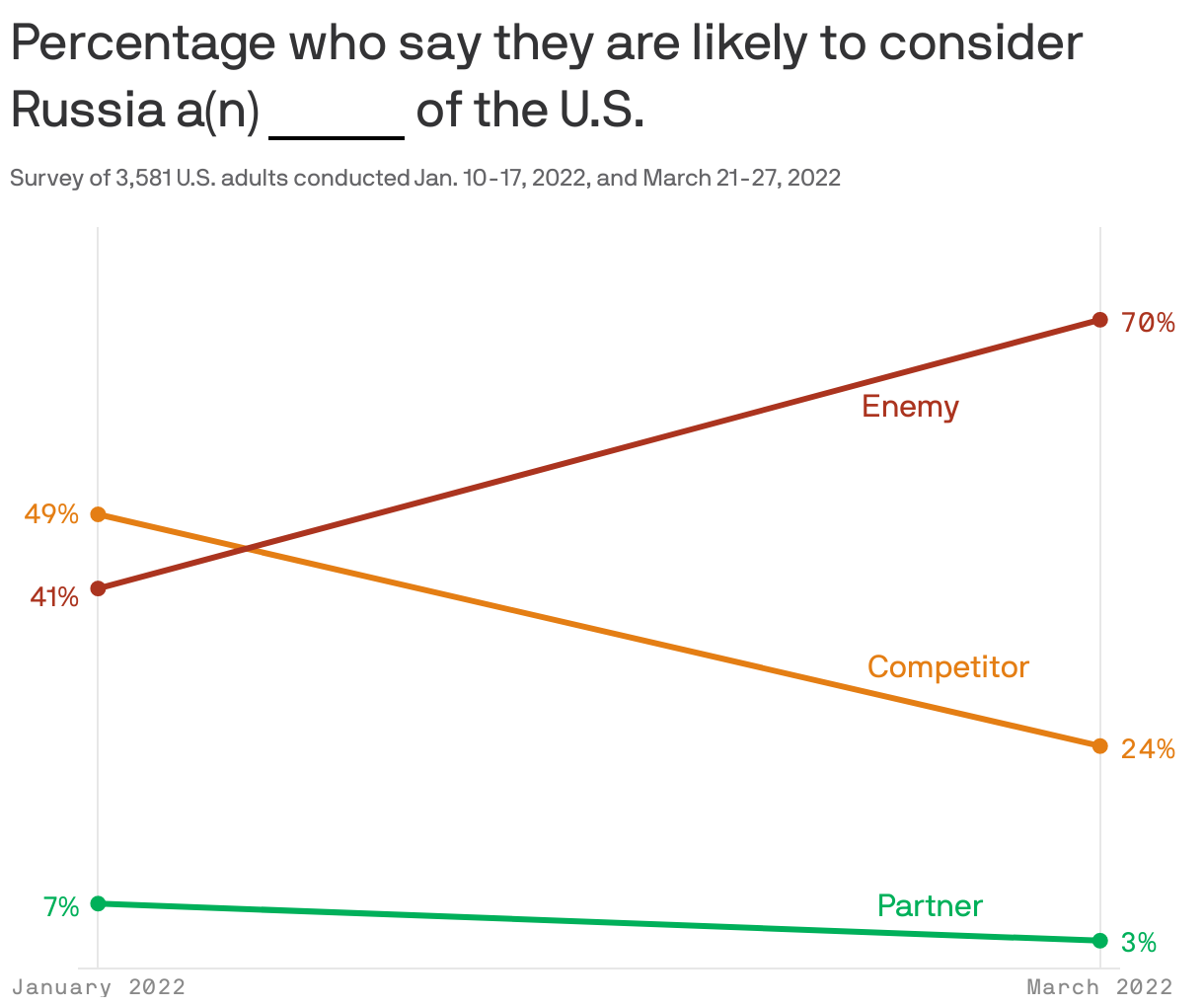
Data: Pew Research Center; Chart: Baidi Wang/Axios
More Americans view Russia as an enemy following its invasion of Ukraine, a new Pew Research survey found.
Why it matters: The issue is one of a few topics in which Democrats and Republicans find common ground. 72% of Democrats and 69% of Republicans agreed that Russia is an enemy of the United States.