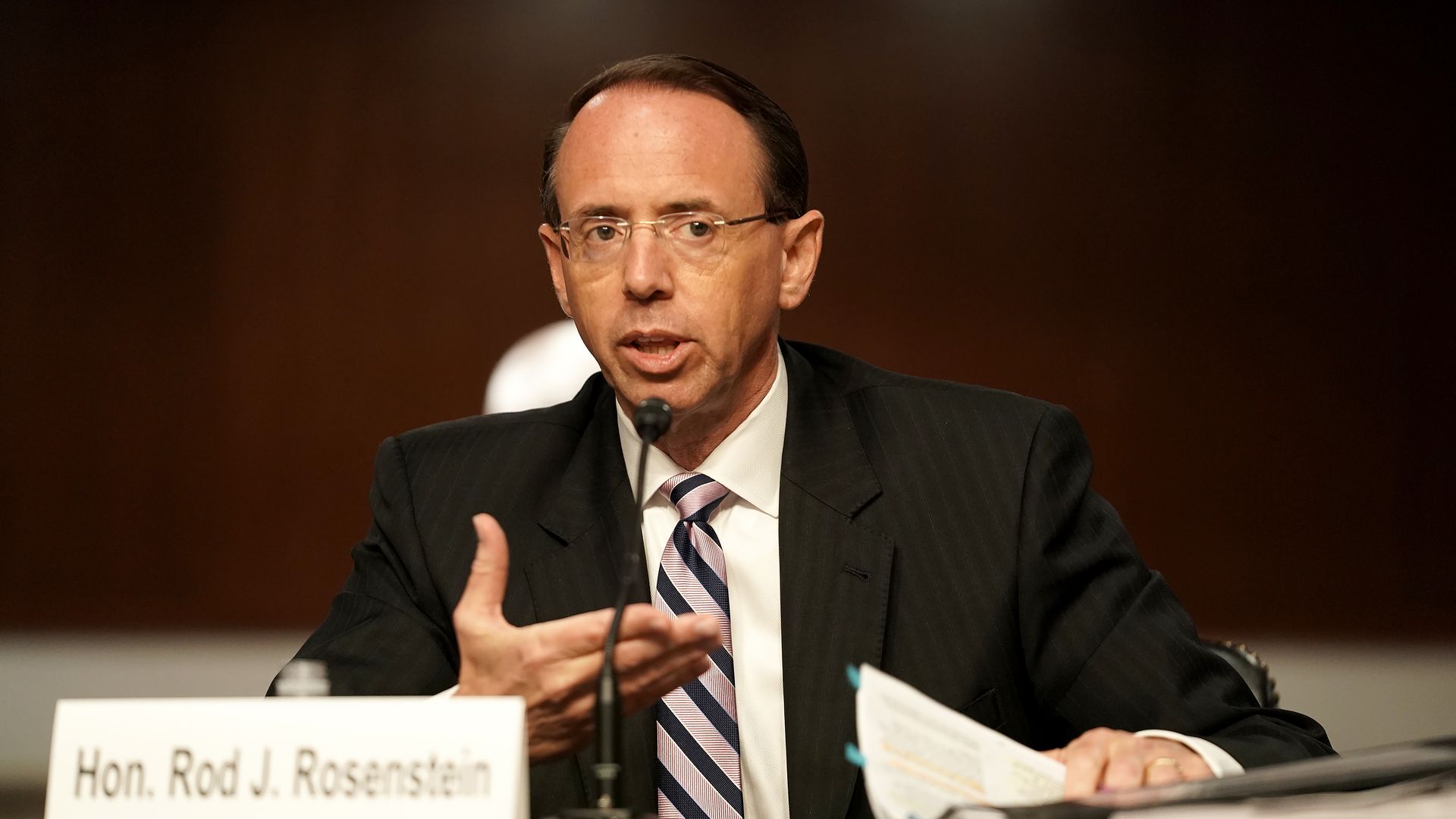
Former Deputy Attorney General Rod Rosenstein told special counsel Robert Mueller in May 2017 to only conduct a criminal investigation of possible coordination between the Trump campaign and the Kremlin, secretly curtailing an FBI counterintelligence probe into President Trump's ties to Russia, the New York Times' Mike Schmidt reports.
Why it matters: Acting FBI director Andrew McCabe had approved the opening of the counterintelligence investigation out of concerns that Trump's decades of personal and financial dealings in Russia posed a national security threat. Rosenstein, concluding that the probe lacked justification and that McCabe had conflicts of interest, never informed him of the decision.
Sen. Ron Johnson (R-Wis.) denied on Sunday that the theory that the Ukrainian government interfered in the 2016 election on behalf of Democrats is Russian disinformation, telling CNN's Dana Bash: "That's your typification that it has been debunked."
Why it matters: The bipartisan Senate Intelligence Committee found that "numerous Russian-government actors" promoted "false narratives" seeking to discredit investigations into 2016 Russian election interference by blaming Ukraine. The committee identified "no reliable evidence" that the Ukrainian government interfered in the election.
A delegation of senior representatives from all Israeli security and intelligence agencies will travel to the UAE in the next two weeks to discuss security aspects of the U.S.-brokered normalization deal, two Israeli officials tell me.
Why it matters: Israel and the UAE have had a secret security relationship for more than two decades, but Israeli and Emirati officials hope that security dialogue and cooperation between the countries will be broadened as a result of the normalization deal. The Trump administration created a trilateral security dialogue between the U.S., Israel and the UAE.
New export controls on technologies that Beijing deems sensitive are threatening to derail efforts by American companies to acquire TikTok's U.S. operations from its Chinese parent company ByteDance, the Wall Street Journal reports.
Driving the news: The regulations were unveiled on Friday and prevent "technology based on data analysis for personalized information recommendation services" — which would likely apply to TikTok's AI content-recommendation engine — from being exported without a license, according to the New York Times.
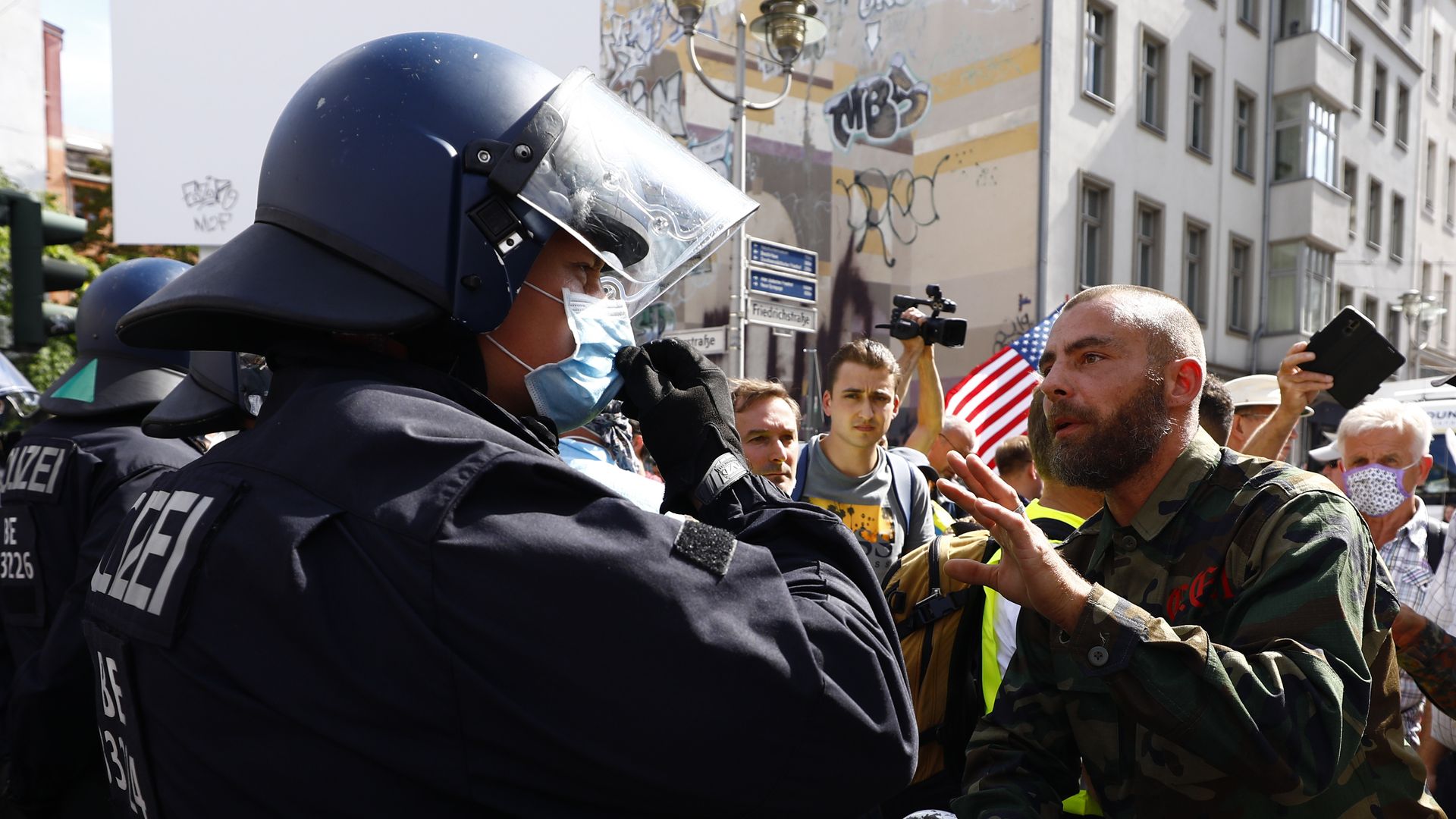
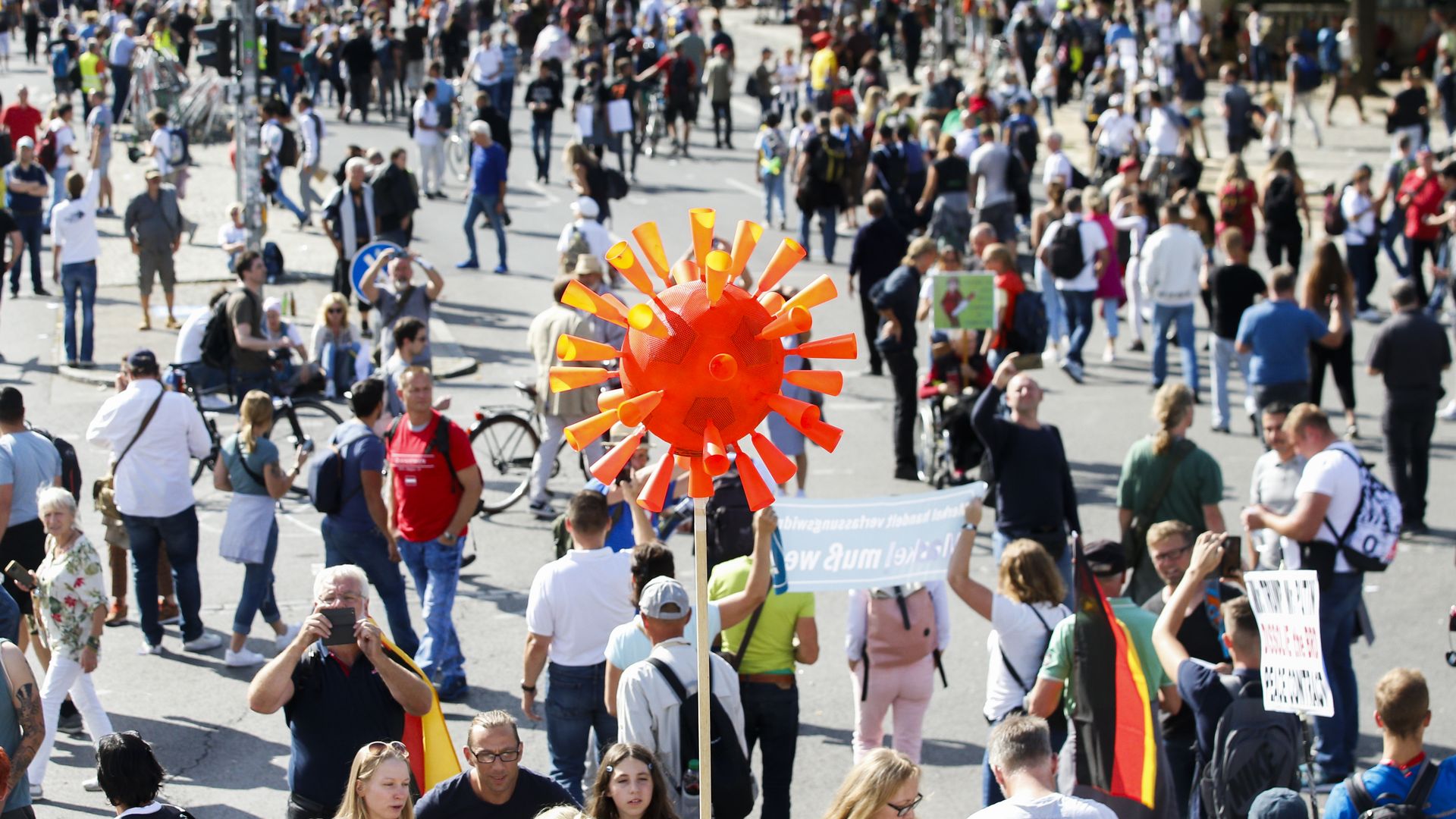
Berlin police arrested 300 demonstrators after disbanding a protest Saturday over Germany's coronavirus restrictions as tens of thousands of participants refused to maintain social distancing, per the BBC.
Why it matters: Berlin's regional government tried to ban the protest earlier this week, citing concern for public health. Protesters successfully appealed the decision on Friday, though a court required demonstrators to observe social distancing.
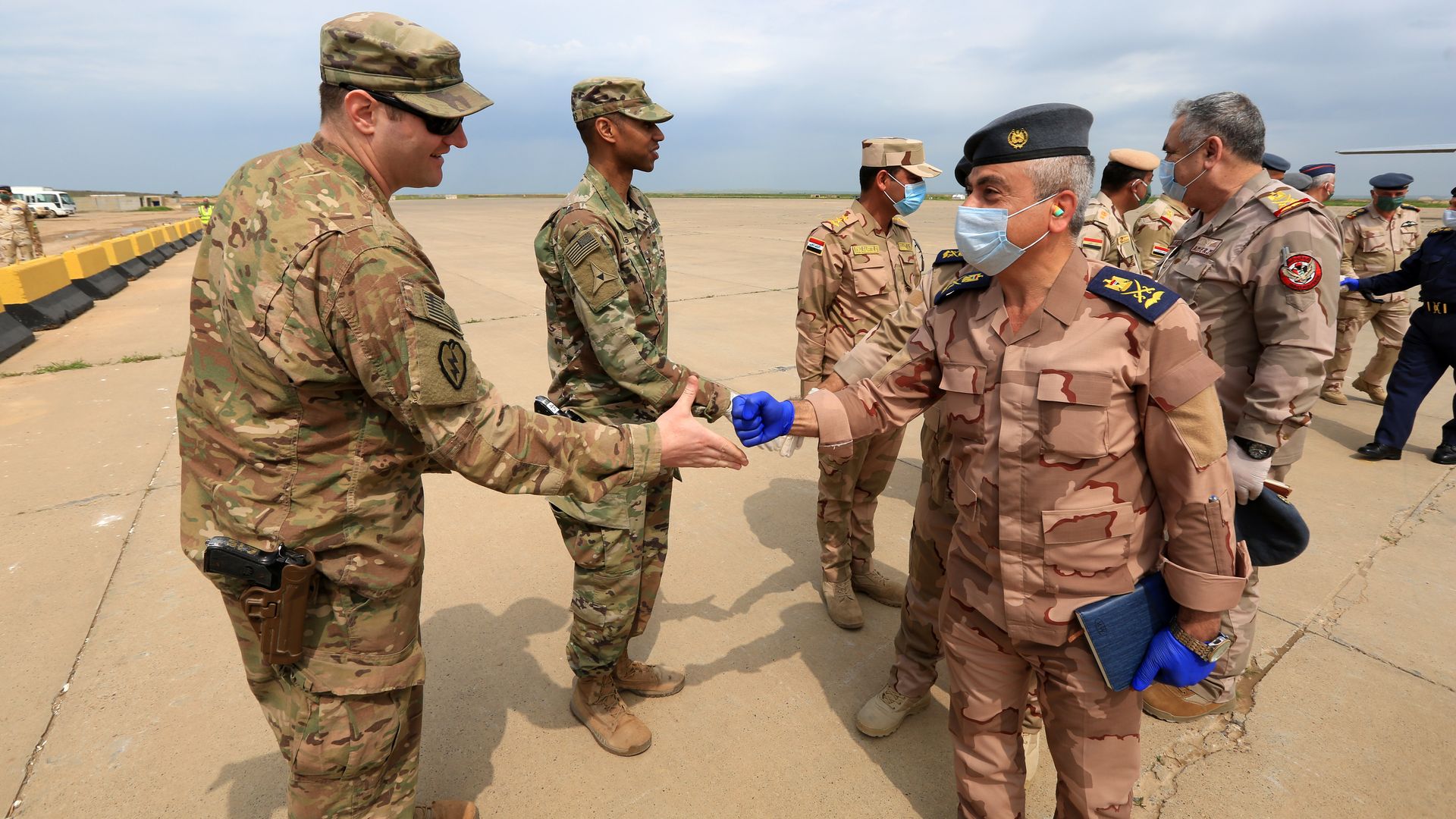
President Trump tweeted late Saturday that the U.S. is "planning to cut" its military presence in Iraq, without elaborating further.
The big picture: Trump's tweet linked to an OAN article reporting that American troop numbers in the region would decline from 5,200 to 3,500, a number also reported by the Wall Street Journal and Stars and Stripes. Coalition forces left three Iraqi bases in March, including the U.S.-led coalition withdrawal from K1 Air Base. The White House and Defense Department did not immediately respond to Axios' requests for comment.
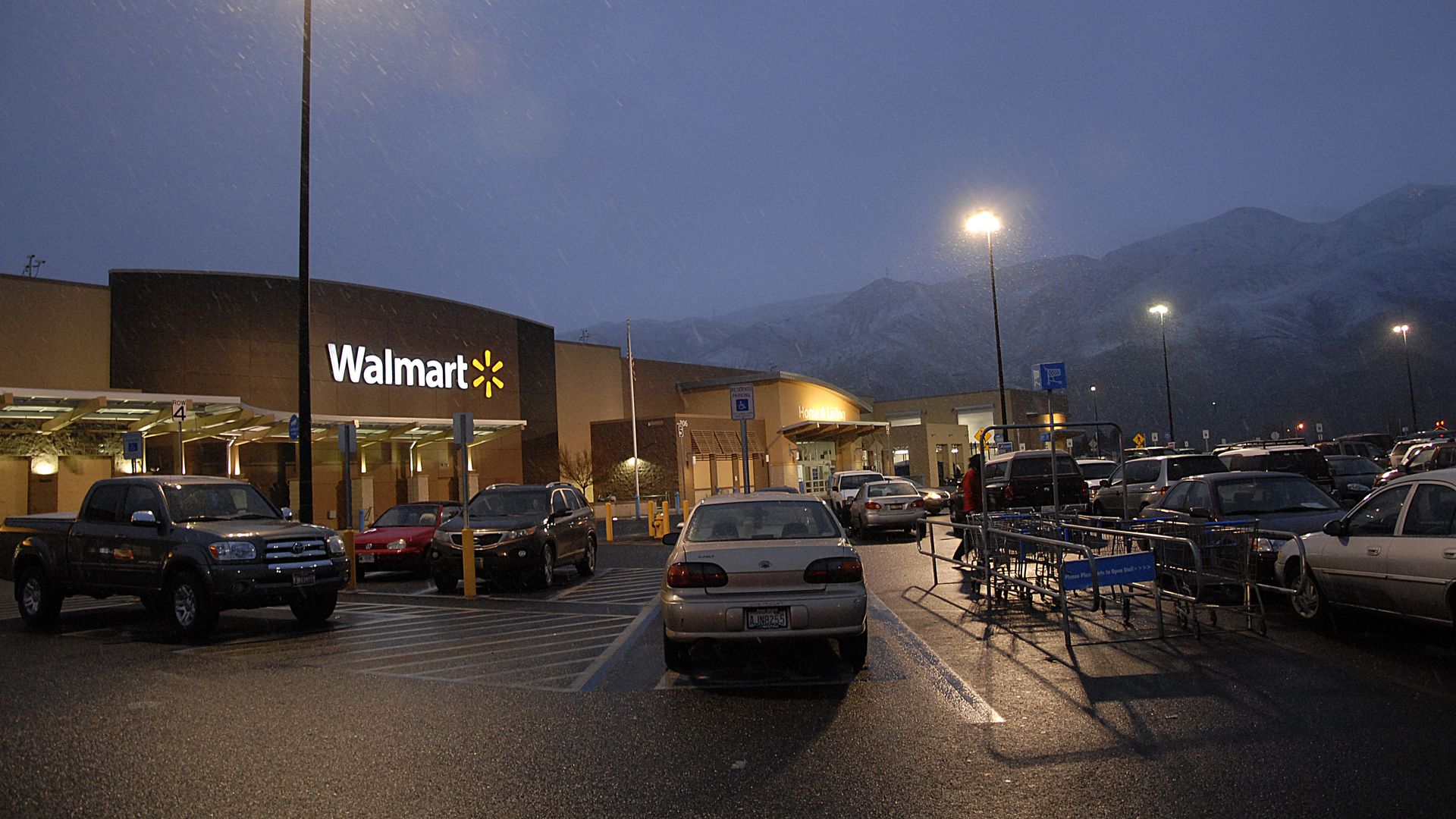
The big picture: The Trump administration has been forcing a sale of TikTok due to ongoing national security concerns over ByteDance, it's Chinese owner. The app is most popular with young people who could be the future of Walmart's customer base, AP notes.
Several European countries have reported a jump in new coronavirus cases in recent weeks after a drop in cases over June and July, according to Johns Hopkins University data.
Why it matters: The surge could indicate that Europe is on the verge of a second wave, though currently fewer people are dying from the virus and new cases have needed less medical treatment than those who got it in the spring, according to the Washington Post.
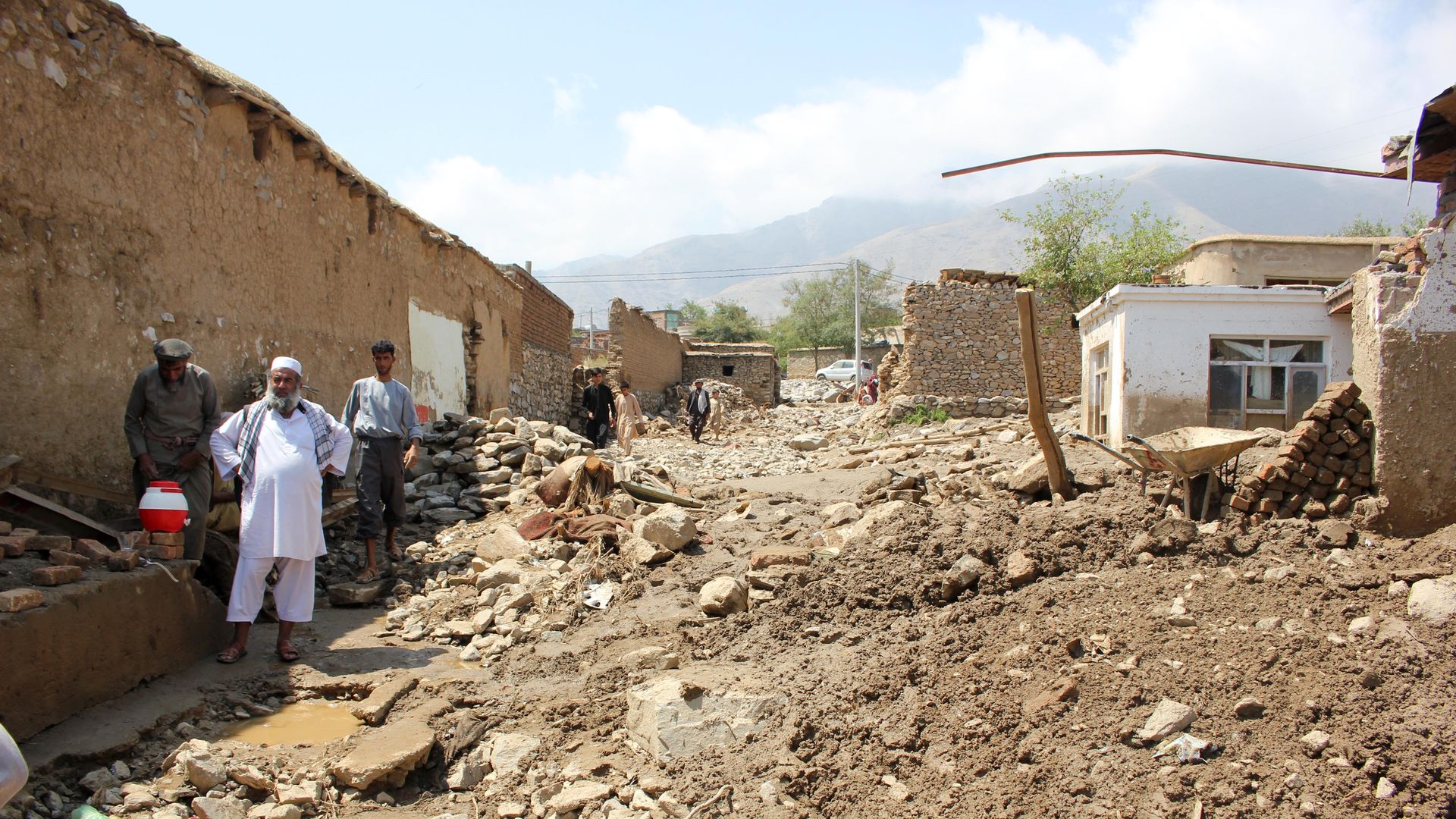
Flash flooding in Afghanistan killed at least 160 people and injured hundreds of others this week, though rescuers are continuing to search for missing people on Saturday, Reuters reports.
The big picture: The Ministry for Disaster Management said thirteen provinces were affected by flooding, including Parwan Province — just north of country's capital Kabul — where 116 people were killed, more than 120 injured and 15 people still missing.