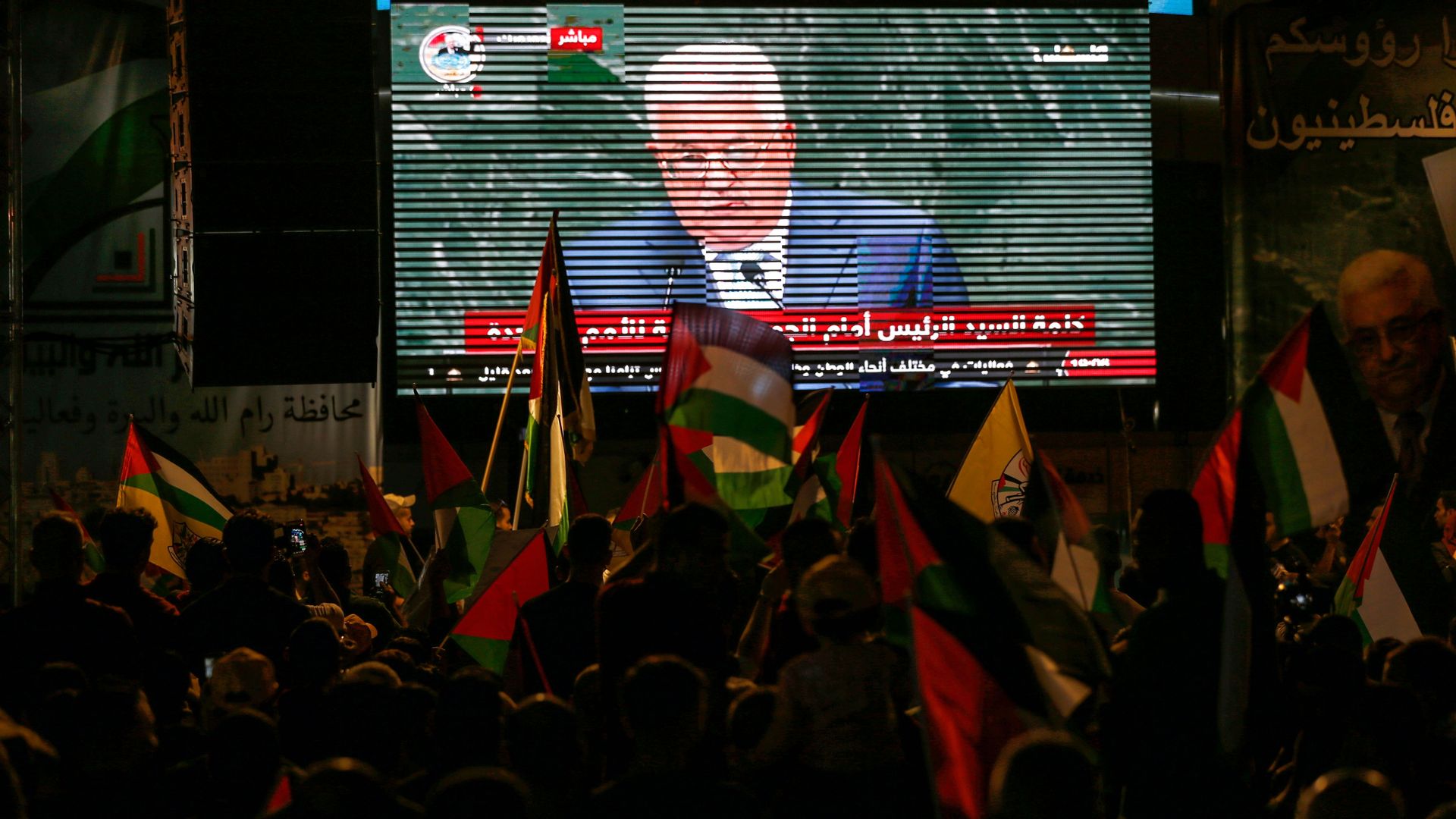
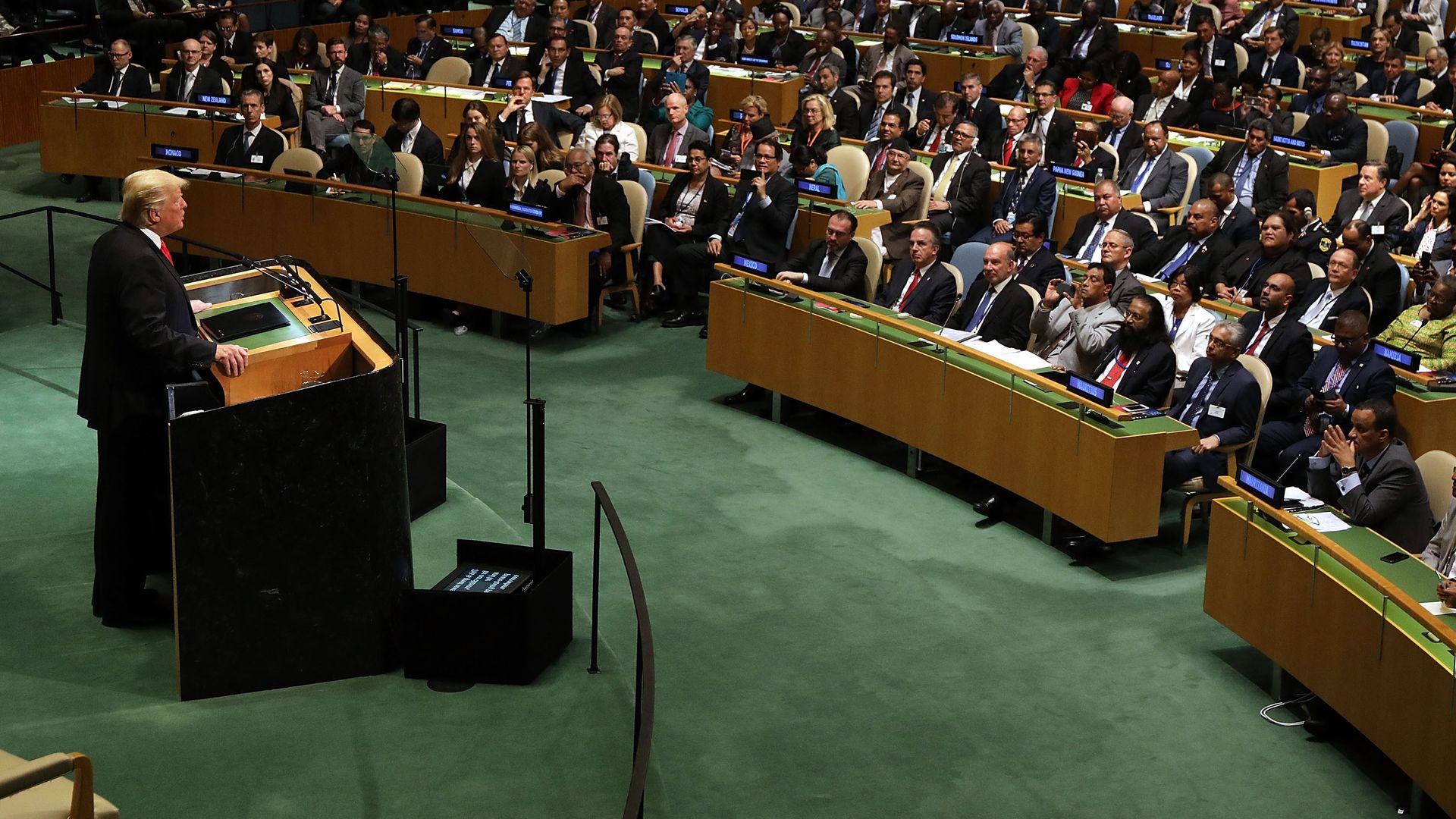
Palestinian President Mahmoud Abbas today called on President Trump to rescind his decisions on Jerusalem and Palestinian refugees in order to be able to act again as a mediator between Israel and the Palestinians during his speech today at the UN General Assembly.
Why it matters: The White House was closely following Abbas's speech and wanted to see if Trump's overture about the two state solution would be answered by Abbas. Abbas didn't answer it directly, but Palestinian officials say he had prepared several versions of the speech and, after Trump's press conference, decided to use the most moderate one, which didn't contain personal attacks against Trump.
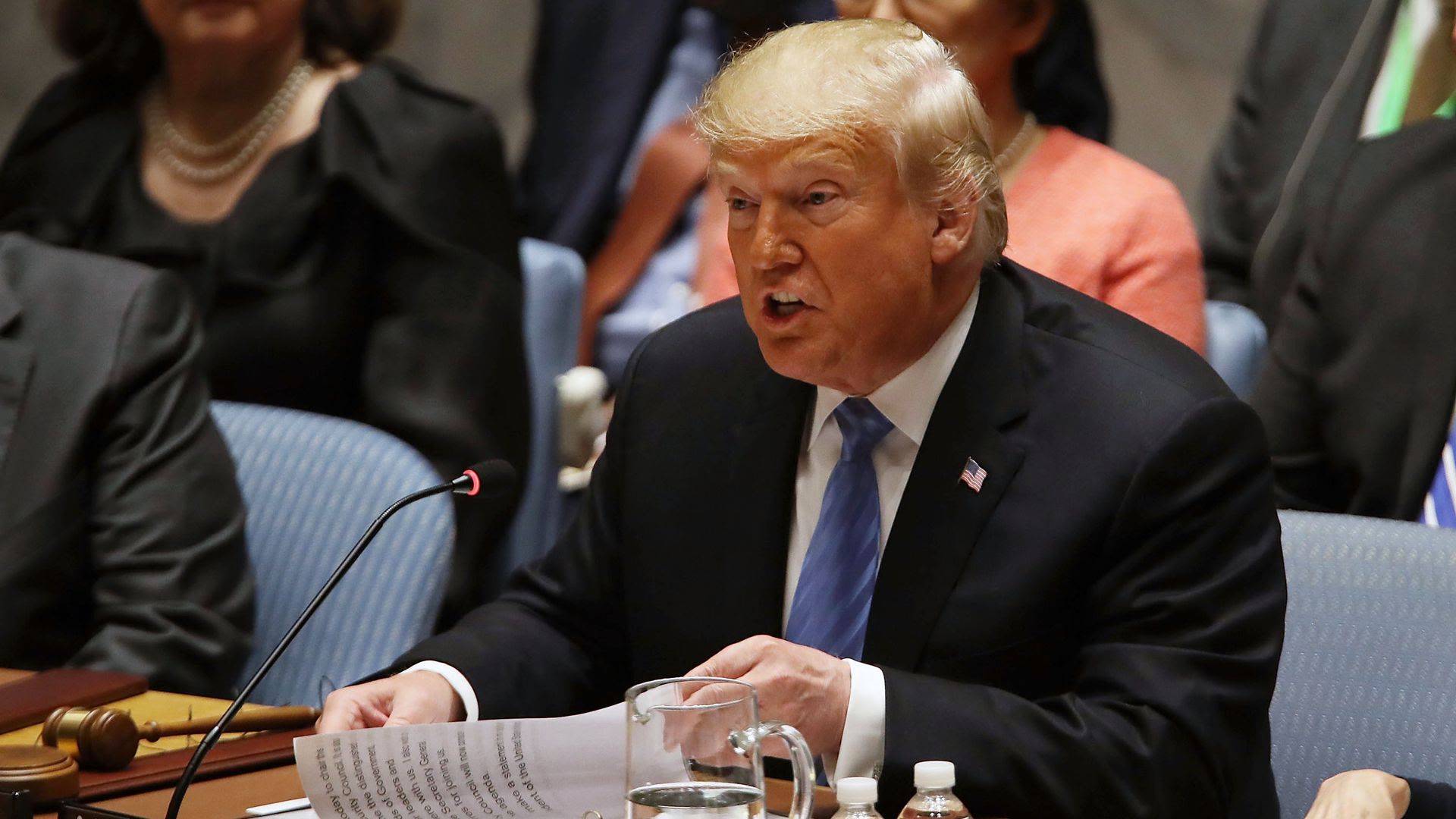
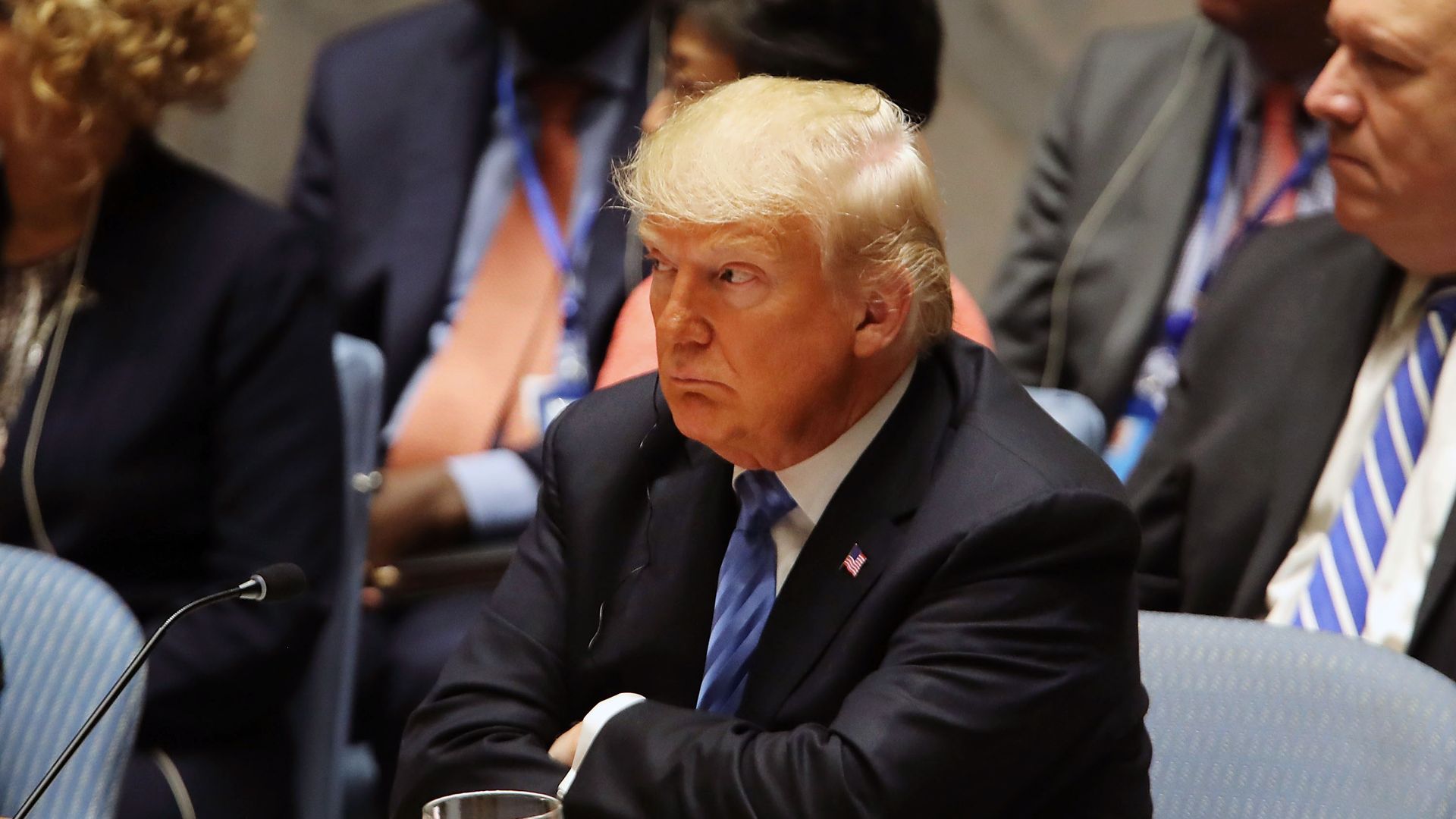
At the U.N. on Wednesday, President Trump repeatedly claimed that China is meddling in the U.S. midterm elections. But his administration has provided no evidence that that's true, according to any useful definition of "election meddling."
In three different stage appearances, the president conflated predictable tactics triggered by his trade war — including tariffs targeted by China at influential states and a clearly labeled "advertorial" about the farm bill in an Iowa newspaper — with Russian-style interference of the sort that clouded the 2016 U.S. elections.
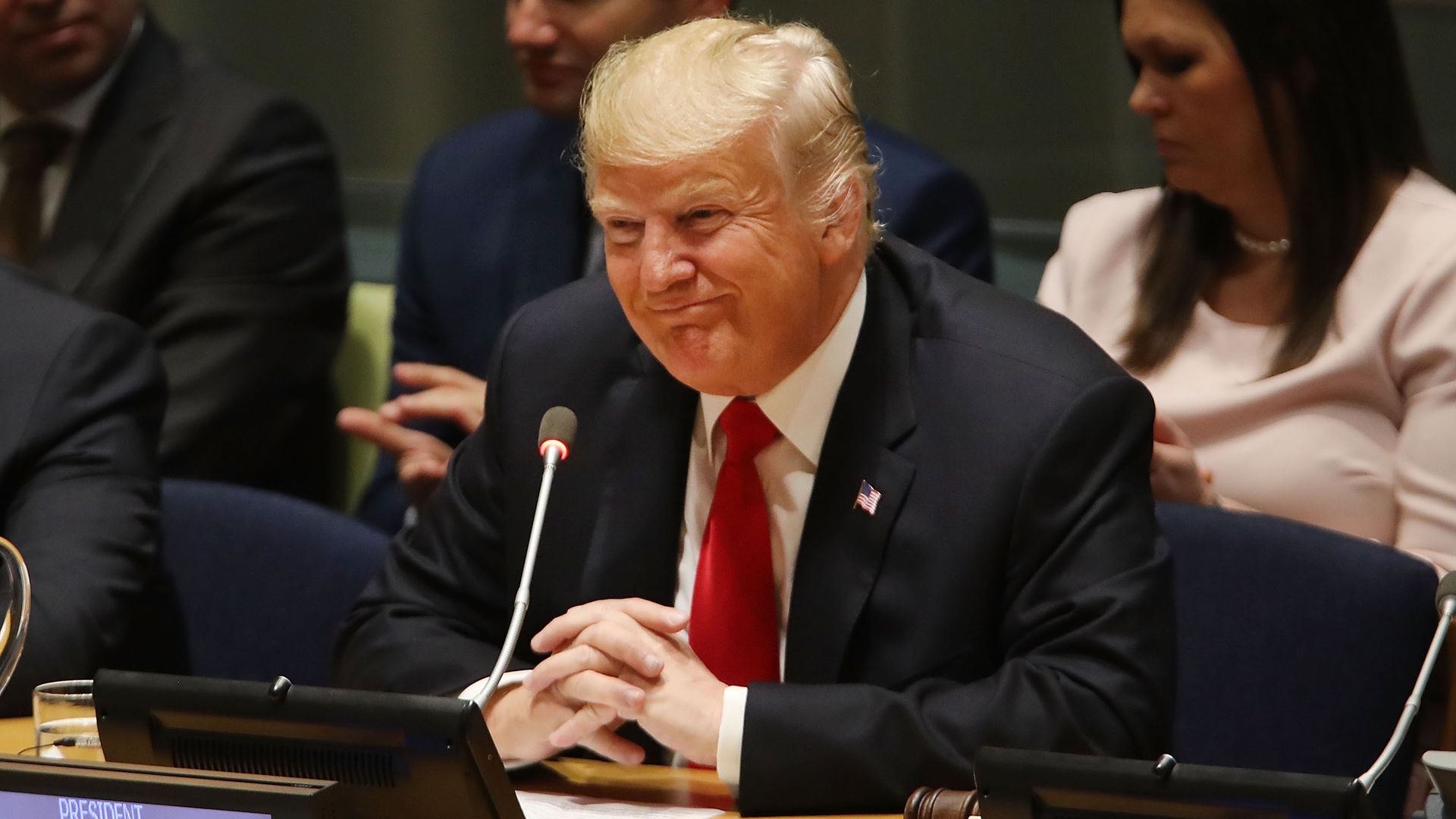
President Trump said yesterday that he is ready to renew aid to the Palestinian Authority under certain circumstances, a message that went largely unnoticed because of the focus on his statement of support for the two-state solution.
Why it matters: Trump's statement, made during his press conference with Israeli Prime Minister Netanyahu, seems deliberate and meant for the ears of Palestinian President Mahmoud Abbas. It looks like another overture by Trump as he tries to get the Palestinians — who cut ties with the U.S. over Trump's decision to move the U.S. Embassy to Jerusalem — to come back to the table. Just two weeks ago, Trump cut all U.S. aid for the Palestinians, which totaled $550 million annually.
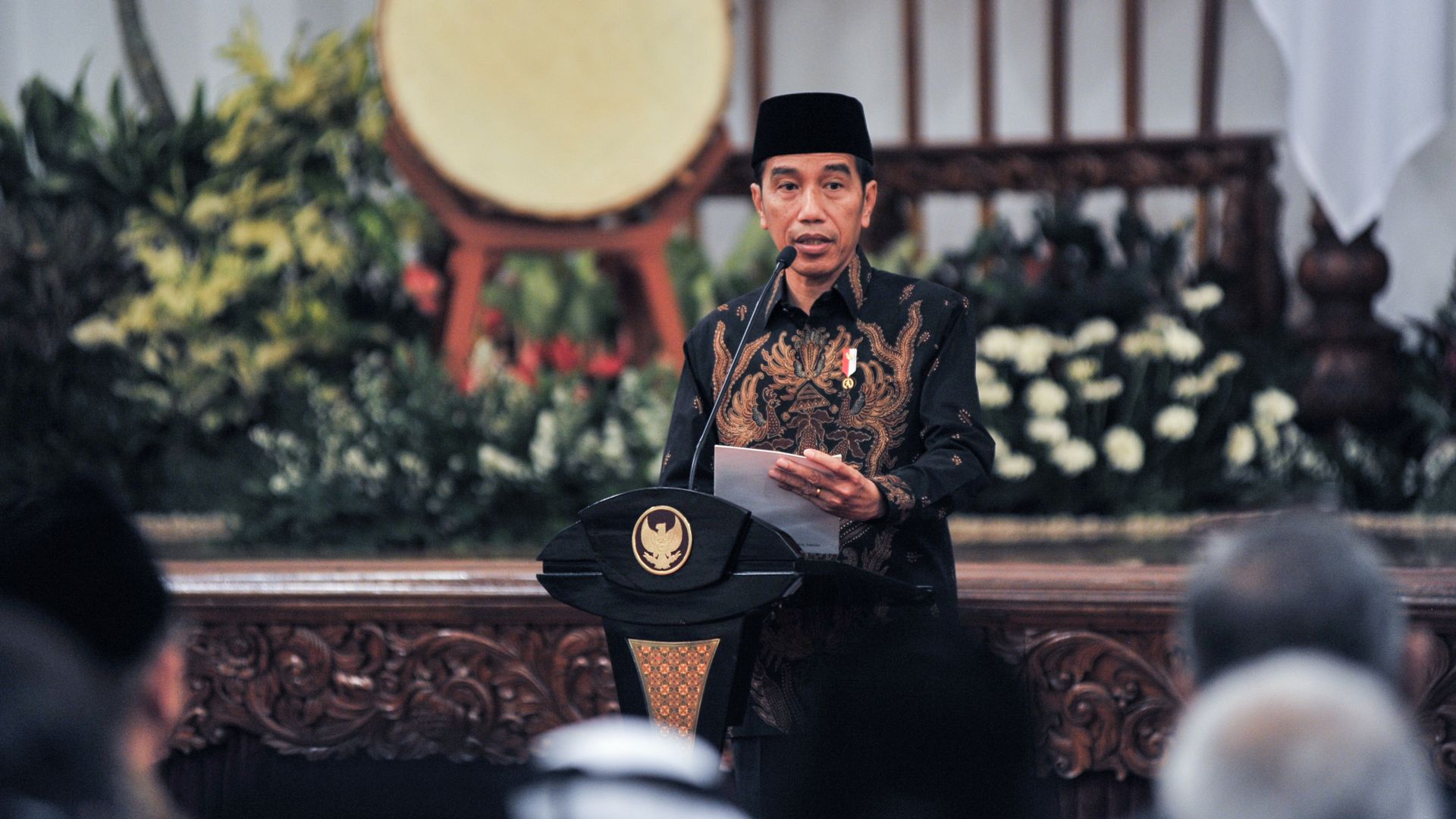
Indonesia, the third-biggest democracy in the world, will hold presidential elections next April. Since the late 1990s, when the economy crashed, the corrupt Suharto dictatorship collapsed, and the country appeared to be falling into chaos, Indonesia has stabilized and held multiple free presidential elections.
Yes, but: Although the country has made enormous progress since 1998, potential dangers remain. Islamist groups, many allied with a Trump-like populist former lieutenant general, have recently gained power, and the elections could put Indonesia on a democratic backslide.
China has been employing a "whole of government approach" to influence America's "political system," a senior administration official told reporters during a briefing Wednesday. The briefing comes after President Trump told the UN Security Council that China is currently trying to meddle in U.S. elections.
Why it matters: Trump's national security advisor John Bolton has previously said the government is concerned about Chinese interference in U.S. elections, but the administration has not yet provided specific evidence of direct tampering or misinformation campaigns of the sort Russia pursued in 2016.
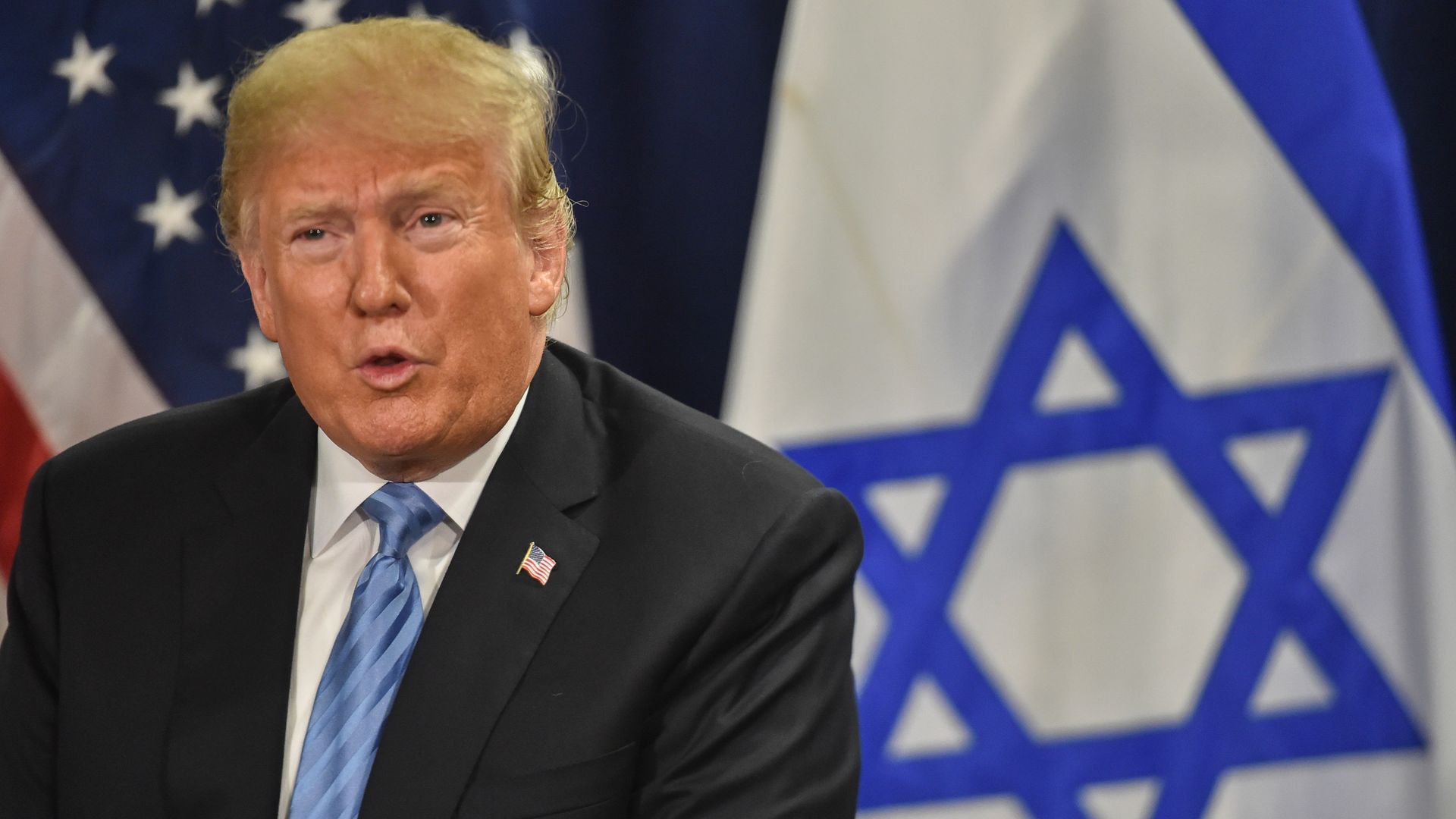
President Trump announced for the first time today that he supports a "two-state solution" to the Israeli-Palestinian conflict, and the founding of an independent Palestinian state. Following his meeting with Israeli Prime Minister Benjamin Netanyahu, he also said he would be presenting his long awaited peace plan in 2-4 months.
Why it matters: The Palestinians have been anxiously waiting for Trump to say this. In the 20 months since he assumed office, Trump refrained from supporting the two state solution even though presidents Clinton, Bush and Obama all supported a Palestinian state. Trump has been urged by Arab and European leaders — mainly King Abdullah of Jordan — over the last few months to pledge support for the two state solution.
Among the many targets of the Trump administration’s ire this week at the UN, Iran stood out. “We cannot allow the world’s leading sponsor of terrorism to possess the planet’s most dangerous weapons,” Trump told the General Assembly on Tuesday. On Wednesday, he reiterated, “a regime of this track record must never be allowed to possess a nuclear weapon.”
The big picture: The Trump administration is angry that most of the world — including key allies Britain, France and Germany — have rejected its withdrawal from the 2015 nuclear deal and are attempting to circumvent sanctions on Iran. But overemphasizing the challenge Iran poses only further undercuts U.S. credibility and makes it easier for other nations, such as China, to actively oppose U.S. policy.
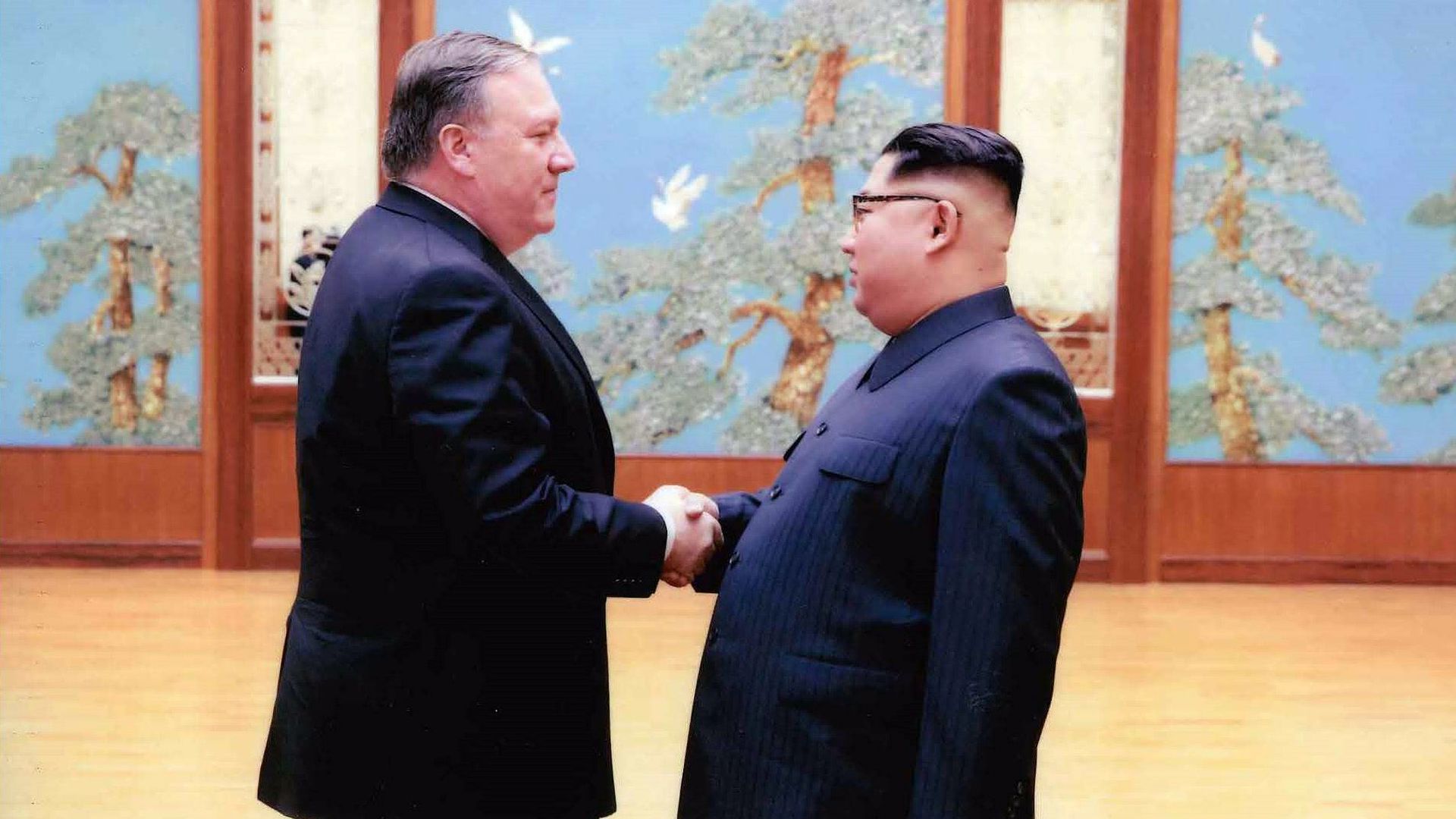
Secretary of State Mike Pompeo will travel to North Korea next month at the invitation of Kim Jong-un, the State Department announced today.
Why it matters: Pompeo's last visit to Pyongyang was a disaster, and another planned visit in August was called off. This latest announcement shows that, while significant progress toward denuclearization is elusive, the two sides remain invested in talks. The news follows a meeting between Pompeo and his North Korean counterpart, and President Trump's address to the UN General Assembly, at which he praised Kim's "courage." Trump is considering a second meeting with Kim in the coming months.