Ten years ago, hubristic Wall Street geniuses came this close to destroying the global economy, saved largely by the Fed feeding trillions of dollars into banks in the U.S. and around the world.
Why it matters: This time, unlike in 2008 and 2009, it may be that no one comes to the rescue, given new U.S.-China tensions, frayed trans-Atlantic relations, and Trump Administration hostility to multi-lateral actions.
U.S officials are trying to extinguish a mini-political fire in Israel after President Trump's speech last night at a political rally in West Virginia during which he said Israel "will have to pay a higher price" in future negotiations with the Palestinians because of his decision to recognize Jerusalem as Israel's capital.
The big picture: While Trump hasn’t spoken publicly for several months about the White House's efforts to draft and launch an Israeli-Palestinian peace plan, his statements yesterday — although not choreographed — showed the issue is still on his agenda.
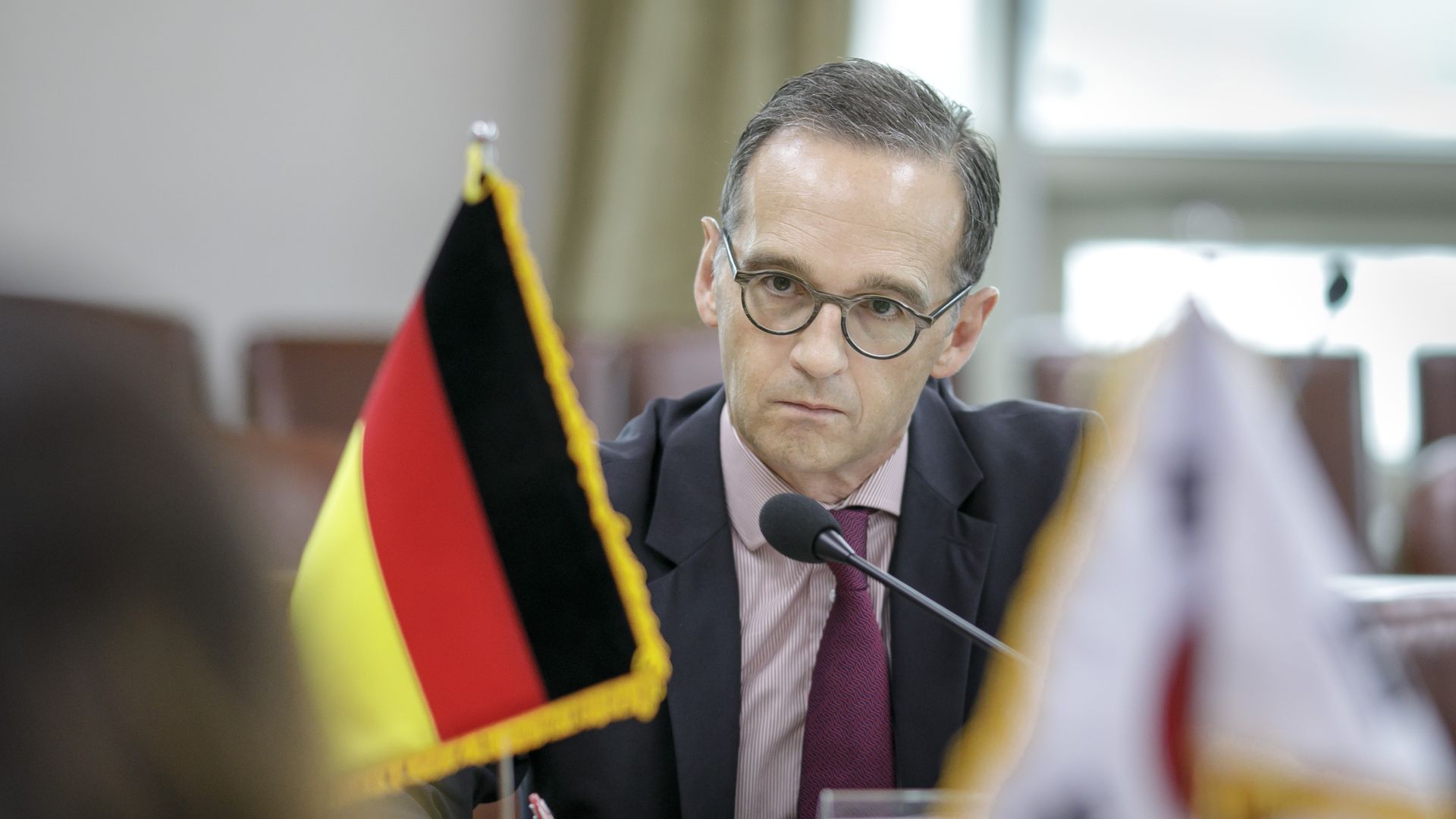
Germany's foreign minister Heiko Maas urged Europe to rethink its partnership with the U.S. in an op-ed in German newspaper Handelsblatt, calling for the establishment of independent payment channels in response to the Trump administration's unilateral withdrawal from the Iran deal.
The big picture: Later this year, the U.S. is expected to cut Iran off from SWIFT, an essential financial network that connects more than 11,000 banks around the world and allows countries to facilitate payments abroad. Maas' call to circumvent the system in order to preserve the Iran deal signals growing tensions in the alliance, recently aggravated by the Trump administration's rejection of a joint European request to be exempted from sanctions.
Michael Cohen's lawyer Lanny Davis said on MSNBC Wednesday that Cohen has information that would be "of interest" to Special Counsel Robert Mueller regarding "knowledge about a conspiracy to corrupt American democracy by the Russians and a failure to report that knowledge."
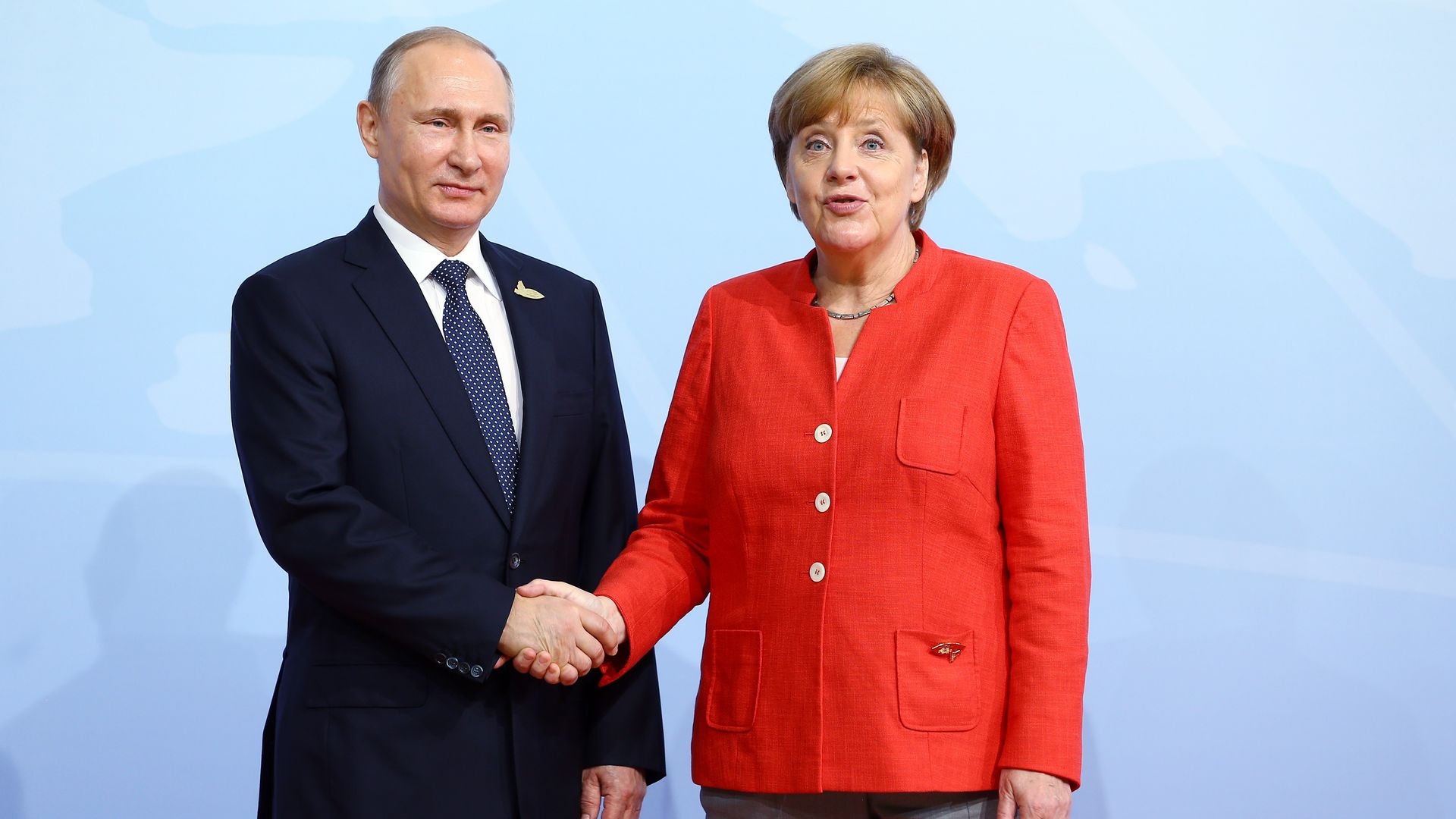
The polarized state of U.S. politics extends to foreign leaders, according to new data from Gallup. German Chancellor Angela Merkel, for example, has widespread approval among Democrats, but just a 27% favorable rate among Republicans — on par with Russian President Vladimir Putin.
Between the lines: Merkel’s approval with both parties would likely be higher, but for the fact that 25% of Americans said they’d never heard of her, while 10% said they had no opinion.
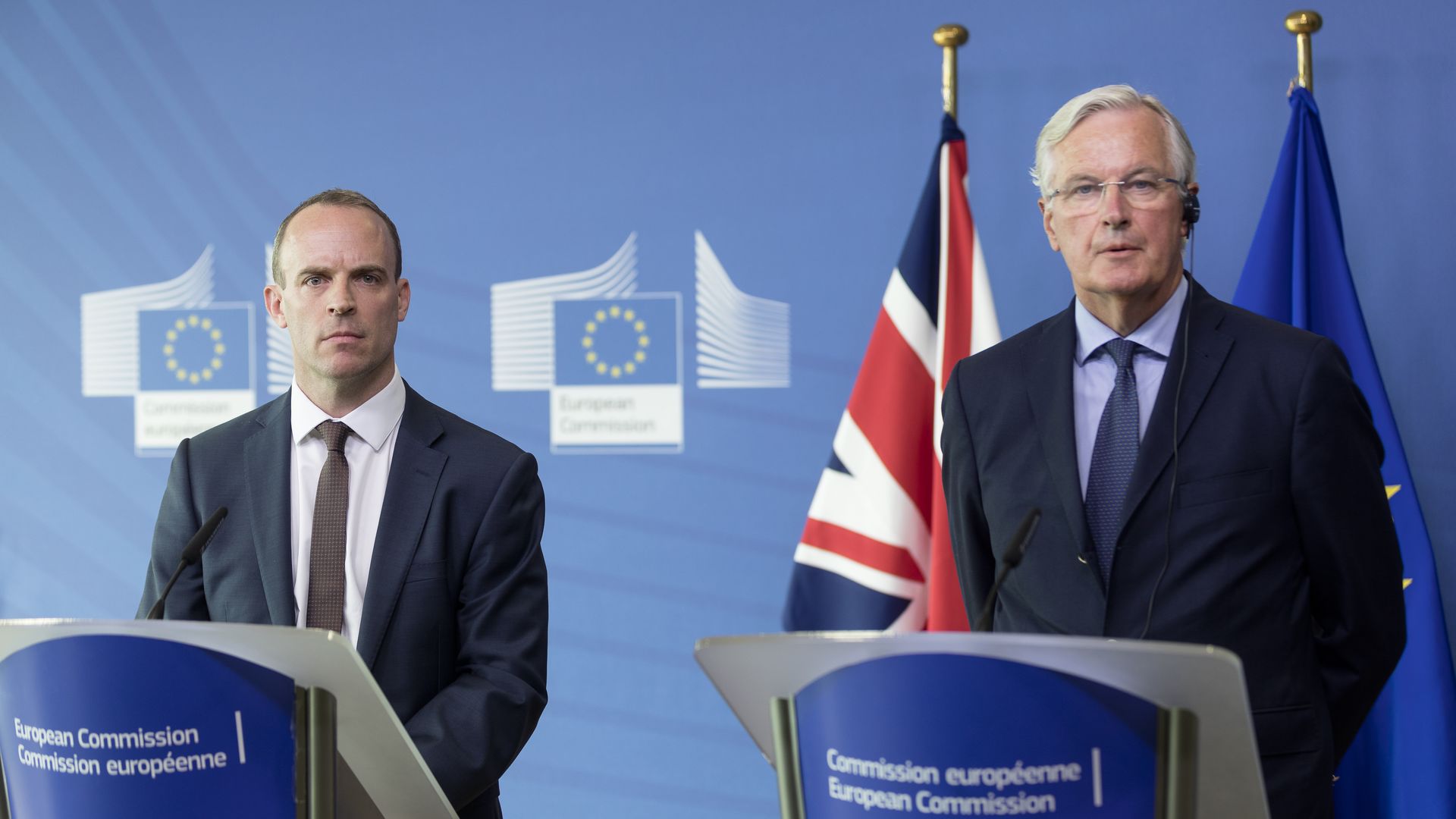
Negotiations between the U.K. and the European Union on a Brexit withdrawal treaty are not expected to be wrapped up by the quarterly EU summit on Oct. 18, which had been treated as an informal deadline for a completed deal, reports Reuters.
Why it matters: Questions about trade ties and the Irish border continue to be sticking points for Brexit negotiators in both London and Brussels, with diplomats telling Reuters that talks could slip into November and possibly December. Though EU chief negotiator Michel Barnier and U.K. Brexit chief Dominic Raab remain publicly optimistic about reaching an agreement, coming up empty-handed after the last EU meeting of the year on Dec. 18 would almost certainly lead to a "no deal" scenario.
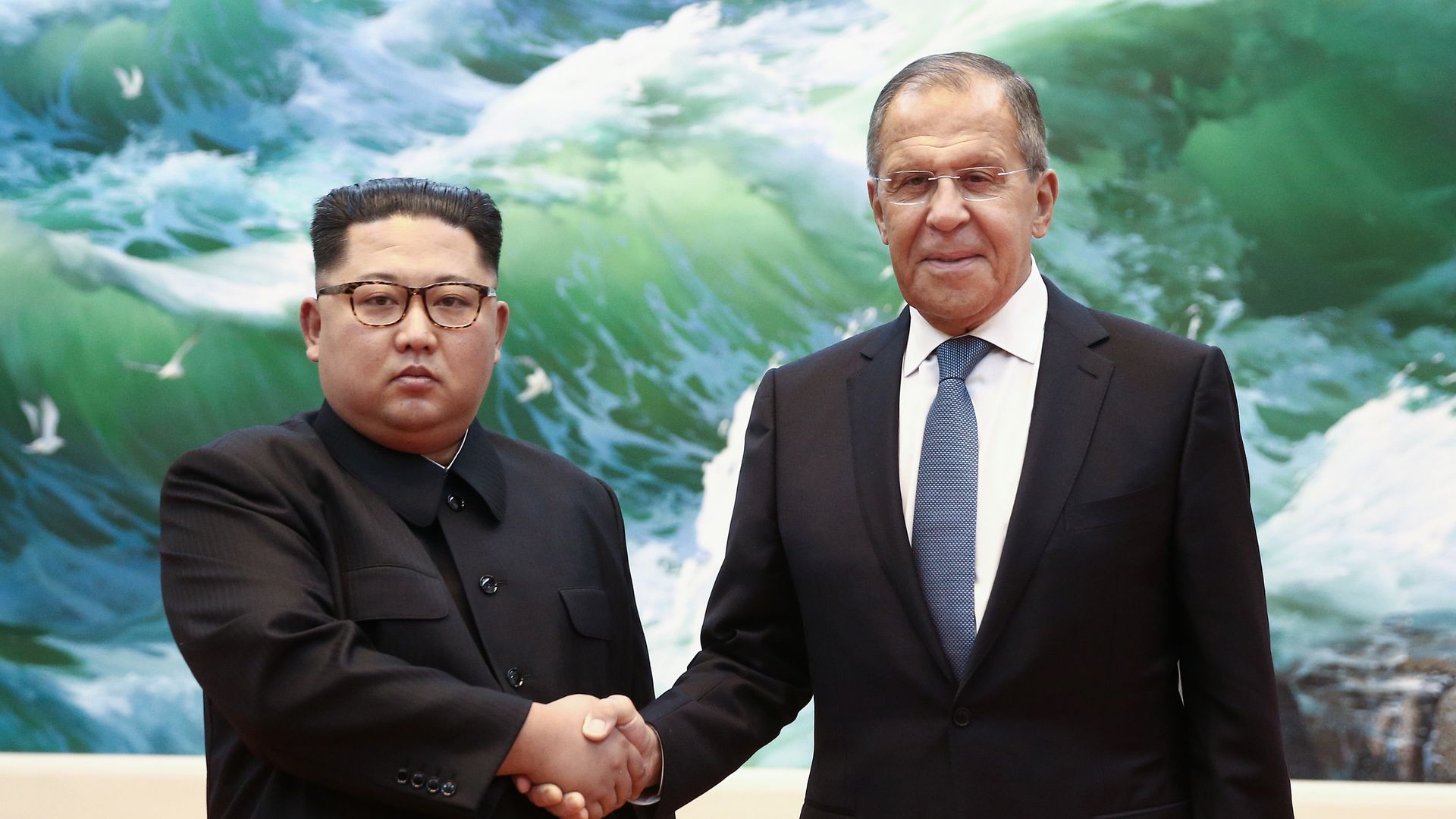
The details: The cyber-related designations target two firms and two individuals that tried to circumvent previous sanctions by purchasing underwater and diving equipment for Russian government agencies, including the FSB, the Russian domestic intelligence service. The other designations target two Russian companies and six vessels that engaged in trade with North Korean ships, also in violation of existing sanctions.
Just 15% of Russians believe the Kremlin interfered in the 2016 U.S. election, according to a new report from Pew, while 85% believe the U.S. government interferes in the domestic affairs of other countries.
Reproduced from Spring 2018 Pew Global Attitudes Survey, Q68a-3; Note: Survey of 1,000 Russian adults with a ±4.4 percentage point margin of error; Chart: Axios Visuals
Why it matters: The report's findings underscore feelings of suspicion toward the West held not just by members of the Kremlin, but by a significant portion of the Russian population itself. 80% of Russians view NATO as a military threat, while 82% believe U.S. sanctions are impacting the economy.
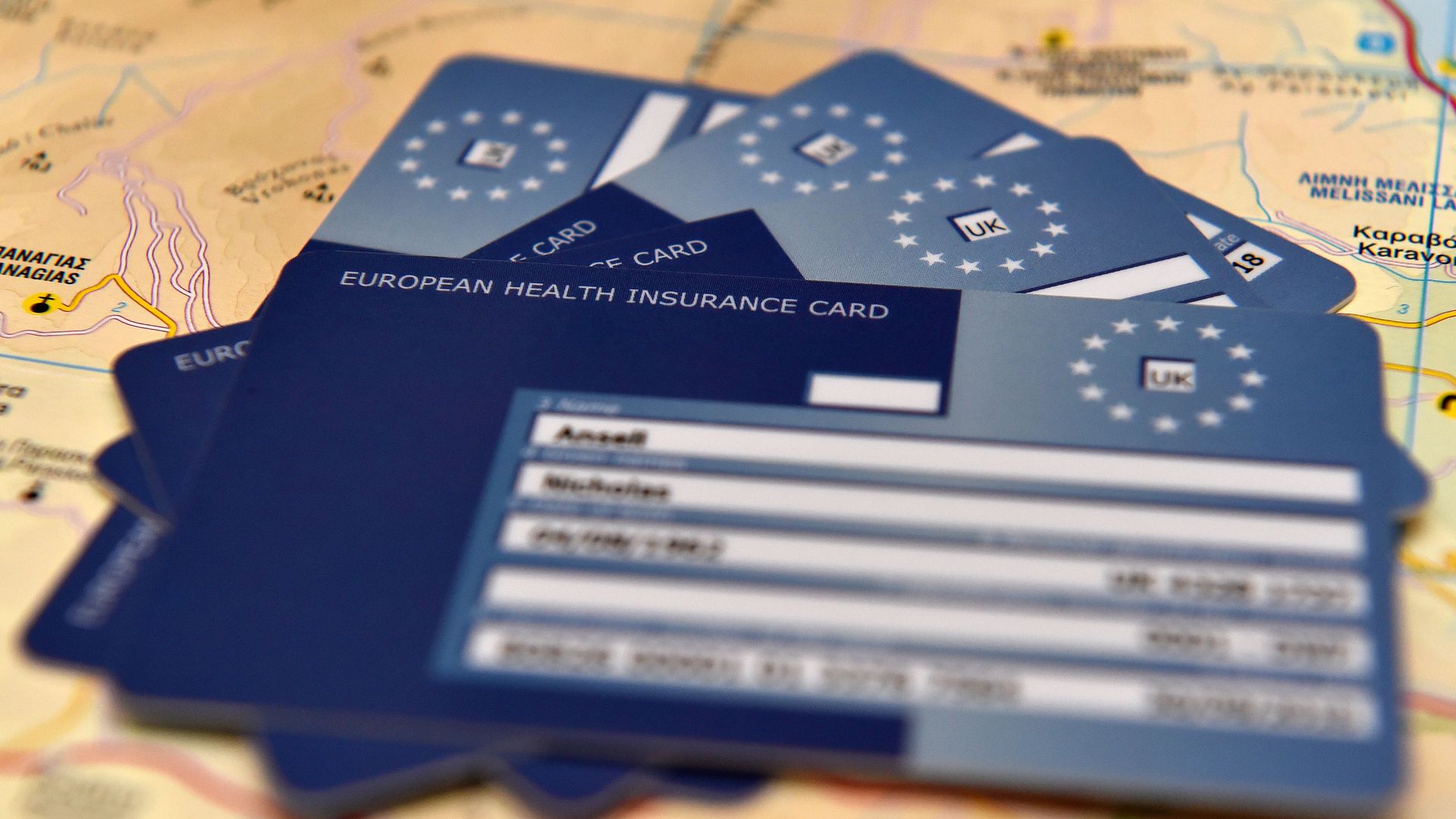
In the event that the United Kingdom and the European Union fail to reach a deal on Brexit, poor government planning could result in hospitals facing shortages in medicine and medical devices, the trade association for the National Health Service warned in an email obtained by The Times.
The big picture: The increasingly likely scenario that the U.K. and the EU won't come to an agreement on their customs and trade relationship — among the last, but most contentious issues left to hammer out — could threaten “the entire supply chain of pharmaceuticals." According to The Guardian, NHS provides more than 1 billion items through community pharmacies each year, many of which come from outside the country. The U.K. has some domestic manufacturing capacity, but not nearly enough to meet the population's full medical demands.
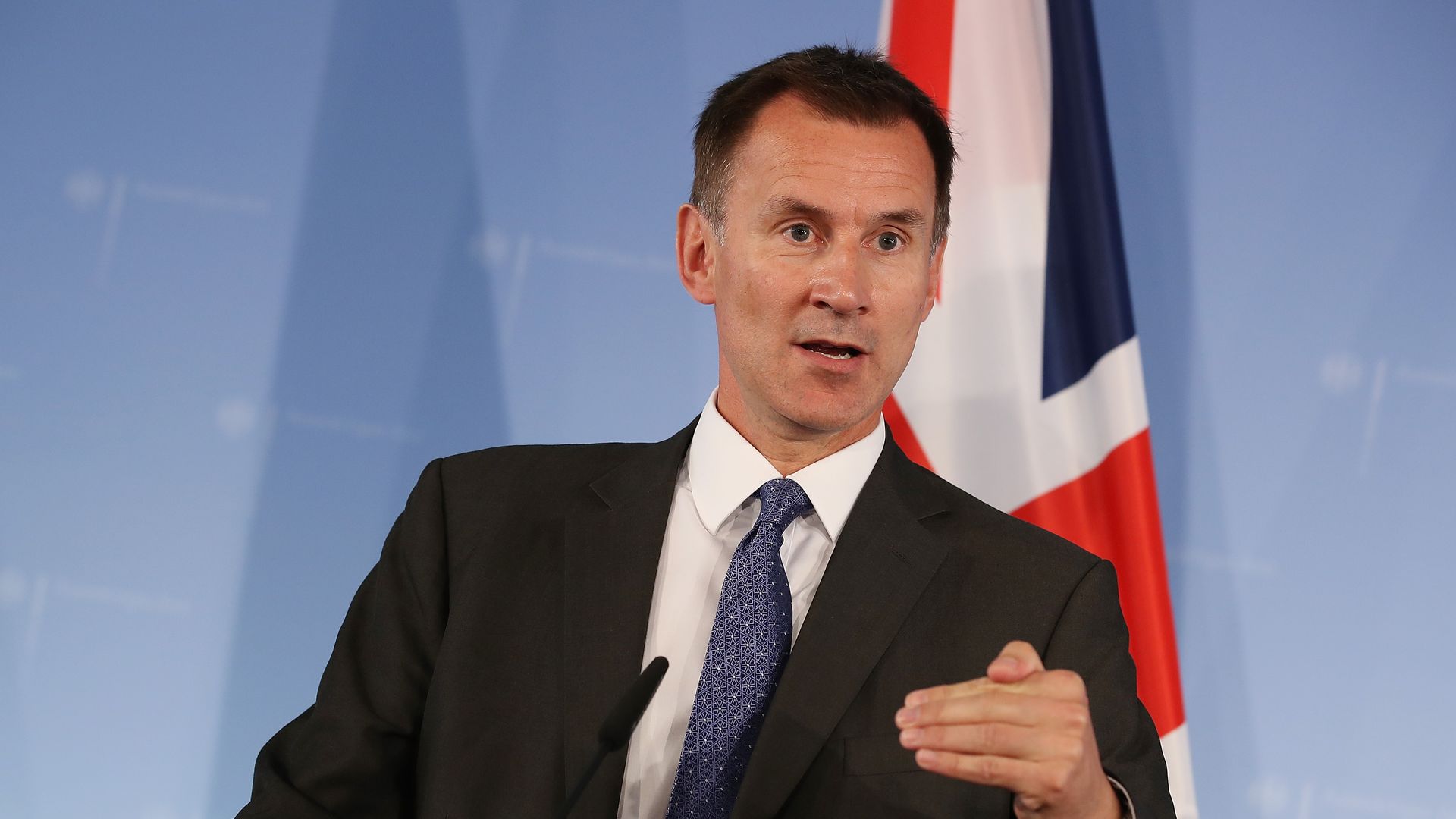
To kick off his first visit to the U.S. Tuesday, British Foreign Secretary Jeremy Hunt will call on Europe to match the Trump administration's freshly imposed sanctions on Russia in response to the Novichok poisoning of Sergei Skripal and his daughter in the U.K., per the BBC.
What we're watching: Hunt's speech will emphasize Western solidarity against Russia's "malign behavior" around the world, including its attempts to interfere in foreign elections. According to prepared remarks, he will say: "Russia’s foreign policy under President Putin has made the world a more dangerous place." Hunt will also meet with Secretary of State Mike Pompeo and the UN Security Council during his three-day visit.
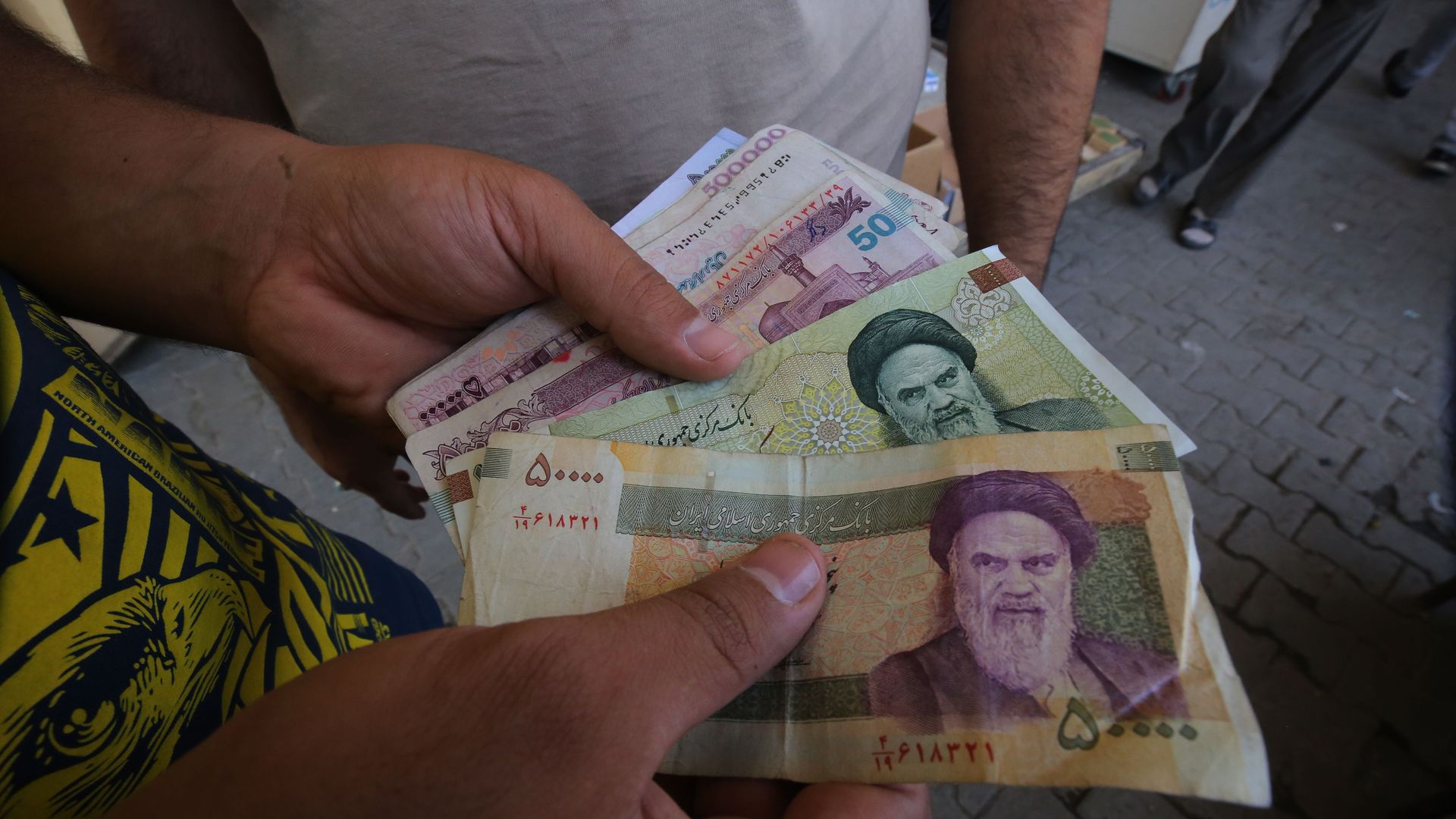
An Iraqi delegation will travel to Washington to ask the Trump administration to allow it to ignore some sanctions against Iran, its neighbor and close trading partner, Reuters reports.
Why it matters: In addition to being a strategic U.S. ally, Iraq imports about $12 billion in oil and $6 billion in goods from Iran, including food and agricultural products crucial to its political stability. The U.S. has said it will offer limited exemptions only for human rights and national security reasons, having previously rejected a joint European request for exemptions in July.