Tuesday's world stories

America's polarized views of foreign leaders
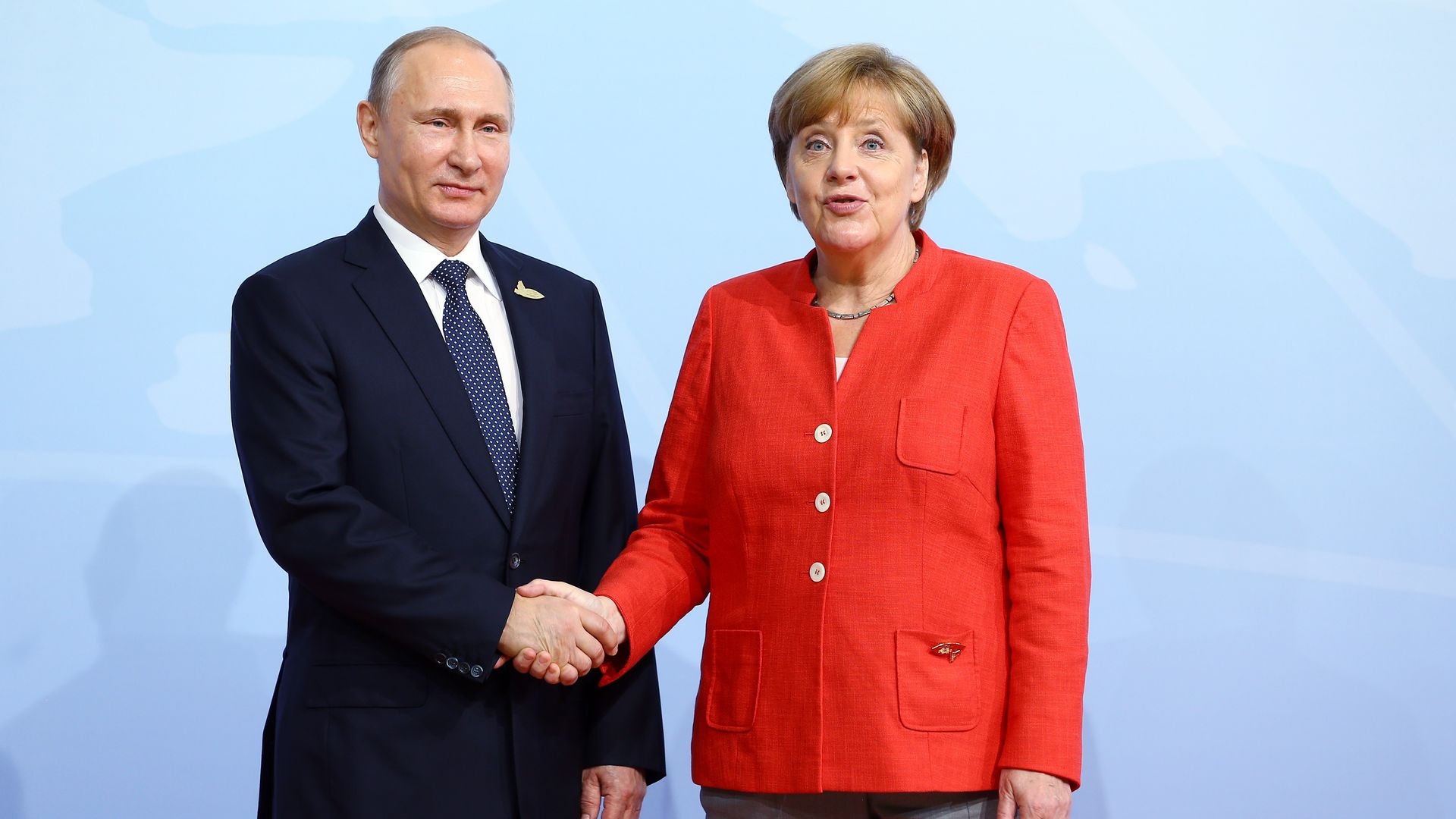
The polarized state of U.S. politics extends to foreign leaders, according to new data from Gallup. German Chancellor Angela Merkel, for example, has widespread approval among Democrats, but just a 27% favorable rate among Republicans — on par with Russian President Vladimir Putin.
Between the lines: Merkel’s approval with both parties would likely be higher, but for the fact that 25% of Americans said they’d never heard of her, while 10% said they had no opinion.

Brexit deal not expected by October target
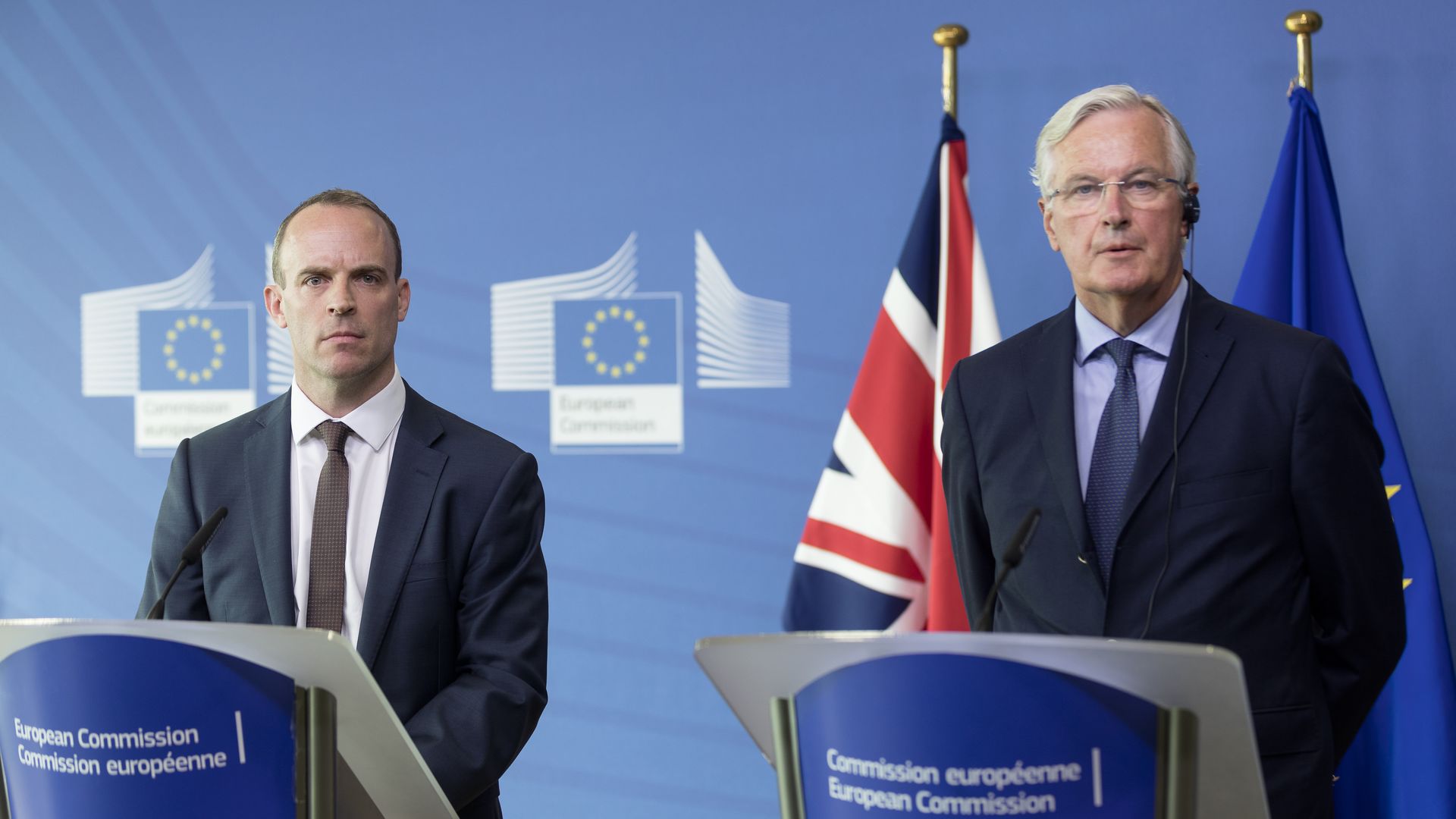
Negotiations between the U.K. and the European Union on a Brexit withdrawal treaty are not expected to be wrapped up by the quarterly EU summit on Oct. 18, which had been treated as an informal deadline for a completed deal, reports Reuters.
Why it matters: Questions about trade ties and the Irish border continue to be sticking points for Brexit negotiators in both London and Brussels, with diplomats telling Reuters that talks could slip into November and possibly December. Though EU chief negotiator Michel Barnier and U.K. Brexit chief Dominic Raab remain publicly optimistic about reaching an agreement, coming up empty-handed after the last EU meeting of the year on Dec. 18 would almost certainly lead to a "no deal" scenario.

Treasury announces two new rounds of Russia sanctions
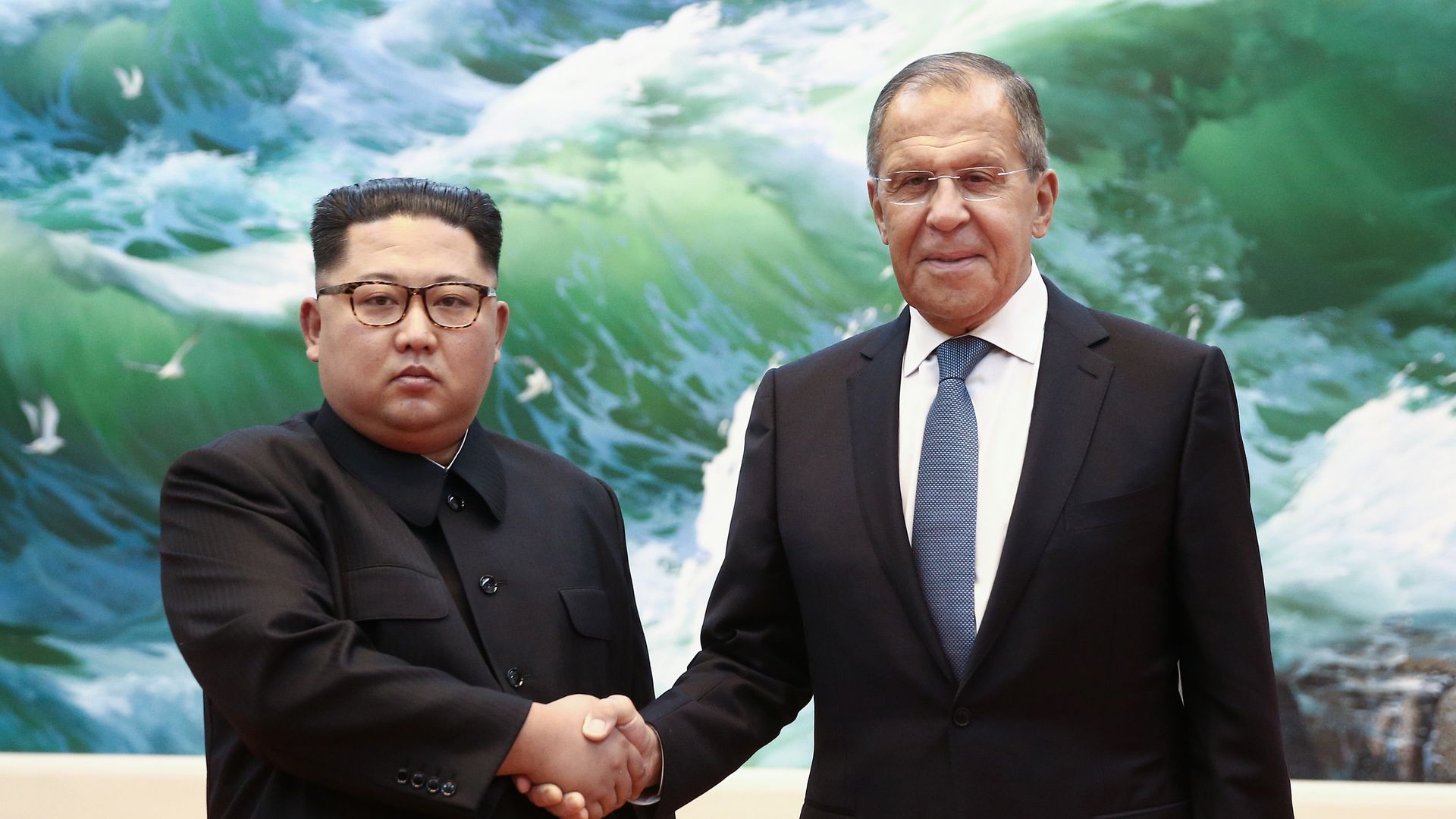
The Treasury Department announced two new rounds of sanctions today against Russian companies and individuals for malicious cyber-enabled activity and for violating trade prohibitions with North Korea.
The details: The cyber-related designations target two firms and two individuals that tried to circumvent previous sanctions by purchasing underwater and diving equipment for Russian government agencies, including the FSB, the Russian domestic intelligence service. The other designations target two Russian companies and six vessels that engaged in trade with North Korean ships, also in violation of existing sanctions.

Only 15% of Russians believe Kremlin interfered in 2016 U.S. election
Just 15% of Russians believe the Kremlin interfered in the 2016 U.S. election, according to a new report from Pew, while 85% believe the U.S. government interferes in the domestic affairs of other countries.


Why it matters: The report's findings underscore feelings of suspicion toward the West held not just by members of the Kremlin, but by a significant portion of the Russian population itself. 80% of Russians view NATO as a military threat, while 82% believe U.S. sanctions are impacting the economy.
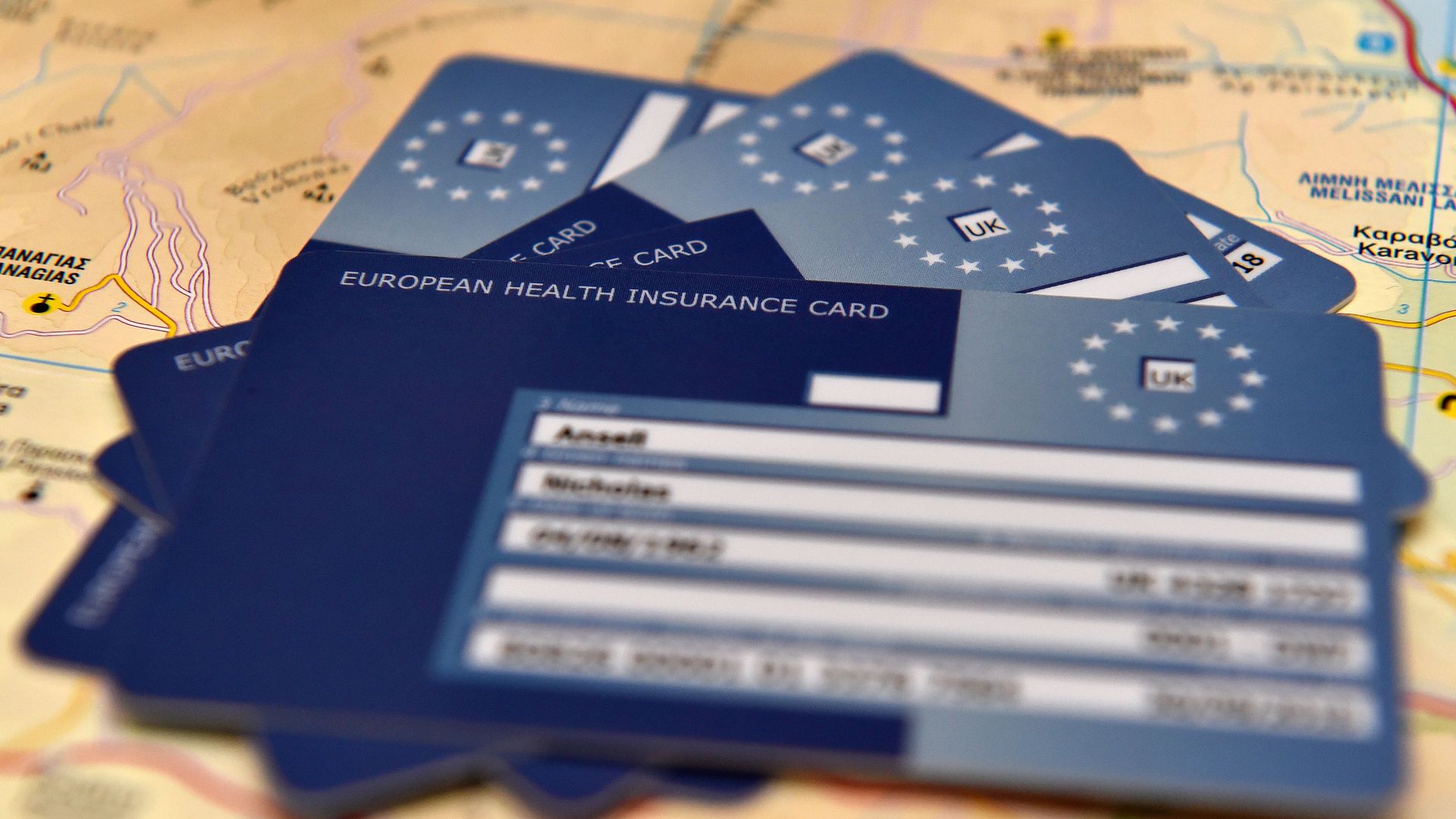
"No deal" Brexit threatens nationwide medical shortages
In the event that the United Kingdom and the European Union fail to reach a deal on Brexit, poor government planning could result in hospitals facing shortages in medicine and medical devices, the trade association for the National Health Service warned in an email obtained by The Times.
The big picture: The increasingly likely scenario that the U.K. and the EU won't come to an agreement on their customs and trade relationship — among the last, but most contentious issues left to hammer out — could threaten “the entire supply chain of pharmaceuticals." According to The Guardian, NHS provides more than 1 billion items through community pharmacies each year, many of which come from outside the country. The U.K. has some domestic manufacturing capacity, but not nearly enough to meet the population's full medical demands.

U.K. foreign secretary will call on Europe to match Trump's Russia sanctions
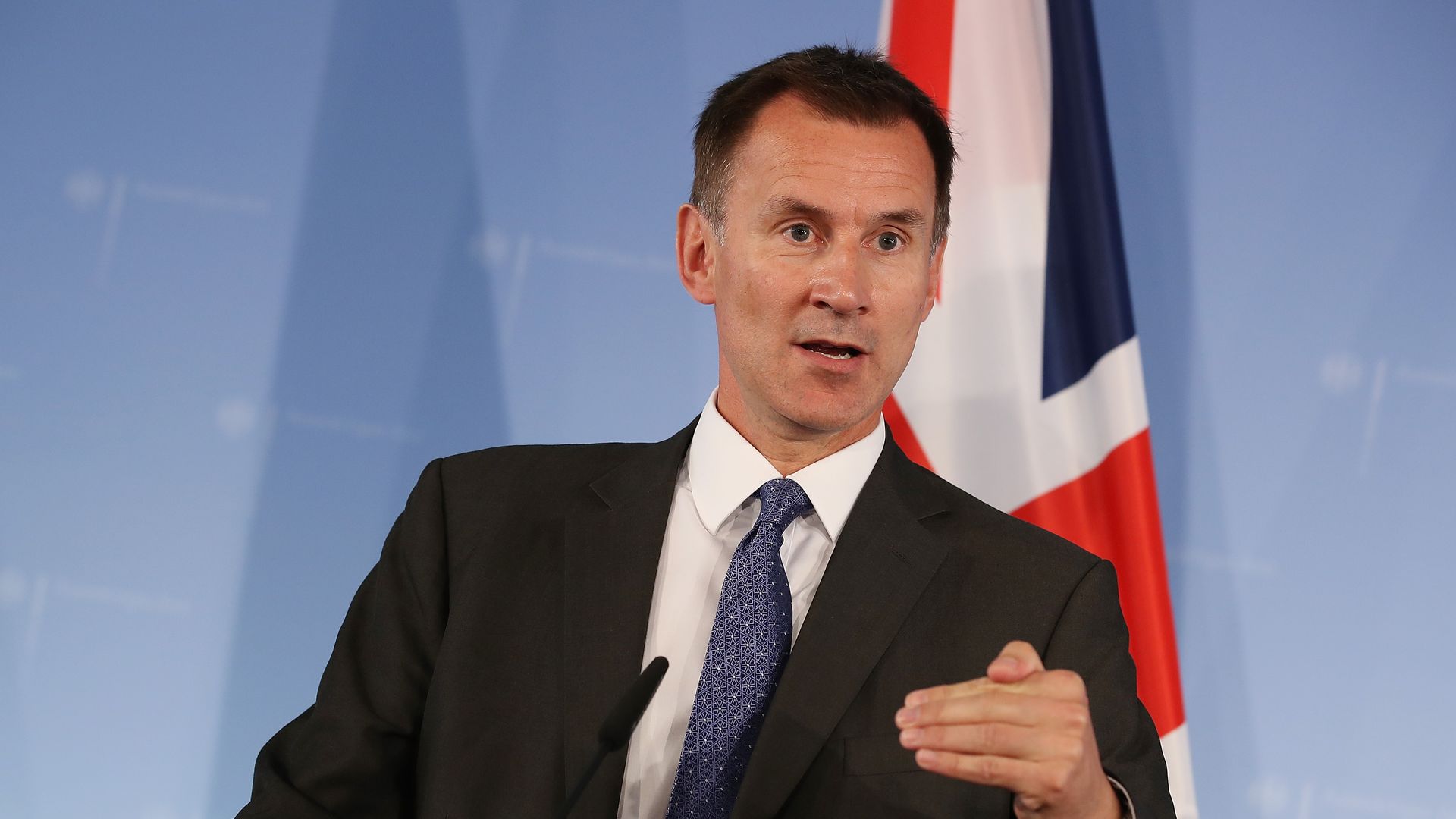
To kick off his first visit to the U.S. Tuesday, British Foreign Secretary Jeremy Hunt will call on Europe to match the Trump administration's freshly imposed sanctions on Russia in response to the Novichok poisoning of Sergei Skripal and his daughter in the U.K., per the BBC.
What we're watching: Hunt's speech will emphasize Western solidarity against Russia's "malign behavior" around the world, including its attempts to interfere in foreign elections. According to prepared remarks, he will say: "Russia’s foreign policy under President Putin has made the world a more dangerous place." Hunt will also meet with Secretary of State Mike Pompeo and the UN Security Council during his three-day visit.

Report: Iraq planning to ask U.S. for exemptions on Iran sanctions
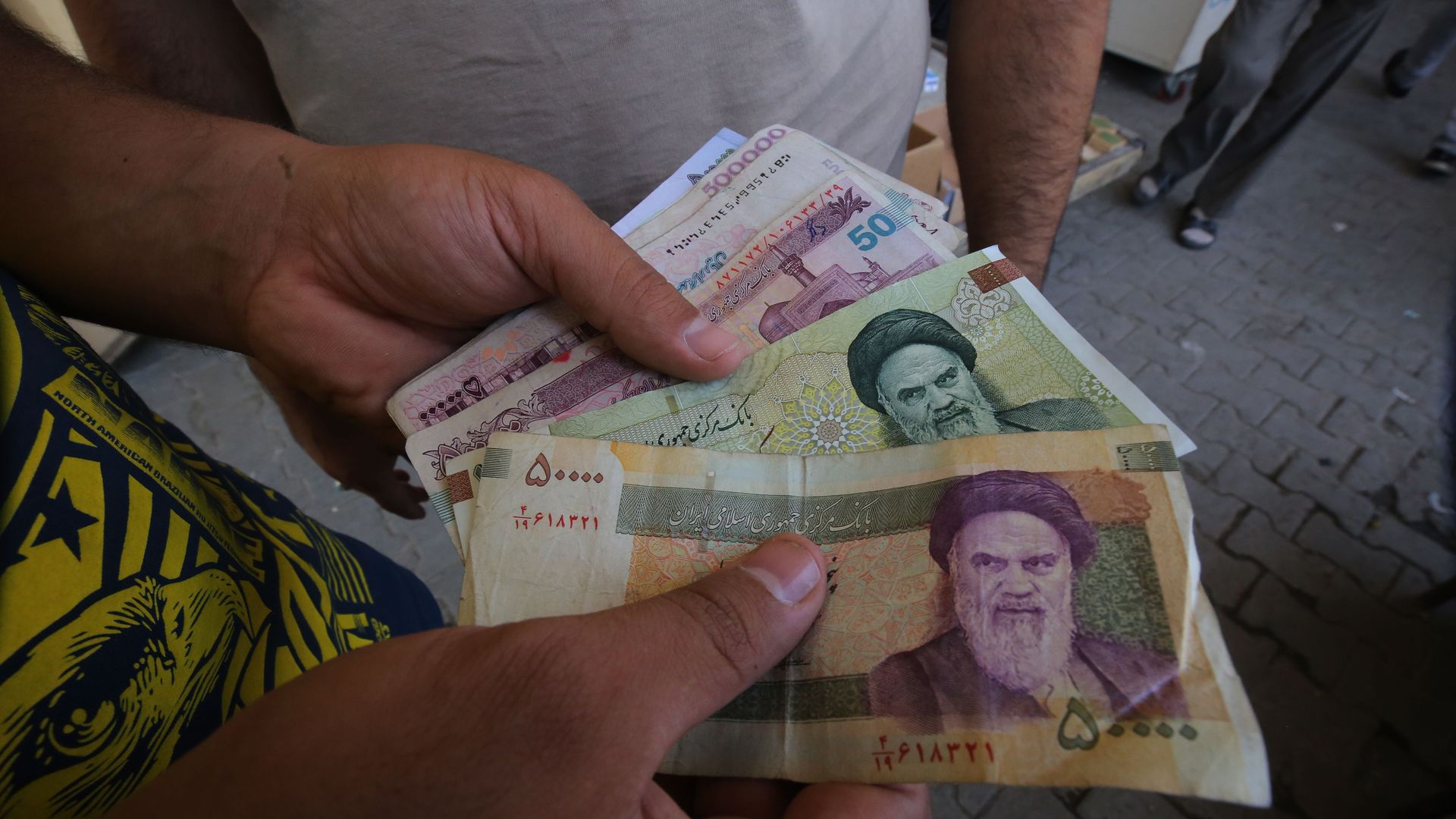
An Iraqi delegation will travel to Washington to ask the Trump administration to allow it to ignore some sanctions against Iran, its neighbor and close trading partner, Reuters reports.
Why it matters: In addition to being a strategic U.S. ally, Iraq imports about $12 billion in oil and $6 billion in goods from Iran, including food and agricultural products crucial to its political stability. The U.S. has said it will offer limited exemptions only for human rights and national security reasons, having previously rejected a joint European request for exemptions in July.

In Europe, fears loom that the U.S. is seeking regime collapse in Iran
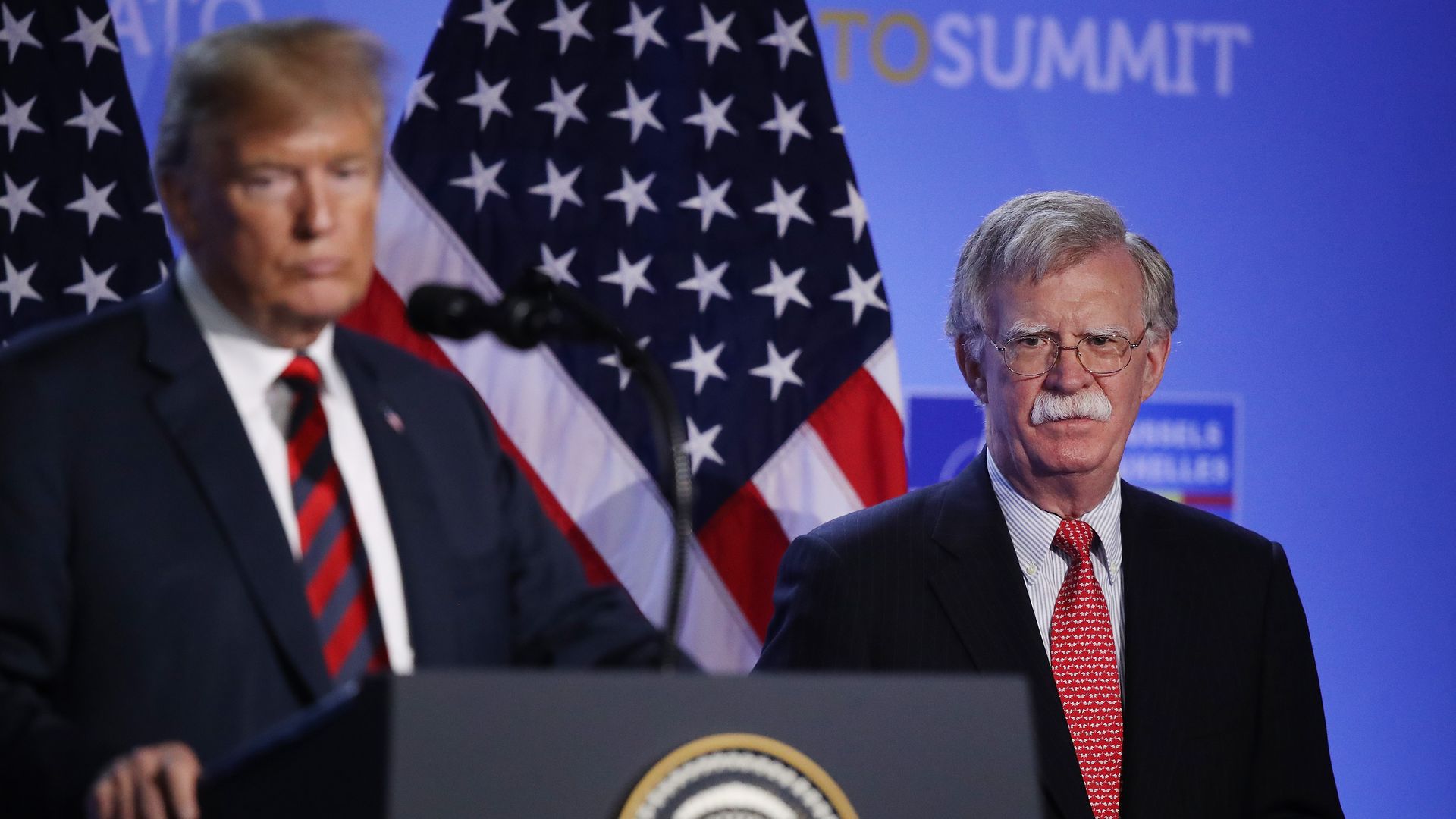
European analysts and diplomats alike are increasingly concerned that the Trump administration might be pursuing a policy of destabilizing Iran. The administration's abrogation of the Iran nuclear deal, new economic sanctions and explicit encouragement of continued protests in Iran have contributed to the ongoing unrest there, which has begun to seem a goal in itself.
The big picture: The combination of Secretary of State Pompeo’s demands and the massive sanctions have left Iran with no ability to negotiate. And since Trump likely isn't seeking military confrontation with Iran (despite his bombastic rhetoric) or Iraq-style regime change, many in Europe are worried that Washington’s policy might be geared toward a third scenario: regime collapse.

Response to Russian threat varies widely in Europe
A report from the Czech-based European Values think tank evaluates all 28 European Union countries based on their governments' attitudes, policies, and strategic responses to the Russian threat, following the Kremlin's recent influence operations throughout the West.


The big picture: The "Kremlin Watch" report grouped countries into five categories based on their acknowledgement of the threat and governmental countermeasures. The Baltic nations of Estonia, Latvia and Lithuania, which declared independence from the Soviet Union in 1991, as well as the U.K. and Sweden, were labeled "full-scale defenders." Greece and Cyprus were found to have shown "no meaningful resistance to Russia's subversive activities."

Trump envoy held secret meeting with Palestinian President's son
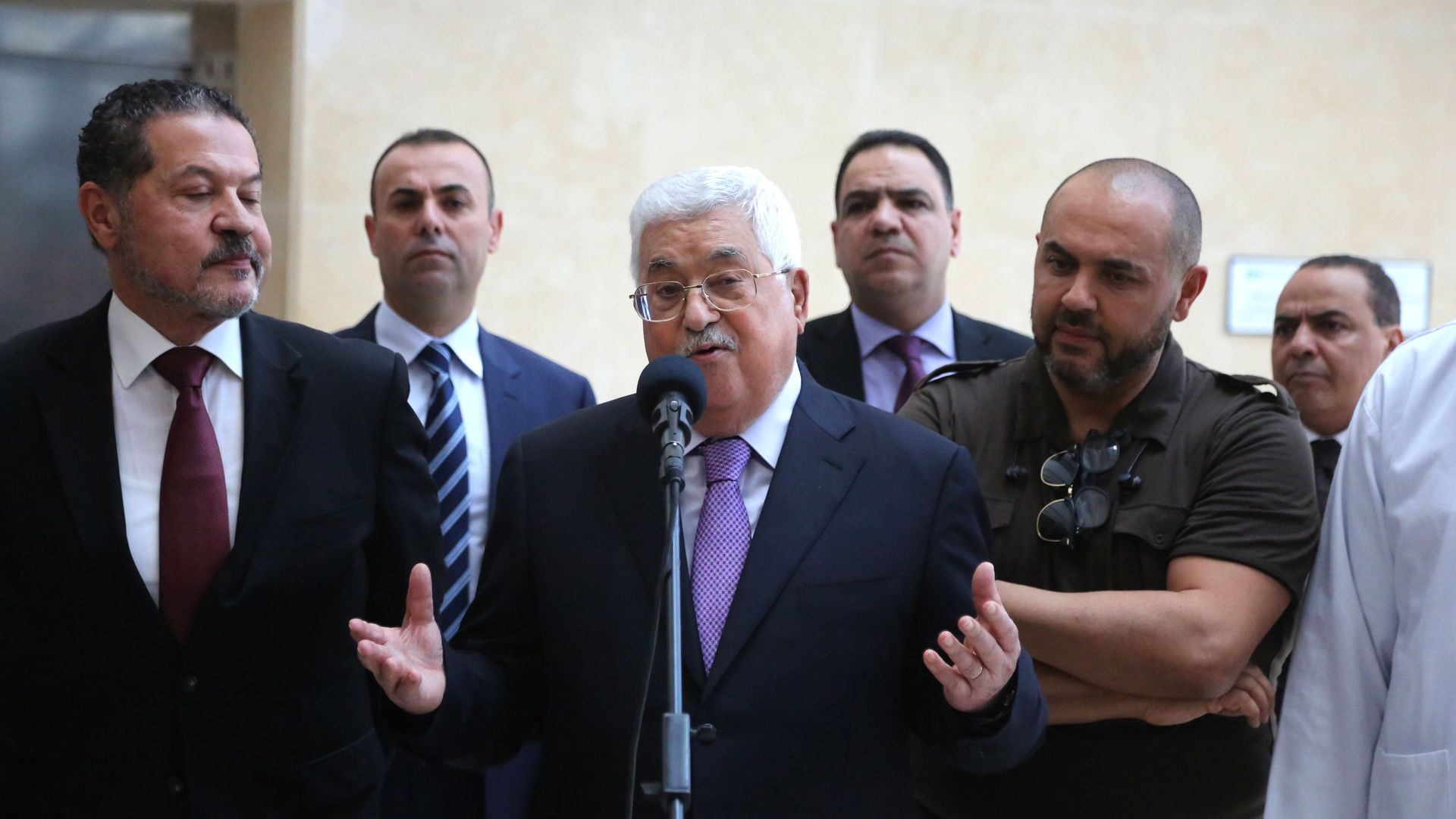
President Trump's special envoy for Middle East peace, Jason Greenblatt, held a secret meeting with Palestinian President Mahmoud Abbas' son last September on the margins of the UN General Assembly in New York, Israeli officials tell me.
Why it matters: They met to discuss the White House efforts to get a deal between Israel and the Palestinians. The Israeli officials say the undisclosed meeting was an attempt by the White House to strengthen ties with Abbas' inner circle and potentially even create channels to promote the Trump administration's peace efforts in the future.
Trump challenges John Brennan to sue him over security clearances
President Trump responded in a Monday morning tweet to former CIA Director John Brennan's statement on NBC's "Meet the Press" that he would consider suing Trump to prevent him from revoking the security clearances of other former intelligence officials.
"I hope John Brennan, the worst CIA Director in our country’s history, brings a lawsuit. It will then be very easy to get all of his records, texts, emails and documents to show not only the poor job he did, but how he was involved with the Mueller Rigged Witch Hunt. He won’t sue!"
Go deeper: Watch a clip from Brennan's "Meet the Press" appearance.