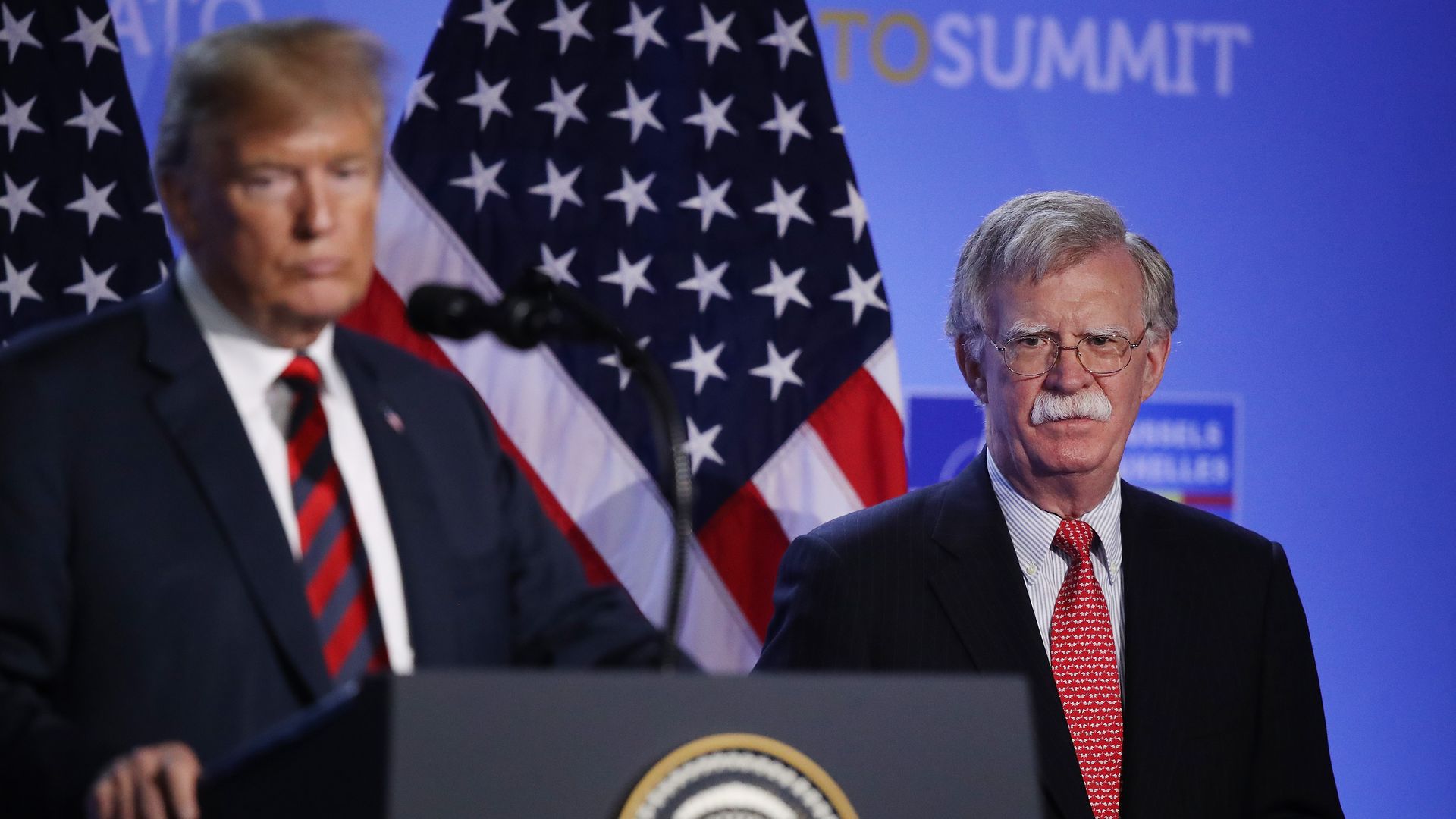
European analysts and diplomats alike are increasingly concerned that the Trump administration might be pursuing a policy of destabilizing Iran. The administration's abrogation of the Iran nuclear deal, new economic sanctions and explicit encouragement of continued protests in Iran have contributed to the ongoing unrest there, which has begun to seem a goal in itself.
The big picture: The combination of Secretary of State Pompeo’s demands and the massive sanctions have left Iran with no ability to negotiate. And since Trump likely isn't seeking military confrontation with Iran (despite his bombastic rhetoric) or Iraq-style regime change, many in Europe are worried that Washington’s policy might be geared toward a third scenario: regime collapse.
A report from the Czech-based European Values think tank evaluates all 28 European Union countries based on their governments' attitudes, policies, and strategic responses to the Russian threat, following the Kremlin's recent influence operations throughout the West.
The big picture: The "Kremlin Watch" report grouped countries into five categories based on their acknowledgement of the threat and governmental countermeasures. The Baltic nations of Estonia, Latvia and Lithuania, which declared independence from the Soviet Union in 1991, as well as the U.K. and Sweden, were labeled "full-scale defenders." Greece and Cyprus were found to have shown "no meaningful resistance to Russia's subversive activities."
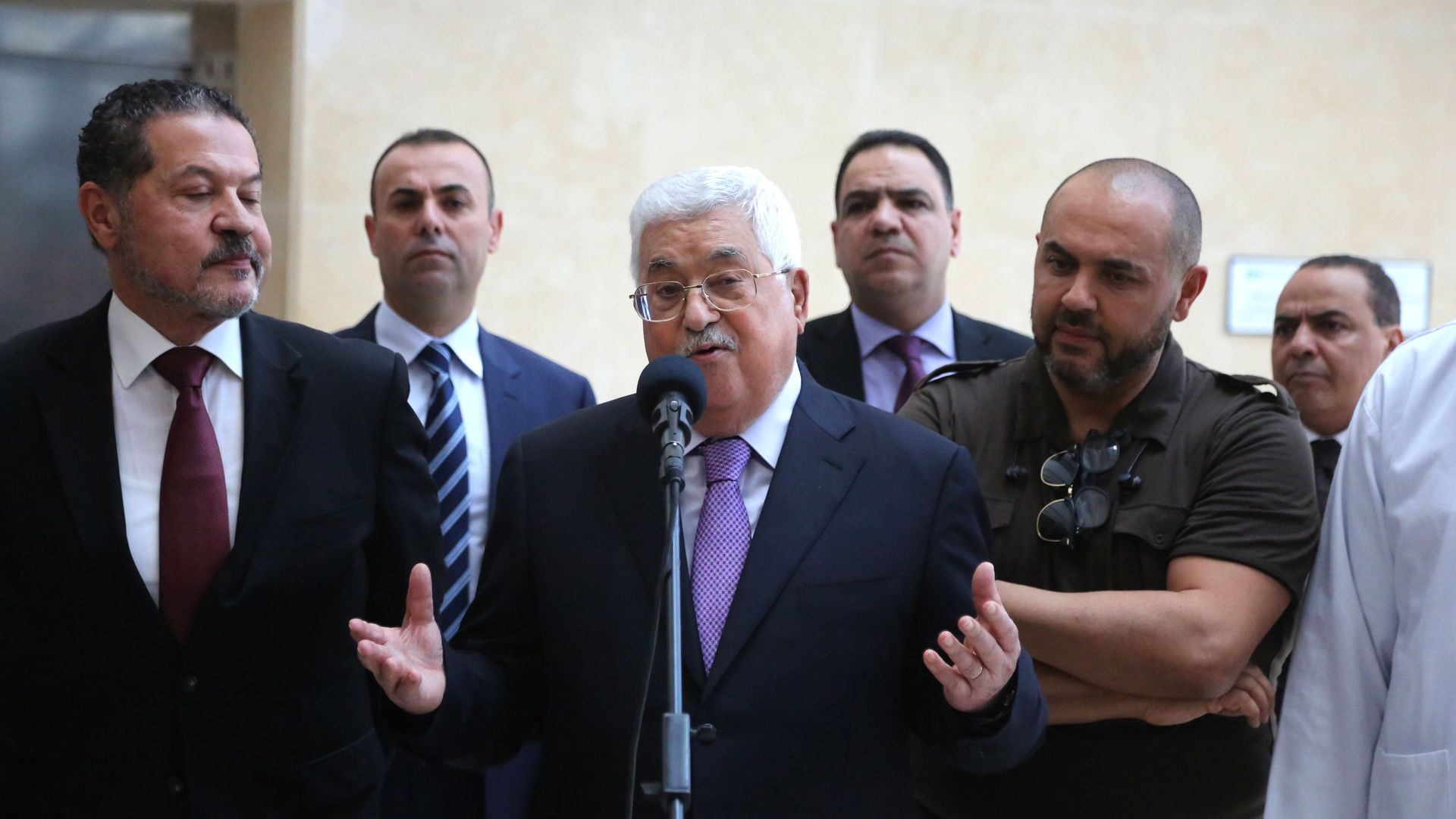
President Trump's special envoy for Middle East peace, Jason Greenblatt, held a secret meeting with Palestinian President Mahmoud Abbas' son last September on the margins of the UN General Assembly in New York, Israeli officials tell me.
Why it matters: They met to discuss the White House efforts to get a deal between Israel and the Palestinians. The Israeli officials say the undisclosed meeting was an attempt by the White House to strengthen ties with Abbas' inner circle and potentially even create channels to promote the Trump administration's peace efforts in the future.
President Trump responded in a Monday morning tweet to former CIA Director John Brennan's statement on NBC's "Meet the Press" that he would consider suing Trump to prevent him from revoking the security clearances of other former intelligence officials.
"I hope John Brennan, the worst CIA Director in our country’s history, brings a lawsuit. It will then be very easy to get all of his records, texts, emails and documents to show not only the poor job he did, but how he was involved with the Mueller Rigged Witch Hunt. He won’t sue!"
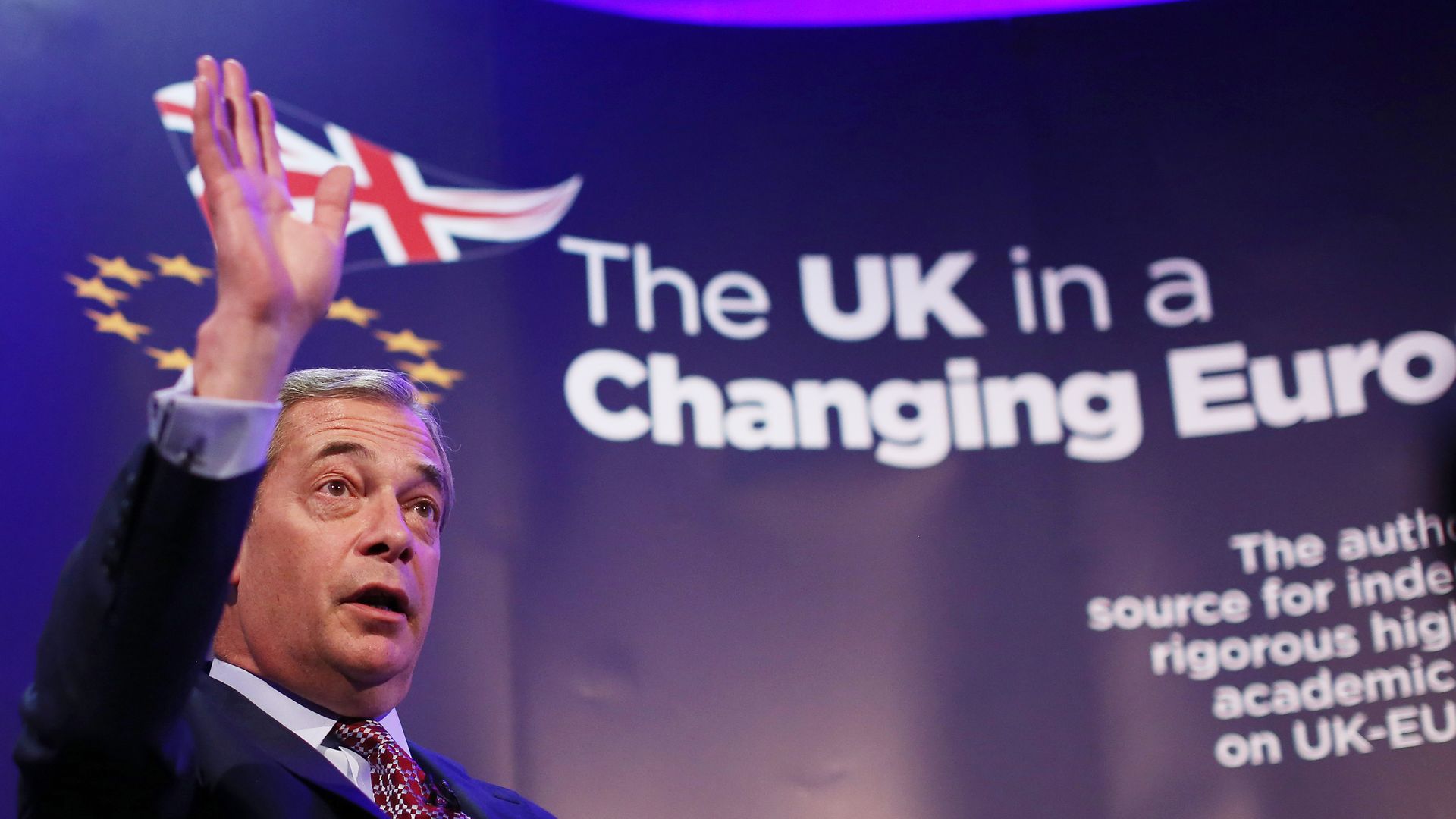
Nigel Farage, the British politician who became the face of the 2016 Brexit campaign, penned an op-ed in The Telegraph announcing he would join the Leave Means Leave campaign, which is dedicated to fighting against Theresa May's plan to maintain some form of political and economic ties to the European Union.
Why it matters: Farage's reemergence on the political scene comes as the U.K. and the EU struggle to negotiate the terms of a withdrawal treaty — and as many British constituencies that voted for Brexit appear to be changing their tune. Citing a need for leadership and unity against Theresa May's "fraudulent Chequers plan," Farage said he will travel across the country on a "battlebus" to help reengage voters and restore their faith in Brexit.
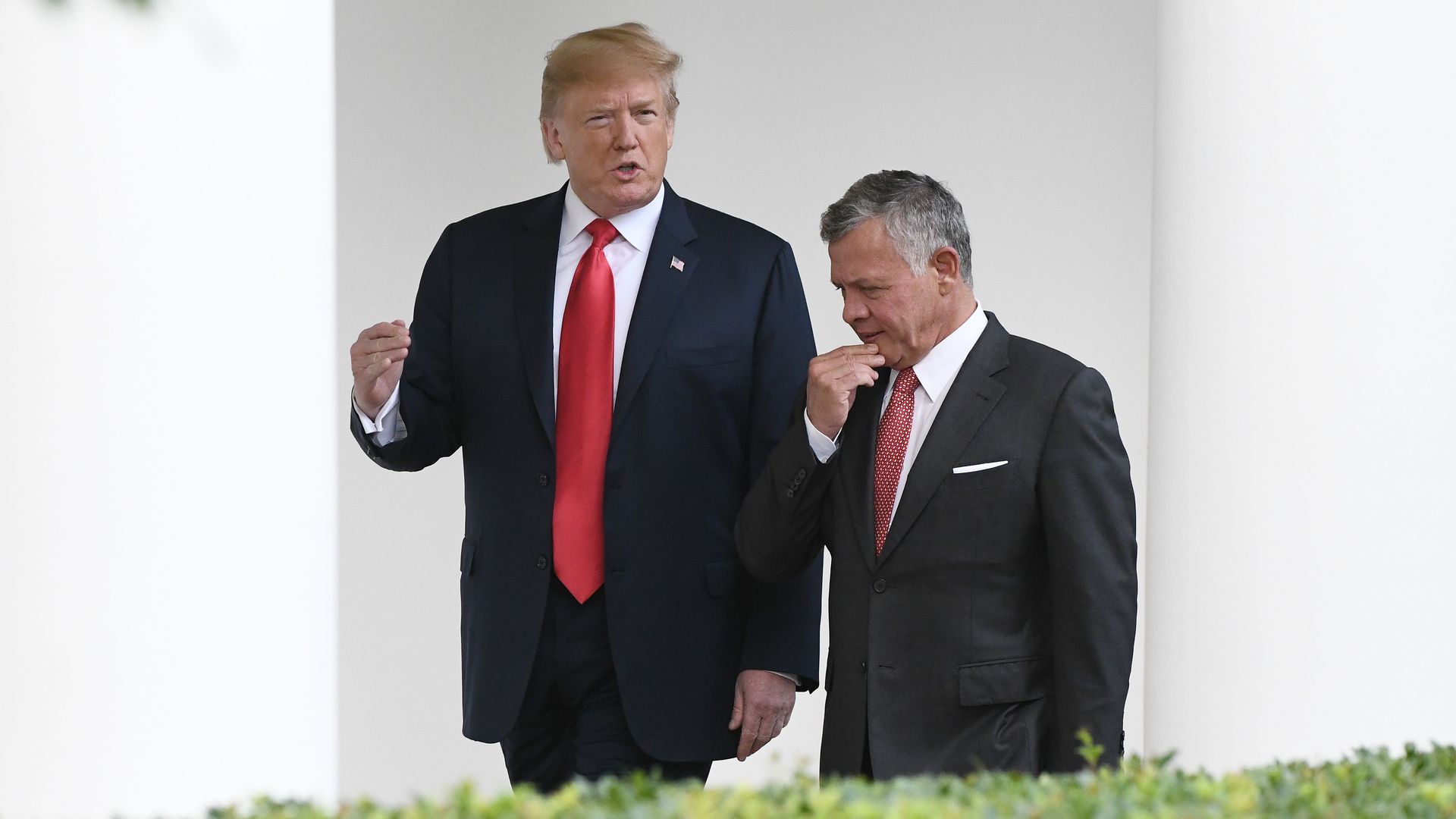
President Trump told King Abdullah of Jordan that a one-state solution to the Israeli-Palestinian conflict might lead in a few years to someone named Mohammed becoming prime minister of Israel, according to several sources briefed on the meeting.
Why it matters: The White House "peace team" is still discussing when and how to launch the Trump administration's peace plan. It's still unclear whether the plan is based on a two-state solution or on a different paradigm. Trump has said he would support whatever solution the parties can agree to. His remarks to the King of Jordan, made in their White House meeting on June 25, might suggest he thinks a one-state solution is a threat to the future of Israel as a Jewish state.