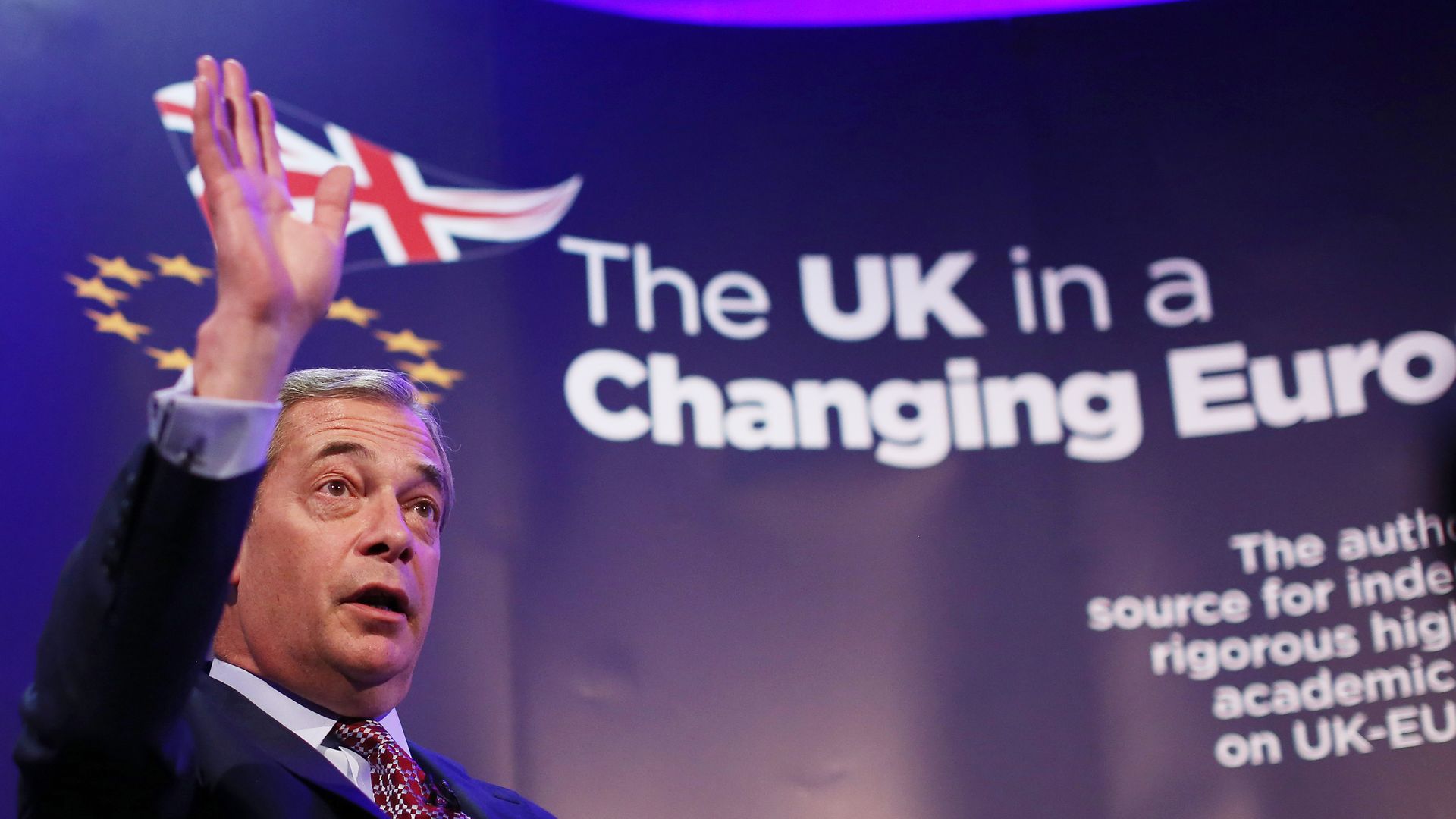
Nigel Farage, the British politician who became the face of the 2016 Brexit campaign, penned an op-ed in The Telegraph announcing he would join the Leave Means Leave campaign, which is dedicated to fighting against Theresa May's plan to maintain some form of political and economic ties to the European Union.
Why it matters: Farage's reemergence on the political scene comes as the U.K. and the EU struggle to negotiate the terms of a withdrawal treaty — and as many British constituencies that voted for Brexit appear to be changing their tune. Citing a need for leadership and unity against Theresa May's "fraudulent Chequers plan," Farage said he will travel across the country on a "battlebus" to help reengage voters and restore their faith in Brexit.
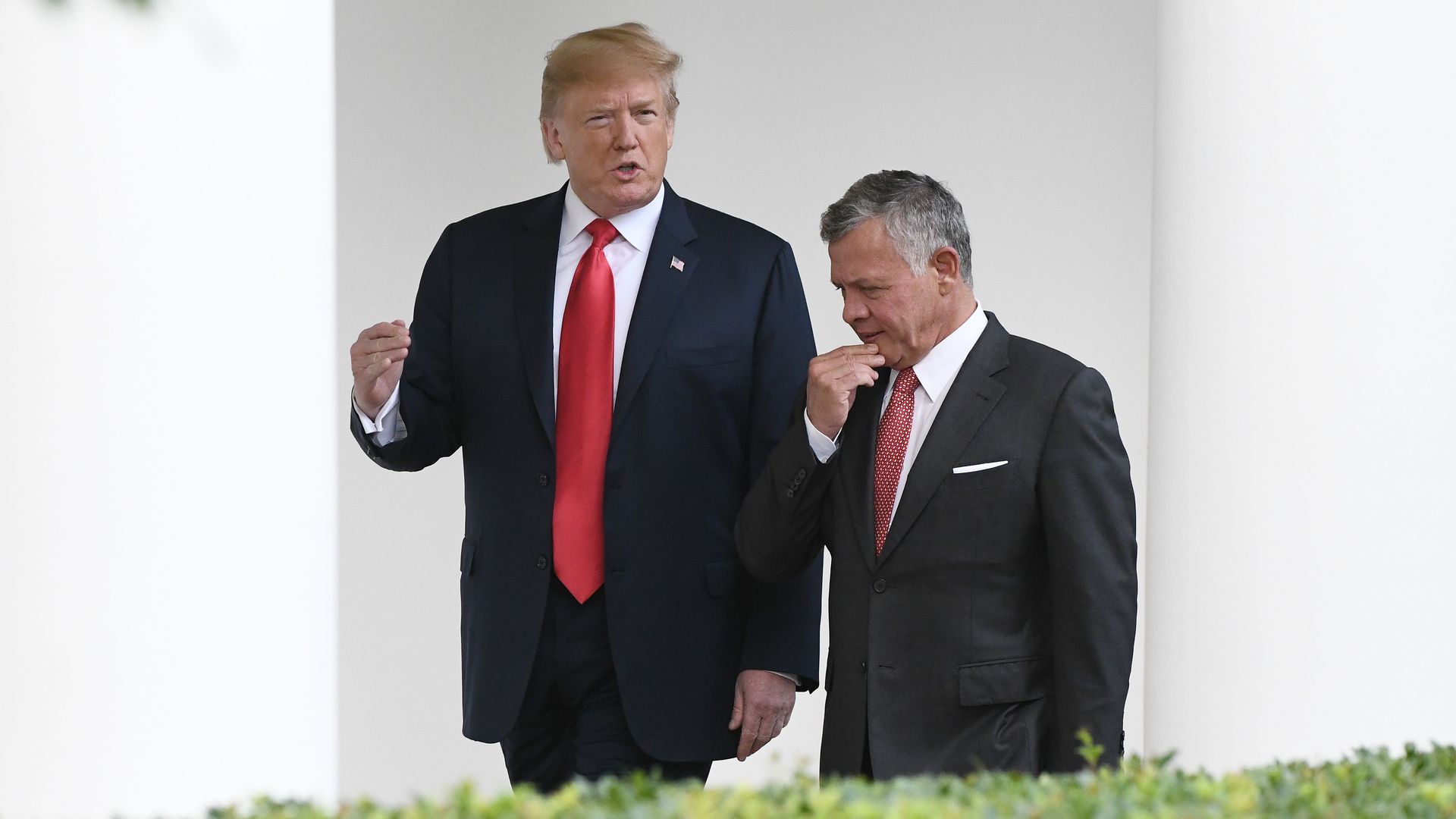
President Trump told King Abdullah of Jordan that a one-state solution to the Israeli-Palestinian conflict might lead in a few years to someone named Mohammed becoming prime minister of Israel, according to several sources briefed on the meeting.
Why it matters: The White House "peace team" is still discussing when and how to launch the Trump administration's peace plan. It's still unclear whether the plan is based on a two-state solution or on a different paradigm. Trump has said he would support whatever solution the parties can agree to. His remarks to the King of Jordan, made in their White House meeting on June 25, might suggest he thinks a one-state solution is a threat to the future of Israel as a Jewish state.
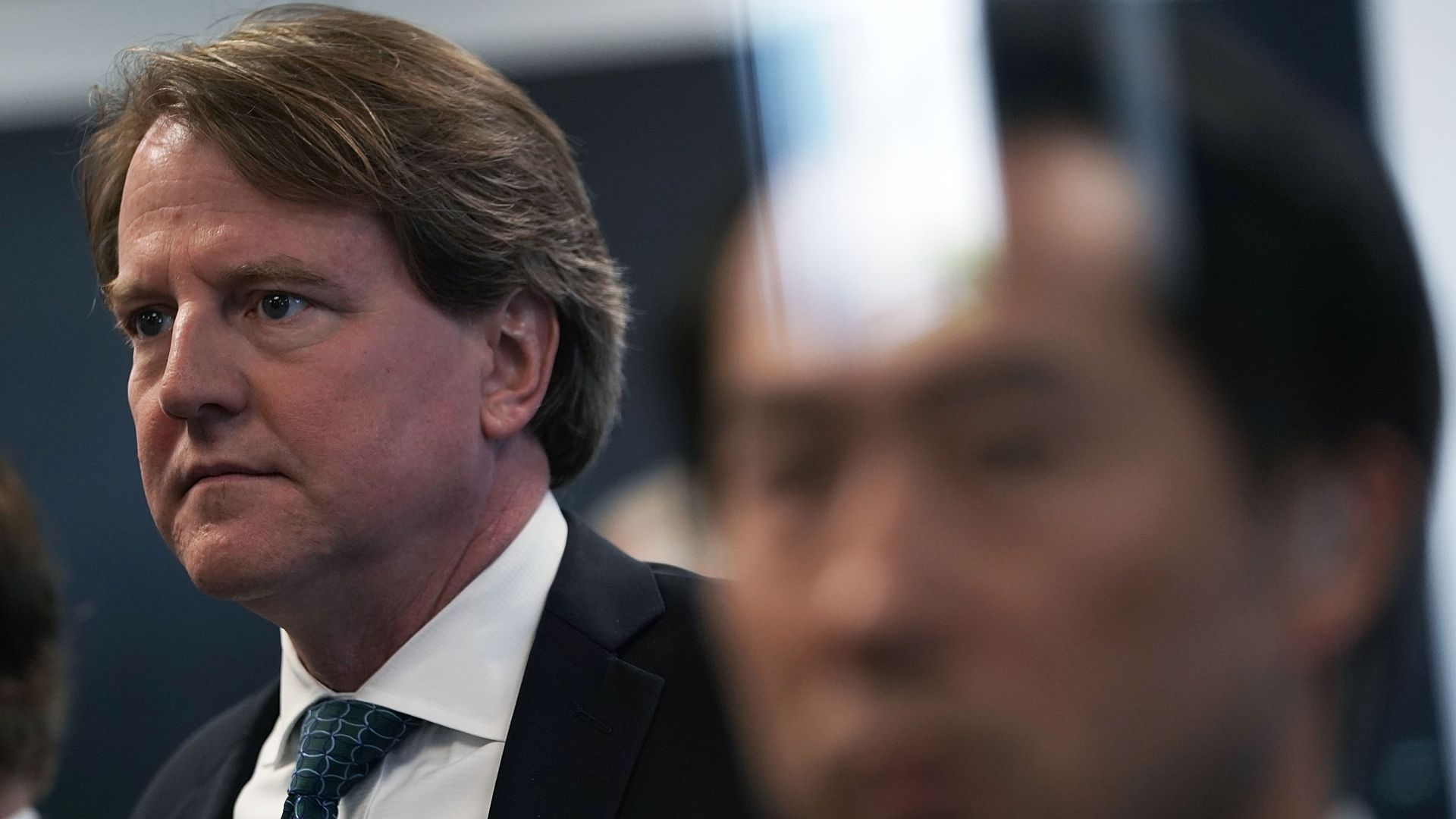
Robert Mueller's team has been working "extensively" with White House counsel Don McGahn, the New York Times reports as he shares "detailed accounts about the episodes at the heart" of the special counsel's investigation.
Why it matters: It's unusual for a lawyer to be so open with investigators probing matters regarding his client, the Times' Maggie Haberman and Michael Schmidt point out. Trump's legal team has "explained that they believe their client had nothing to hide and that they could bring the investigation to an end quickly." McGahn has met with Mueller's team for at least three voluntary interviews totaling 30 hours over nine months, the NYT reports.
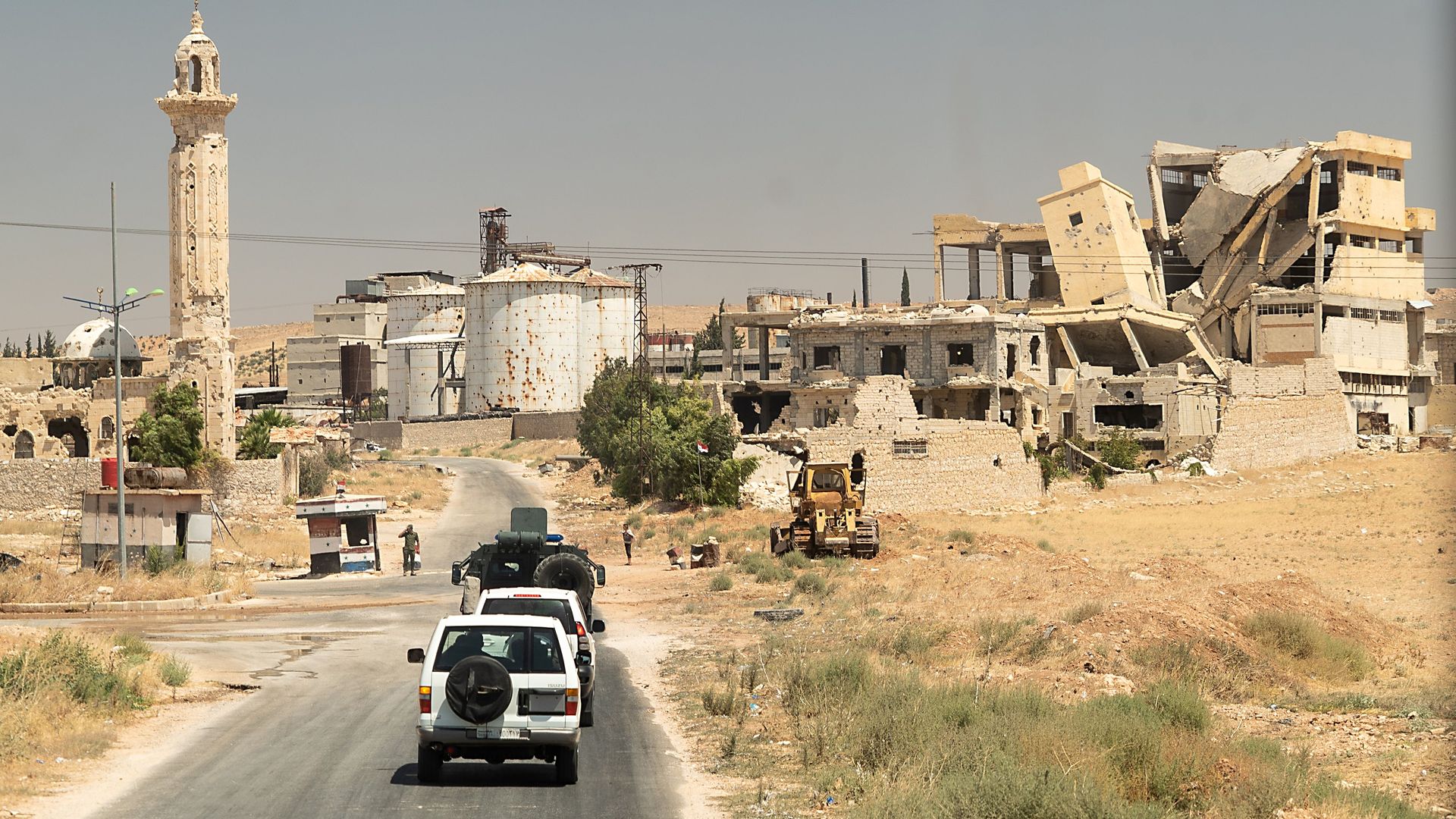
The Trump administration announced Friday that it will not spend some $230 million in stabilization assistance that had been slated for U.S. civilian programs in Syria. The State Department said the cut would be more than offset by other contributions from international partners.
The big picture: A U.S. military partnership with the Syrian Democratic Forces has liberated most of northeast Syria from the so-called Islamic State. Following clearance operations, stabilization programs provide de-mining, electricity, health, water and critical service delivery essential to relieve the devastation left in ISIS's wake. Even with foreign contributions, the U.S. spending cut presents real risks.