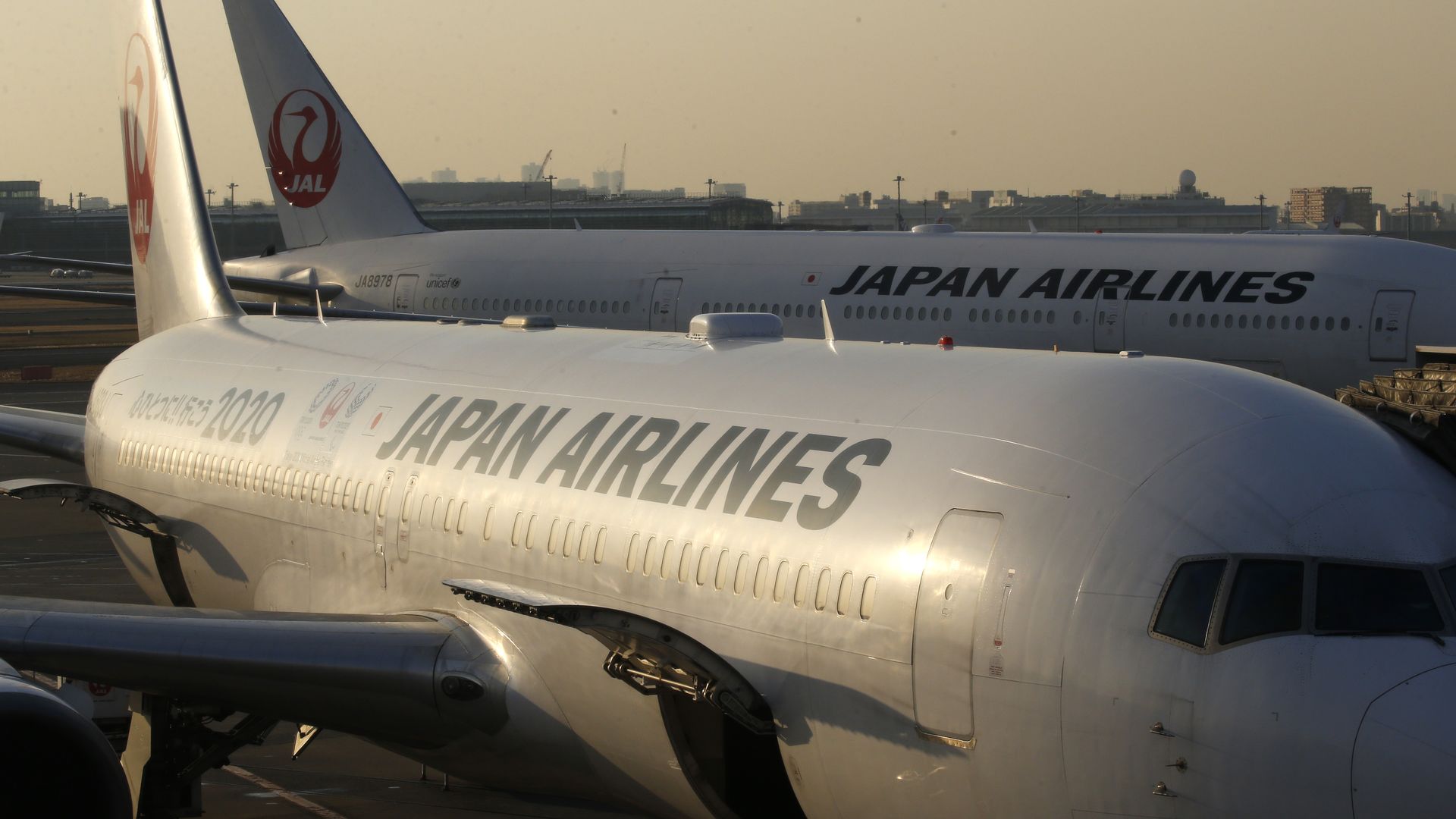
When Beijing first asked airlines around the world to remove references to Taiwan as an independent country from their destinations lists, White House Press Secretary Sarah Sanders slammed the move as "Orwellian nonsense." But a number of airline companies are buckling under Chinese pressure.
Why it matters: China is wielding its market leverage to advance its geopolitical goals — and it's working.
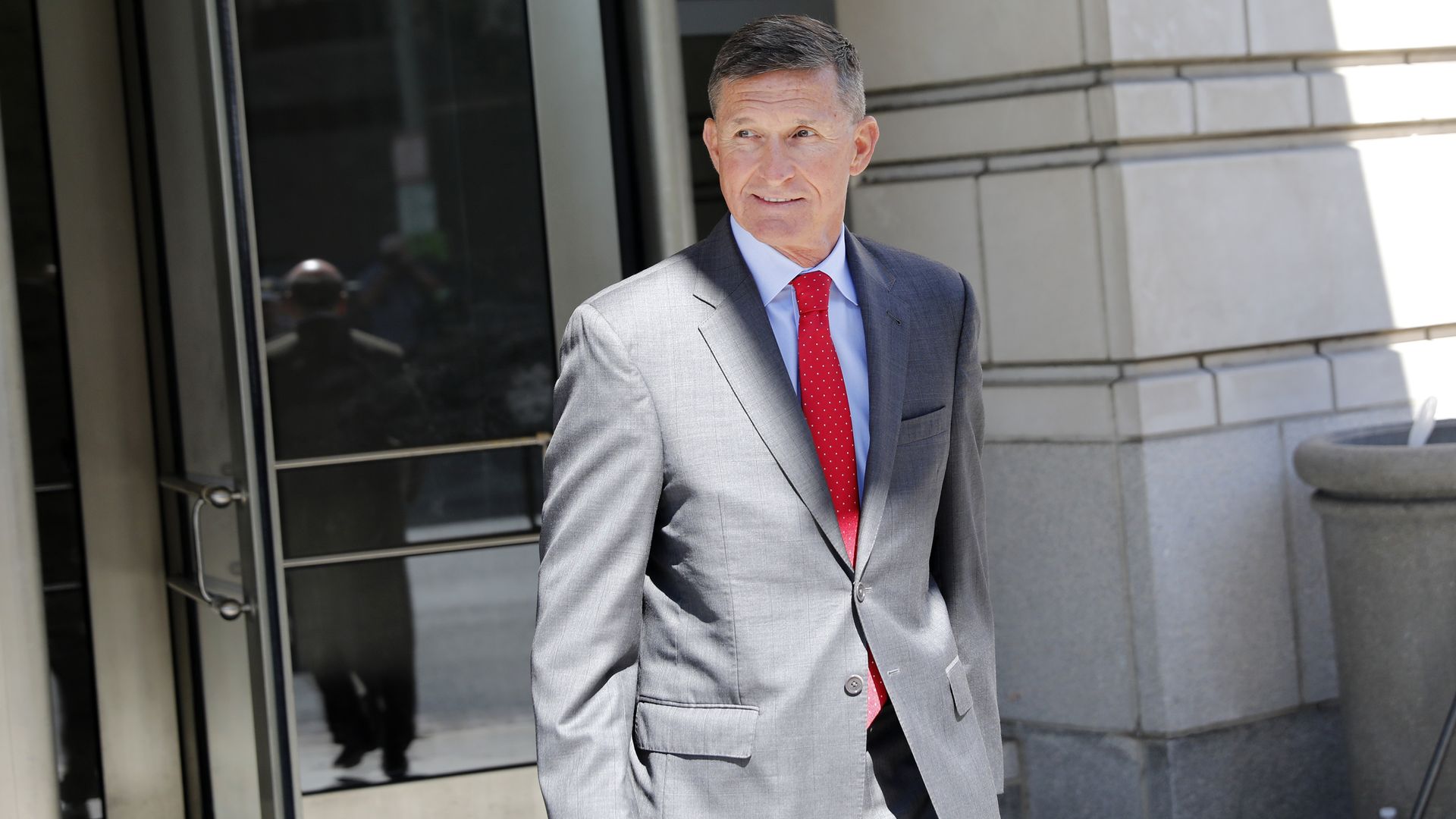
President Trump's former national security adviser Michael Flynn, who awaits sentencing for lying to federal investigators, will serve as the director of global strategy for a new lobbying and consulting firm called Stonington Global, reports the Wall Street Journal.
The details: The firm was founded by Washington lobbyist Nick Muzin, a registered foreign agent who most recently worked on an influence campaign for the government of Qatar. Muzin was named in a lawsuit against the Qatari government filed by Republican fundraiser Elliot Broidy, which alleged that the Gulf state had conspired with Muzin to hack Broidy's emails and smear his reputation.
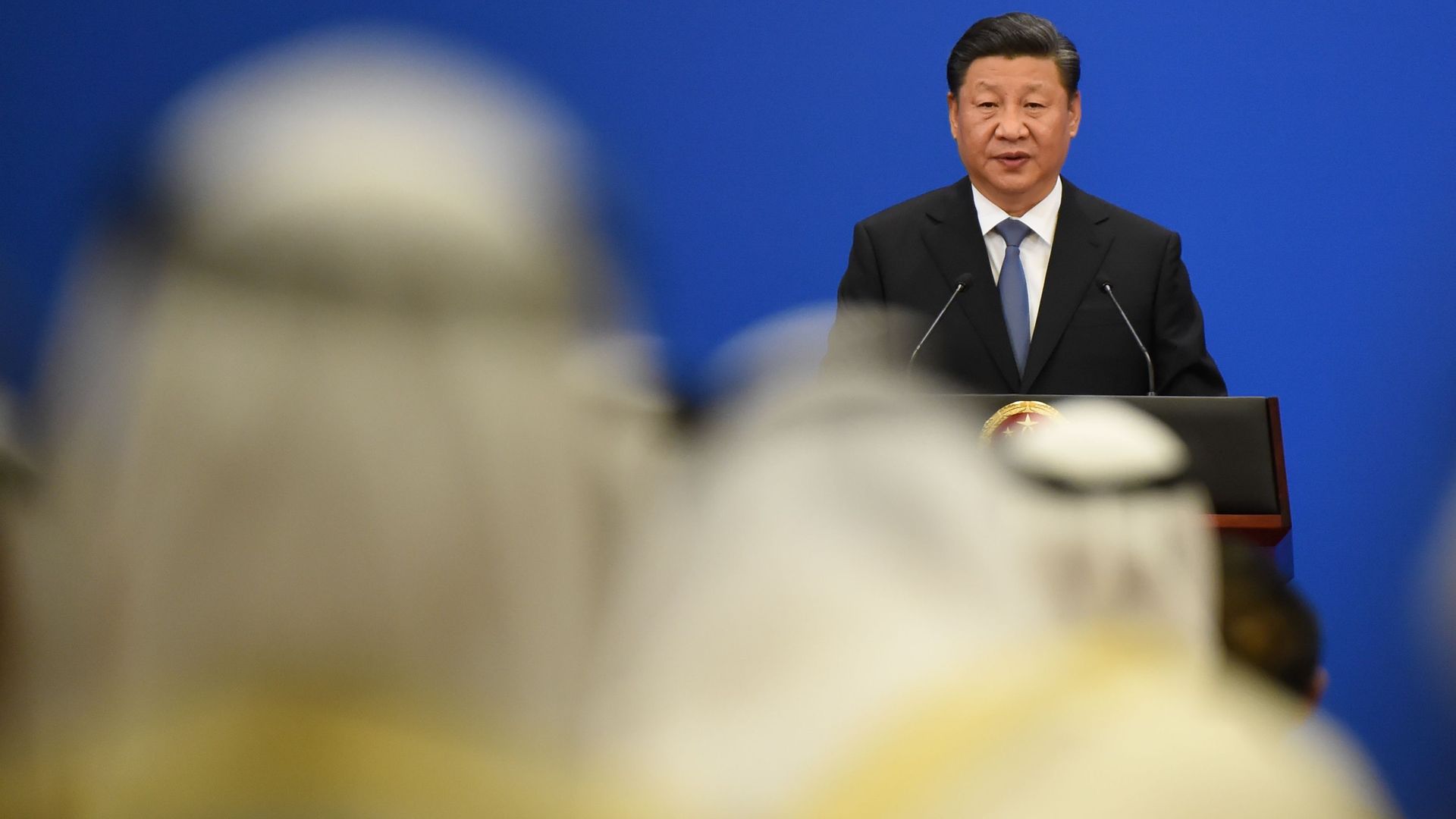
While pledging $23 billion in loans and aid, President Xi Jinping told members of the Arab League today that China would like to form a strategic partnership to become "the keeper of peace and stability in the Middle East, the defender of equity and justice, promoter of joint development, and good friends that learn from each other," according to the South China Morning Post.
Why it matters: As Axios' Erica Pandey has reported, China is determined to win influence in the Middle East, largely through its massive Belt and Road infrastructure initiative. And while Beijing has not been shy about developing economic partnerships in the region, Xi's comments signal a new level of political engagement.
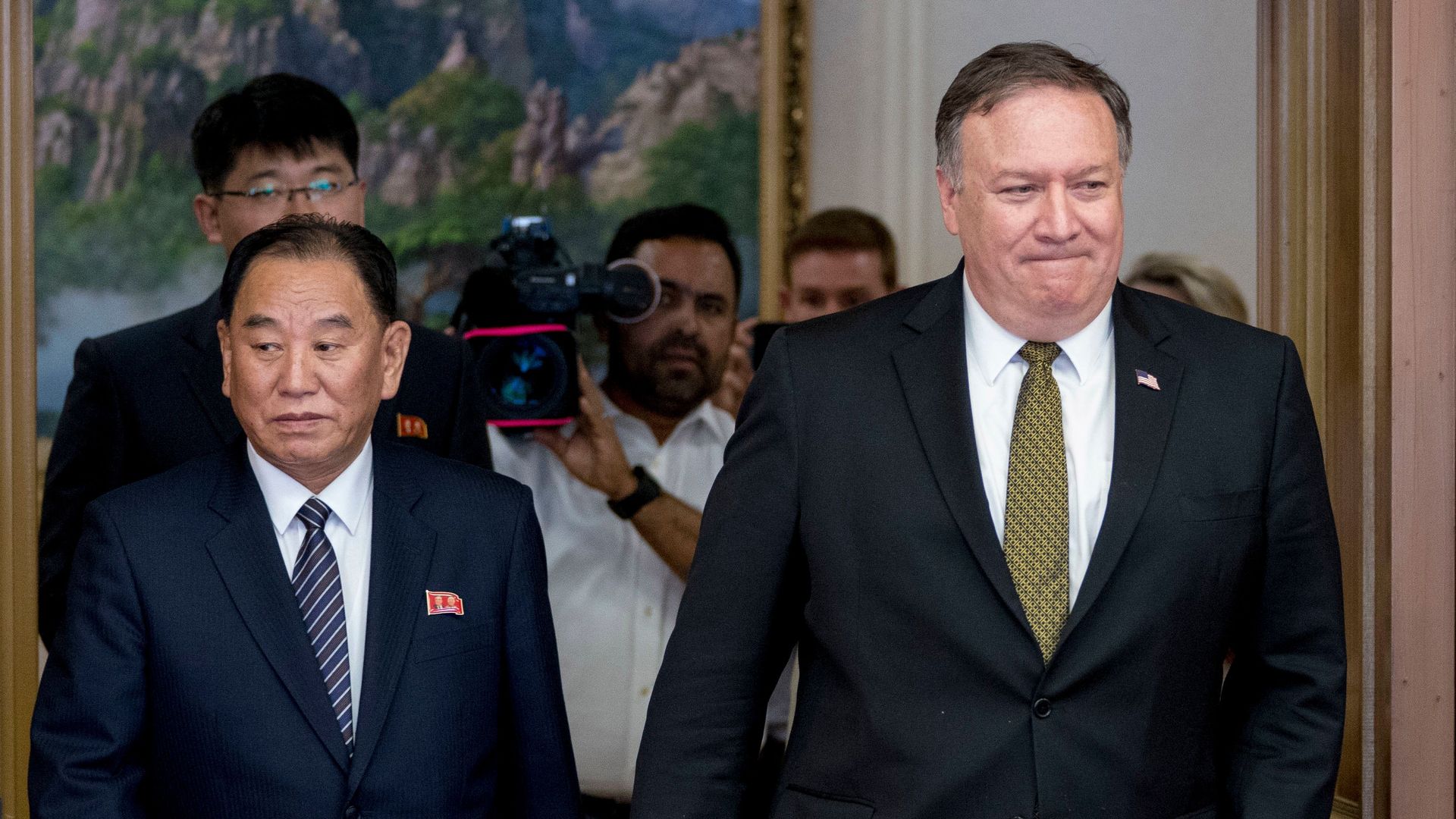
President Trump said on Twitter Monday he has "confidence that Kim Jong-un will honor the contract we signed" for the "denuclearization of North Korea." But in fact, Pyongyang has offered only a series of gradual, reciprocal steps unlikely to lead to full disarmament.
The details: After the Trump–Kim summit in Singapore and three Pyongyang visits by Secretary of State Pompeo, there is still little momentum to dismantle the nuclear program. North Korea has not agreed to stop nuclear and missile developments; open satellite imagery shows it is expanding its capacity to produce plutonium and uranium and to deploy a larger missile force; and the missile test site it offered to dismantle stands intact.
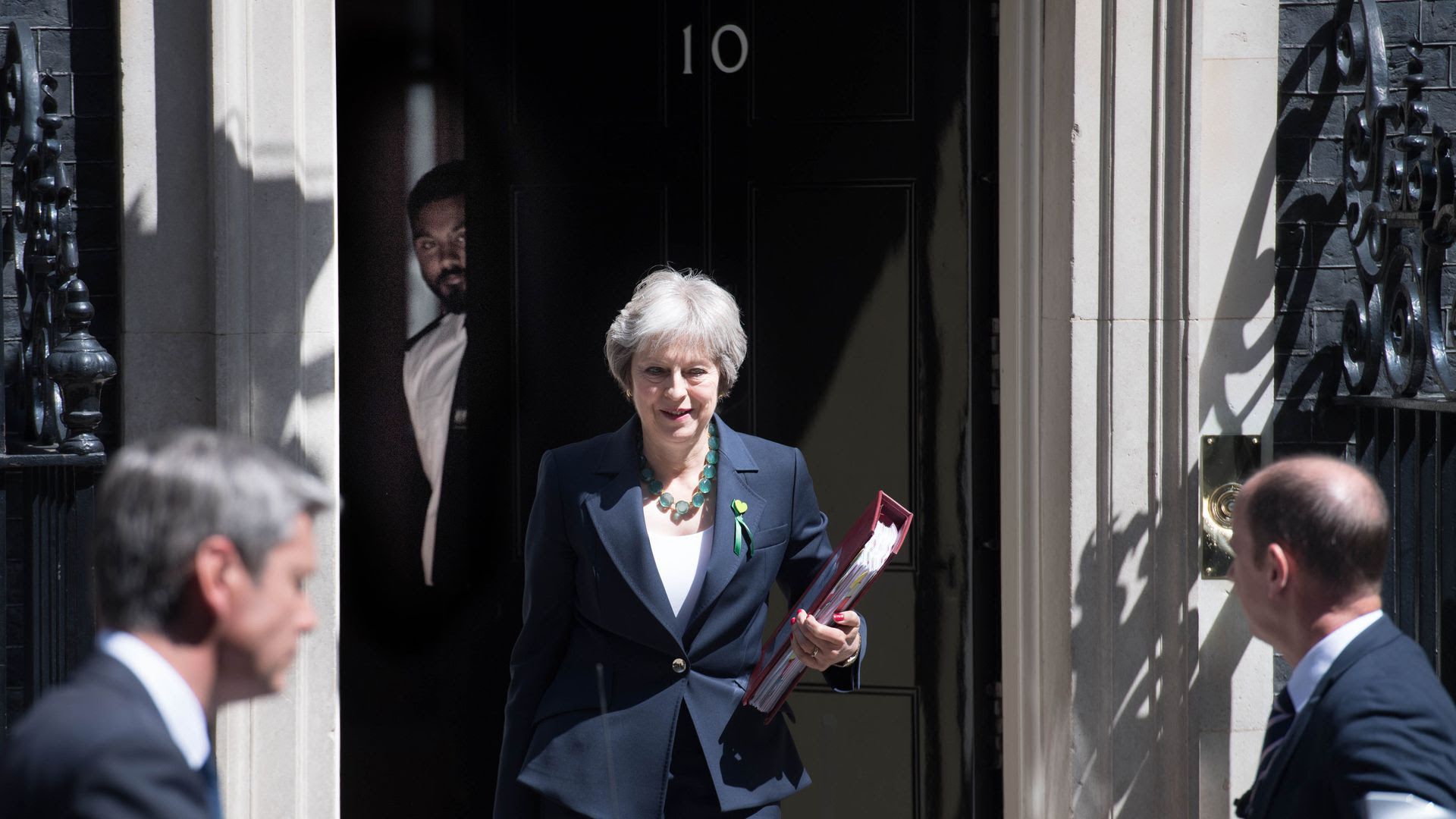
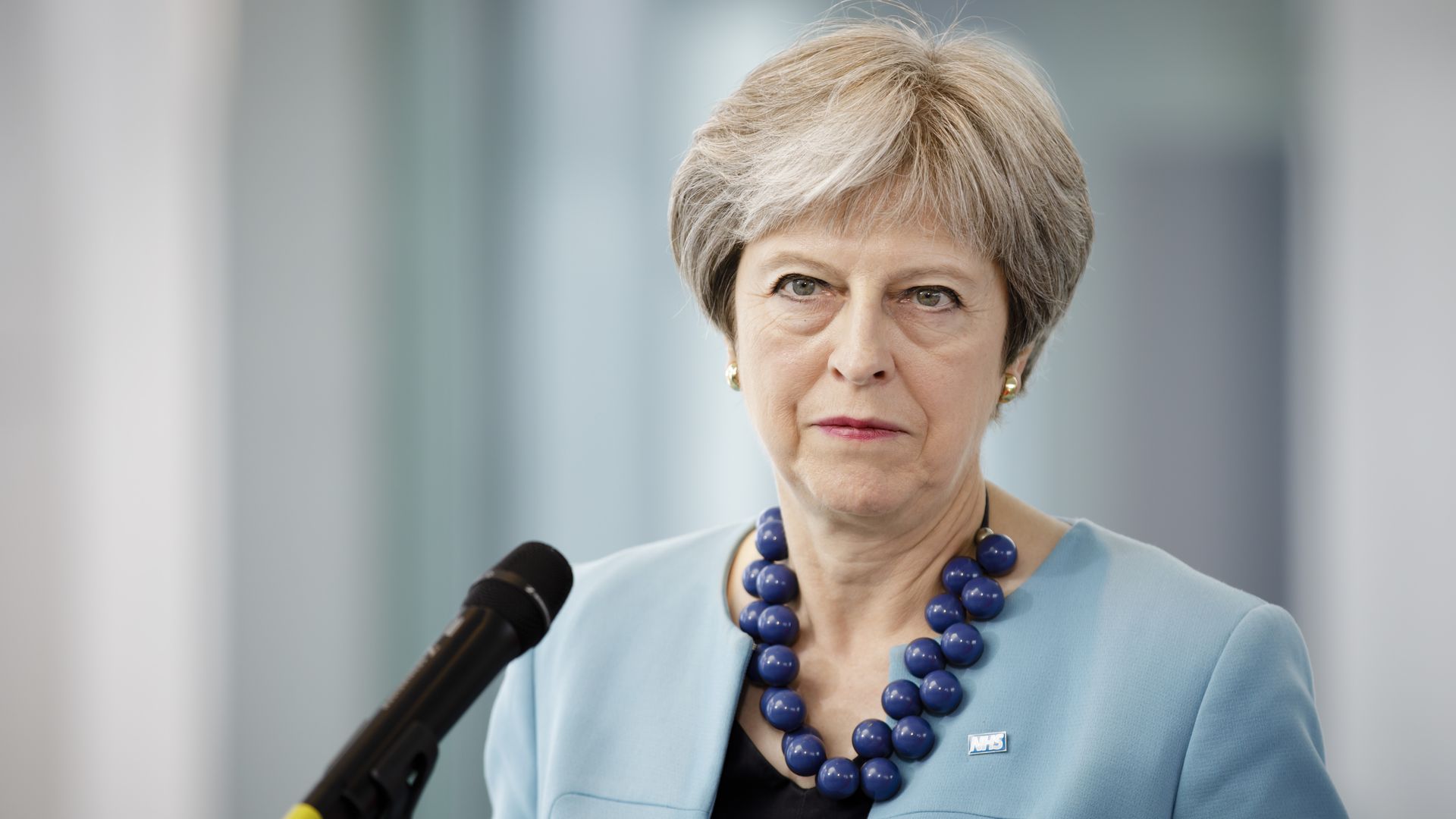
The ground is shaking under U.K. Prime Minister Theresa May’s feet after two top cabinet officials resigned over her blueprint for Brexit.
The big picture: Two years after May moved into Downing Street in the wake of the Brexit referendum, and nine months before the U.K. is set to leave the EU, the truce she worked tirelessly to maintain within the Conservative Party has officially broken down, and the path to Brexit remains far from clear.
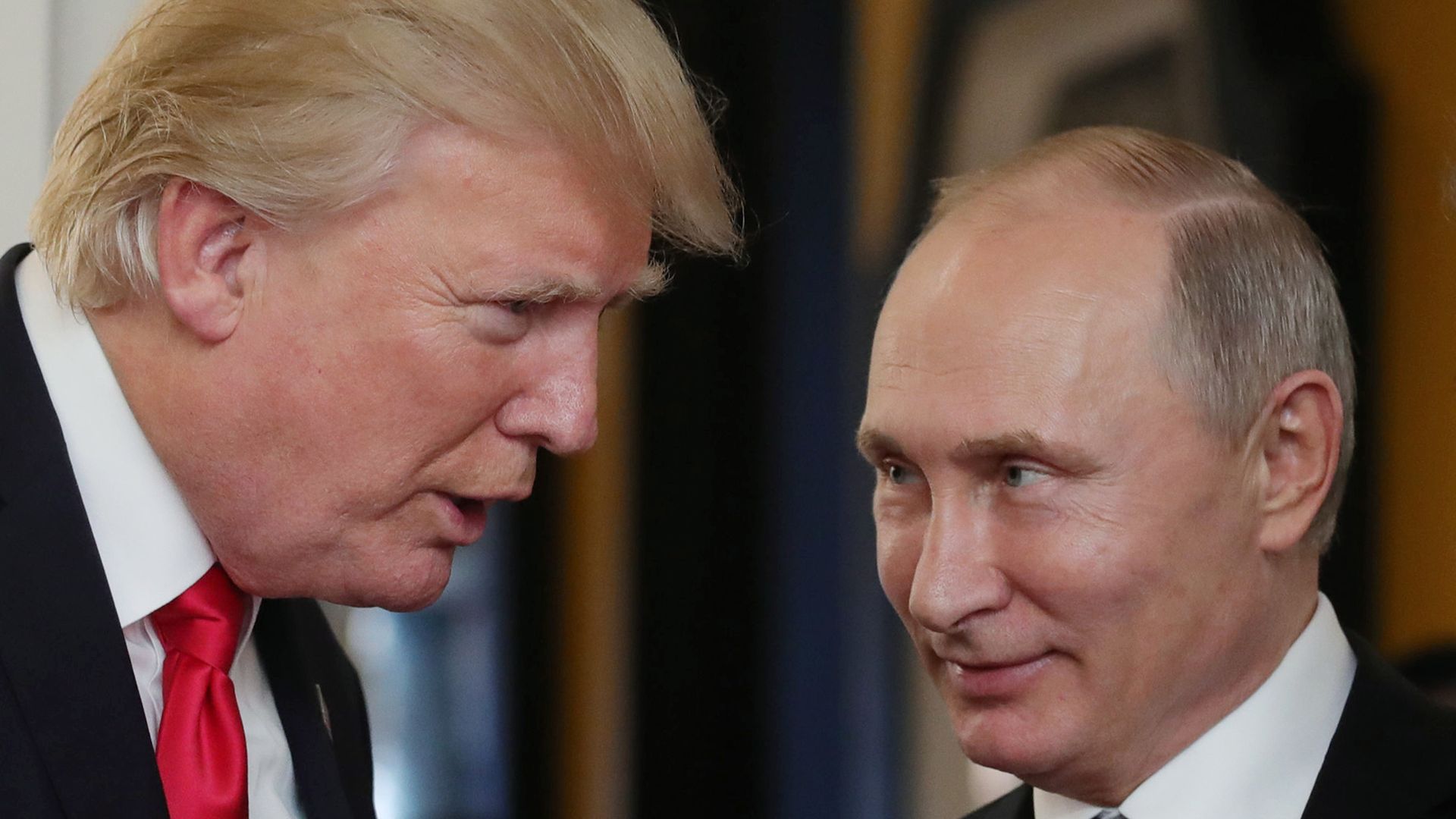
When President Trump meets President Putin next week in Helsinki, talk may turn to their shared belief in state sovereignty and hard borders. Putin’s approach to sovereignty is, of course, hypocritical — used selectively to justify aggression abroad while providing an excuse for oppression at home.
What's next: Trump should take Putin’s high talk of sovereignty and borders at face value and use it to his advantage. After all, Russia’s invasion of Ukraine and continued occupation of Crimea and the Donbas remains the greatest infringement of a sovereign state’s rights since the Cold War. If ensuring a state’s ability to protect its borders is a leader’s highest calling, as both presidents claim to believe, it would seem Ukraine should enjoy those rights too.
British Prime Minister Theresa May won a snap general election last year while promising a "strong and stable" U.K. throughout the Brexit process, but the twin departures of Brexit Secretary David Davis and Foreign Secretary Boris Johnson underline just how unstable things have become within her own government.
The big question: This is the biggest test May's premiership has faced. She's survived more than a few Brexit scrapes thus far — is this the one that brings her down?
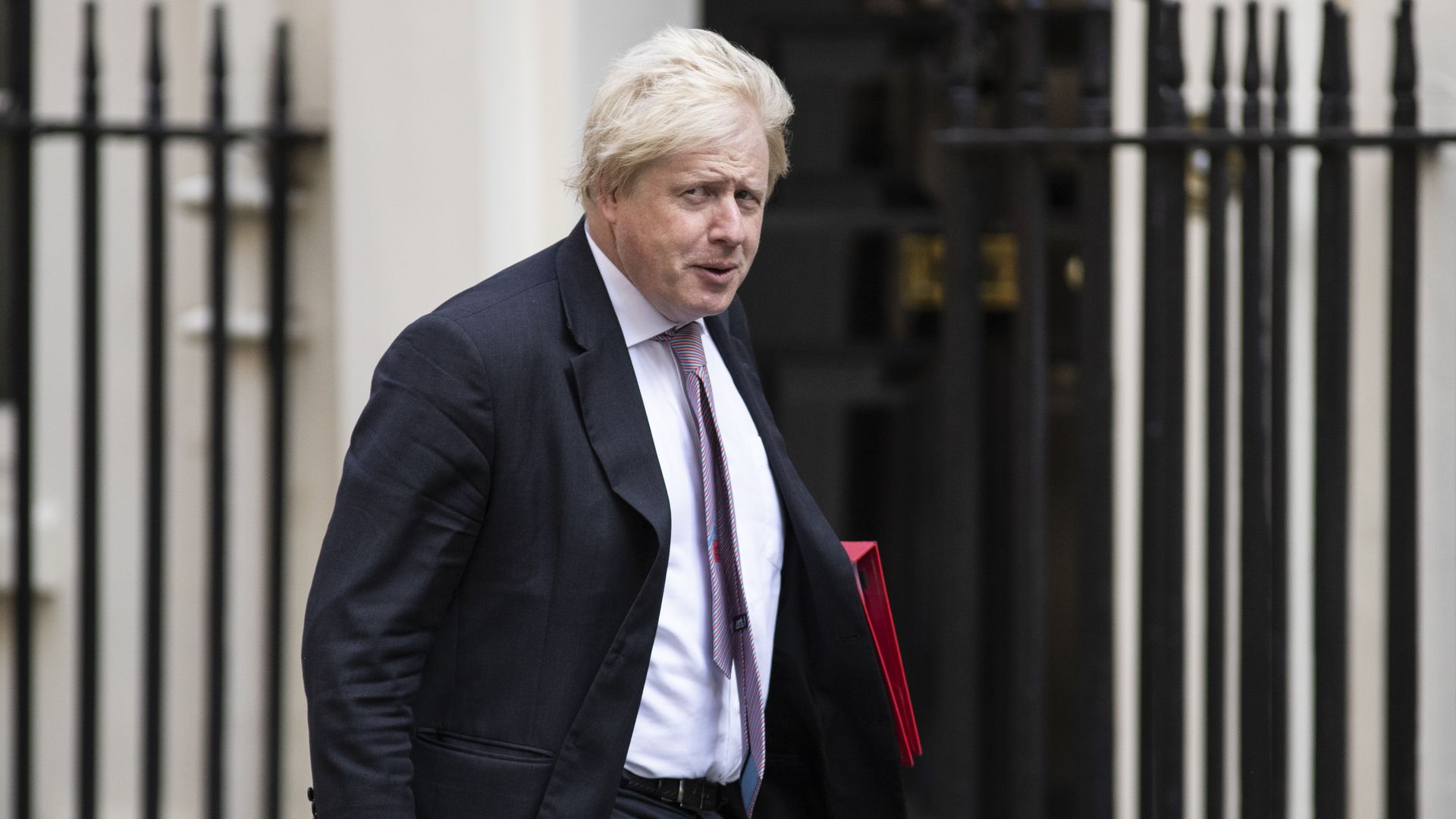
Boris Johnson, the United Kingdom's Foreign Secretary, resigned from Prime Minister Theresa May's Cabinet on Monday — just hours after Brexit Secretary David Davis resigned over May's proposed plan for a "soft" Brexit, per the BBC's Laura Kuenssberg.
Why it matters: This is now a full-fledged crisis for May's premiership — Johnson has long been eyeing her position, having been an early frontrunner for prime minister just after the Brexit vote in 2016 — and it comes just before her plan to push a version of Brexit that would maintain a close economic relationship with the European Union.
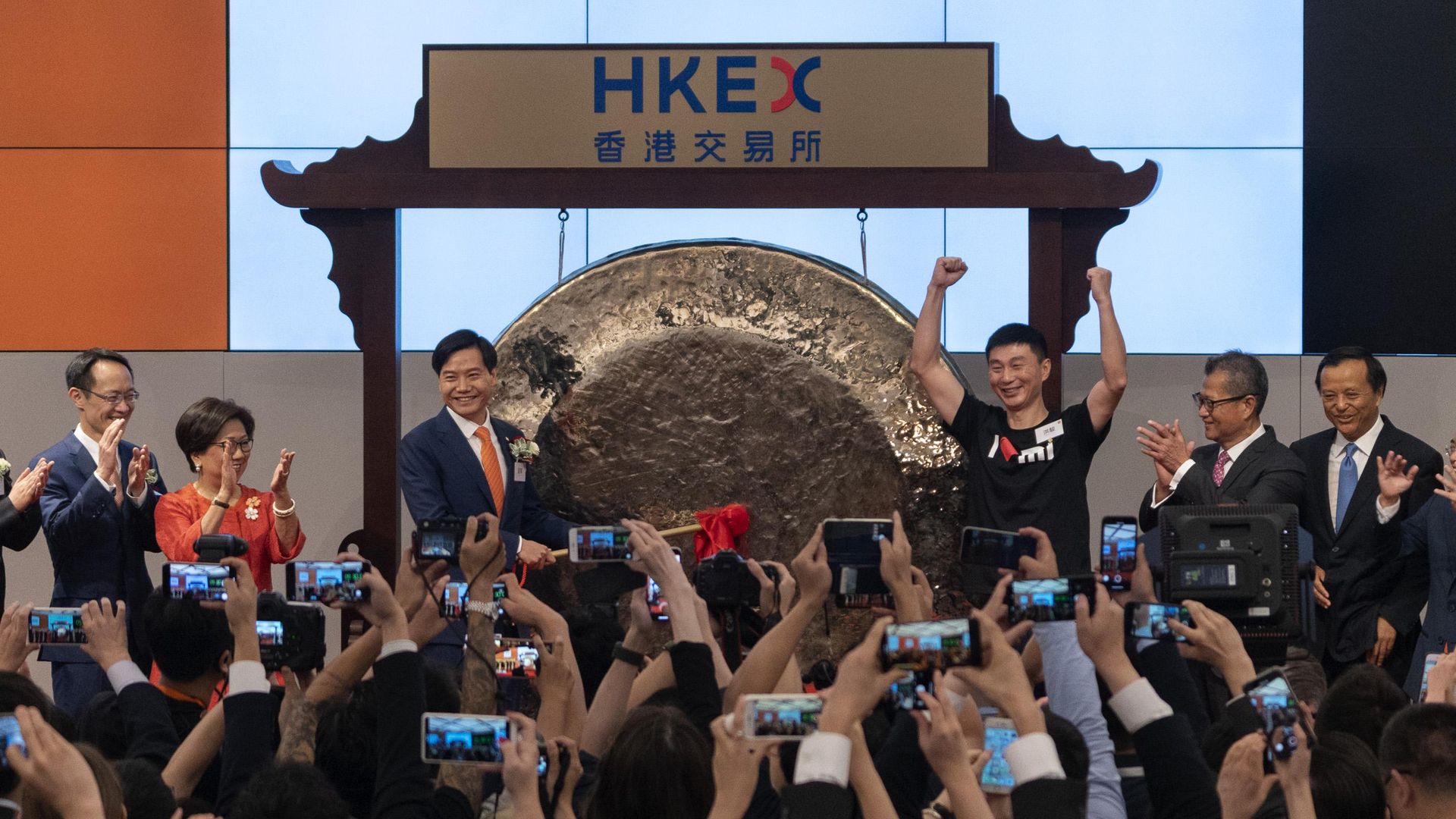
Chinese smartphone maker Xiaomi saw its shares close down 1.2% on its first day of trading in Hong Kong, following what was already a disappointing IPO.
Why it matters: Xiaomi was seen as a bellwether for other Chinese tech offerings that are expected in the second half, such as China Tower and Meituan Dianping, with original plans to be valued at around $100 billion.