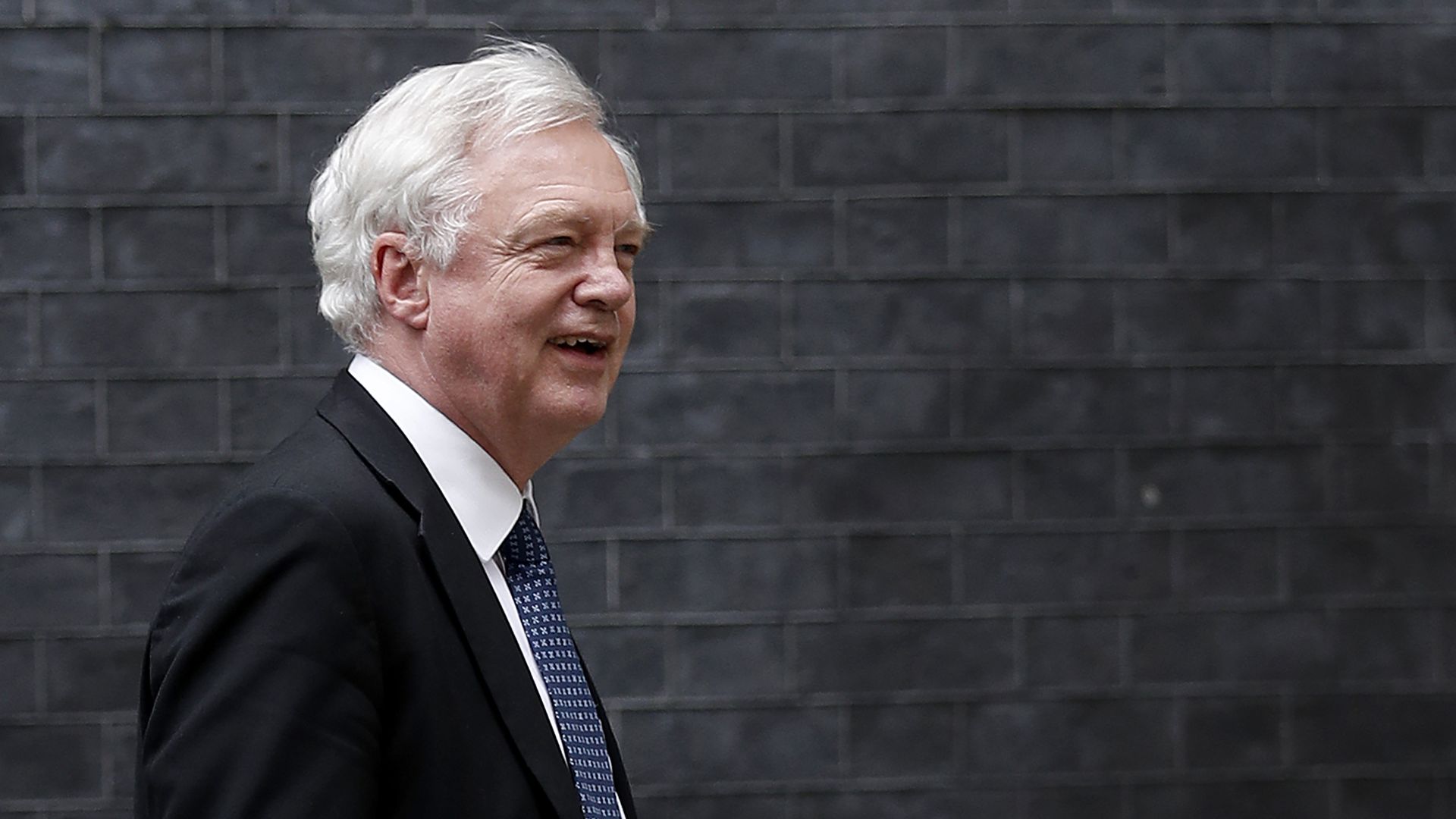
David Davis, the United Kingdom's Brexit Secretary, resigned from Prime Minister Theresa May's Cabinet late Sunday night after weeks of speculation, intensifying the chaotic struggle to define what Brexit will look like and putting May's position at risk.
The big picture: Davis, an advocate for a "hard," lasting Brexit, made his move one day after May's Cabinet agreed to a "collective" plan for the U.K.'s ongoing negotiations with the European Union. Per the BBC, that plan was viewed by many as a "soft" version of Brexit, choosing to maintain a close economic relationship with the EU that created a "common rule book" between the two entities.
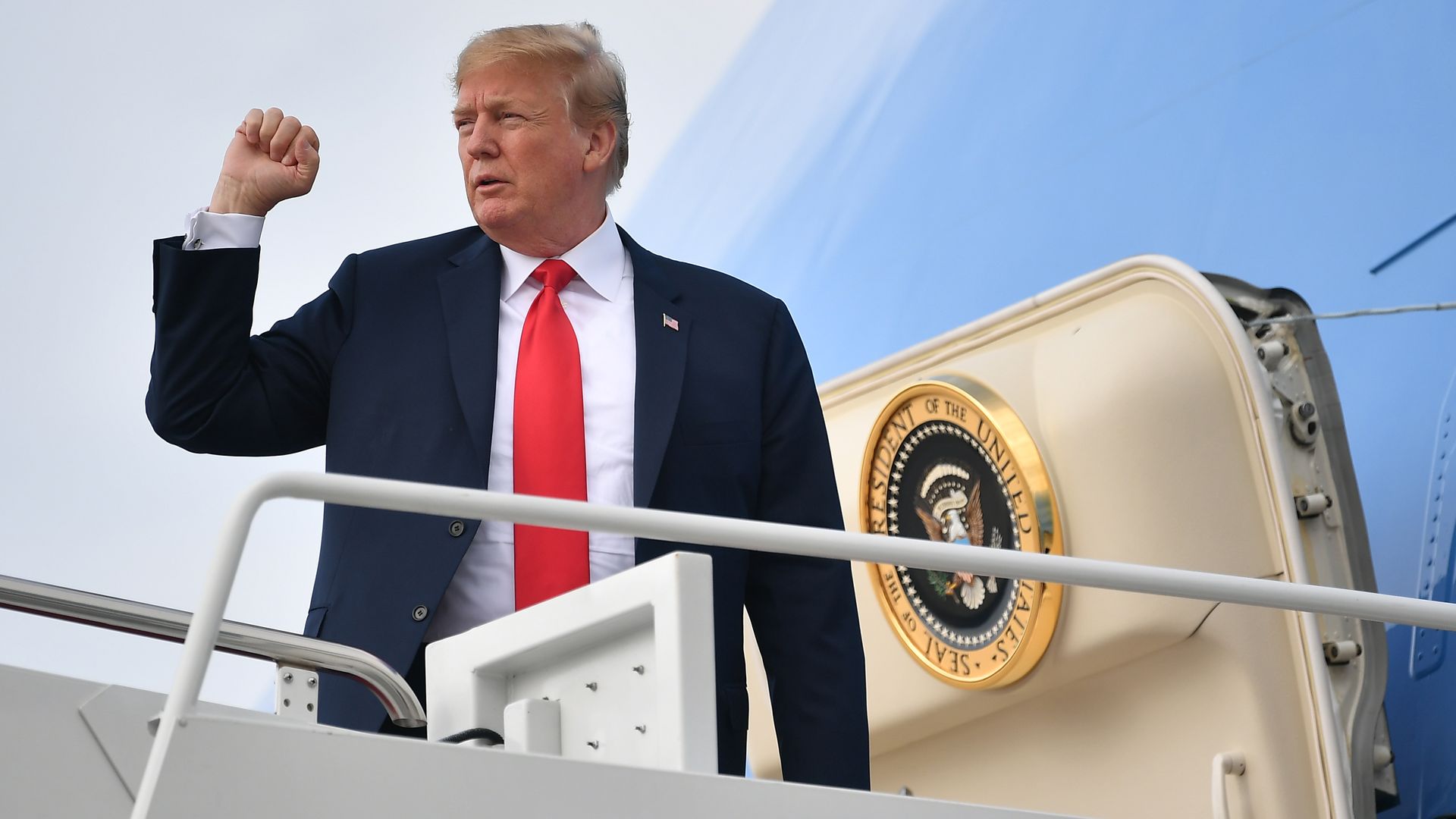
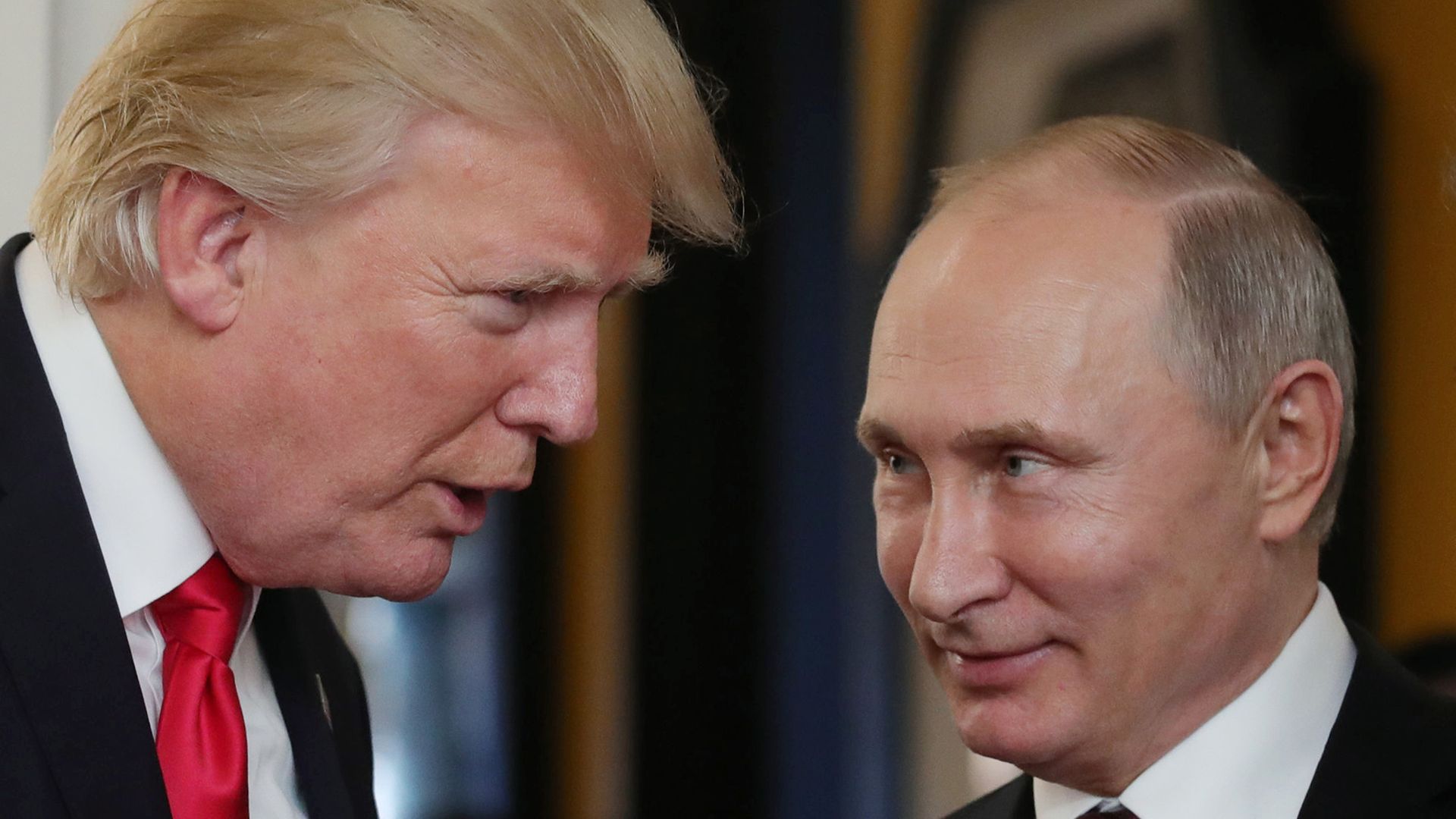
I fly to Europe this week to cover President Trump as he meets with NATO allies in Brussels, Theresa May in London, then Helsinki for his first one-on-one summit with Russia's Vladimir Putin.
What we're hearing: Senior European officials have told Axios they are worried that Trump will spend the entire NATO summit beating up on America's closest allies — especially Germany — for not spending enough on their defense. They're worried he'll make these deficiencies the focus of the summit rather than solidarity in face of the Russian threat. And that he'll have a friendlier summit with Putin just a few days after a tense NATO gathering.
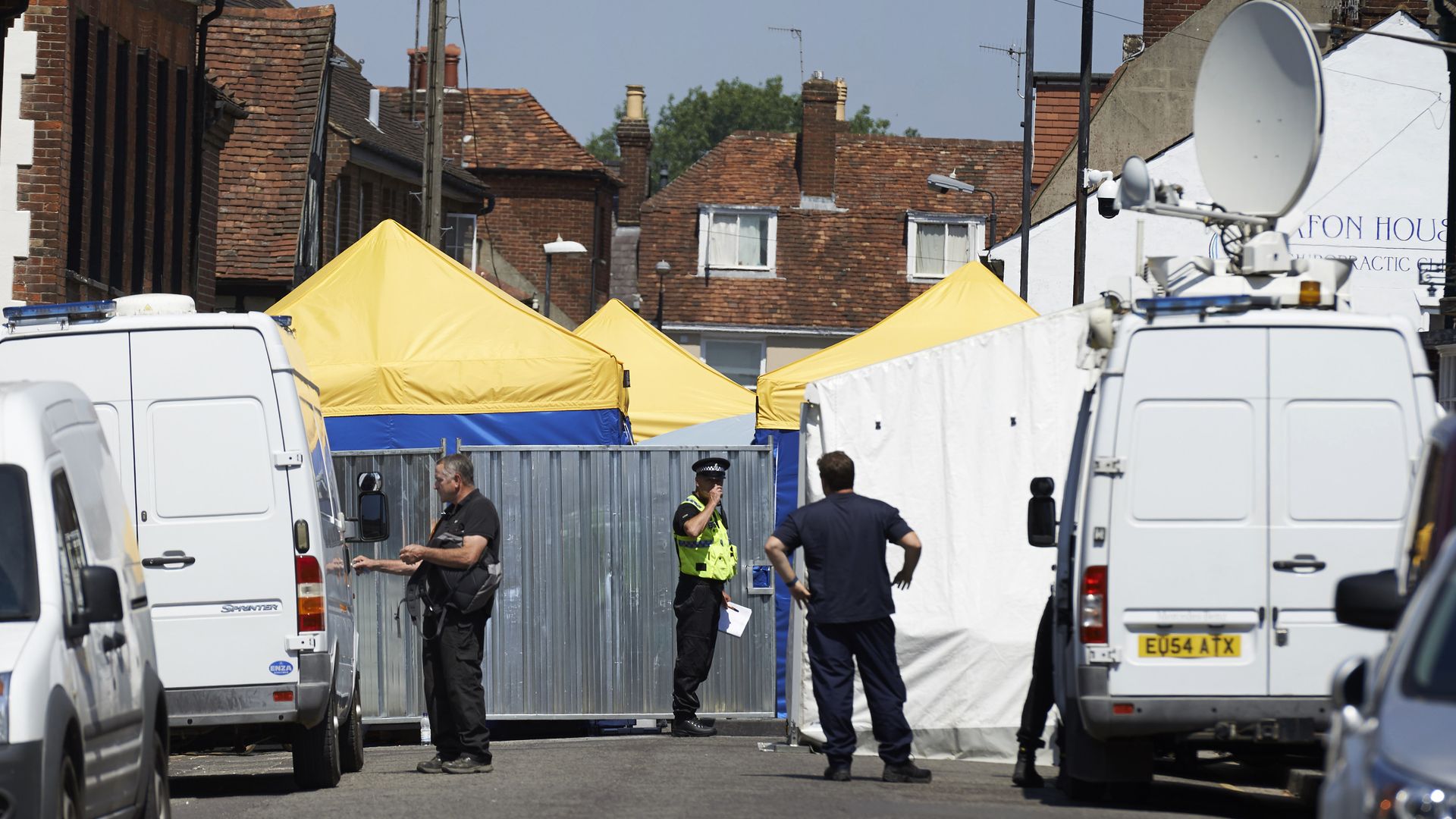
A British woman who was exposed to the Russian-produced nerve agent Novichok — the same used on a former Russian spy, Sergei Skripal, and his daughter in the U.K earlier this year — died in hospital on Sunday evening, prompting police to launch a murder inquiry, per The Guardian.
The details: The woman, Dawn Sturgess, 44, fell critically ill last month following exposure to the nerve agent. A 45-year-old man, who was also admitted, reportedly remains in critical condition. It’s unclear whether this is related to the poisoning of Skripal, which was blamed on the Russian government, but both incidents occurred just miles apart near Salisbury, England.
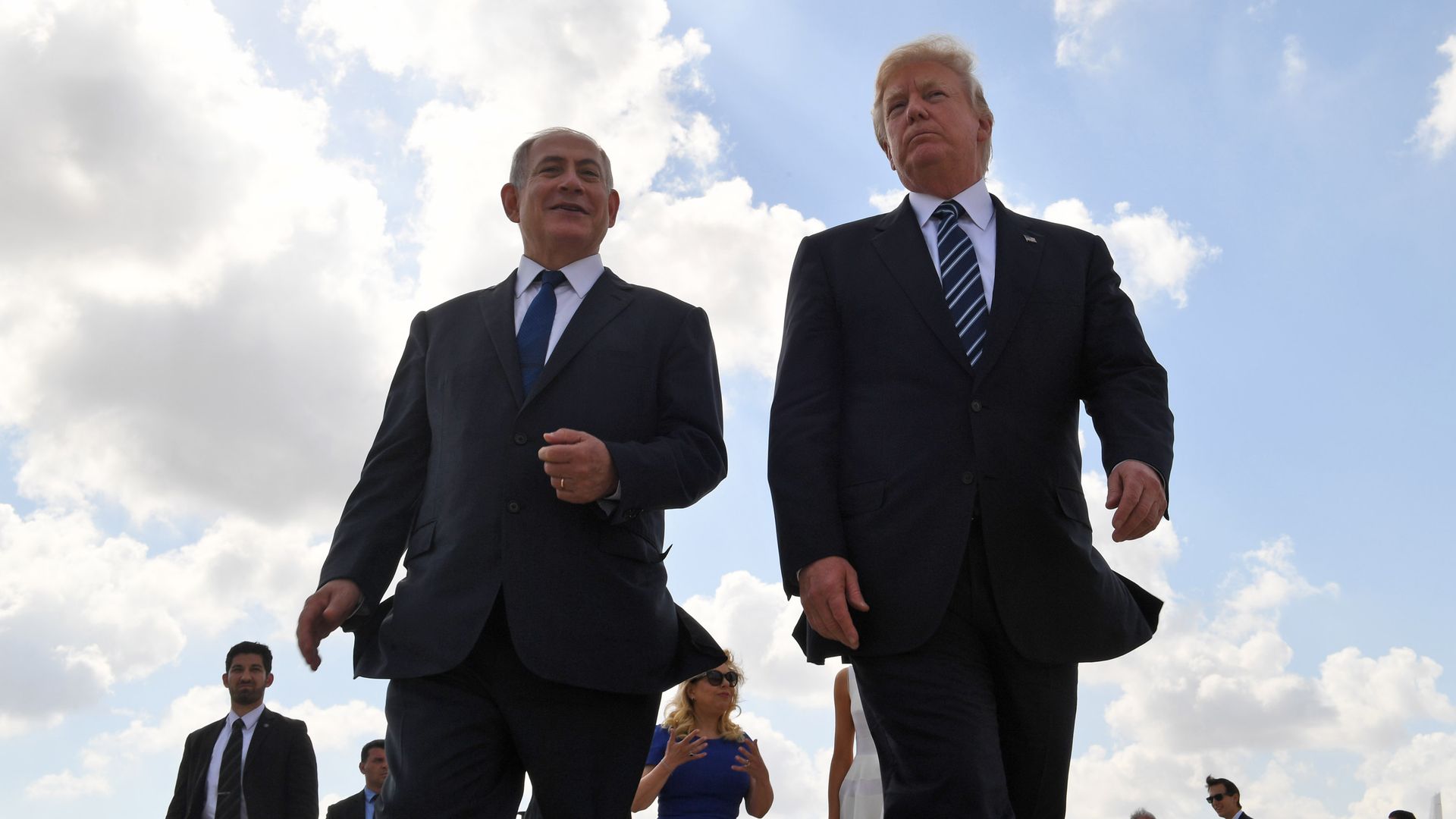
Israel has presented the Trump administration with its "red lines" for the nuclear deal the United States is currently negotiating with Saudi Arabia to build reactors in the kingdom.
The big picture: A senior Israeli official told me the Israeli government realized it will not be able to stop the deal — set to be worth billions of dollars for the U.S. — and decided instead to attempt to reach an understanding with the Trump administration regarding the parameters of the deal.
Sen. Lindsey Graham said on "Fox News Sunday" that he sees "China's hands all over" North Korea's latest statement calling the U.S. push for complete denuclearization "regrettable." He added, “If I were President Trump, I would not let China use North Korea to back me off of the trade dispute. We've got more bullets than they do when it comes to trade.”
The big picture: Kim Jong-un has kept China updated on developments in his talks with the United States, visiting Beijing three times in the past few months to meet President Xi Jinping. And China's influence with North Korea is crucial leverage against Washington amid an escalating trade war.
The United States shocked world health officials by staunchly opposing a U.N. resolution that says mothers' milk is healthiest for babies and countries should work to curb misleading marketing from companies producing baby formula, reports the New York Times.
The details: The resolution, which is based on extensive research about the health benefits of breast milk for babies, was expected to pass easily. "Then the United States delegation, embracing the interests of infant formula manufacturers, upended the deliberations," the Times' Andrew Jacobs writes.
Kay Bailey Hutchison, the U.S. ambassador to NATO, told Dana Perino on Fox News Sunday that she thinks "Russia is trying to flip Turkey," adding, "They're trying to flip many of our allies. They want to destabilize the strongest defense alliance in the history of the world."
The backdrop: U.S. allies are concerned that President Trump — who has been critical of NATO — will slam NATO members at the group's July 11-12 summit in Brussels, then lavish praise on Russian President Vladimir Putin during their meeting in Helsinki just days later.
" [President] Trump’s lack of preparation has added a further level of unpredictability to his interactions with foreign leaders," per the WashPost.
Why it matters: "The president rarely reads his nightly briefing book, which focuses on issues likely to come up in meetings ... To slim down Trump’s workload, aides have sometimes put the most critical information in a red folder."
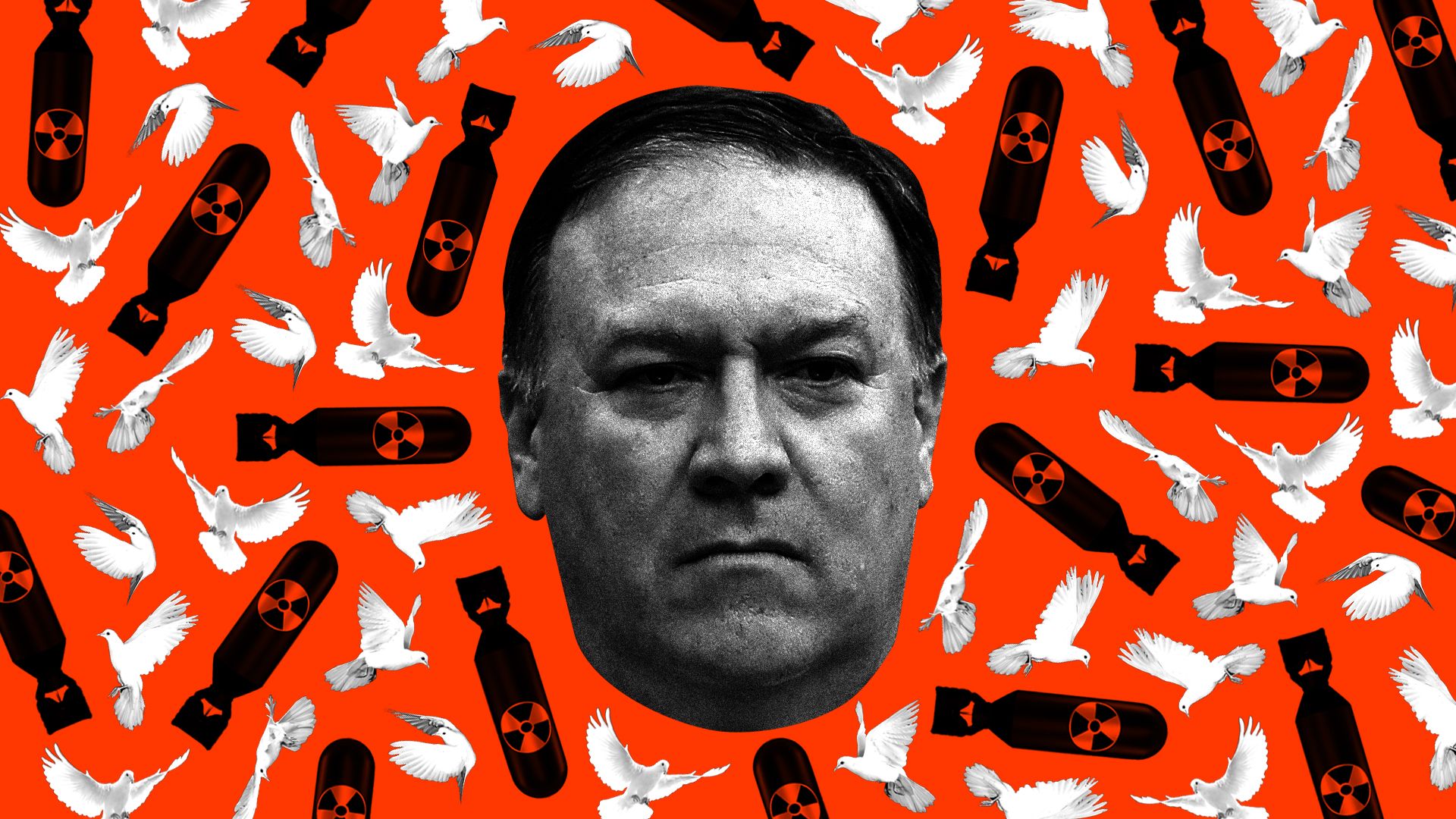
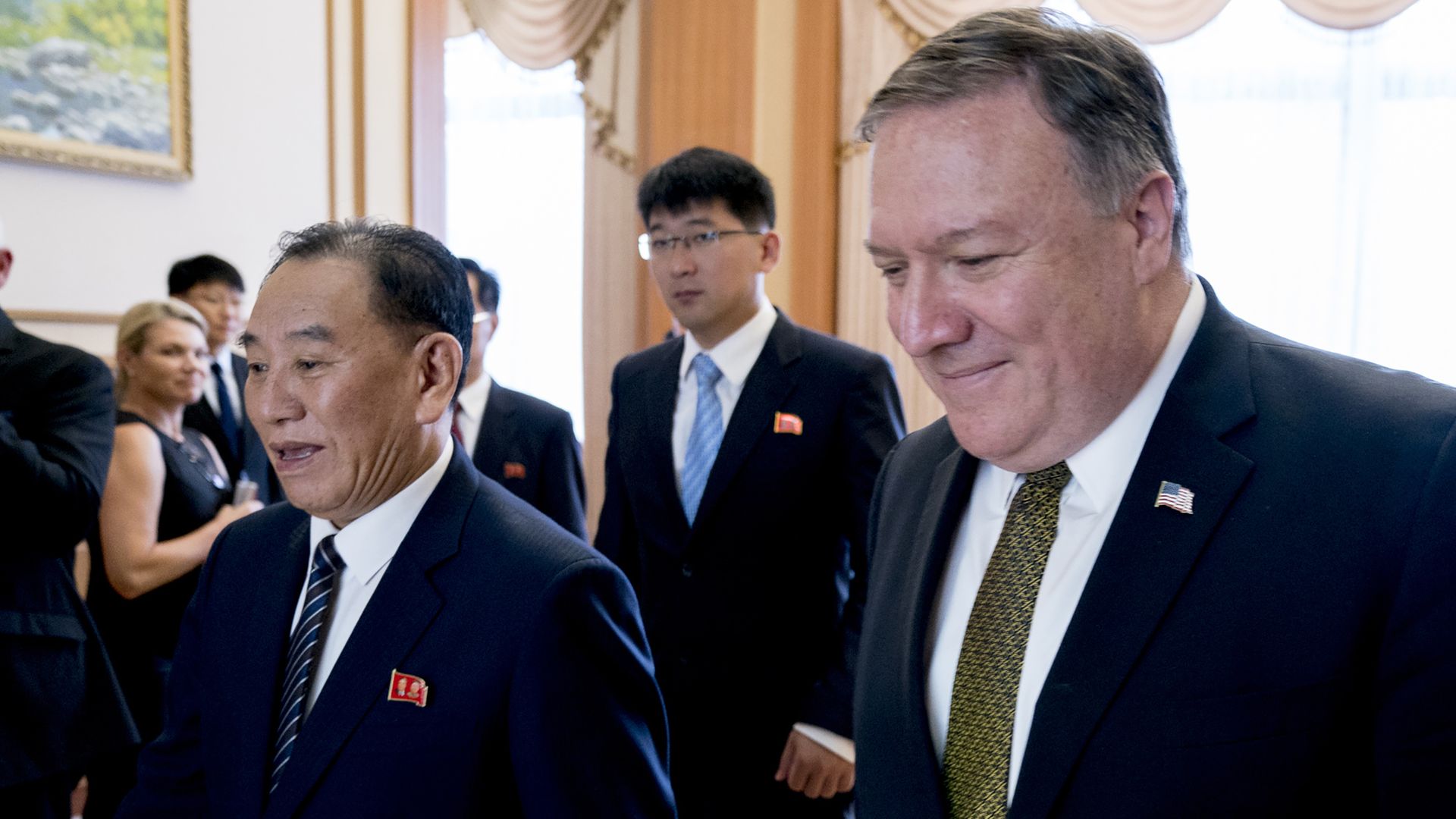
President Trump prides himself on negotiating savvy. But North Korea is trying to outfox him with a return to harsh public rhetoric immediately after the first overnight visit by Secretary of State Mike Pompeo, who came with press in tow.
The big picture: But then Pyongyang issued a statement accusing Pompeo of trying to jam them with denuclearization demands: "The U.S. is fatally mistaken if it went to the extent of regarding that [North Korea] would be compelled to accept, out of its patience, demands reflecting its gangster-like mindset."
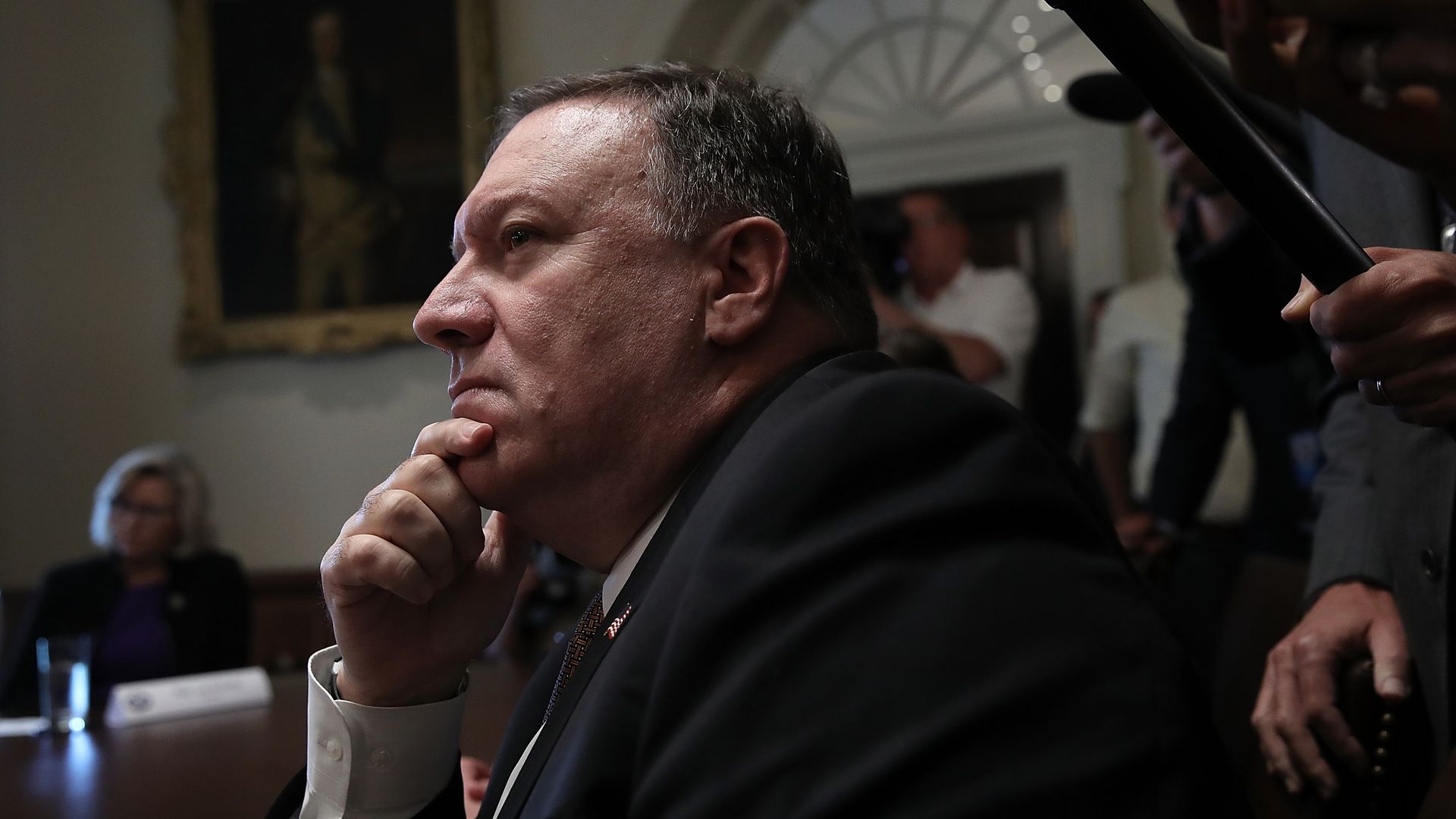
Would you travel 7,000 miles to confirm what your boss believes? That's partly what Secretary of State Mike Pompeo was doing with his two-day mission to North Korea.
The bottom line: According to sources, it's not going to happen overnight, or even in a year. Sources tell Jonathan Swan and me that the secretary was trying to validate for President Trump, who's anything but patient, that some patience will increase the chances of denuking North Korea.
The North Korean Foreign Ministry said on Saturday that talks with Secretary of State Mike Pompeo were "regrettable," the Associated Press reports, accusing the U.S. "of unilateral demands for denuclearization."
The big picture: Pompeo has been in North Korea for two days speaking with officials, but did not meet with the country's leader, Kim Jong-un. Per the AP, Pompeo said on Saturday before leaving Pyongyang that his talks with North Korean officials had been conducted "in good faith," and that "a great deal of progress" was made on some issues.