Thursday's technology stories



Scoop: Trump names Kirsten Davies as new national cyber director
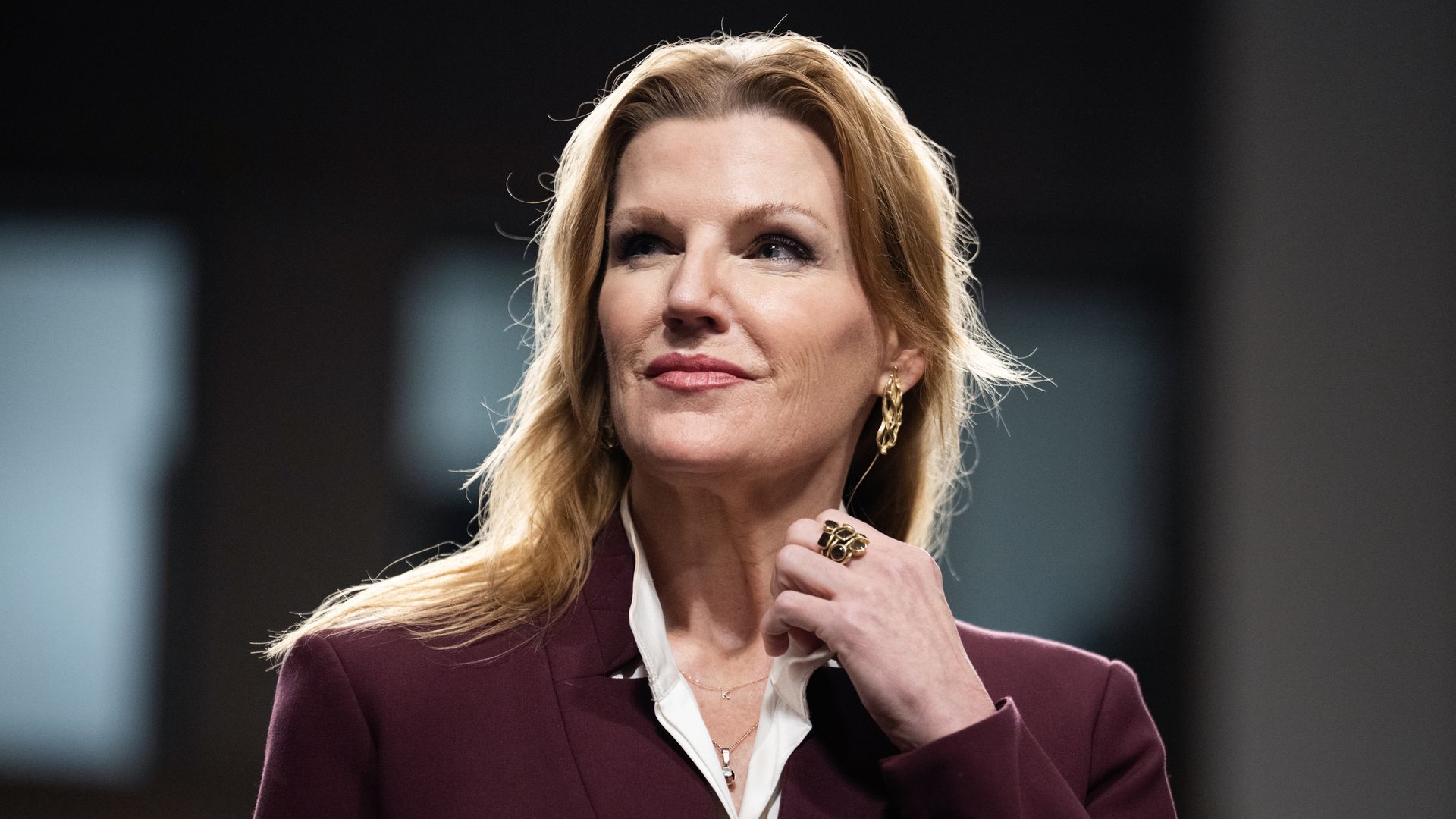
The White House named Kirsten A. Davies to be its new national cyber director Thursday as President Trump overhauls his AI team, Axios has learned.
Why it matters: Davies, who currently serves as the Pentagon's chief information officer, has more experience in the field than the outgoing director, Sean Cairncross.

Exclusive: Tech outages a 'taste' of what AI cyberattacks could look like, Twenty CEO says
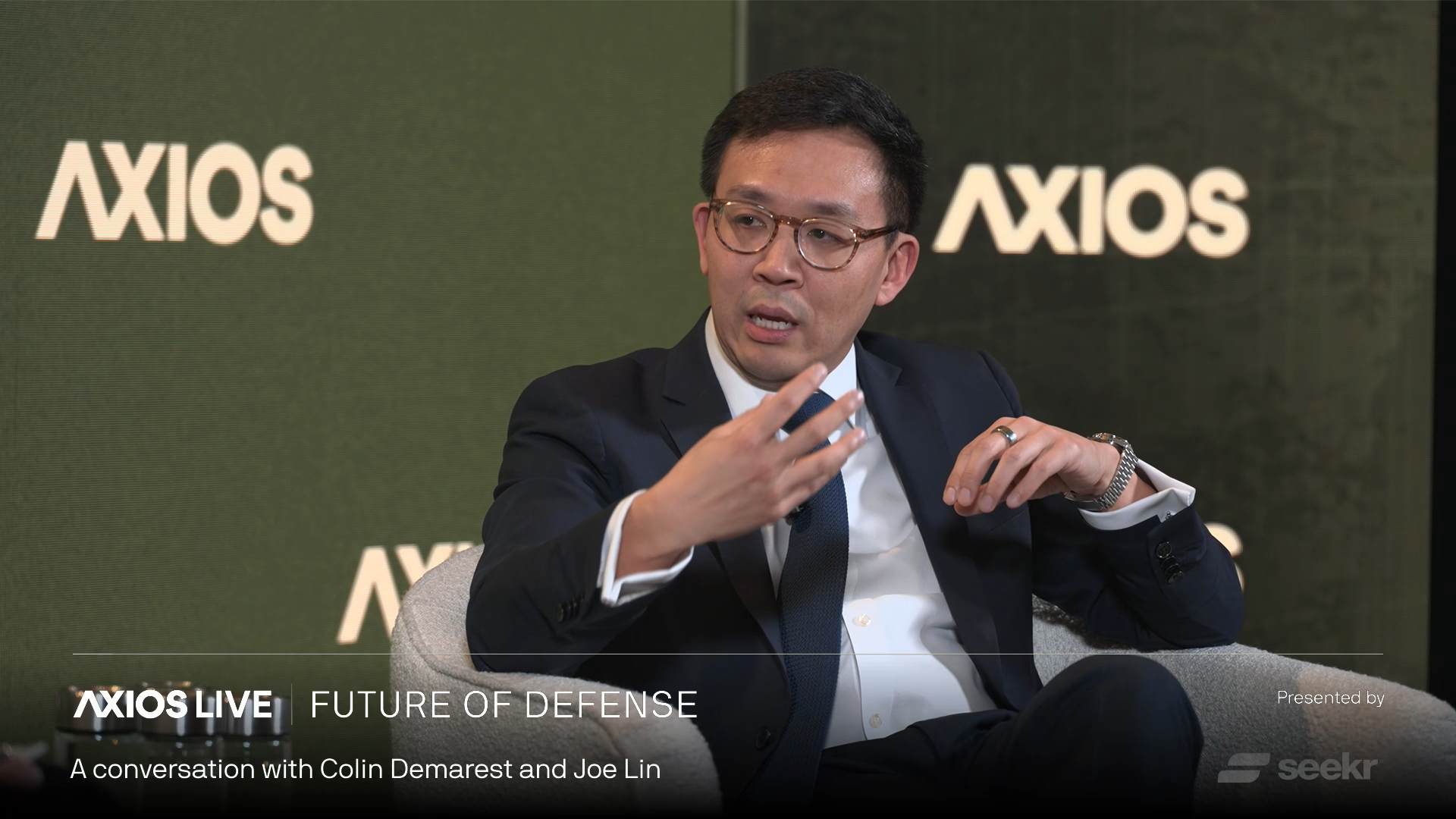
Companies rushing to fix AI-discovered vulnerabilities — not a coordinated wave of cyberattacks — are behind the spate of tech outages over the past week, Twenty co-founder and CEO Joe Lin said at Axios' Future of Defense Summit on Thursday.
- "Conspiracy theories can be a lot of fun, but as psychologically satisfying as they sometimes may be, I don't think that's what's happening here," Lin said.
Why it matters: Internet outages are likely about to become commonplace as organizations rapidly patch software bugs that AI models identify before hackers can take advantage of them.

Here's how many soldiers took the Army's GTA VI deal

More than three dozen soldiers reenlisted in a U.S. Army battalion after being offered four days off to play Grand Theft Auto VI, the Army confirmed to Axios.
Why it matters: The military branch turned one of the biggest video game releases in history into a reenlistment incentive that appears to have paid off.

Fed minutes show broad support for more rate hikes
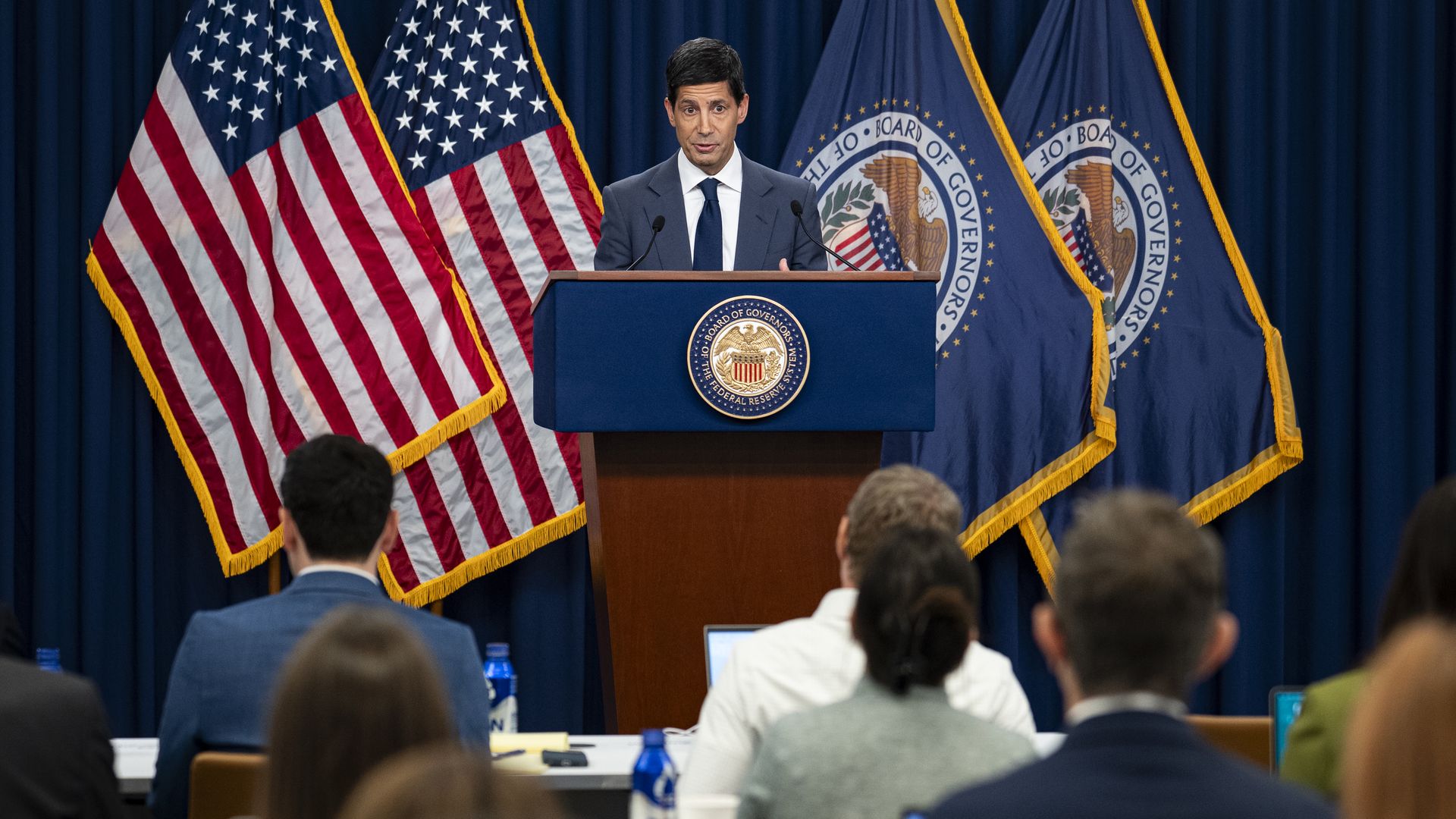
Minutes from the Federal Reserve's October meeting suggest Fed officials broadly agree on the need for higher interest rates, even as they debate how quickly to raise them.
Zoom in: "Almost all" policymakers expected further rate increases would be appropriate, broadly in line with their September projections.

Meta rethinks climate goal as AI emissions soar 45%
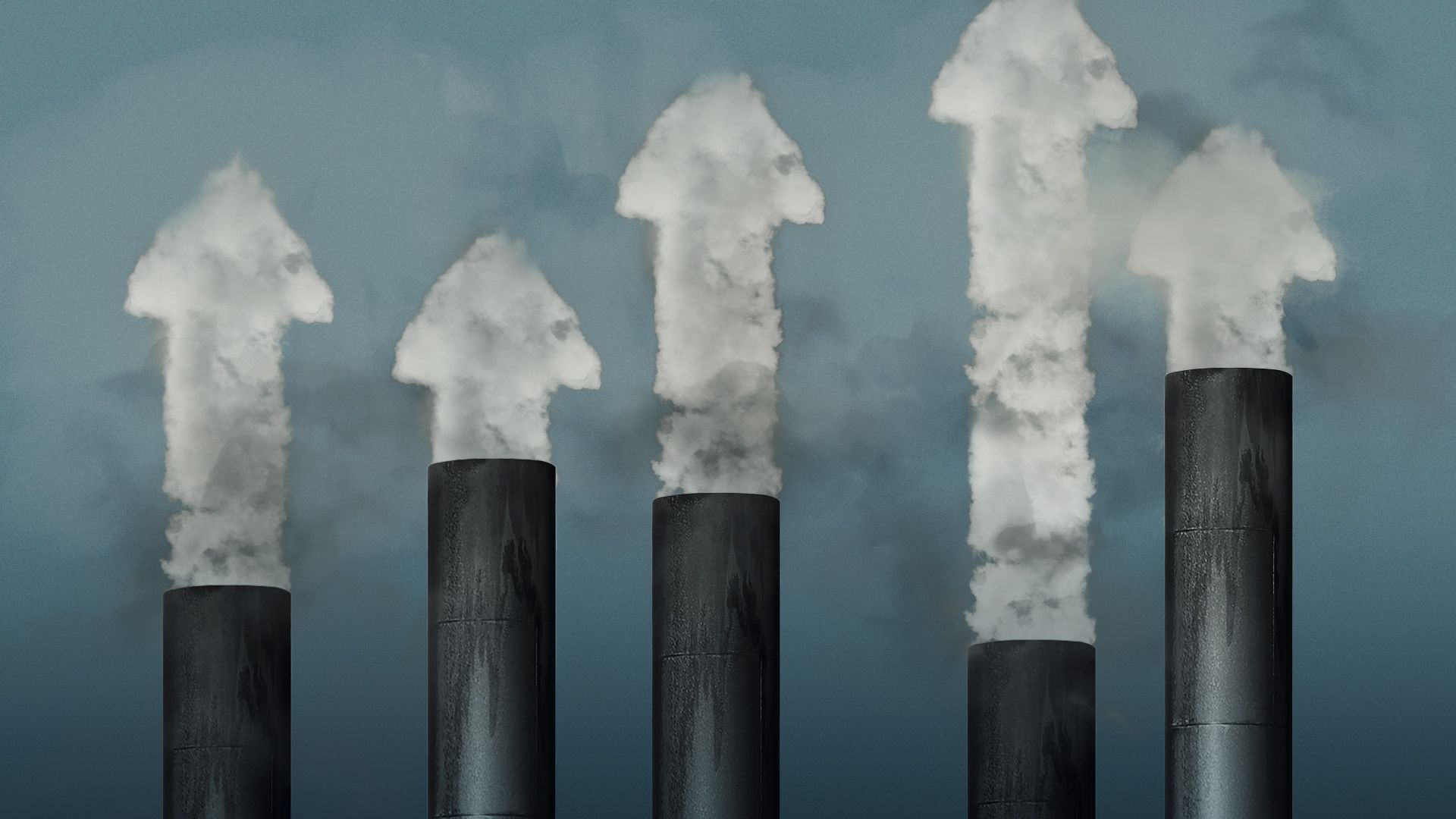
Meta's greenhouse gas emissions surged 45% last year amid its AI infrastructure boom, prompting the tech giant to reconsider its goal of reaching net-zero emissions by 2030.
Why it matters: Other tech giants have reported rising emissions as they race to build data centers, but Meta is going a step further by explicitly reconsidering its climate deadline.

Claude crushes it on Wall Street

Wall Street isn't sweating existential threats to humanity. That's a tomorrow problem. Today there's money to make.
Driving the news: Anthropic last night raised $81.35 billion in its IPO, after pricing 980 million shares at $83 per share. It had planned to sell 825 million shares at $70-$78 per share.

Why the Senate permitting bill might become law
If the sweeping Senate permitting bill becomes law, it will reflect a rare convergence of political and market forces strong enough to trump the Beltway aversion to big, bipartisan deals.
Why it matters: The bill could transform how America builds energy infrastructure, with major implications for everything from electricity costs to data centers.

Hyperscaler dominance could goeth before a fall

Giant tech companies seem to control the commanding heights of the emerging AI economy at this stage of the AI trade.
Why it matters: Owning the hyperscalers has been one of the most popular positions on Wall Street, but some argue they actually may be more vulnerable than they look.
The big picture: They've got all the money they need, via cash from their massively profitable business models and relatively cheap debt.
- Hyperscalers are also in a prime strategic spot, as they can sell wholesale computing power and AI services, as well as consumer and enterprise applications like Meta's Muse or Alphabet's Gemini Tasks.
Reality check: If this whole AI thing goes down in a flaming crash, hyperscalers will essentially be fine. They'll write down a few hundred billion in investment losses and go back to their pastime of minting money and plowing it into share buybacks.
- Plus, if things do get ugly, people are going to want to own giant blue chips with durable cash flows and fat profit margins. You know, Microsoft, Alphabet, Apple. Big Tech.
- (And then there's the situation in which hyperscalers control giant slugs of stock in companies like Anthropic, which could mitigate potential competitive threats.)
Zoom out: For all those reasons, sometimes it does seem like the strongest Big Tech companies really can't lose.
Yes, but: Not everybody agrees.
- "I think the most underappreciated risk when it comes to AI is the disruption risk to the big tech incumbents," Ulrike Hoffmann-Burchardi, head of global equities at UBS Global Wealth Management, told Axios Tuesday, at a UBS event to discuss its 2027 outlook.
What they're saying: She said she is telling clients that market bounces could be opportunities "to balance exposure and to balance and diversify away from the largest index weights."
The bottom line: It was an interesting view. And it seemed consistent with wrinkles we noticed in the recent crop of earnings, which included surprising weakness in the core businesses of giants like Alphabet and Amazon, for example.

Exclusive: JPMorgan, GM, Pfizer want bigger say in AI policy

Seven corporate giants are joining forces to give the businesses using AI a bigger voice in writing the rules around its deployment.
Why it matters: Corporate America wants a better seat at the AI regulation table in Washington, which has so far mainly offered seats to frontier AI and tech companies.
Exclusive: HEO unveils new space intel platform
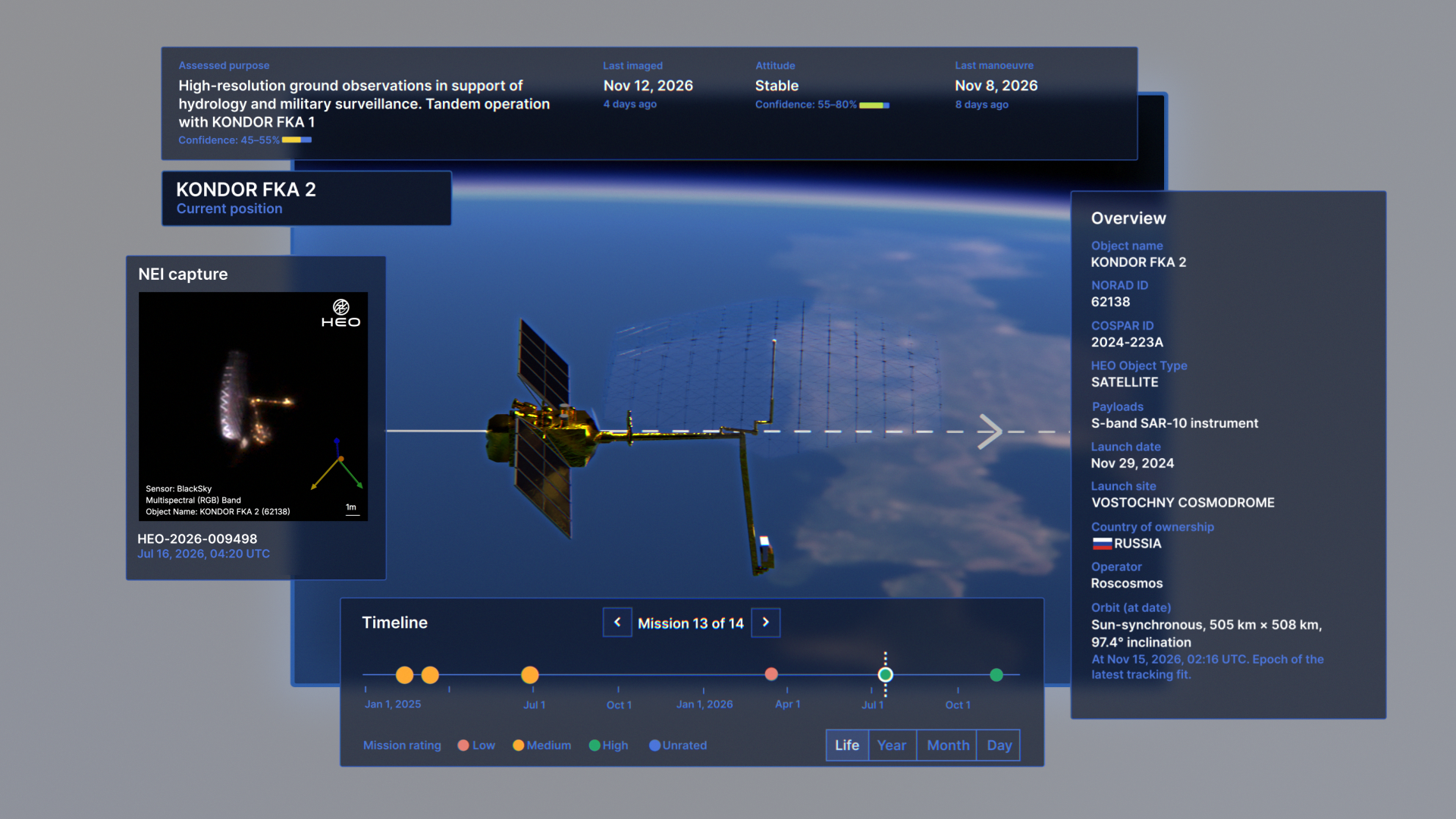
HEO, an Australian company, has been taking thousands of images of objects in orbit and has woven them together in a new space intelligence platform, Axios has learned.
Why it matters: As space warfare looms, countries need to be able to track potentially hostile activities in orbit to protect their military and commercial satellites from interference or attack.
- In October, an orbital showdown between a Russian spacecraft and a U.S. ICEYE satellite illustrated why keeping a close eye on space is crucial for emerging conflicts.
ULA's Vulcan mishap underscores U.S. "launch crisis"

While SpaceX basked in its historic Starship "catch" last weekend, a different space mission went awry the next day — with serious implications for U.S. national security.
- United Launch Alliance's heavy-lift Vulcan rocket had a mission failure Sunday just 10 minutes into its mission to bring 40 Amazon Leo satellites to space.
Why it matters: The growing commercial space industry and future U.S. military missions depend on multiple reliable rocket providers.
- But only two companies have flown National Security Space Launch missions: ULA and SpaceX. The former just had a mission failure, and the latter may be winding down government launches.

New on streaming: "Madden," "The Altruists" and new "Yellowjackets"

Real-life stories dominate this week's streaming picks, from the rise of a football legend to the collapse of a cryptocurrency empire and a decades-old wrongful conviction.
Madden — Movie available now on Prime Video
Nicolas Cage plays John Madden in a biopic directed by David O. Russell about the football legend's career and the video game franchise that bears his name.
- Zoom in: Christian Bale portrays Raiders owner Al Davis, while comedian John Mulaney takes on the role of EA Sports founder Trip Hawkins.
The Altruists — Limited series available Thursday on Netflix
The collapse of cryptocurrency exchange FTX unfolds through the relationship between its founder, Sam Bankman-Fried (Anthony Boyle), and his former girlfriend and colleague, Caroline Ellison (Julia Garner).
- Behind the scenes: Barack and Michelle Obama are executive producers of the eight-episode series, which is inspired by New York Magazine reporting.
Yellowjackets — Season 4 available Friday on Paramount+ Premium
The final season of the survival thriller follows the stranded teenage soccer players as they try to cover up what happened in the wilderness before they're rescued.
- Zoom in: Molly Ringwald, June Squibb, Devon Sawa and Dulé Hill join as guest stars.
Tony — Movie available Friday on HBO Max
Dominic Sessa plays a young Anthony Bourdain working in a Provincetown restaurant before finding fame as a chef and TV personality.
- Between the lines: The A24 film, which had its theatrical debut in August, fictionalizes parts of Bourdain's early life.
When a Witness Recants — Documentary available now on HBO Max
After a 1983 murder at a Baltimore school, three teenagers were wrongfully convicted and spent 36 years in prison. Witnesses later recanted their testimony, saying they had been pressured to lie.
- Behind the scenes: Director Dawn Porter teamed up with writer Ta-Nehisi Coates, who serves as executive producer and was a child in Baltimore when the murder occurred.
Go deeper: See last week's picks.
Putting cyber risk in perspective, from the experts (our own CTO)

Axios chief technology officer Dan Cox, who's spent 25 years at some of the world's biggest tech companies, puts the recent spate of high-profile failures in perspective:
My parents, my siblings and plenty of other people are asking the same question: How worried should we be?
The big picture: I've been in technology a long time. I take these threats seriously, but I'm not in panic mode.
- When something breaks, we need to understand what happened, how far it reaches and what we can do about it.
- A frightening headline doesn't answer those questions.

Doomsday prepping goes mainstream

The internet has caught the emergency preparation bug, fueled by fears of AI-led cyberattacks, power grid vulnerabilities, transportation standstills and international threats.
The big picture: The "prepper" mindset is resonating with larger slices of society — who are packing emergency bags, stocking up on water and taking inventory of non-perishables.

AI's great divergence: Machines accelerate as makers unravel
Anthropic will make its Wall Street debut Thursday at a moment of profound contradiction in the history of AI:
- The humans are embattled — bogged down by scandal, financial turmoil and political revolt.
- But the machines are ascendant — accelerating toward an "intelligence explosion" they expect will transform civilization.
Why it matters: The industry's recent chaos has obscured a breathtaking surge in technological progress, forcing some of the world's leading researchers to reconsider just how soon AI could surpass human intelligence.
Exclusive: Bots fueled tech outage conspiracy theories

Bot accounts have helped spread conspiracy theories about a wave of major tech outages over the last week, according to new research shared exclusively with Axios.
Why it matters: Purveyors of disinformation appear to be exploiting public anxiety over the outages and fragile infrastructure, amplifying suspicions of coordinated cyberattacks and government cover-ups.
- While it's unclear who's behind these accounts, the pattern shows that when technology failures lack substantive explanations, bot networks will fill the void to manufacture panic.