What is a dirty bomb and how dangerous is the weapon

Add Axios as your preferred source to
see more of our stories on Google.
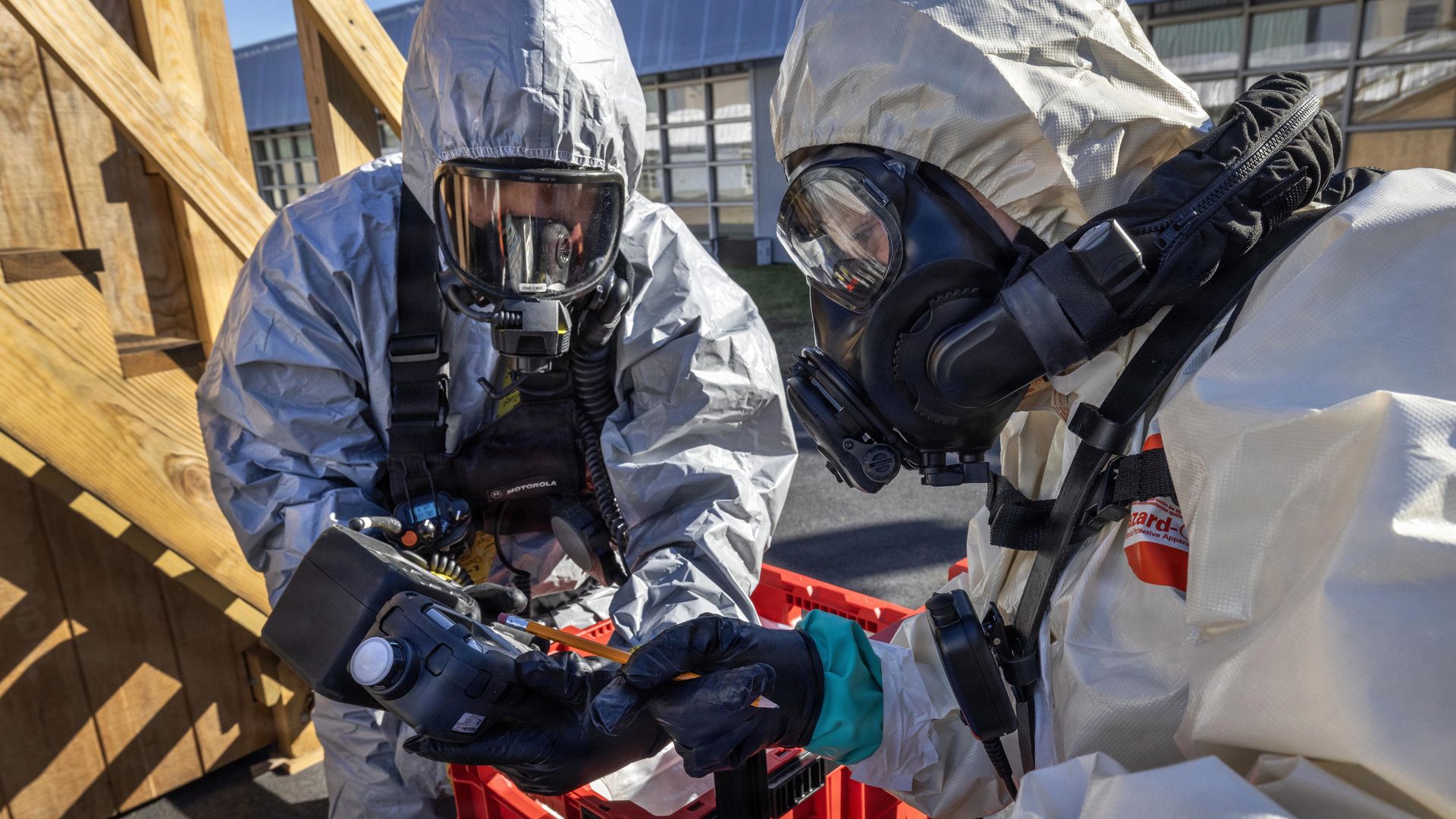
New Jersey National Guard Spc. Miguel Diaz displays radiation and chemical detection readings during a training exercise in Linden, N.J., on Jan. 15. Photo: Mark C. Olsen/New Jersey National Guard
President Trump warned Iran against orchestrating a "dirty bomb" attack in Washington, D.C., though the White House says there are no credible threats.
The big picture: Unlike a nuclear weapon, a "dirty bomb" uses common explosives to scatter radioactive material, potentially contaminating surrounding areas, forcing evacuations and causing widespread disruption.
Driving the news: Asked Tuesday about reports of a possible Iranian dirty bomb plot in Washington, Trump said, "We're looking into it."
- "We take it very seriously because they happen to be crazy," he added.
- Trump did not say an attack was imminent: "I hope it's not."
- Trump warned Iran would face unprecedented consequences if it carried out an attack.
Catch up quick: Trump's comments came hours after CNN reported about the threat to D.C.
- CNN reported that unnamed officials described Iran's attack planning as "an effort to give itself options rather than an indicator of an imminent attack."
- "We remain vigilant monitoring any and all potential threats, but at this time there are no credible threats to the homeland," says Lauren Bis, a White House spokeswoman.
- Iran has denied the allegations, with Foreign Ministry spokesman Esmaeil Baqaei calling them "baseless."
Read more about dirty bombs below.
What is a dirty bomb?
How it works: A dirty bomb combines conventional explosives, like dynamite, with radioactive materials, according to the Centers for Disease Control and Prevention.
- This is much different than a nuclear bomb. A nuclear bomb splits atoms and releases a huge blast of energy. Dirty bombs spread radioactive dust, smoke or other material that contaminate, the CDC says.
How dangerous is a dirty bomb?
The main danger stems from the explosion itself, which, like other explosive materials, can cause serious injuries and damage, according to the Nuclear Regulatory Commission.
- The scope of impact would depend on the size of the bomb, NRC says, as well as the type of radioactive material and weather conditions — especially if the material is inhaled.
- "Because people cannot see, smell, feel, or taste radiation, you should take immediate steps to protect yourself and your loved ones," the CDC says.
- The biggest concerns from high levels of radiation exposure would be nausea, vomiting, skin burns and radiation sickness, per CDC.
Yes, but: The exposure would probably not cause immediate serious illness, the CDC says, except for those very close to the blast.
What would happen if one exploded in Washington?
Though the White House confirms there are no credible threats, there are plans in place to keep D.C. safe from threats.
- The Department of Homeland Security's immediate response includes police and responders restricting access to affected areas, while experts investigate radiation levels. Residents may be told to shelter indoors.
DHS' Securing the Cities program helps high-risk metro areas, including D.C. and its region, detect and prevent potential attacks.
- The DHS has provided $300 million to the STC areas through 2023 to help them buy radiation detectors, train officers and build systems for spotting potential radioactive materials.
Worthy of your time: The NRC recommends staying as far away as possible from the bomb site.
- The CDC has tips on what to do if you're in a home, building or car when a dirty bomb goes off.
- Removing outer clothing may eliminate up to 90% of radioactive dust, the CDC says.
- Pets should also be brought inside, the CDC says.
Has a dirty bomb ever been used?
No dirty bomb has ever been successfully used in an attack, according to the Washington Post and other reports, though authorities have uncovered several plots and attempts.
- The U.S. Government Accountability Office has tracked past attempts, including multiple attempts in Russia.
- In 2002, U.S. authorities arrested Jose Padilla, an American accused of discussing a dirty-bomb attack with al-Qaeda operatives, potentially targeting Washington, D.C., per the Department of Justice. The alleged plot was in its early stages and never materialized.
The bottom line: A dirty bomb attack doesn't appear to be imminent in the U.S., but any such strike would make a relatively small explosion into a much larger public safety crisis.
