Most Americans are baffled and alarmed by the daily, if not hourly, explosion of technical glitches hitting air travel, banks and work products like Microsoft Outlook. The outages seem genuinely scary and related.
So what the hell is going on?
The most likely answer: This is the first true wave of unintended consequences of increasingly powerful artificial intelligence hitting us at once.
PlayStation confirmed Wednesday afternoon that it experienced a major outage to its online gaming platform just hours before the release of the highly anticipated "Grand Theft Auto VI."
Why it matters: "GTA VI" is arguably the biggest pop culture event of the year, and is set to release on PlayStation and Xbox consoles when the clock strikes midnight.
Ursa Major and Avio USA secured a joint contract from RTX to design and develop solid-rocket motors for the Tomahawk cruise missile.
Why it matters: The work is expected to produce a pair of qualified booster vendors, bolstering supply chains for one of the most in-demand and relied-upon munitions in the U.S. inventory.
"At the end of the day," Ursa president Jason Meredith said in a statement to Axios, "this is about making sure" troops have "the critical munitions they need, when they need them."
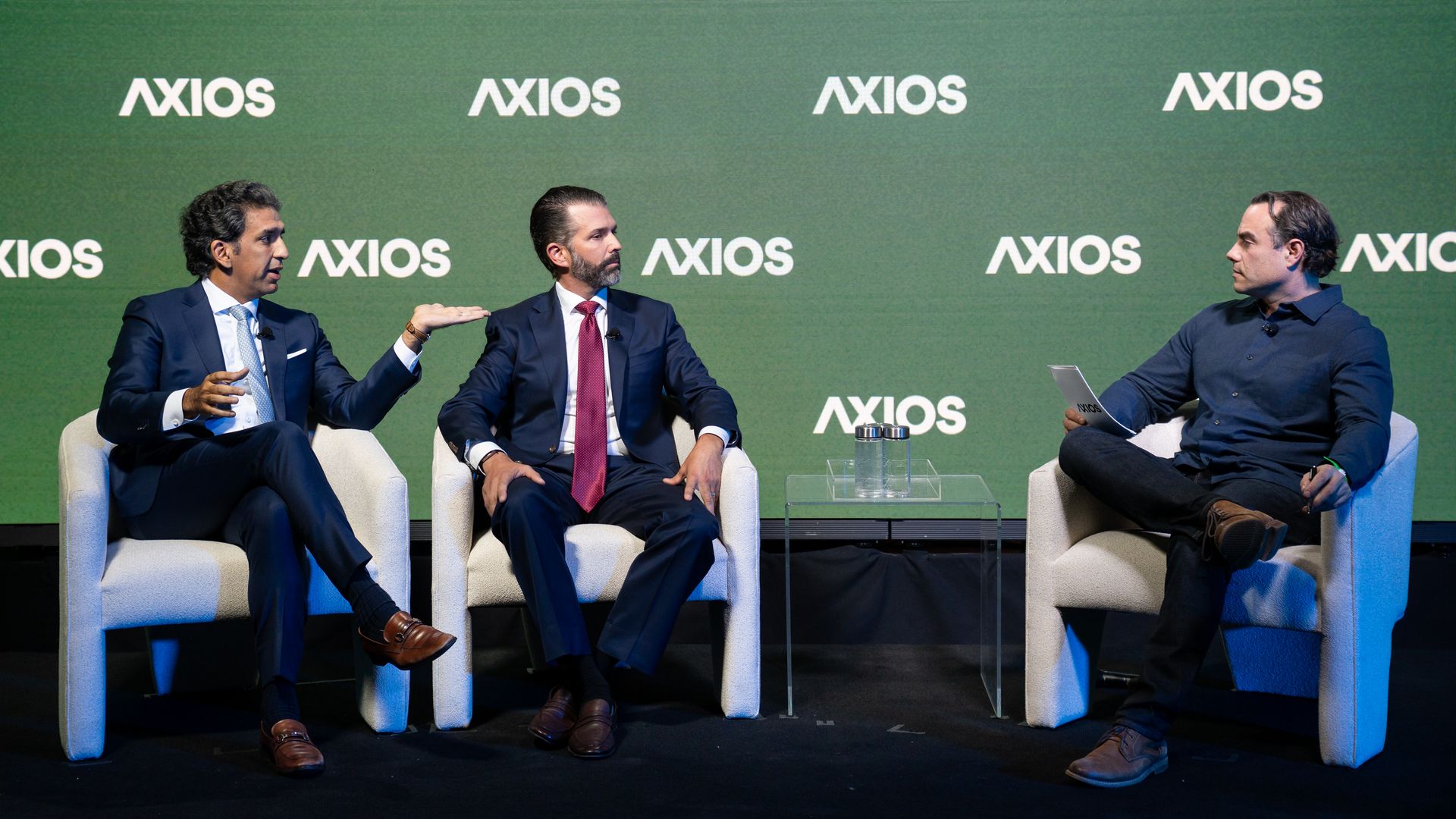
NEW YORK — Some of Wall Street's biggest financial voices remain optimistic on artificial intelligence, but questions about valuations, risks and the technology's impact on the economy loomed large at Axios BFD.
Why it matters: It remains unclear if AI makes money, and how much. Whether the technology delivers on its potential could have immense consequences for the country's economic outlook.
The Nov. 17 event was sponsored by Center for Audit Quality, Imprint, KPMG and TriEdge Investments.
Catch up quick: Here are our top takeaways.
Trump Organization executive vice president and 1789 Capital partner Donald Trump Jr. acknowledged investors may have underestimated the negative sentiment around AI and that tech founders are "probably not the best messengers when they basically say, 'AI is gonna rule the world, and you should be thrilled about it.'"
Fears over cybersecurity are "double underlined" in the age of AI, Federal Reserve Bank of New York president and CEO John C. Williams said. He added that the AI boom may push the Fed to raise interest rates again next year.
There may be "mini-bubbles" floating around the AI ecosystem, Goldman Sachs global co-head of investment banking Kim Posnett said, adding that "we don't yet know who the winners and losers" of the AI boom are.
"There is often a component of AI" in the companies that world-class tennis champion, entrepreneur and host of the "Pretty Tough" podcast Maria Sharapova invests in, she said.
Not everyone or everything needs expensive frontier AI models, Vista Equity Partners founder, chairman and CEO Robert F. Smith said. Instead, Vista has built its own "agentic factory," Smith explained, which he said can double or triple the margins of its portfolio companies.
Content from the sponsors' segments:
In a View From the Top conversation, Center for Audit Quality public affairs vice president Amy O'Connor said times of uncertainty are an opportunity to build trust and interrogate information sources.
"All of us … can really benefit from ensuring we're asking ourselves and those around us the right questions. I think that will only lead to better capital allocation decisions."
In a sponsored conversation, Imprint founder and CEO Daragh Murphy said he can't see the future but expects AI agents to transform commerce and purchasing.
"Five months ago, we had 0% agent transactions on our card. Today, we have 2%. That doesn't sound like a lot, but the curve is already exponential. So, we would predict that … 15%, 20%, 25% of commerce may be intermediated by agents, and we're already seeing that at the bleeding edge."
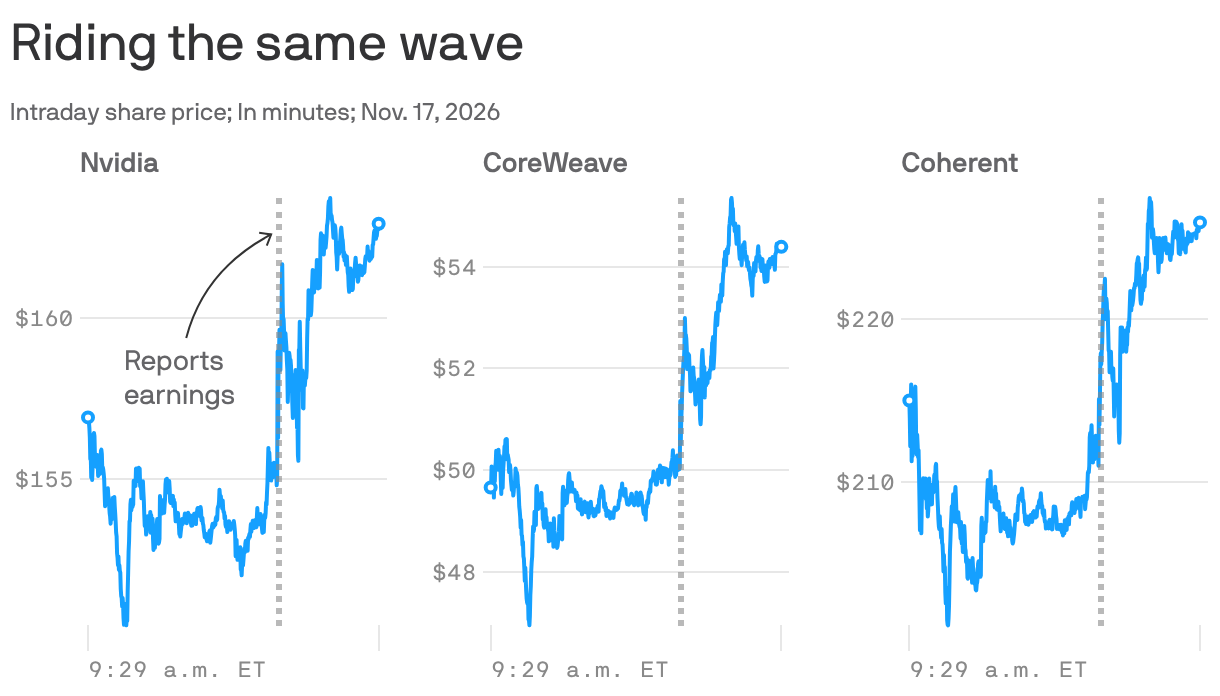
Nvidia's strong results, better-than-expected guidance and statements of ongoing support for the AI ecosystem are giving the tech trade a fillip.
Why it matters: The bump for firms financially linked to Nvidia reveals how the resignation of Jensen Huang — the driving force behind the company's unorthodox financial arrangements with smaller AI entities — has been weighing on the markets more broadly.
Anthropic leaders built their brand and reputation with a stark warning: Their all-powerful AI could gut white-collar work and, if rushed, could slip beyond human control with catastrophic consequences.
Now, they're basically promising Wall Street and investors they could do both faster than their rivals.
Why it matters: Anthropic is pushing one of the largest IPOs ever attempted, selling tens of billions of dollars' worth of stock at a $1 trillion-plus valuation. The stock is expected to begin trading Thursday on Nasdaq with the ticker symbol ANT.
A new breed of widely available AI tools is helping hackers launch cyberattacks around the clock, breaching corporate networks in a matter of hours and overwhelming defenders.
Why it matters: AI-enabled hacking is still in its infancy, but open-source tools — which are free to download — are fundamentally changing the economics of cybercrime.
A group of elected officials from five states led by Democrats is seeking to pressure Anthropic to square its warnings of catastrophic risk with plans to go public.
Why it matters: The questions for the company aren't likely to stop the IPO, but they are a preview of the scrutiny tech giants can expect to face after the midterms' blue AI earthquake.
While Democrats have yet to build a comprehensive AI policy platform, it's already clear that many do not favor acceleration.
Americans were locked out of bank accounts, blocked from boarding flights and unable to check emails in rapid succession over the past week.
Why it matters: The internet immediately pointed fingers toward an AI agent doomsday, sending people into a frenzy that the Big One™was about to happen.