Tesla's Cybercab: Your car, Tesla's rules

Add Axios as your preferred source to
see more of our stories on Google.
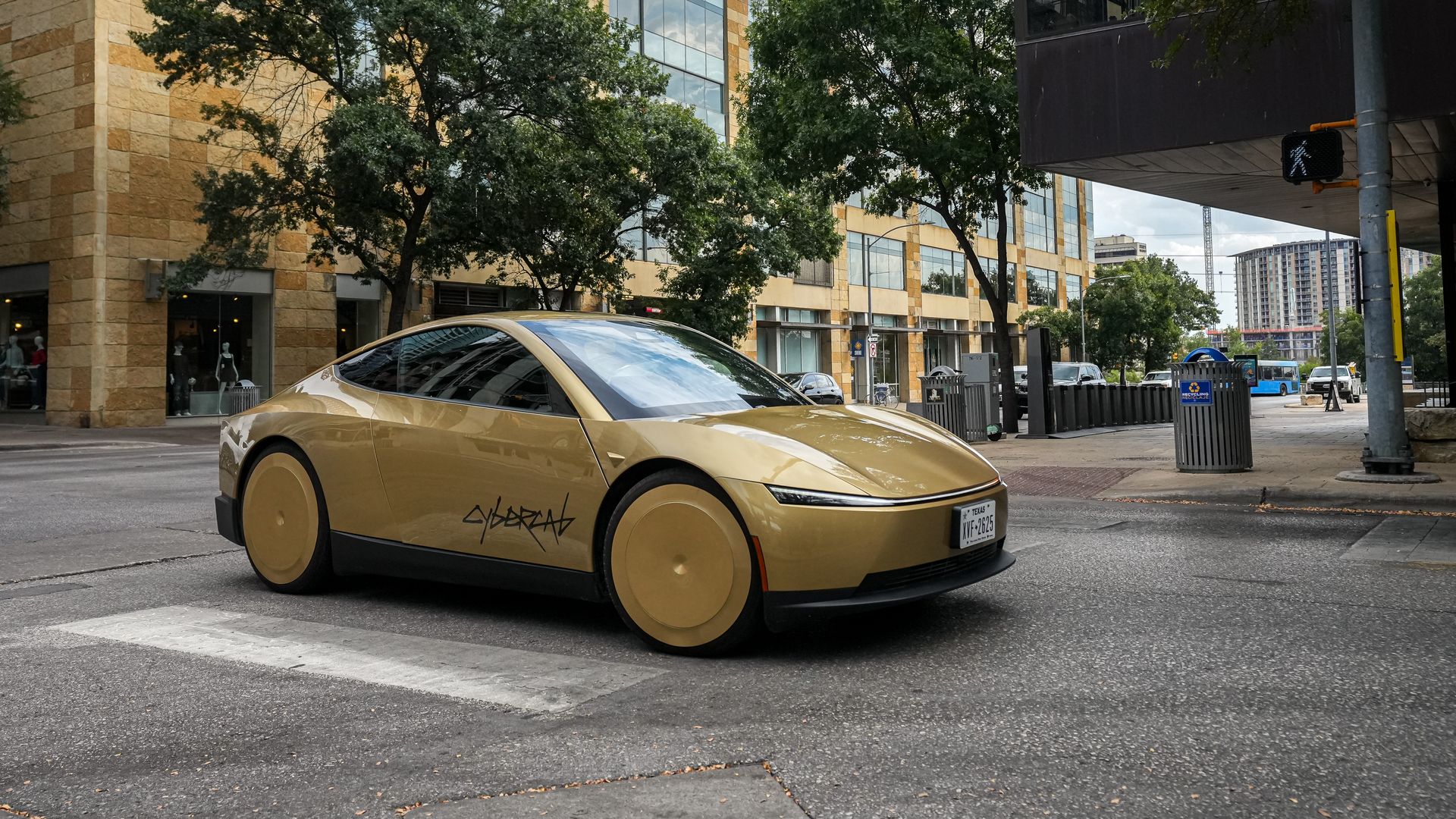
Tesla Cybercab in Austin, Texas. Photo: Aaron E. Martinez/The Austin American-Statesman via Getty Images
Tesla is inviting select customers to buy its futuristic Cybercab, promising the freedom of owning a car that drives itself.
Why it matters: The fine print suggests owners may have surprisingly little control over their vehicles.
The big picture: The dawn of personal autonomy could transform transportation, but Tesla's initial purchase agreements raise fundamental questions about what it means to own a car when the manufacturer controls the driving technology.
Driving the news: Tesla is offering its two-seat, steering-wheel-free Cybercab for $29,990, plus a mandatory $299 monthly autonomy subscription.
- The subscription includes autonomous driving, connectivity, roadside assistance and routine maintenance, including tires and windshield replacements.
The fine print: Tesla retains extraordinary control over the vehicle even after selling it.
- Owners cannot sell or transfer their Cybercab without Tesla's permission. Violators face a contractual penalty of at least $50,000, and Tesla can remotely disable the vehicle.
- Owners generally cannot lend their Cybercab to someone else unless they're riding along, although Tesla can authorize exceptions through its app.
- They also can't use their Cybercab to earn money through ride-hailing or delivery services without Tesla's authorization.
Three big questions remain unanswered:
Who's responsible when a Cybercab crashes? Tesla requires owners to obtain their own insurance, even though its software does all the driving.
- It's unclear which insurers will cover privately owned, fully autonomous vehicles — or how liability will be divided between Tesla and the owner when something goes wrong.
Where and how can Cybercabs operate? Tesla limits them to approved geographic areas and reserves the right to change those boundaries.
- Plus, it's not clear how governments will regulate personally owned robotaxis.
How much freedom will owners really have? Can they send a Cybercab to pick up their spouse or teenager without riding along?
- What about road trips? Under Tesla's initial sales agreements, obtained by Axios, those freedoms are restricted or subject to its approval.
The bottom line: Tesla is selling the freedom to stop driving. But for now, that could mean surrendering some of the freedoms that traditionally come with owning a car.
