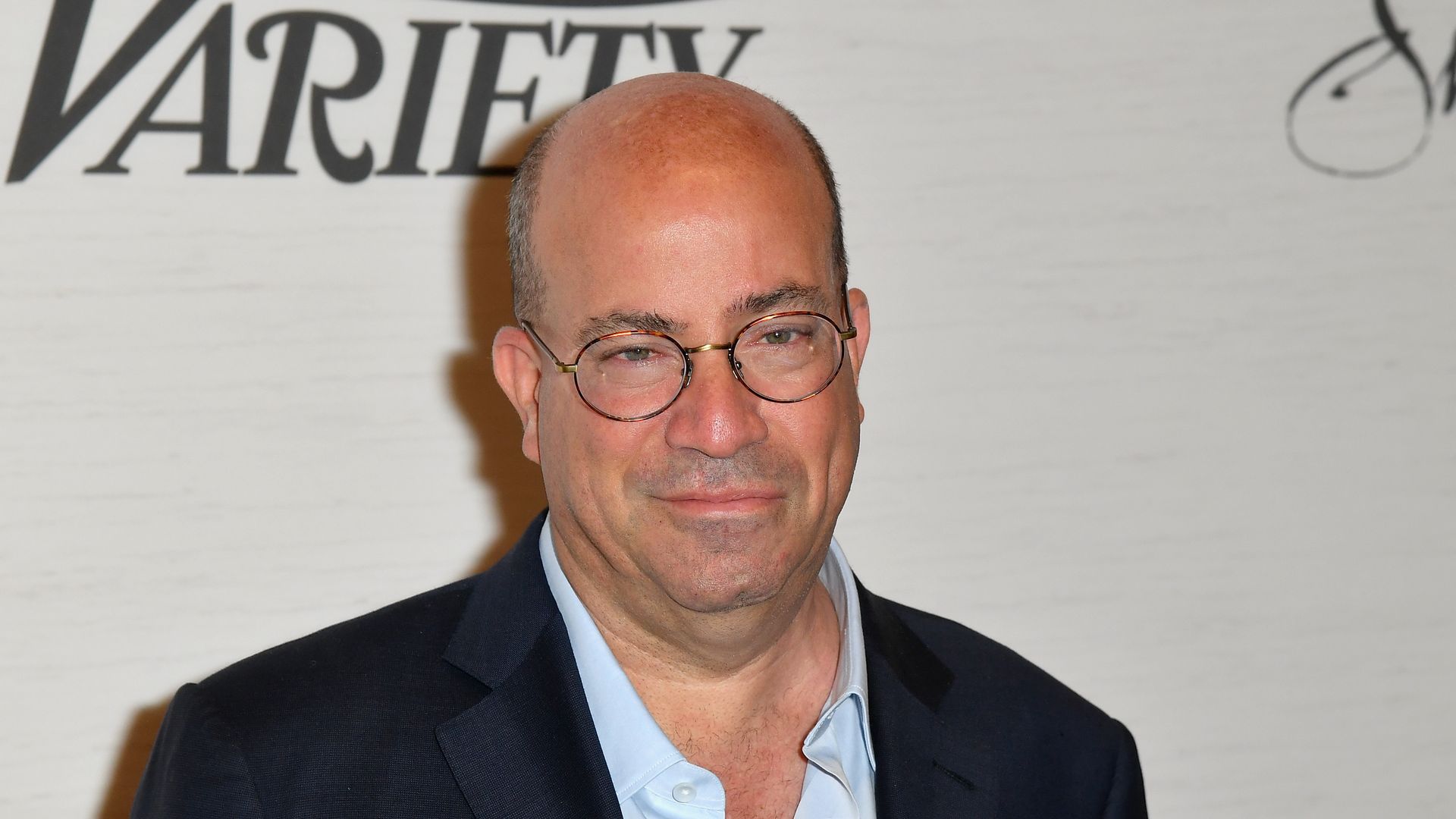
All3Media, an independent TV production firm, has merged with Banijay Entertainment, a publicly traded French production company to create a European TV production behemoth worth $8 billion, the chair of the newly combined company Jeff Zucker told Axios in an interview Tuesday.
Why it matters: The combined company will be better positioned to continue to grow outside of Europe and particularly in the U.S., Zucker said.
Now that Paramount Skydance has won the bidding war for Warner Bros. Discovery, it faces a complicated road of regulatory approvals from governments across the globe.
Why it matters: Antitrust experts do not expect regulators in the U.S. or abroad to block the deal, but the approval process will likely be long and cumbersome, which could impact how quickly the company can realize synergies and growth opportunities.
Netflix co-CEO Ted Sarandos never met with President Trump or any White House officials last week when he visited Washington, according to sources familiar with the engagement.
Sarandos was informed shortly after arriving at the White House that his meeting was canceled because of a last-minute scheduling conflict, and then he promptly left the building.
Why it matters: Media onlookers were quick to speculate that Sarandos' meeting at the White House on Thursday prompted Netflix to drop out of the bidding war for Warner Bros. Discovery.
OpenAI and the Pentagon have agreed to adjust their recently agreed contract, following widespread backlash that domestic mass surveillance was still a real risk under the deal — though the language has not been formally signed, sources familiar with the pact told Axios.
Why it matters: The Pentagon's deal with Anthropic to use Claude for national security blew up, and the prospect of securing an agreement with OpenAI appeared to be on thin ice if concerns around mass domestic surveillance weren't addressed.
Hospitals are increasingly billing health plans for more complex care than they actually provide, according to a new analysis of Blue Cross Blue Shield claims from 2022 to 2025.
Why it matters: The so-called coding intensity balloons health care spending, and it corresponds with an increase in hospital use of AI to help document patient visits.
As large language models grow more powerful and less predictable, AI companies are loosening safety guardrails in the race to be first — a shift that some warn could lead to catastrophe.
Why it matters: Even Google DeepMind CEO Demis Hassabis has warned that "race conditions" — pressure to outpace rivals or rival nations — can drive reckless decisions as the world nears superhuman AI.
The U.S. Embassy in Riyadh was attacked by two drones, according to initial estimates, resulting in a limited fire and minor material damage to the building, a Saudi Defense Ministry spokesperson said.
The big picture: Tehran has launched a wave of counterattacks following weekend airstrikes by American and Israeli forces on Iran, firing missiles at Middle Eastern countries that are allied with the U.S. into Tuesday morning — as the U.S. and Israel continued to target Iran.
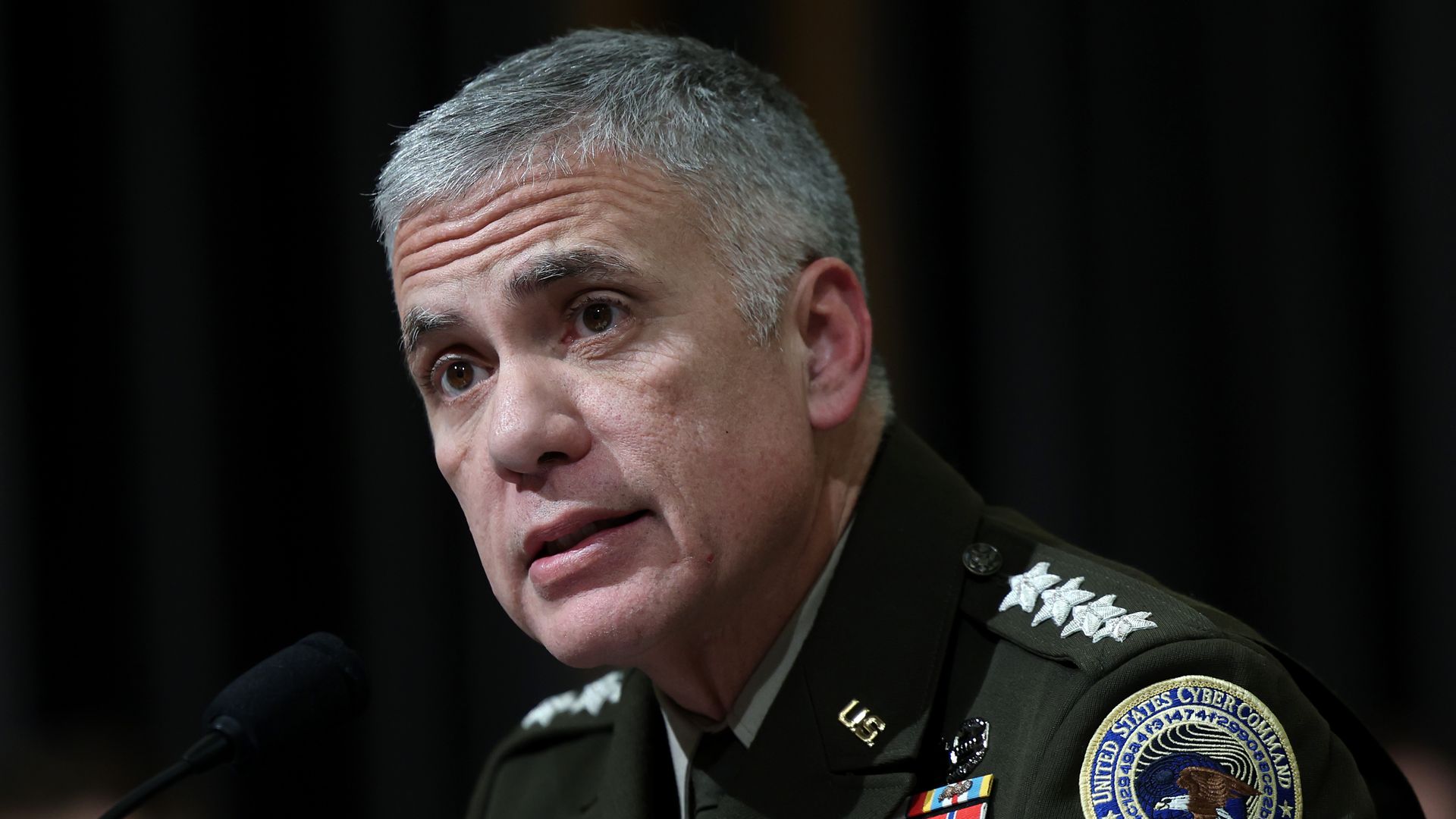
Retired Gen. Paul Nakasone, former NSA and U.S. Cyber Command director and an OpenAI board member, criticized the Trump administration's decision to label Anthropic a supply chain risk.
Why it matters: Designating just one American AI company as a risk could dismantle the Pentagon's decades of work to build trust across Silicon Valley, he warned.
AI is moving fast, and a wave of hot takes is fueling doomerism and amplifying fears about what tech could do to jobs, power and society.
Why it matters: When something scares me, I like to focus on what I can control. In this case, that's my own understanding of AI, as a reporter covering it.
U.S. counterterrorism and intelligence teams are on high alert and law enforcement in major cities has bolstered security in the wake of this weekend's strikes on Iran.
The big picture: FBI director Kash Patel instructed federal counterterrorism and intelligence to "mobilize all assisting security assets needed" after placing them on high alert Saturday, per a post to X, while law enforcement in D.C., New York City and Los Angeles are among those to take additional steps.
WASHINGTON, D.C. — Diverse energy sources are vital to keeping costs down, policymakers said at a Feb. 25 Axios Live event.
The big picture: With the artificial intelligence explosion driving rapid data center expansion, the resulting energy demand is raising concerns about supply — and who will pay the bills.
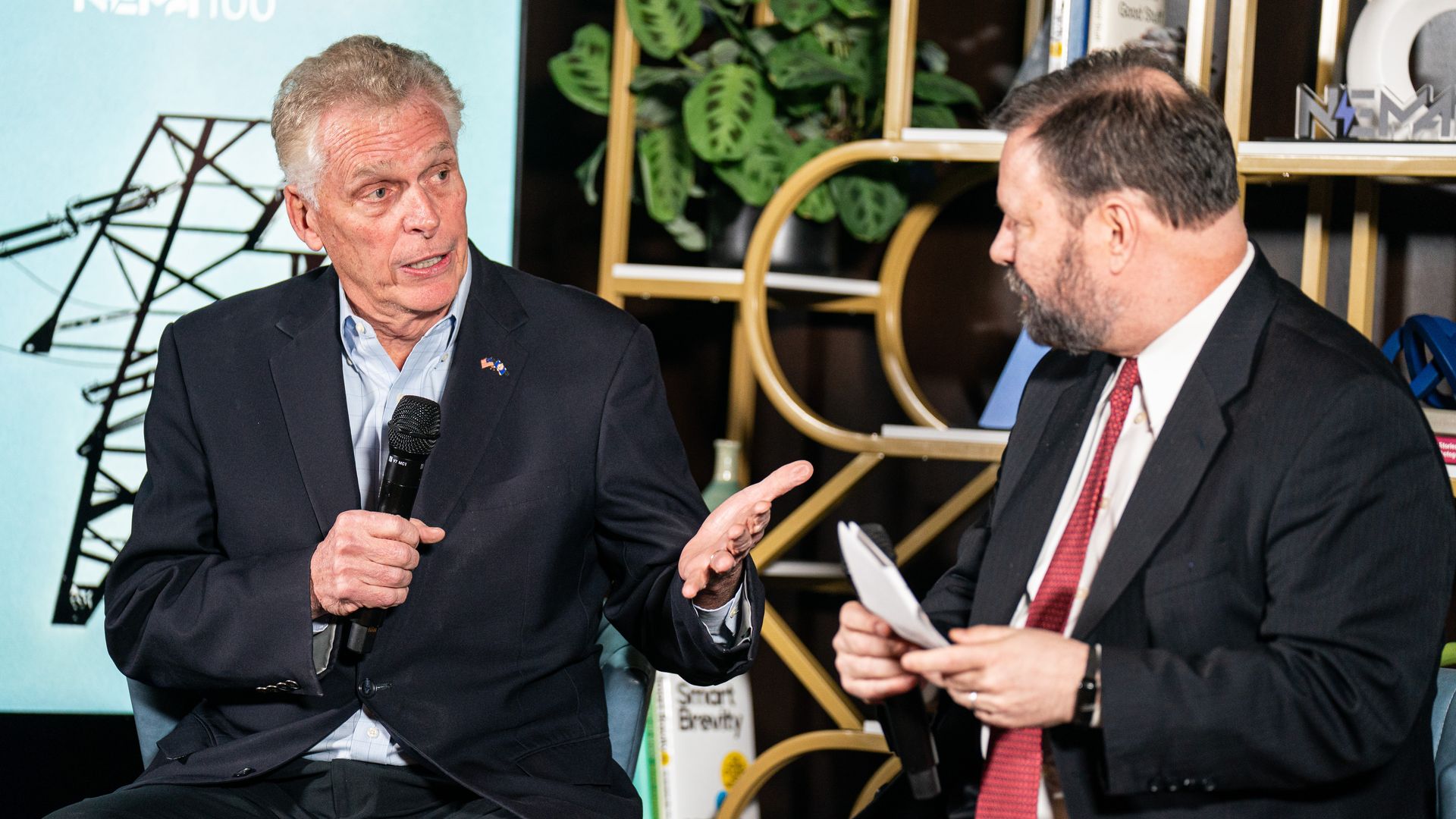
Axios' Chuck McCutcheon and Ben Geman spoke with former Virginia Gov. Terry McAuliffe (D), co-chair of Natural Allies for a Clean Energy Future National Leadership Council; and Alex Fitzsimmons, acting undersecretary at the U.S. Department of Energy and director of its office of cybersecurity, energy security and emergency response.
Driving the news: The Trump administration has announced a "ratepayer protection pledge" that calls on Big Tech to cover its own electricity needs amid the data center boom.
"The hyperscalers realize that if they want to be politically or economically sustainable in the long term, they have to do what President Trump said, which is bring your own power, and then some," Fitzsimmons told Geman.
Yes, but: The administration's announcement was short on specifics.
Virginia has found some strategies for data center expansion and expenses, McAuliffe told McCutcheon.
"Loudoun County, Virginia, today, gets about $990 million in tax revenue from our data centers," McAuliffe said. "That is a third of Loudoun County's budget."
Diverse energy sources are essential, McAuliffe added.
The Democratic Party "needs to get better on gas," he said. "We need more gas infrastructure in the country with AI data centers, [which are] going to require three times more energy."
"So what do we do? I'm building turbines, I'm building wind farms, I'm putting solar in, but I've got to meet the demand today."
It is "the single largest loan that the Department of Energy has ever made … [and] the single largest loan the federal government has ever made outside of the financial crisis."
"That loan is going to save ratepayers in Alabama and Georgia $7 billion" over its lifetime, Fitzsimmons told Geman.
Content from the sponsor's segment:
In a View From the Top conversation, NEMA president and CEO Debra Phillips and Deni Miller, ABB U.S. & Mexico distribution solutions business line leader and U.S. electrification business lead, discussed concerns about permitting bottlenecks with Axios publisher Nicholas Johnston.
The electrical industry "is ready" to meet the moment, Phillips told Johnston, "but we can't do it alone."
"We need our grid partners [and] we need our policy partners to create an environment where we can expand, grow, meet the growing demand for electricity — which we think is going to be 55% between now and 2050."
Congressional security officials are instituting "heightened security measures" at the U.S. Capitol in response to escalating conflict in the Middle East, according to a notice to House offices obtained by Axios.
Why it matters: It is a signal of how seriously domestic law enforcement is taking the possibility of attacks on U.S. soil related to ongoing U.S. operations in Iran.
Democrats in the House and Senate are readying their response to the Pentagon's fight with Anthropic, including a measure to prevent federal agencies from punishing AI companies over disputes, sources familiar with the matter tell Axios.
Why it matters: The administration's unprecedented blacklisting of a leading American AI company could spur Congress to act on AI guardrails.
Corporations are starting to find their backbone: from AI labs resisting military ultimatums to retailers successfully suing the president.
Why it matters: The prevailing corporate strategy has been one of high-profile compliance, particularly with the Trump administration. Now, corporates are pushing back, because the cost of that compliance is existential.
The Treasury Department is officially pulling the plug on Anthropic's AI tools at the direction of President Trump, Secretary Scott Bessent announced on Monday.
Why it matters: The move marks the next step in one of the most aggressive federal actions against a major American AI company.
Anthropic and OpenAI's war over talent, financing, contracts and positive public perception hit a crescendo last month.
It started with Anthropic's Super Bowl ad — which took aim at OpenAI for integrating ads into its chatbots — and continues as the two attempt to distinguish red lines within government contracts.
Why it matters: Both AI labs must make major inroads if they hope to win over the public.
The Pentagon’s standoff with Anthropic highlights a mass surveillance reality: There are few laws limiting what the government can do with artificial intelligence.
Why it matters: AI's evolving technology enables scenarios that may be widely unpopular, but fully legal.