U.S. counterterrorism and intelligence teams are on high alert and law enforcement in major cities has bolstered security in the wake of this weekend's strikes on Iran.
The big picture: FBI director Kash Patel instructed federal counterterrorism and intelligence to "mobilize all assisting security assets needed" after placing them on high alert Saturday, per a post to X, while law enforcement in D.C., New York City and Los Angeles are among those to take additional steps.
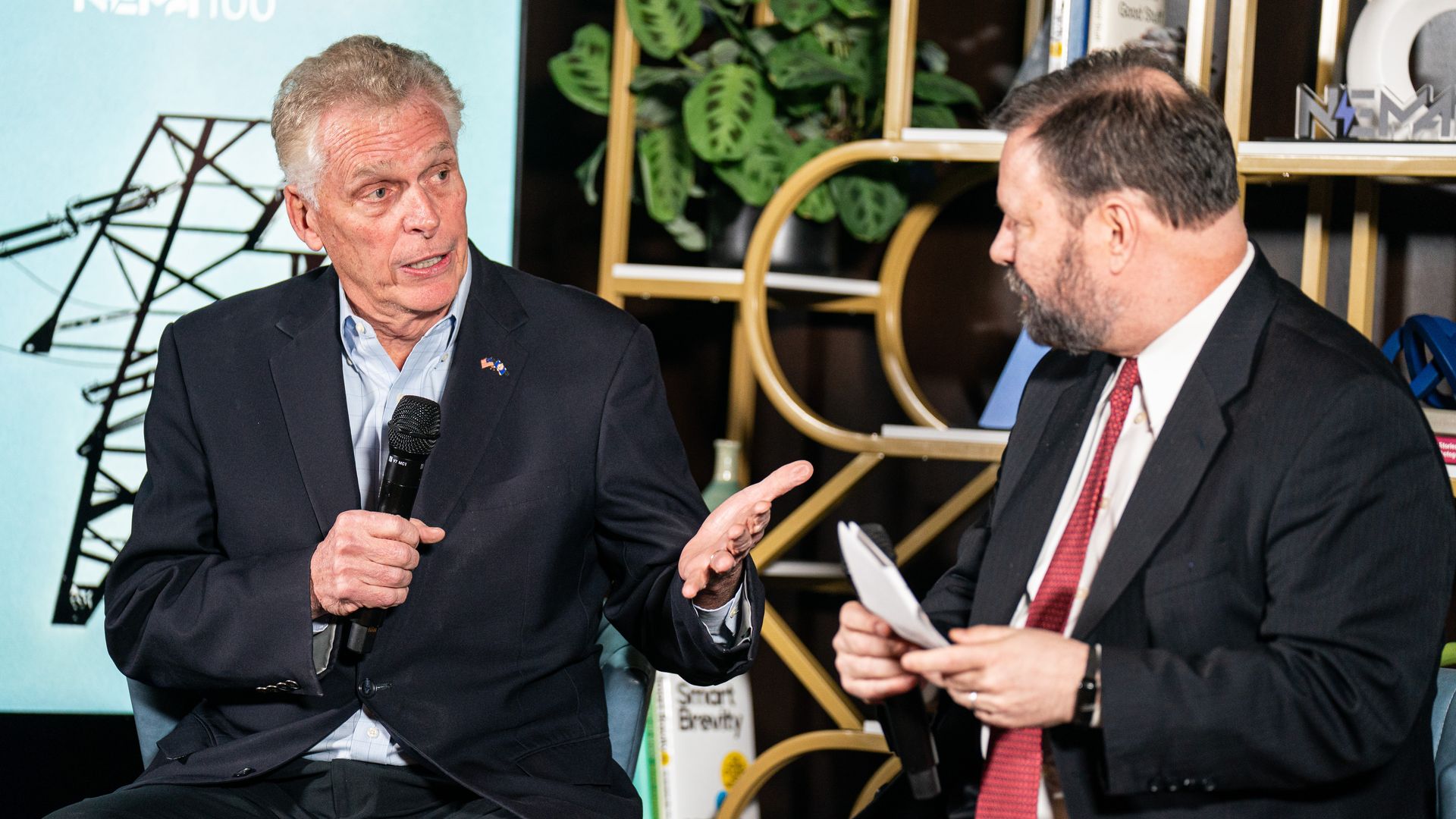
WASHINGTON, D.C. — Diverse energy sources are vital to keeping costs down, policymakers said at a Feb. 25 Axios Live event.
The big picture: With the artificial intelligence explosion driving rapid data center expansion, the resulting energy demand is raising concerns about supply — and who will pay the bills.
Axios' Chuck McCutcheon and Ben Geman spoke with former Virginia Gov. Terry McAuliffe (D), co-chair of Natural Allies for a Clean Energy Future National Leadership Council; and Alex Fitzsimmons, acting undersecretary at the U.S. Department of Energy and director of its office of cybersecurity, energy security and emergency response.
Driving the news: The Trump administration has announced a "ratepayer protection pledge" that calls on Big Tech to cover its own electricity needs amid the data center boom.
"The hyperscalers realize that if they want to be politically or economically sustainable in the long term, they have to do what President Trump said, which is bring your own power, and then some," Fitzsimmons told Geman.
Yes, but: The administration's announcement was short on specifics.
Virginia has found some strategies for data center expansion and expenses, McAuliffe told McCutcheon.
"Loudoun County, Virginia, today, gets about $990 million in tax revenue from our data centers," McAuliffe said. "That is a third of Loudoun County's budget."
Diverse energy sources are essential, McAuliffe added.
The Democratic Party "needs to get better on gas," he said. "We need more gas infrastructure in the country with AI data centers, [which are] going to require three times more energy."
"So what do we do? I'm building turbines, I'm building wind farms, I'm putting solar in, but I've got to meet the demand today."
It is "the single largest loan that the Department of Energy has ever made … [and] the single largest loan the federal government has ever made outside of the financial crisis."
"That loan is going to save ratepayers in Alabama and Georgia $7 billion" over its lifetime, Fitzsimmons told Geman.
Content from the sponsor's segment:
In a View From the Top conversation, NEMA president and CEO Debra Phillips and Deni Miller, ABB U.S. & Mexico distribution solutions business line leader and U.S. electrification business lead, discussed concerns about permitting bottlenecks with Axios publisher Nicholas Johnston.
The electrical industry "is ready" to meet the moment, Phillips told Johnston, "but we can't do it alone."
"We need our grid partners [and] we need our policy partners to create an environment where we can expand, grow, meet the growing demand for electricity — which we think is going to be 55% between now and 2050."
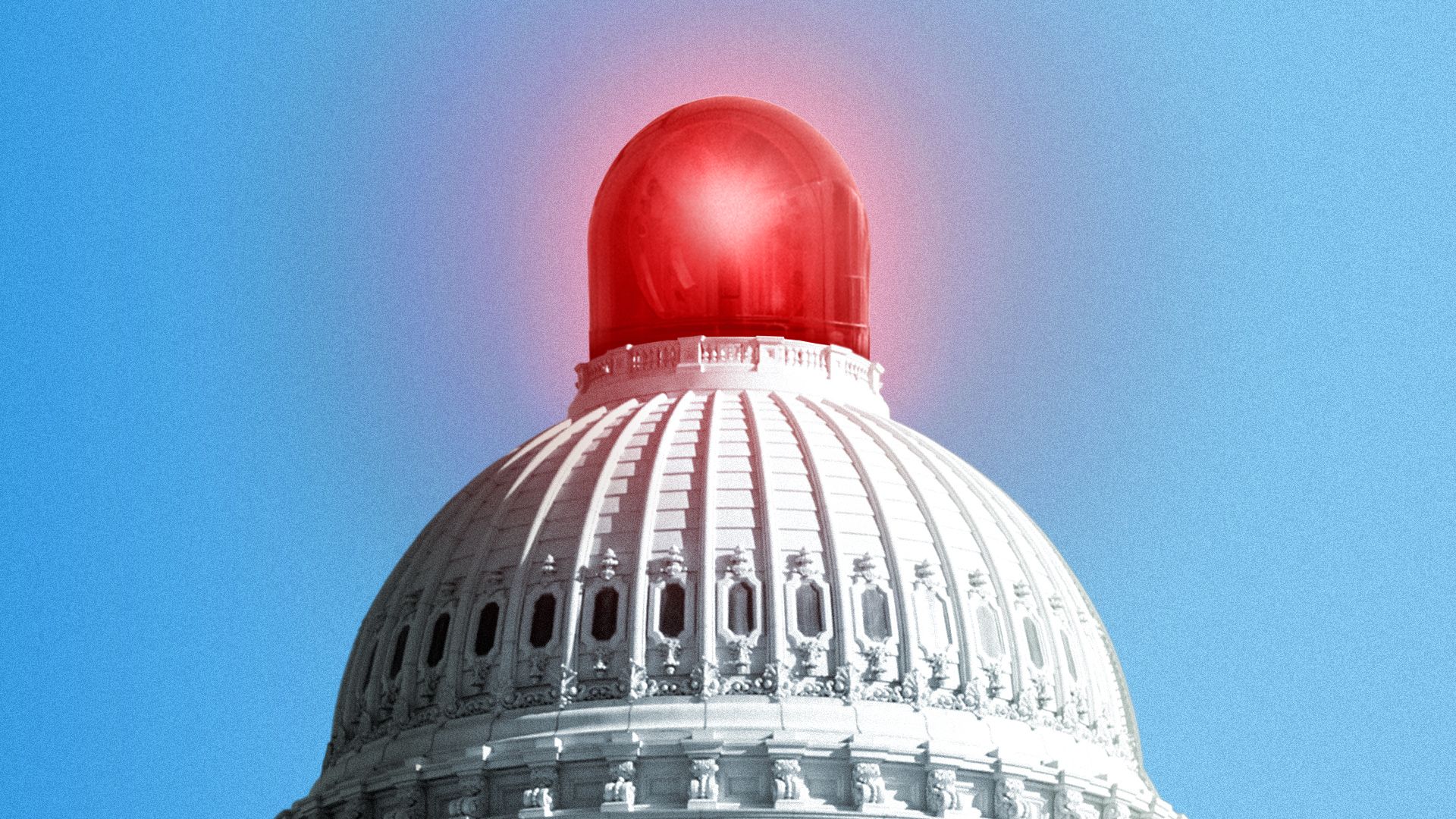
Congressional security officials are instituting "heightened security measures" at the U.S. Capitol in response to escalating conflict in the Middle East, according to a notice to House offices obtained by Axios.
Why it matters: It is a signal of how seriously domestic law enforcement is taking the possibility of attacks on U.S. soil related to ongoing U.S. operations in Iran.
Democrats in the House and Senate are readying their response to the Pentagon's fight with Anthropic, including a measure to prevent federal agencies from punishing AI companies over disputes, sources familiar with the matter tell Axios.
Why it matters: The administration's unprecedented blacklisting of a leading American AI company could spur Congress to act on AI guardrails.
Corporations are starting to find their backbone: from AI labs resisting military ultimatums to retailers successfully suing the president.
Why it matters: The prevailing corporate strategy has been one of high-profile compliance, particularly with the Trump administration. Now, corporates are pushing back, because the cost of that compliance is existential.
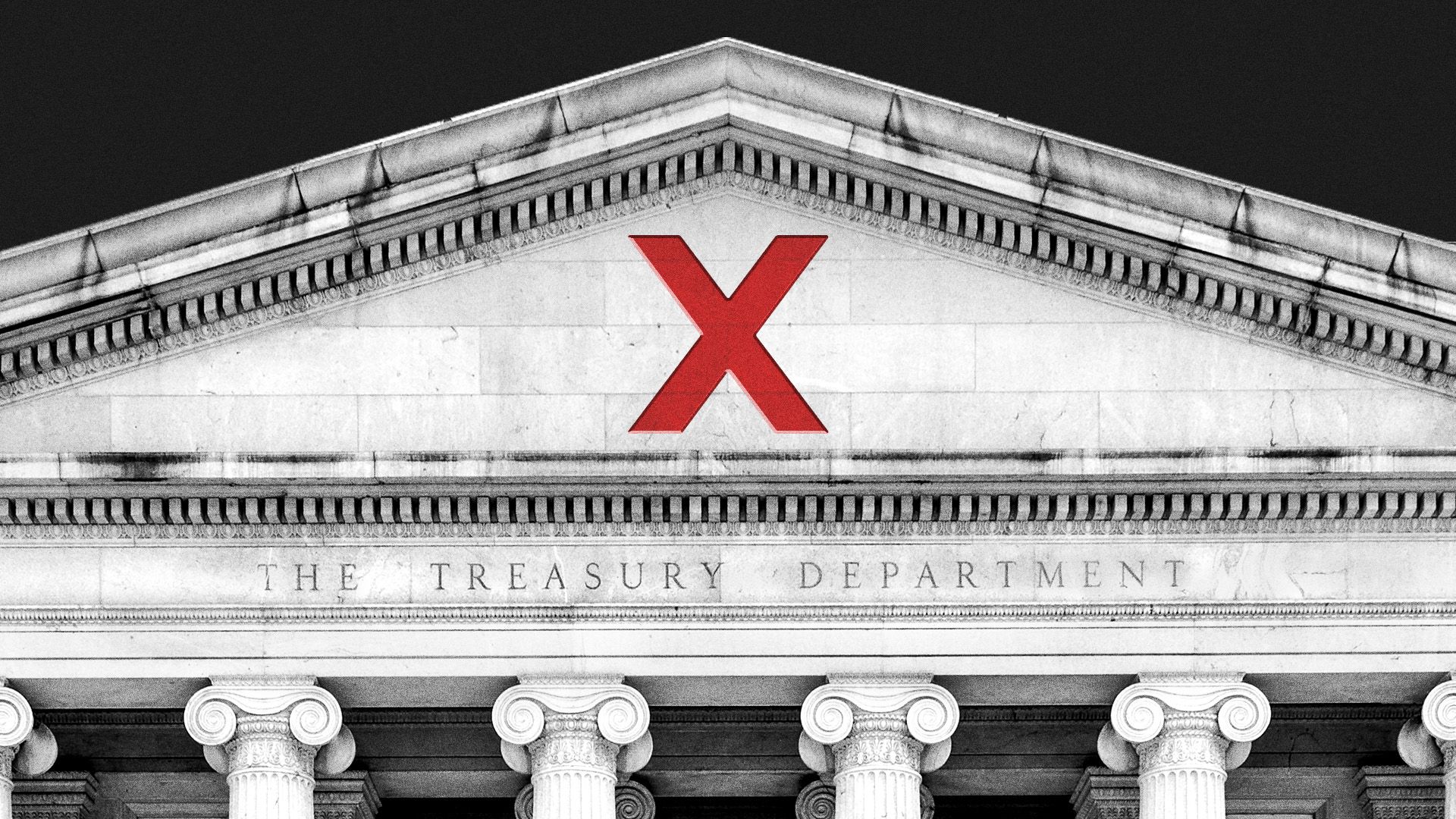
The Treasury Department is officially pulling the plug on Anthropic's AI tools at the direction of President Trump, Secretary Scott Bessent announced on Monday.
Why it matters: The move marks the next step in one of the most aggressive federal actions against a major American AI company.
Anthropic and OpenAI's war over talent, financing, contracts and positive public perception hit a crescendo last month.
It started with Anthropic's Super Bowl ad — which took aim at OpenAI for integrating ads into its chatbots — and continues as the two attempt to distinguish red lines within government contracts.
Why it matters: Both AI labs must make major inroads if they hope to win over the public.
The Pentagon’s standoff with Anthropic highlights a mass surveillance reality: There are few laws limiting what the government can do with artificial intelligence.
Why it matters: AI's evolving technology enables scenarios that may be widely unpopular, but fully legal.
President Trump said Sunday the U.S. military destroyed nine Iranian warships and is in the process of destroying the rest of Iran's navy.
Why it matters: The U.S. strikes target Iran's ability to close the strategic Strait of Hormuz, the narrow waterway through which roughly a fifth of the world's oil supply flows.
OpenAI's new deal with the Pentagon does not explicitly prohibit the collection of Americans' publicly available information — a sticking point that rival Anthropic says is crucial for ensuring domestic mass surveillance doesn't take place.
Why it matters: OpenAI CEO Sam Altman, Anthropic CEO Dario Amodei, and the Pentagon's lead AI negotiator Emil Michael all say they care about civil liberties, but disagree on whether the law today offers enough protections for AI use.
Anthropic's Claude hit No. 1 in U.S. app downloads Saturday, overtaking ChatGPT, after the Pentagon blacklisted the company for refusing to loosen safeguards for military use of its AI model.
Why it matters: The long-term business impact for Anthropic remains unclear. But in the short term, the clash has fueled interest in Claude, as some social media users call for dumping ChatGPT over OpenAI's deal with the Pentagon.