There's been lots of reporting Wednesday on the TikTok situation, with Amazon, AppLovin and even the founder of OnlyFans reportedly throwing their hats into the ring as potential acquirers.
And a new report that Trump will propose a solution during today's tariff speech.
Christine Hunsicker, the founder and now-former CEO of fashion tech company CaaStle, isn't just being accused of fudging some numbers. It sounds like she may have built an entire Wonka factory.
Zoom in: Axios has learned that Hunsicker last year told prospective investors that CaaStle generated $519 million in 2023 revenue. Audited financials sent on Saturday to shareholders show the actual revenue figure for the year ending Sept. 30, 2023 was only $15.7 million.
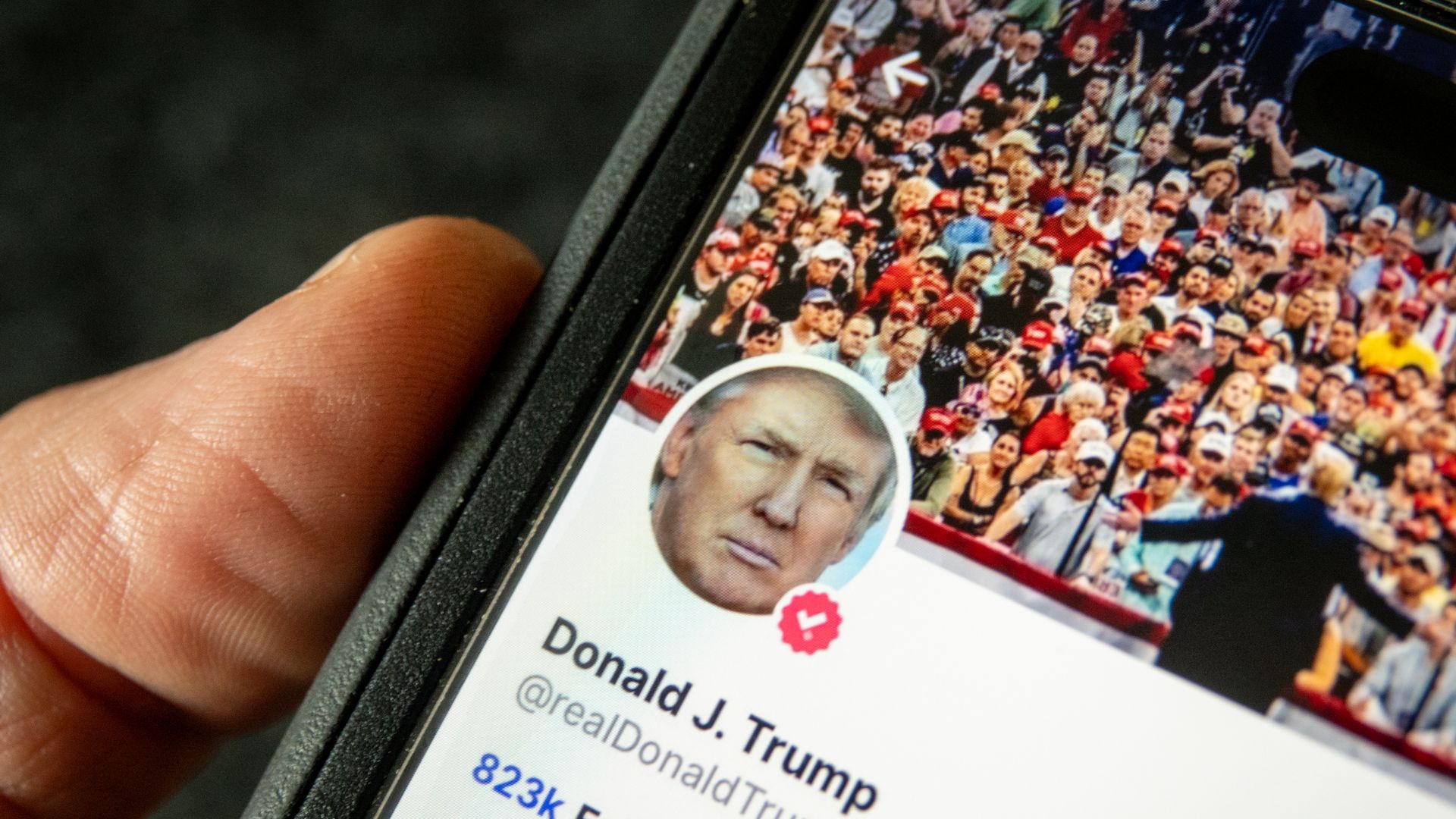
President Trump's social media company on Wednesday filed papers with securities regulators that would allow Trump's trust to sell almost 115 million shares of the company's stock.
Why it matters: Truth Social may be hoping for a halo from Newsmax, the conservative media company that went public Monday and saw its stock rise from $10 to $233 in two days.
Google DeepMind is urging a renewed focus on long-term AI safety planning even as rising hype and global competition drive the industry to build and deploy faster.
Why it matters: With better-than-human level AI (or AGI) now on many experts' horizon, we can't put off figuring out how to keep these systems from running wild, Google argues in a paper released Wednesday.
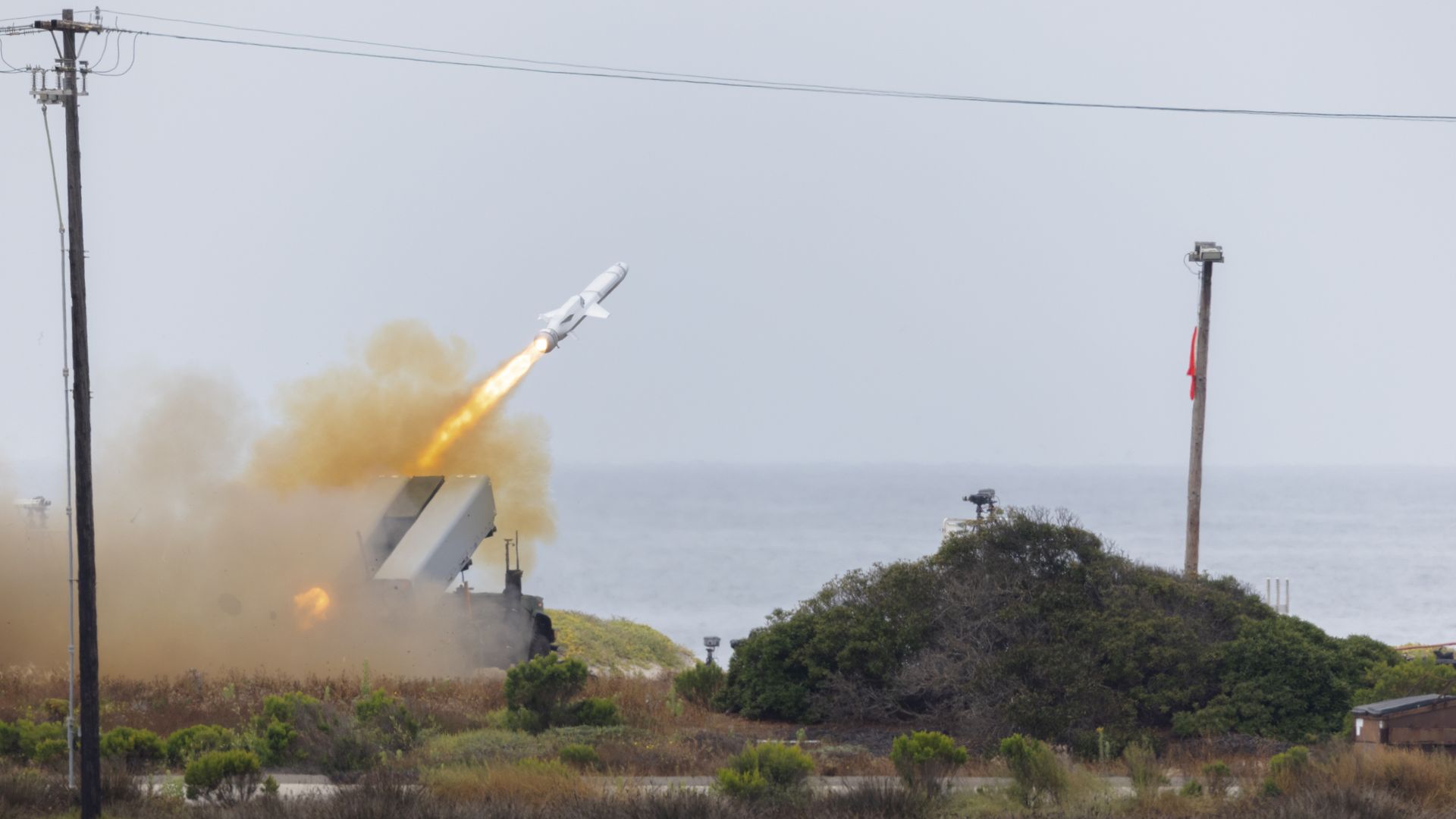
The U.S. will deploy ship-sinking missile launchers in the Philippines this spring as part of a military exercise also involving Australia and Japan.
Why it matters: The planned appearance of the Navy-Marine Expeditionary Ship Interdiction System, or NMESIS, at Balikatan 2025 comes amid games of chicken in the South China Sea.
Beijing also continues to protest the U.S. Army's Mid-Range Capability, or Typhon, which will be tested fired at Talisman Sabre, another drill, according to Defense News.
Foreign F-16s will be flying with upgraded electronic warfare packages as soon as next year, according to L3Harris Technologies.
Why it matters: The Viper Shield countermeasures are "digital armor" for the warplanes, Travis Ruhl, a director of international business development and former pilot, said in an interview.
The consequences of electronic warfare are underscored daily in Ukraine, where digital harassment harries surveillance and precision strikes.
TikTok faces a Saturday ban if it is not sold to a U.S. owner — déjà vu.
The big picture: At least four groups have made offers to buy the app, but TikTok owner ByteDance would likely need Chinese government approval to sell.
The first trillion-dollar cybersecurity company will be here in the next five years, Rubrik CEO Bipul Sinha told me last week at his company's HQ in Palo Alto.
I sat down with Sinha for a new monthly-ish series we're starting in Future of Cybersecurity where I dive into a security prediction for the cyber world — and what it would take to get there.
Why it matters: If Sinha is right, cybersecurity could be one of the few economic areas that will see high growth in the next half decade — alongside artificial intelligence.
The big picture: No cybersecurity company has ever achieved a trillion-dollar market cap, but several publicly traded companies are well on their way.
Google Workspace is rolling out a new encryption model designed to make sending secure emails with Gmail dramatically easier.
Why it matters: Google's new enterprise model will lift several of the burdens both IT teams and end users face when sending encrypted messages, including the need to manage certificates.
The big picture: Organizations in highly regulated industries are required to encrypt sensitive emails sent internally and to other businesses.
However, current encryption protocols are clunky, hard to scale and frustrating for users, Neil Kumaran, a group product manager at Gmail Security, told Axios.
China-based manufacturer Unitree Robotics pre-installed an apparent backdoor on its popular Go1 robot dogs that allowed anyone to surveil customers around the world, according to findings from two security researchers.
Why it matters: Clear evidence of a backdoor in widely sold consumer technology is rare, and it affirms longstanding concerns from U.S. officials that Chinese-made devices could quietly enable foreign surveillance.
👀 President Trump nominated Karen Evans, who has been leading the cyber mission at the Cybersecurity and Infrastructure Security Agency in recent weeks, to be the new undersecretary for management at the Department of Homeland Security. (Nextgov)
📲 The White House told DOGE employees to preserve their Signal messages after last week's scandal. (Politico)
👨🏻💻 The State Department has ordered consular offices to expand their social media screening processes for student visa applicants, according to an obtained cable. (The Guardian)
@ Industry
💰 Island raised a $250 million round, led by Coatue Management, that values the enterprise browser startup at $4.8 billion. (Wall Street Journal)
Domestic box office revenue is down 12% from this time last year, when theaters were still grappling with the fallout from the historic actors and writers strikes.
Why it matters: Theaters never made a full comeback from COVID-19 and experts don't think they ever will. But for tech giants looking to establish themselves in Hollywood, theatrical distribution matters.
A U.S. District Court judge last week denied most of OpenAI's motion to dismiss a lawsuit against it and its minority owner Microsoft from the New York Times.
Why it matters: The ruling allows most of the Times' case against OpenAI and Microsoft to proceed, paving the way for a possible trial.
OpenAI is on a new roll: Its latest image generator is dazzling millions of users, it's teasing new models and hardware, and it just landed another $40 billion to pay for all that and more.
Why it matters: The renewed mojo comes after a bumpy few months that saw handwringing over the release of advanced models from China's DeepSeek in January and disappointment at delays in the next big upgrade of the GPT models that drive the company's success.
The Trump administration has taken action to ensure a Signal group chat that inadvertently included The Atlantic editor-in-chief Jeffrey Goldberg can never happen again, White House press secretary Karoline Leavitt said Monday.
Why it matters: There have been growing calls from lawmakers on both sides of the aisle for an investigation into the Signal scandal, with Democrats on the House Intelligence Committee the latest to call for an independent probe in a letter Monday to director of national intelligence Tulsi Gabbard.

/2025/04/02/1743622106581.gif?w=3840)






/2025/04/01/1743536530663.gif?w=3840)