Law enforcement officials have found a new data source to mine as part of their investigations: the Android and iPhone push notifications that typically run through Apple or Google's servers.
Why it matters: While often mundane, push notifications can offer clues to where someone is located, who they are communicating with and more.
New Mexico on Wednesday filed a lawsuit against Meta and CEO Mark Zuckerberg for allegedly failing to protect children from sexual abuse, online solicitation and human trafficking on Facebook and Instagram.
Why it matters: The suit comes just weeks after 33 other states also sued Meta for allegedly knowingly issuing products and features through its apps that pose psychological risks to children and teen users.
Elon Musk may have a plan to save X, and it doesn't involve advertising, free speech, or financial services.
Why it matters: There are fascinating signs Musk is turning his attention — and business bull case — to AI. There may be a hidden plan behind what looks like random rants.
As automakers push their flashy new electric vehicles (EVs), many consumers making the jump from gasoline cars are opting instead for hybrids as they tiptoe toward electrification.
Why it matters: Car buyers — not politicians, regulators or carmakers — will dictate the pace of the electric transition.
Marshall Heilman, a long-time executive at Google Cloud's Mandiant, has left the company to head up insider-risk firm Dtex Systems, he first tells Axios.
Why it matters:Insider threats — or cyber risks related to employees either purposefully or incidentally leaking corporate data — have become a top concern for security executives, but the industry has yet to catch up.
X.ai, Elon Musk's new artificial intelligence company, appears to have raised at least $134.7 million out of a $1 billion target, per a new SEC filing.
When people want to know what ChatGPT is, they're not asking ChatGPT — they're going to a more traditional source: Wikipedia.
Why it matters: An article describing the AI system was the most popular topic on the online encyclopedia's English-language site in 2023, the Wikimedia Foundation reported Tuesday.
Omidyar Network announced a $30 million investment to prioritize immediate AI risks over existential AI risks and to bridge the gap between AI hype and AI hysteria.
Why it matters: Philanthropists are stepping in to help shift the terms of the AI debate and the Omidyar dollars are intended to broaden who participates in AI discussions.
A free online tool, debuting today, taps generative AI to help new moms and others in New York figure out whether they're eligible for paid family leave and guides them through the application process.
Why it matters:Paidleave.ai aims to solve one challenge while providing a pathway for others to harness generative AI to navigate complicated bureaucracies.
Rockstar Games has revealed the next Grand Theft Auto earlier than planned, with a 90-second trailer that's promising a 2025 release for GTA VI and, in a rare turn for the series, a woman in one of the lead roles.
Why it matters: GTA is not just one of gaming's biggest franchises, but one of entertainment's biggest.
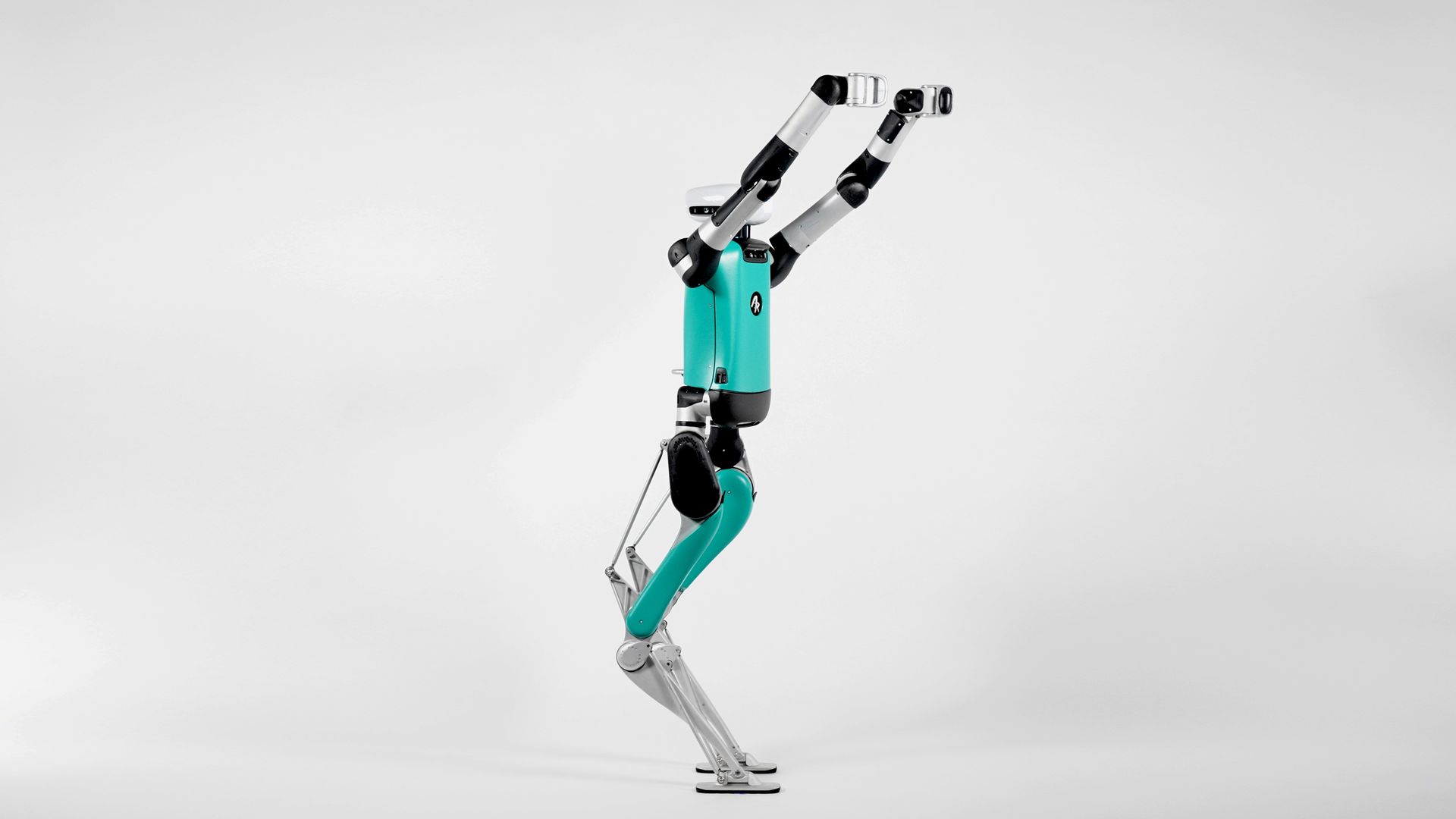
A factory planning to pump out 10,000 two-legged robots a year is taking shape in Salem, Oregon — the better to help Amazon and other giant companies with dangerous hauling, lifting and moving.
Why it matters: Agility Robotics says that its RoboFab manufacturing facility will be the first to mass-produce humanoid robots, which could be nimbler and more versatile than their existing industrial counterparts.
A new global alliance for AI open source development launched Dec. 5, firing shots at the makers of closed AI models (OpenAI, Google and Anthropic) which have dominated much of 2023's AI conversation, and who the alliance believes are creating distractions from immediate AI risks.
Why it matters: More than 50 organizations — under leadership from Meta and IBM — have signed up to the AI Alliance including Intel, Oracle, Dell, AMD, Sony, Hugging Face and Stability AI.
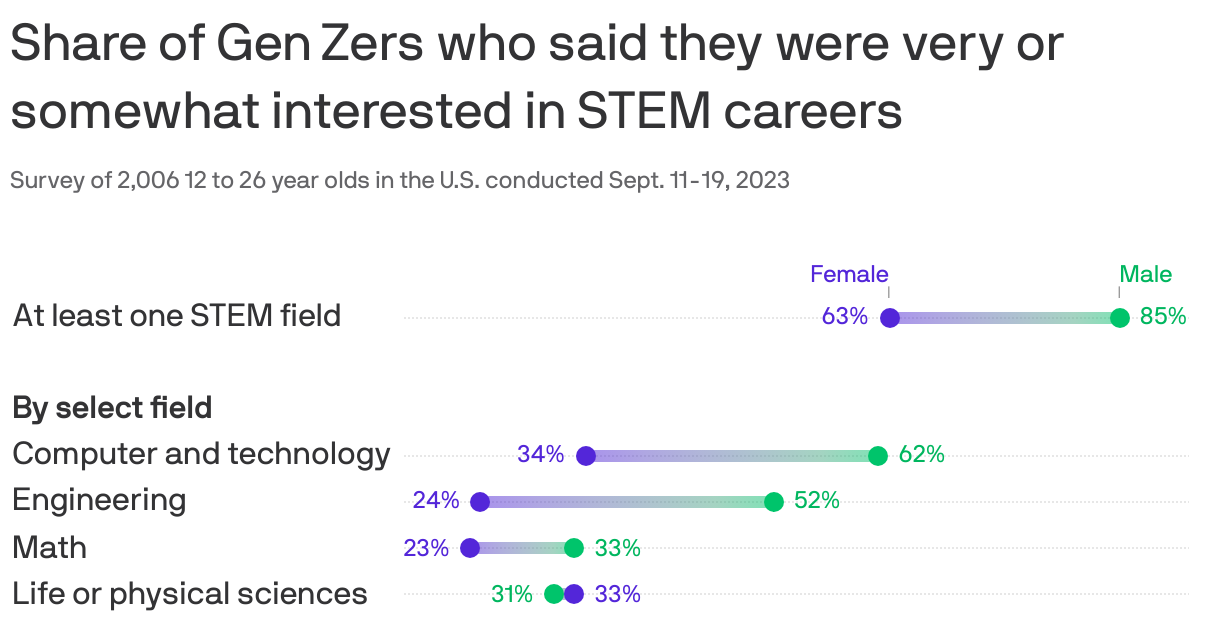
The gender disparity in pursuing STEM careers persists among young people ranging from tweens to recent grads, new data shows.
Why it matters: Like their older counterparts, girls aren't warming to STEM, as diversity in the field is critical for representative and responsible advancements — and despite efforts designed to boost their participation.

/2023/12/06/1701900174894.gif?w=3840)