A new pay transparency law in New York City is offering an unprecedented, if narrow, look at what people in the video game industry make and how different companies pay.
Driving the news: As of Tuesday, any company in New York City with at least four workers is required to post “good faith” salary ranges in its listings for jobs in the city.
Amazon will pause hiring people for new positions in its corporate workforce for "the next few months" in response to the economy being "in an uncertain place," the company said Wednesday in a memo.
Why it matters: The news comes after the company announced last month it would freeze corporate hiring in its retail business for the rest of the year, per the New York Times.
Encrypted messaging app Signal will soon have an ephemeral "stories" feature, with video, pictures or text that disappear after 24 hours.
Driving the news: Signal, often used by journalists, activists and privacy minded individuals, plans to roll out the feature on Monday, the nonprofit's president Meredith Whittaker told Axios at the Web Summit in Lisbon, Portugal Thursday.
Just as Instagram, the biggest social network for looking at pictures, opens up to non-fungible token sales, it looks like the potential for NFT's to provide artists with recurring income is fading.
The big picture: Fewer and fewer marketplaces are honoring artist royalties — a payment that rewards creators during secondary sales — built into NFTs.
Meta's Instagram will soon allow artists to create and sell their own NFTs both right on the social media platform and off it.
Why it matters: Big Tech wants in on crypto, and the social media juggernaut's entry into NFTs points to growing competition between marketplaces in spite of dwindling trading volumes and falling prices.
1Password is preparing for a password-less future by acquiring Austin-based ID authentication startup Passage, the company first told Axios.
Why it matters: The acquisition, which will be announced later today, allows the widely-used password management platform to build tools for consumers and businesses to manage passkeys, a popular alternative to phrase-based passwords.
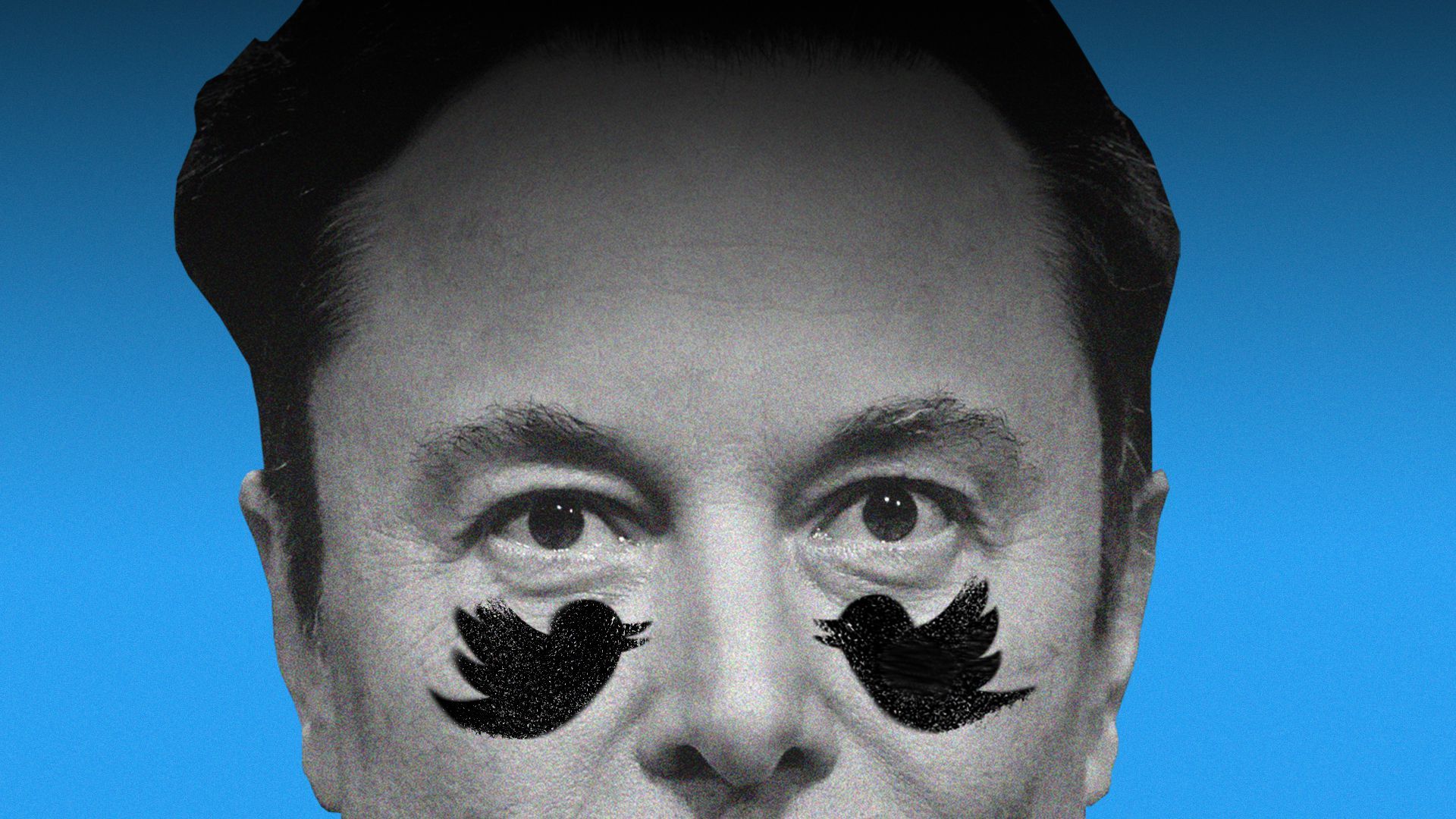
Elon Musk's chaotic new Twitter arrives with a distinct echo of Donald Trump's old White House.
The big picture: The world already knew that Musk's shoot-from-the-hip Twitter posting style recalled the former president's. Now it appears that Musk's management approach owes a debt to the former president as well.
Google's research arm on Wednesday showed off a whiz-bang assortment of artificial intelligence (AI) projects it's incubating, aimed at everything from mitigating climate change to helping novelists craft prose.
Why it matters: AI has breathtaking potential to improve and enrich our lives — and comes with hugely worrisome risks of misuse, intrusion and malfeasance, if not developed and deployed responsibly.
Twitter, which is expected to lay off a third or more of its staff as soon as Friday, also plans to require its remaining staffers to return to physical offices full time, sources tell Axios.
Why it matters: The move is a sharp reversal of Twitter's current policy of letting employees work remotely on a permanent basis, and sources inside the company say that many employees can’t or won’t be willing to relocate, resulting in additional attrition beyond the layoffs.
Qualcomm, a leading maker of wireless chips used in cell phones, cars and other devices, slashed its forecast for the current quarter amid both weaker demand and an excess of inventory already in customers' hands.
Why it matters: Qualcomm is a bellwether for the smartphone industry and its challenges highlight just how quickly the semiconductor industry has shifted from unprecedented supply shortage into a glut of chips.
Health and dieting trends on TikTok glorify weight loss and may contribute to disordered eating behaviors and body dissatisfaction, particularly in adolescent and young users, according to a University of Vermont study published Tuesday in the journal PLOS One.
Why it matters: It is the first study to assess content related to nutrition and body-image at scale on the the social app for short video.
Sony's PlayStation VR 2 headset will cost more than the PlayStation 5 required to run it when it launches on Feb. 22, 2023, the company revealed today.
Why it matters: Despite mountains of hype and investment behind it for the past decade, VR tech has struggled to go mainstream, in part because of the cost of entry to use it.
Mozilla is looking for new forms of revenue apart from its privacy-focused Firefox, as it urges Big Tech companies to stop pushing their browsers on users.
Driving the news: Mozilla launched a $35 million venture fund for "responsible tech," the company announced Wednesday at the Web Summit conference in Lisbon, Portugal.
BuildWithin, a Washington, D.C.-based developer of apprenticeship management software, tells Axios that it's raised $2.4 million in pre-seed funding led by Dundee Venture Capital.
Why it matters: The startup is co-founded by Michelle Rhee, one of the most polarizing figures in American education. It's her first for-profit company, and says she hopes to apply some of her K-12 learnings to workforce training — at a time when there are still millions of unfilled tech jobs.
Using a virtual reality headset while riding in a car sounds like a recipe for nausea, but one startup is betting it's an experience people will pay for. Holoride, an Audi spin-off, is launching a $700 software and hardware combo Wednesday that synchronizes games and videos to the motion of a car.
Why it matters: Virtual reality is still searching for its market. The car may sound like an unlikely place for it, but there are a lot of teenagers being driven around by their parents out there, and Holoride thinks they might be up for a VR adventure.
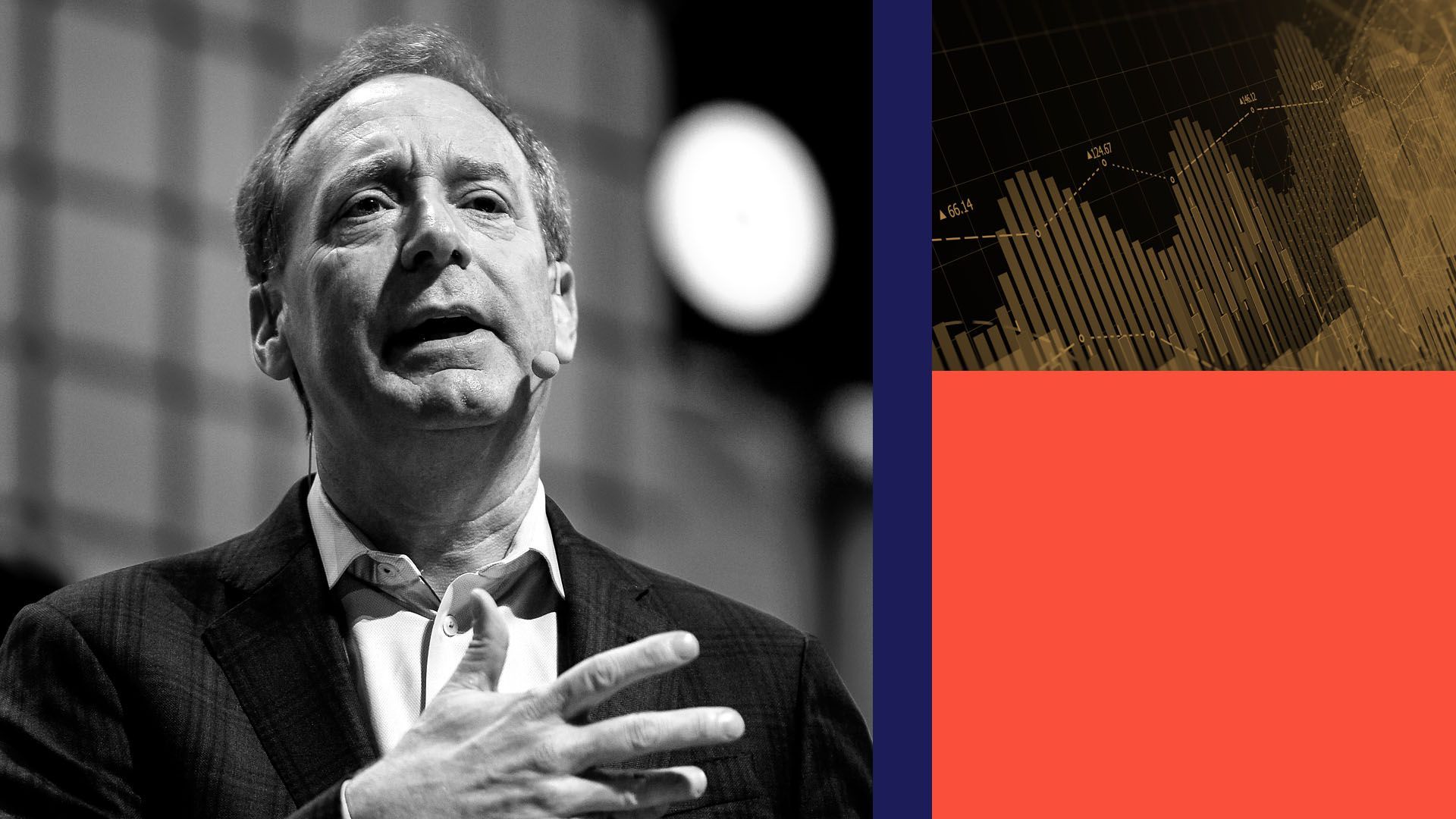
Although nearly 4,000 companies have made pledges to reduce their emissions, many lack the skilled workers needed to meet those goals, Microsoft president Brad Smith tells Axios.
Why it matters: In order to reduce carbon emissions, companies need employees with a range of new skills, including a deep understanding of how supply chains work as well as the ability to properly account for how much carbon a company is emitting.
States are shoring up expertise in high-speed internet networks by creating or expanding broadband offices to prepare for an influx of infrastructure cash.
Why it matters: Ensuring that more than $40 billion in new funding connects every American to high-speed internet service is a job that's falling to the states — and they need help.






/2022/11/01/1667338790363.gif?w=3840)