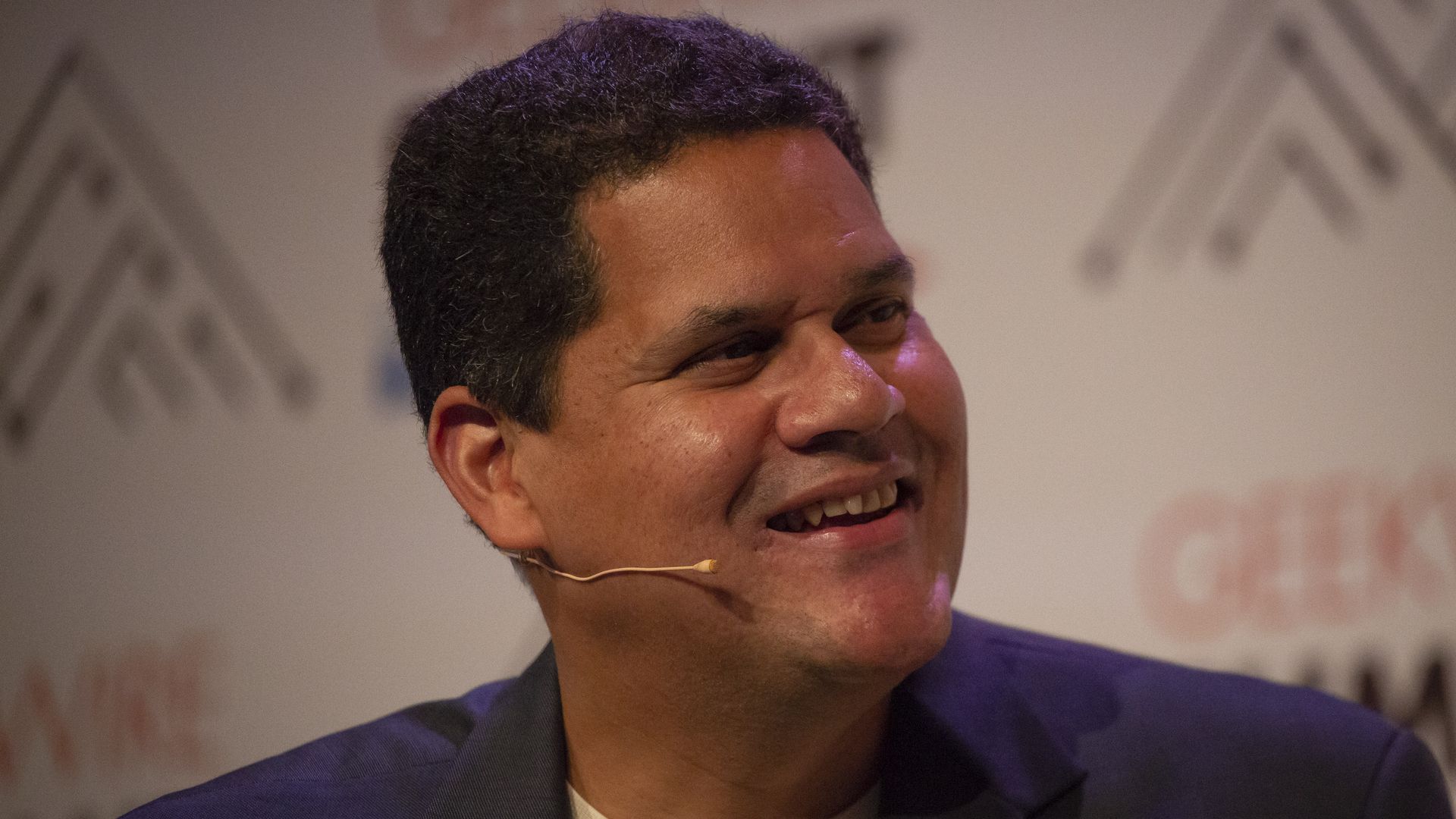
Former Nintendo of America president Reggie Fils-Aimé urges people like him who feel like outsiders to the organizations they join to see “advantage to your uniqueness.”
Driving the news: The longtime head of Nintendo’s business in the Americas is opening up this week in interviews with Axios and others, as he promotes a business memoir, "Disrupting the Game," that focuses on lessons from his 16-year run at Nintendo.
The Library of Alexandria was said to be the seat of ancient wisdom. Legend has it that great works of the former world were lost in a fire. Basic centralization problem right there.
Driving the news:The Filecoin Foundation for the Decentralized Web (FFDW) has provided a grant to MuckRock, a non-profit dedicated to transparent politics and informed democracies, to back up the documents it has collected using the decentralized web and to assist other news and civic organizations in using the system.
Activision CEO Bobby Kotick rushed to secure a takeover bid from Microsoft to escape liability for misconduct at the company, a new lawsuit from New York City officials alleges.
Driving the news: The suit was filed in Delaware on April 26 by New York City Employees’ Retirement System and pension funds for the city’s teachers, police and firefighters. The groups own Activision stock and believe actions by the gaming giant's management hurt the company’s value.
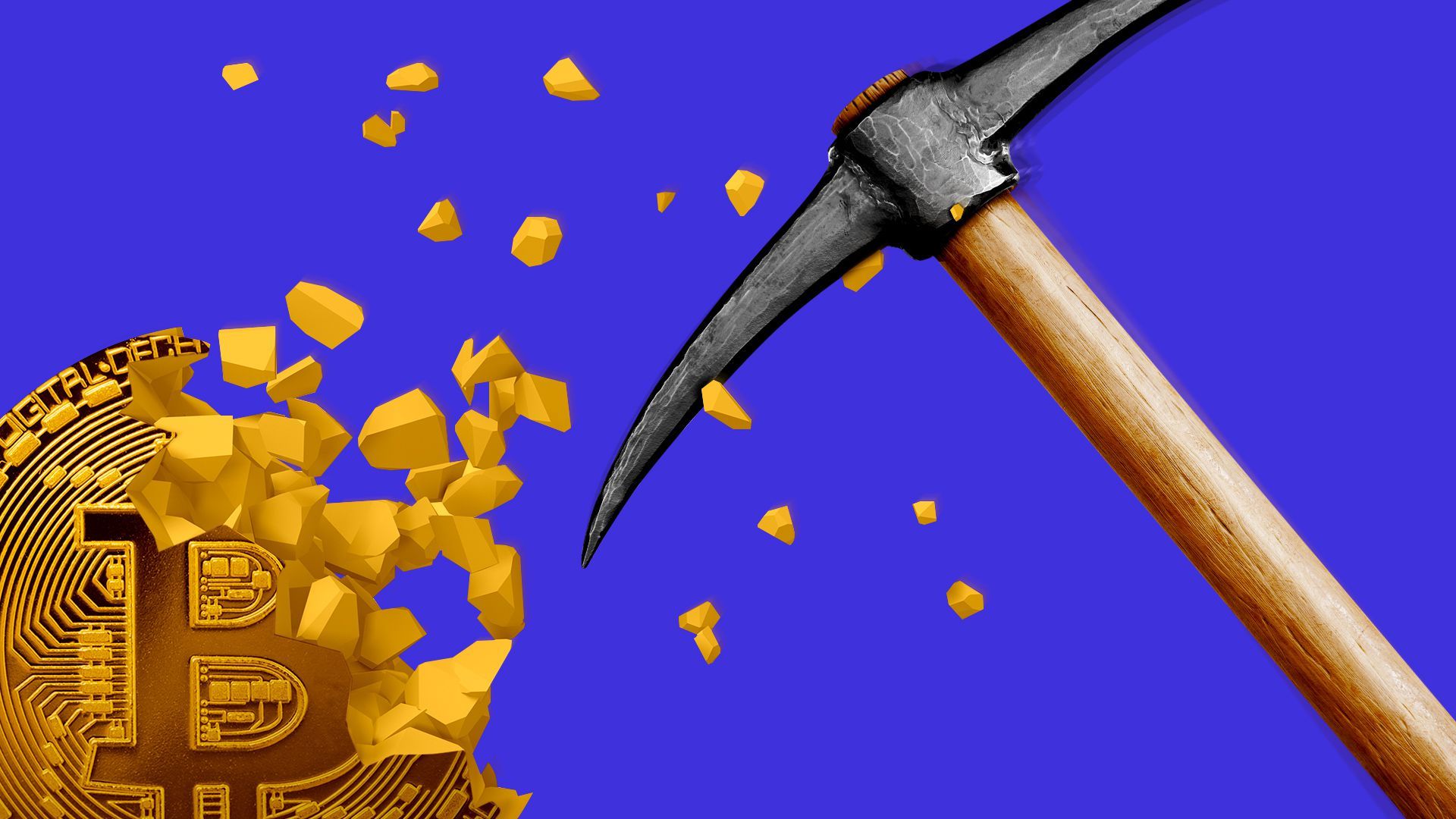
Members of Congress wrote a letter to the Environmental Protection Agency (EPA) last month claiming that Bitcoin production is "poisoning" U.S. communities. The Bitcoin industry has now responded.
Why it matters: Nearly everyone now agrees that polluters should pay for the messes they make, and that greenhouse gas emissions are included as part of that mess. Bitcoin gets scrutinized in this context because, right now, it generates more hype than usage.
Afore Capital, a venture firm focused on pre-seed startup investing, has raised $150 million for its third fund.
Why it matters: The firm, which claims it has the largest dedicated pre-seed fund, says that having more capital now means it can take on more risk by investing even earlier, write bigger checks for a biggest portion of each round, and move faster thanks to a larger team, says co-founder Gaurav Jain.
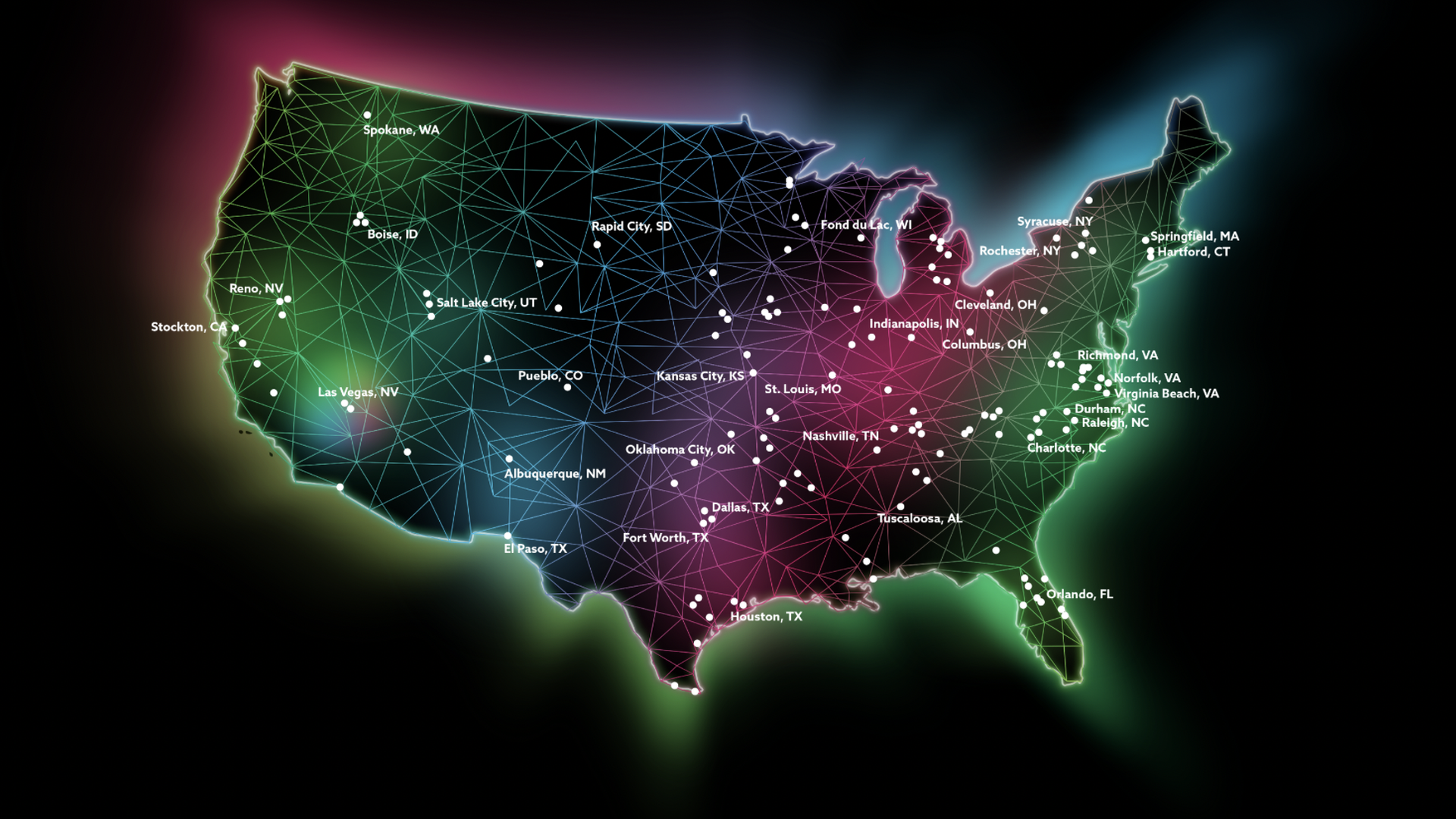
It has taken months longer than expected, but Dish Network plans later today to commercially launch its homegrown 5G cell service to consumers in Las Vegas.
Why it matters: Dish Network has relied on T-Mobile's network to power its Boost prepaid wireless service, but has been working to build out its own nationwide 5G network and service. It also owns huge swaths of wireless airwaves purchased in government auctions.
One way to speed the adoption of self-driving vehicles is to give them automated express lanes, where they can zip past regular traffic without having to tangle with human-driven cars.
Why it matters: For all the billions companies are spending to develop automated vehicles, very little has been done to prepare U.S. roadways for these advanced cars, trucks and buses. That's starting to change, as business and government leaders turn their attention to new digital infrastructure projects.
Facebook's plan to wind down its podcast platform is the latest in a long line of projects the social network has launched with fanfare and then unceremoniously scuttled.
Why it matters: "Launch, test, shut down" is a common pattern in tech's "fail fast" culture, but Facebook has a striking record of big product reversals — and now founder Mark Zuckerberg is betting the whole company on a vast metaverse project that it can't afford to see fail.
The intrigue surrounding Twitter continued on Tuesday with a fresh dialogue between Elon Musk and those critical of his pending deal to buy the service.
Why it matters: The battle for control of Twitter is also a battle for the future of its product.
Warren Buffett raised eyebrows, and share prices, when he said over the weekend that Berkshire Hathaway has increased its Activision Blizzard ownership stake to 9.5%, in a merger arbitrage play.
Why it matters: Buffett is betting that antitrust regulators won't use Microsoft-Activision to quench their thirst for a Big Tech block. Or that, if they do swing, they'll miss.
Decrypt, a media company that focuses on covering cryptocurrency and web3, has spun out from its parent company after raising a $10 million series A round at a $50 million post-money valuation, executives tell Axios.
Why it matters: The spin-out from ConsenSys Mesh — a blockchain incubator — allows Decrypt to be fully independent. The money raised will be used to hire more people for its journalism coverage and continue building out its business projects pegged to web3 initiatives.
A bipartisan Senate bill expected to be introduced Tuesday would require federal regulators to more thoroughly vet internet service providers seeking government money.
Driving the news: The Rural Broadband Protection Act, from Sens. Shelley Moore Capito (R-W.Va.) and Amy Klobuchar (D-Minn.), shared exclusively with Axios, would require the FCC to develop rules to make sure funding goes to companies that have the technical capability to deliver the broadband service they promise.
The FCC vets companies that are set to receive broadband subsidies, but the lawmakers say the scrutiny should come earlier in the funding process.
Capito has previously raised concerns about the ability of internet service providers to meet their funding obligations in her rural state.
Context: A group of lawmakers last year called on the FCC to thoroughly scrutinize the providers who received funding from the $9 billion Rural Digital Opportunity Fund program.
What they're saying: "By verifying that providers can actually deliver on the promises made to bring high-speed internet to specific areas, we can maximize the influx of broadband dollars coming to West Virginia and move closer toward our goal of closing the digital divide in communities of all sizes across our state," Capito said in a statement.
Chinese regulators are signaling they may ease a year-long crackdown on Chinese tech giants as the country's leaders prioritize shoring up a flagging economy.
Why it matters: Loosening restrictions on one of China's most vibrant sectors could remove one source of downward pressure on an economy gutted by COVID lockdowns.But it could also slow progress towards Chinese President Xi Jinping's goal of restructuring a major sector of the economy.
A wide range of Apple's practices that flew under the radar when the company was an underdog are coming under new scrutiny today.
The big picture: Apple's long history as a second fiddle — first to IBM, then to Microsoft — earned it freedom to set its own rules even as it built much more tightly controlled ecosystems than its rivals. But now it's the world's most valuable and arguably most powerful tech company.

















/2022/05/02/1651531308421.gif?w=3840)