Since introducing bitcoin on the Cash app, more than 10 million accounts have bought some of the original cryptocurrency, according to the Q1 shareholder letter from Block, Inc (the company most people probably still think of as Square), released Thursday.
Why it matters: 10 million people is a lot of people. That level of usage suggests that there really is demand for bitcoin from people who don't want to mess with weird wallets and keeping track of private keys.
Yuga Labs has refunded $265,000 worth of ETH for failed transactions in its sale of digital land in its Otherside metaverse last weekend. In English: People got paid back the fees they wasted in magic space money trying to buy fake property in a place that doesn't exist but might be fun one day, especially for those with computer goggles.
Why it matters: Yesterday afternoon, anyone paying attention would have found that they had a little more money than they had before, because the company paid everyone back all at once. Yuga did it because it had designed an auction that worked badly and frustrated everyone, but the company owned up to it.
Robots on the internet are waiting to make money for you — if you have a lot of money.
Driving the news: Yearn Finance, the leading robo-advisor for yield, revealed details about its v3 this week, catching the project up with an effort that spans decentralized finance (DeFi) to standardize tokens that earn money.
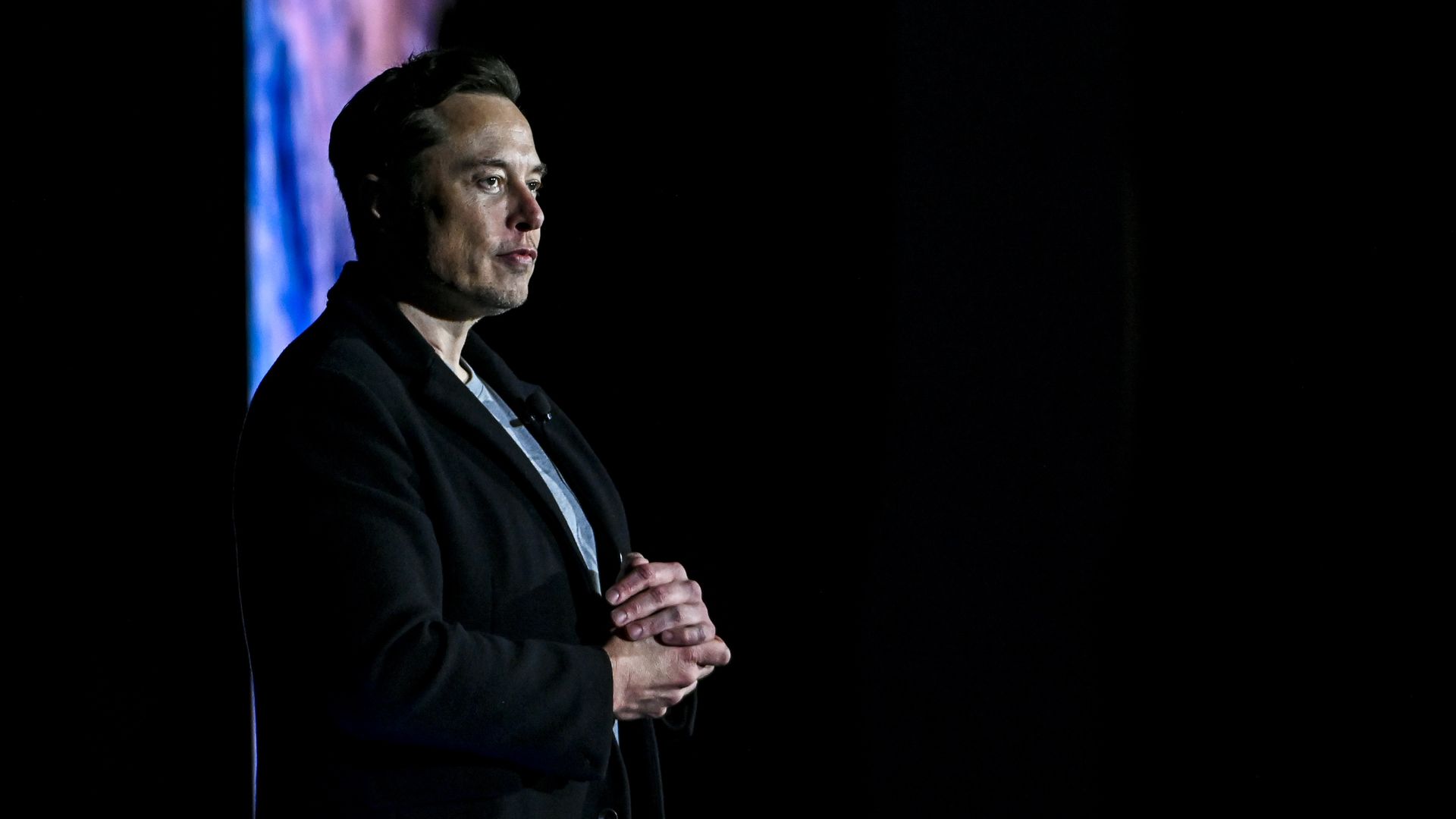
Elon Musk on Thursday disclosed a group of co-investors in his Twitter takeover. The names are impressive, but most of their check sizes aren't.
Driving the news: Musk secured around $5.2 billion in equity commitments from 18 investors, plus a rollover of nearly 35 million Twitter shares from Saudi Prince Alwaleed bin Talal.
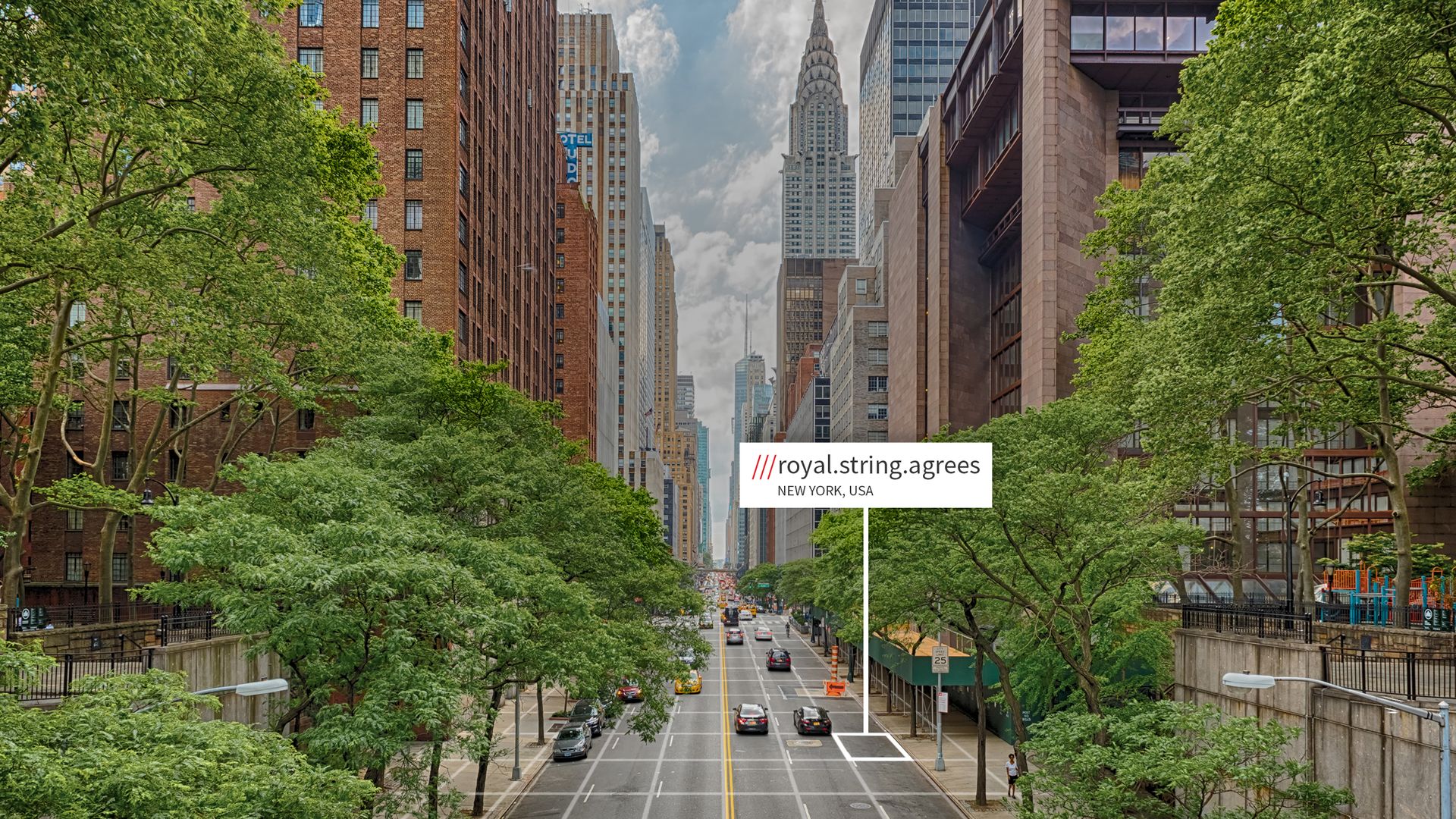
As voice technology in cars has improved, it has opened the door for apps like what3words, a voice-navigation tool that helps drivers get precisely where they're going.
What's happening: Nearly a dozen manufacturers have integrated the London-based company's technology into their vehicles, including Mercedes-Benz, Ford and Subaru.
By dividing the world into a grid of 10-foot by 10-foot squares, each designated by a unique combination of three random words, the technology helps drivers navigate to places where an address isn't enough.
The clock is ticking down on Washington's bipartisan effort to alter how Big Tech does business by passing new antitrust laws.
Why it matters: The next couple of months will be do-or-die for backers of the tech antitrust bills. If lawmakers don't approve them ahead of Congress' August recess, insiders say the outlook is bleak as midterm elections loom.
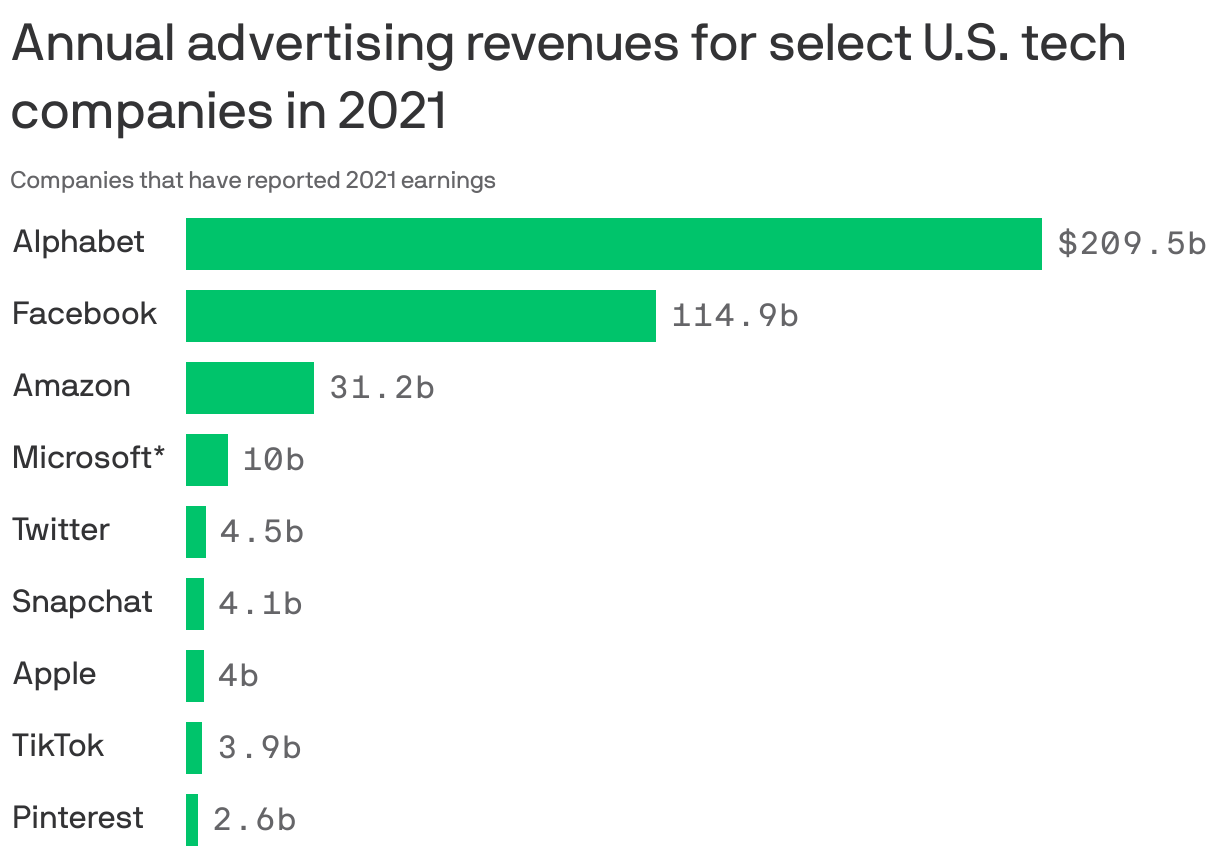
Data: Company reports, analyst reports; Note: Microsoft reported a revenue of more than $10 billion but did not disclose an exact figure; Chart: Thomas Oide/Axios
After years of touting their scale and efficiency, Big Tech companies have a new pitch for Madison Avenue: Social media creators are good for brands.
Why it matters: The user-generated content that tech giants rely on to fuel engagement has long been considered a brand-safety risk for marketers. But professional creators or influencers offer more polished content that poses less brand risk.
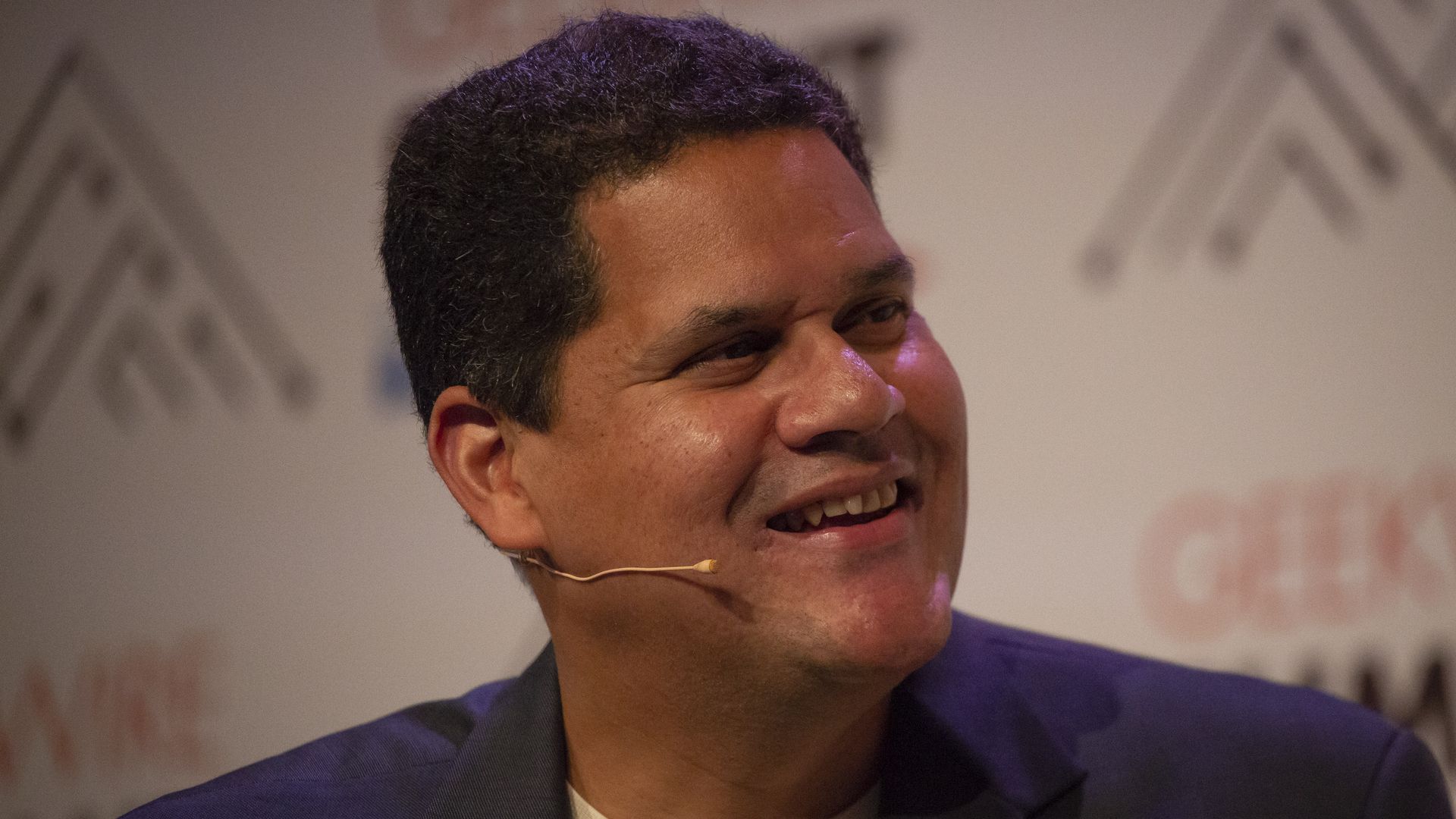
Former Nintendo of America president Reggie Fils-Aimé urges people like him who feel like outsiders to the organizations they join to see “advantage to your uniqueness.”
Driving the news: The longtime head of Nintendo’s business in the Americas is opening up this week in interviews with Axios and others, as he promotes a business memoir, "Disrupting the Game," that focuses on lessons from his 16-year run at Nintendo.
The Library of Alexandria was said to be the seat of ancient wisdom. Legend has it that great works of the former world were lost in a fire. Basic centralization problem right there.
Driving the news:The Filecoin Foundation for the Decentralized Web (FFDW) has provided a grant to MuckRock, a non-profit dedicated to transparent politics and informed democracies, to back up the documents it has collected using the decentralized web and to assist other news and civic organizations in using the system.
Activision CEO Bobby Kotick rushed to secure a takeover bid from Microsoft to escape liability for misconduct at the company, a new lawsuit from New York City officials alleges.
Driving the news: The suit was filed in Delaware on April 26 by New York City Employees’ Retirement System and pension funds for the city’s teachers, police and firefighters. The groups own Activision stock and believe actions by the gaming giant's management hurt the company’s value.
Members of Congress wrote a letter to the Environmental Protection Agency (EPA) last month claiming that Bitcoin production is "poisoning" U.S. communities. The Bitcoin industry has now responded.
Why it matters: Nearly everyone now agrees that polluters should pay for the messes they make, and that greenhouse gas emissions are included as part of that mess. Bitcoin gets scrutinized in this context because, right now, it generates more hype than usage.
Afore Capital, a venture firm focused on pre-seed startup investing, has raised $150 million for its third fund.
Why it matters: The firm, which claims it has the largest dedicated pre-seed fund, says that having more capital now means it can take on more risk by investing even earlier, write bigger checks for a biggest portion of each round, and move faster thanks to a larger team, says co-founder Gaurav Jain.
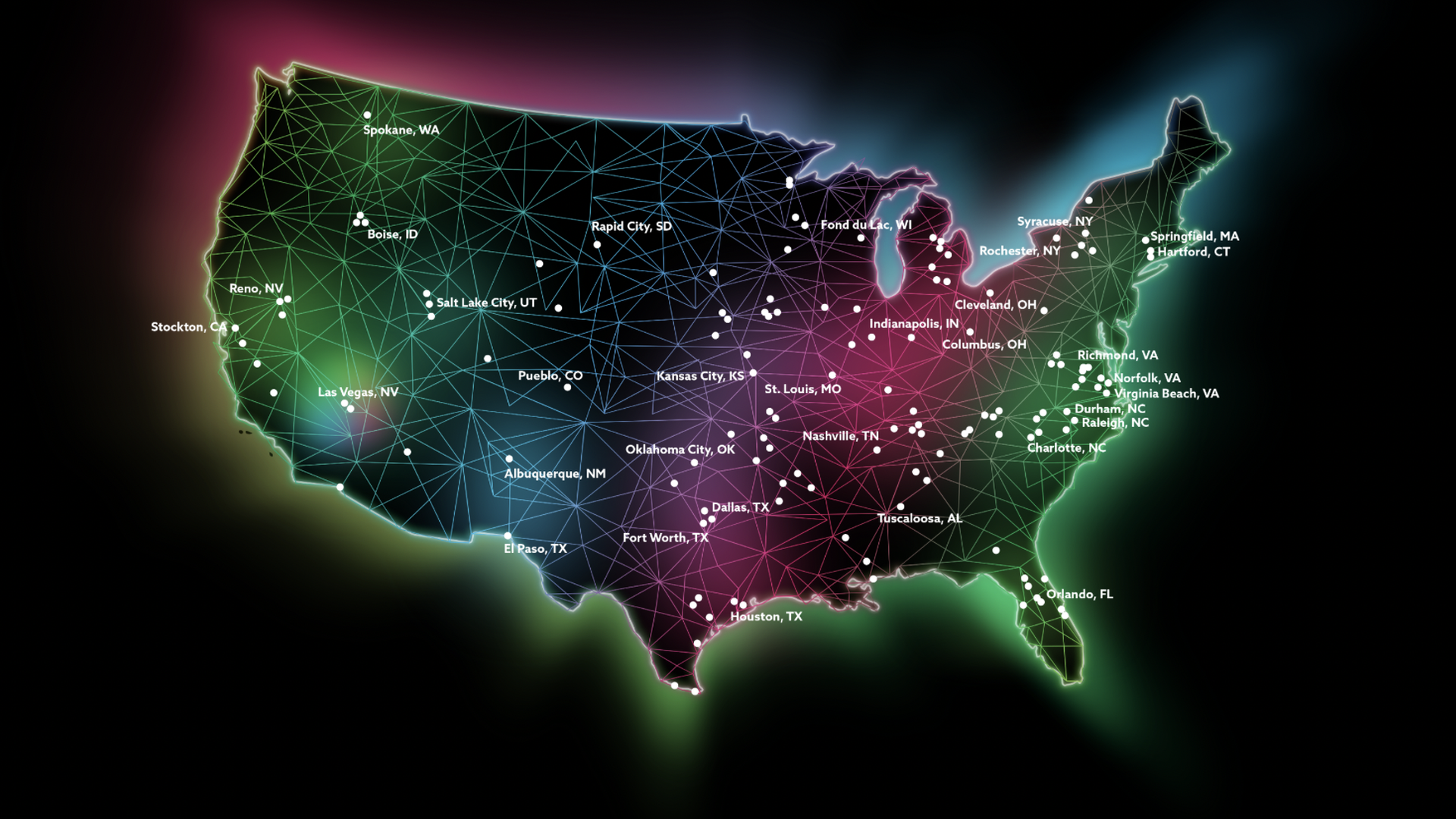
It has taken months longer than expected, but Dish Network plans later today to commercially launch its homegrown 5G cell service to consumers in Las Vegas.
Why it matters: Dish Network has relied on T-Mobile's network to power its Boost prepaid wireless service, but has been working to build out its own nationwide 5G network and service. It also owns huge swaths of wireless airwaves purchased in government auctions.
One way to speed the adoption of self-driving vehicles is to give them automated express lanes, where they can zip past regular traffic without having to tangle with human-driven cars.
Why it matters: For all the billions companies are spending to develop automated vehicles, very little has been done to prepare U.S. roadways for these advanced cars, trucks and buses. That's starting to change, as business and government leaders turn their attention to new digital infrastructure projects.
Facebook's plan to wind down its podcast platform is the latest in a long line of projects the social network has launched with fanfare and then unceremoniously scuttled.
Why it matters: "Launch, test, shut down" is a common pattern in tech's "fail fast" culture, but Facebook has a striking record of big product reversals — and now founder Mark Zuckerberg is betting the whole company on a vast metaverse project that it can't afford to see fail.
The intrigue surrounding Twitter continued on Tuesday with a fresh dialogue between Elon Musk and those critical of his pending deal to buy the service.
Why it matters: The battle for control of Twitter is also a battle for the future of its product.