A Bloomberg report claiming 11 game developers have access to Nintendo Switch 4K development kits is sparking confusion about the existence of the rumored Nintendo Switch Pro.
Driving the news: Bloomberg published a story yesterday in which it says that employees at the game companies, including Zynga, claim to have the dev kits.
"Destiny" developer Bungie will removethe controversial mandatory arbitration clause from its employee agreements as part of its increasing efforts to improve diversity and inclusion.
The details: CEO Pete Parsons outlined the company's efforts, which include a new chief people officer, a promise to review its hiring practices and better training processes.
The company's decision to eliminate mandatory arbitration was due to "the growing concern that arbitration may not be the fairest way to resolve employment complaints. "
"These pastfewmonths have been a sobering reminder for all of us as we hear and listen to the multitude of stories highlighting how good people across our industry have been mistreated," Parsons wrote.
Why it matters: Mandatory arbitration has become a contentious issue within the game industry, following scandals at companies like Riot and Activision Blizzard.
Forced arbitration favors companies over workers, according to Vox, because it "allows companies to hide misconduct that would otherwise be made public in court."
In 2019, workers at Riot staged a walkout in protest of the policy.
Employees at Activision Blizzard followed suit this year as part of an ongoing effort to change toxic practices within the company.
On Twitter, a group of Activision Blizzard employees known as the ABK Workers Alliance called Bungie's move "true leadership," adding "when will [Activision Blizzard] follow?"
What's next: The company still has "more work to do to fully live up to our values," Parsons adds.
"It is our responsibility to keep you safe, to earn your trust, to ensure you have supportive channels to share your experiences and to demonstrate through our actions that we hold everyone — at every level — to the highest standard of personal and professional behavior," Parsons wrote.
It is also creating a new inclusion club at Bungie focused on accessibility to improve how its games are designed.
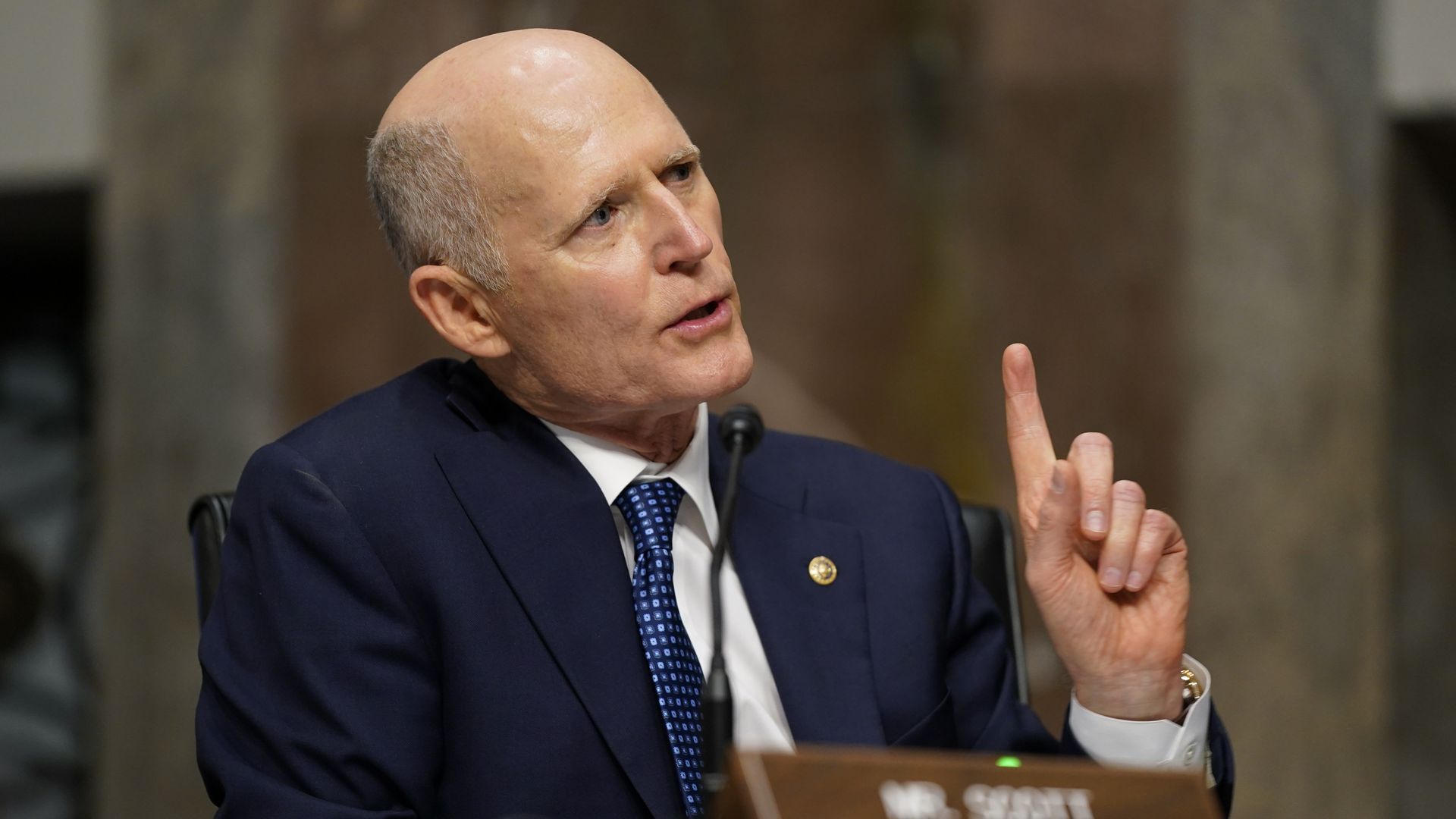
Sen. Rick Scott (R-Fla.) sent a letter to Microsoft and LinkedIn leadership on Thursday questioning why LinkedIn censored the profiles of U.S. journalists from the company's China-based platform this week, according to a letter obtained by Axios.
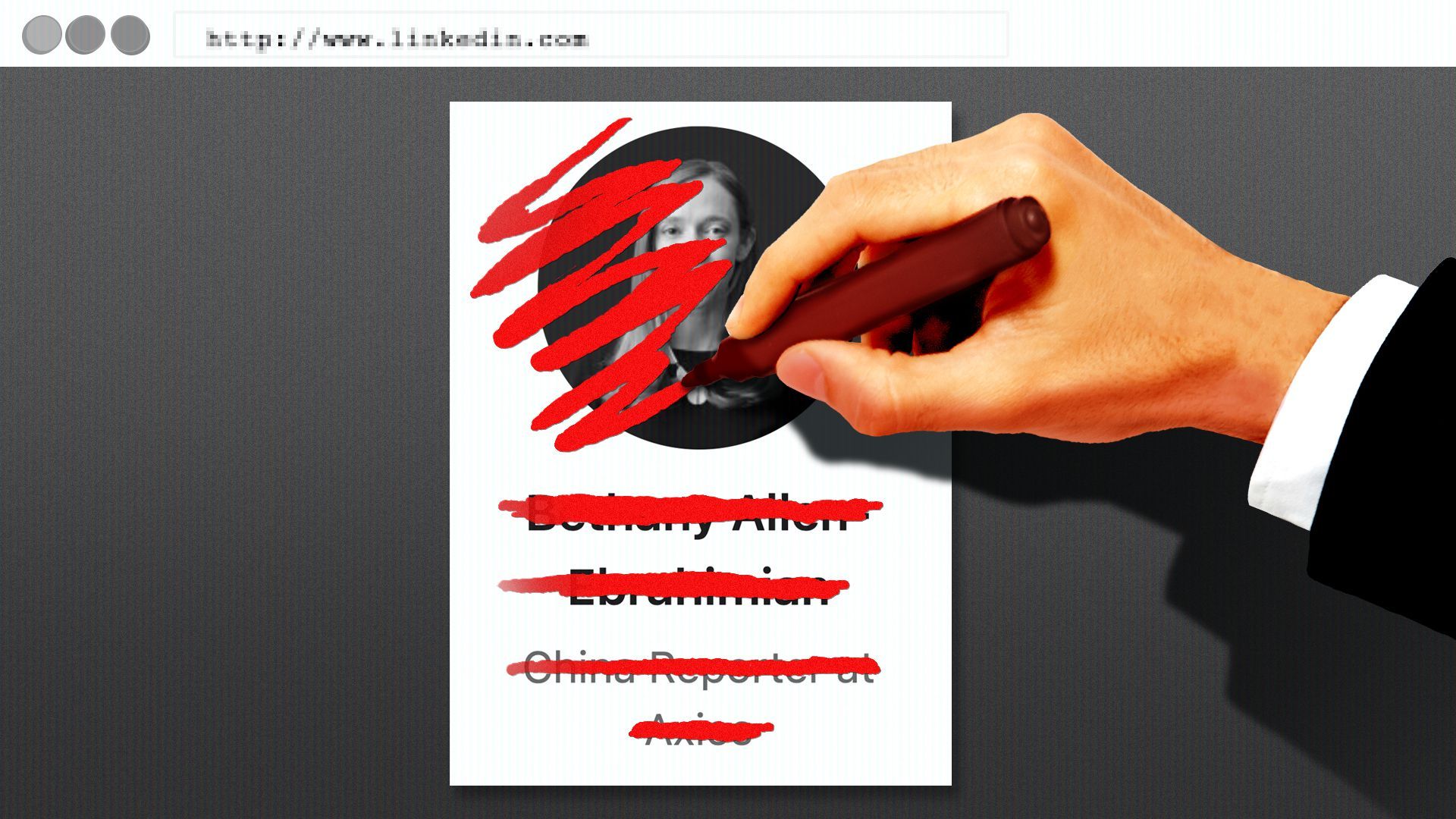
Driving the news: LinkedIn — which is owned by Microsoft — notified several U.S. journalists this week, including Axios' Bethany Allen-Ebrahimian, that their accounts will no longer be viewable in China due to "prohibited content" on their profile.
Amazon, Google and Microsoft announced this morning that they, along with a number of other enterprise companies, have agreed on a series of principles on customer protection and data sovereignty to govern their cloud computing work.
Why it matters: The rare joint announcement shows the industry presenting a united front as regulators around the globe consider different approaches to issues ranging from where data is stored to how to handle requests from law enforcement.
BEVERLY HILLS, Calif. — The tech insider crowd partied here at Code Conference this week, but many couldn't shake the sense that the world's colossal problems are outrunning the breakthroughs their industry is promising.
The stage brimmed with talk of flying electric taxis and space tourism. Optimists flashed "we can fix that" smiles. But there wasn't enough tech-fueled bravado to lift the shadows: Runaway climate change. Misinformation-fueled erosion of democracy. And a planet where isolationism is rising as globalization falters.
LinkedIn blocked the profiles of several U.S. journalists from the company's China-based platform this week, citing "prohibited content." My account was one of the profiles affected.
Why it matters: LinkedIn is one of the only large American social media platforms to agree to the Chinese government's demands to censor content, and is tasking its own employees with restricting what users in China can see.
The Kremlin on Wednesday threatened to ban YouTube unless it reinstates two of Russian state-backed broadcaster RT's German-language channels that were deleted for violating COVID-19 misinformation guidelines.
Why it matters: The threat is the latest example of Russian officials going to extreme lengths to assert greater control over the internet. The channels were deleted by YouTube on Tuesday, one day before the online video giant announced it would terminate channels spreading vaccine misinformation.
Tech companies dream of creating a virtual reality metaverse, but the current best use of VR is something far more quotidian: job training.
The big picture: VR offers everyone from NFL quarterbacks to Walmart sales associates a relatively inexpensive, scalable way to practice their job skills within a programmable virtual space.
In its seventh year, the writers of hit sci-fi war game "Destiny 2" have implemented— and mastered —the ability to tell players an interesting, episodic story that advances week by week.
Why it matters: Storytelling in games is often an afterthought, but two of the game’s lead writers tell Axios that one of their keys to success has been the narrative team’s work with the rest of the game’s creators.
A group of tech and gaming workers have slammed Activision Blizzard's planned settlement with the U.S. Equal Employment Opportunity Commission, saying an $18 million compensation fund for employees who were harassed or discriminated against is not enough.
YouTube is beefing up its misinformation policies to crack down on anti-vaccine misinformation beyond COVID-19 vaccinations, executives told Axios.
Why it matters: Under the new policy, YouTube will terminate the channels of what it calls prominent vaccine misinformation spreaders, including the channel of the Robert F. Kennedy Jr.-affiliated Children's Health Defense.
A majority of voters in battleground districts and states agree Big Tech companies are monopolies with too much power, according to new data shared exclusively with Axios — but those same voters are divided on what Congress should do in response.