The Securities and Exchange Commission has charged Stable Road Acquisition Company and its merger target, space transportation company Momentus, for making false claims.
Why it matters: This is the first enforcement action from the regulator against a special purpose acquisition company (SPAC) amid rising concerns over the flurry of such vehicles and mergers in the past year.
A board game called "Toma El Paso (Make a Move)" is helping college students understand some of the ground-level complexities of U.S. immigration policy.
Why it matters: The game is made to be played, first and foremost, by unaccompanied immigrant minors to help them learn how to navigate the U.S detention system.
The U.S. gaming population is slightly more male and less racially diverse than the country as a whole, but it's also growing, according to new data released Tuesday by the industry's leading trade group.
Why it matters: The annual Entertainment Software Association survey addressed the question of who plays games in America with an answer that gradually — with notable exceptions — is becoming "most people."
Dark web sites tied to the Russian-based cyber gang REvil were not operating on Tuesday, just two weeks after the group launched a large-scale ransomware campaign that affected more than 1,500 companies around the world, according to CNBC.
Why it matters: It's unclear whether the sites — which REvil uses to facilitate its ransom negotiations — are down because of a technical problem, a law enforcement operation, or some other explanation. The group's public spokesperson has also been silent on message boards since last week, according to Politico.
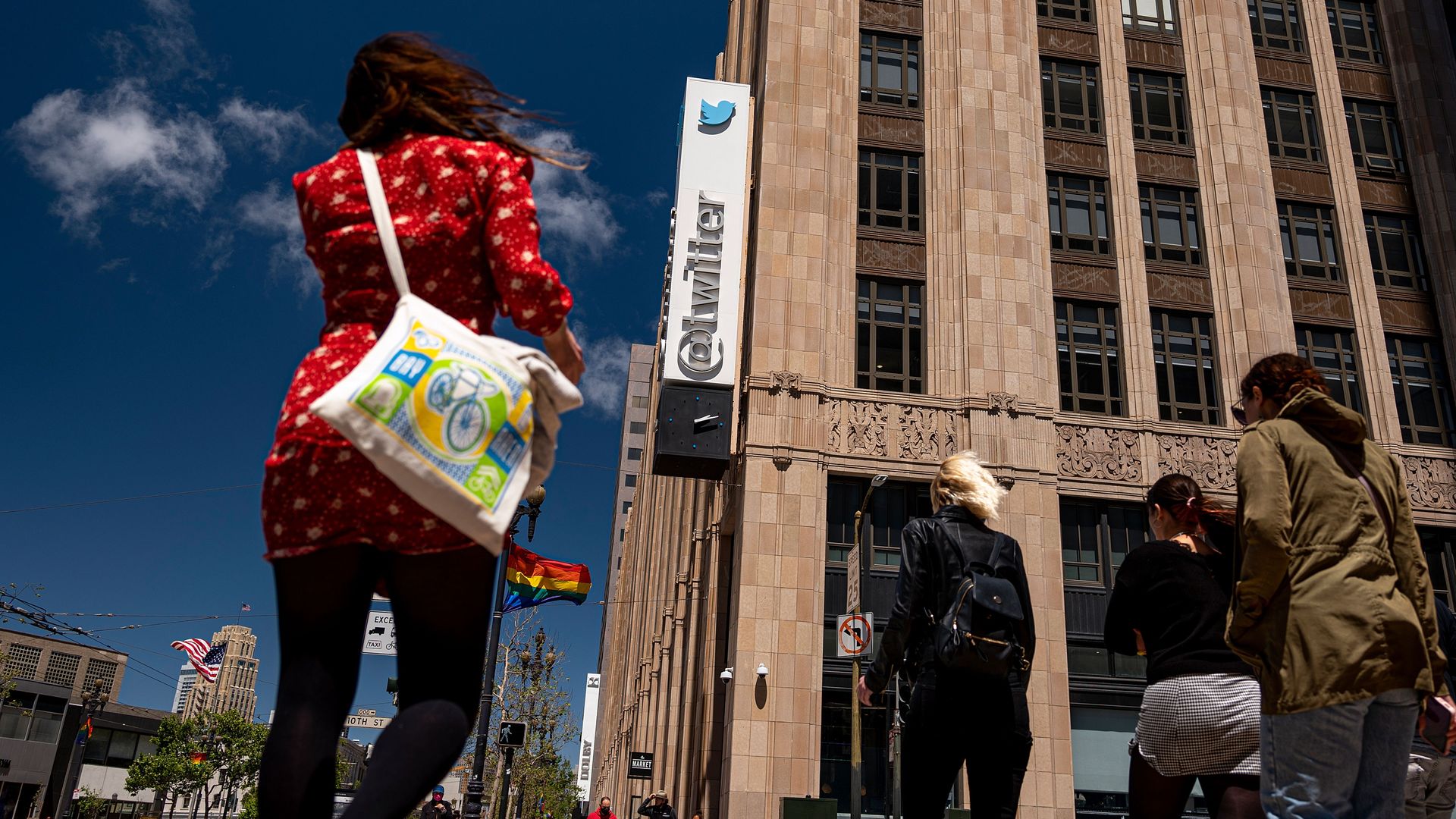
Twitter reopened its New York office as well as its San Francisco headquarters Monday, though employees will be able to continue working remotely as long as they wish.
Why it matters: Tech companies are trying to accommodate both those employees who want to return to an office and those who have come to prefer working remotely. Twitter is among the companies giving workers the choice.
French competition regulators said Tuesday they are fining Google 500 million euros, or roughly $593 million, for failing to comply with copyright rules around negotiating payment terms for news publishers.
Why it matters: It's the latest in a string of competition penalties and investigations Google has faced abroad and at home, several of which concern the way Google compensates news publishers for distributing their work.
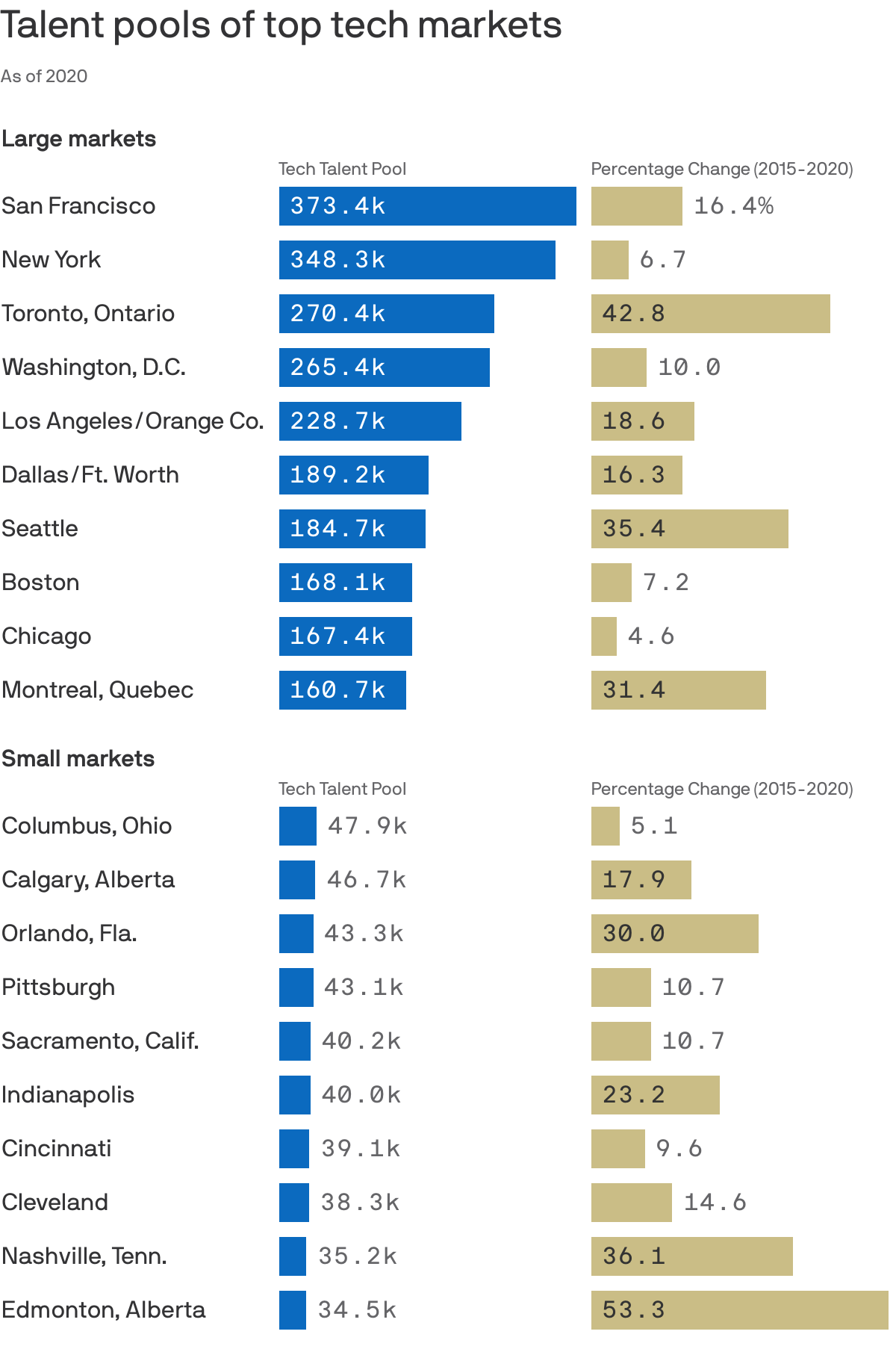
There are emerging hubs all over the U.S. and Canada pulling tech talent away from the superstar cities — but the tech centers are holding onto their dominance, according to a new analysis from the commercial real estate firm CBRE.
The big picture: The pandemic has pushed millions of people to move out of cities, but it hasn't been enough to knock places like the Bay Area and New York out of the top spots to start tech companies.
A new report makes the case that even cities that have made the most progress on digital transformation are failing on cybersecurity and technology governance.
Why it matters: Cities are investing billions in new technologies meant to improve urban life and services. But they're doing too little to keep systems safe from hacking and ensure that all residents can get equal access to the benefits of a smart city.
The Biden administration wants to cut Americans' monthly internet bills, making efforts to accurately measure those costs more urgent — and sometimes contentious.
The big picture: The White House's executive order on competition, signed Friday, included a series of policies aimed at reducing what consumers pay for their online connections.
MeWe, a free and subscription-based social media platform that bills itself as a privacy-focused alternative to Facebook, is looking to raise two new rounds of cash to help fuels its growth, its founder and chief evangelist Mark Weinstein tells Axios.
Driving the news: The company is in talks with strategic investors, mostly venture capital and private equity groups, about a round it hopes to raise this year between $10 and $30 million, Weinstein says. He's hoping to raise even more cash, up to $75 million, the following year.
Texas Attorney General Ken Paxton has unblocked critics on his Twitter account and agreed not to take such action again after reaching an agreement in a First Amendment lawsuit filed against him.