Snapchat beat Wall Street expectations on subscriber growth, earnings per share and revenue last quarter, sending its stock up in after-hours trading.
Details: CEO Evan Spiegel said in prepared remarks that the camera company officially has more Android users than iOS users — "a critical milestone that reflects the long-term value of the investment we made to rebuild our Android application."
Regulators in Europe and Washington are racing to figure out how to govern business' use of artificial intelligence while companies push to deploy the technology.
Driving the news: On Wednesday, the EU revealed a detailed proposal on how AI should be regulated, banning some uses outright and defining which uses of AI are deemed "high-risk."
The upcoming decision from Facebook’s independent Oversight Board on whether to uphold or reverse Facebook’s indefinite suspension of former President Trump’s profiles has policymakers on edge.
Why it matters: The decision will set a historic precedent for how the tech giant treats accounts of world leaders, and could be a litmus test for the board’s power.
The Chinese Communist Party is believed to be responsible for newly found hack attacks on the U.S. government, businesses and American infrastructure, cybersecurity company Mandiant said Wednesday.
Why it matters: This is the third major cybersecurity breach to hit the U.S. in recent months — including two in March blamed on hackers linked to China's government: one targeting 30,000 U.S. victims, including small businesses and local governments, the other hitting Microsoft.
President Joe Biden nominated Stacey Dixon on Wednesday to become the principal deputy director of National Intelligence, the nation's second highest intelligence post, per a White House press release.
Why it matters: If confirmed by the Senate, Dixon would be the first Black woman to hold the position, according to the New York Times.
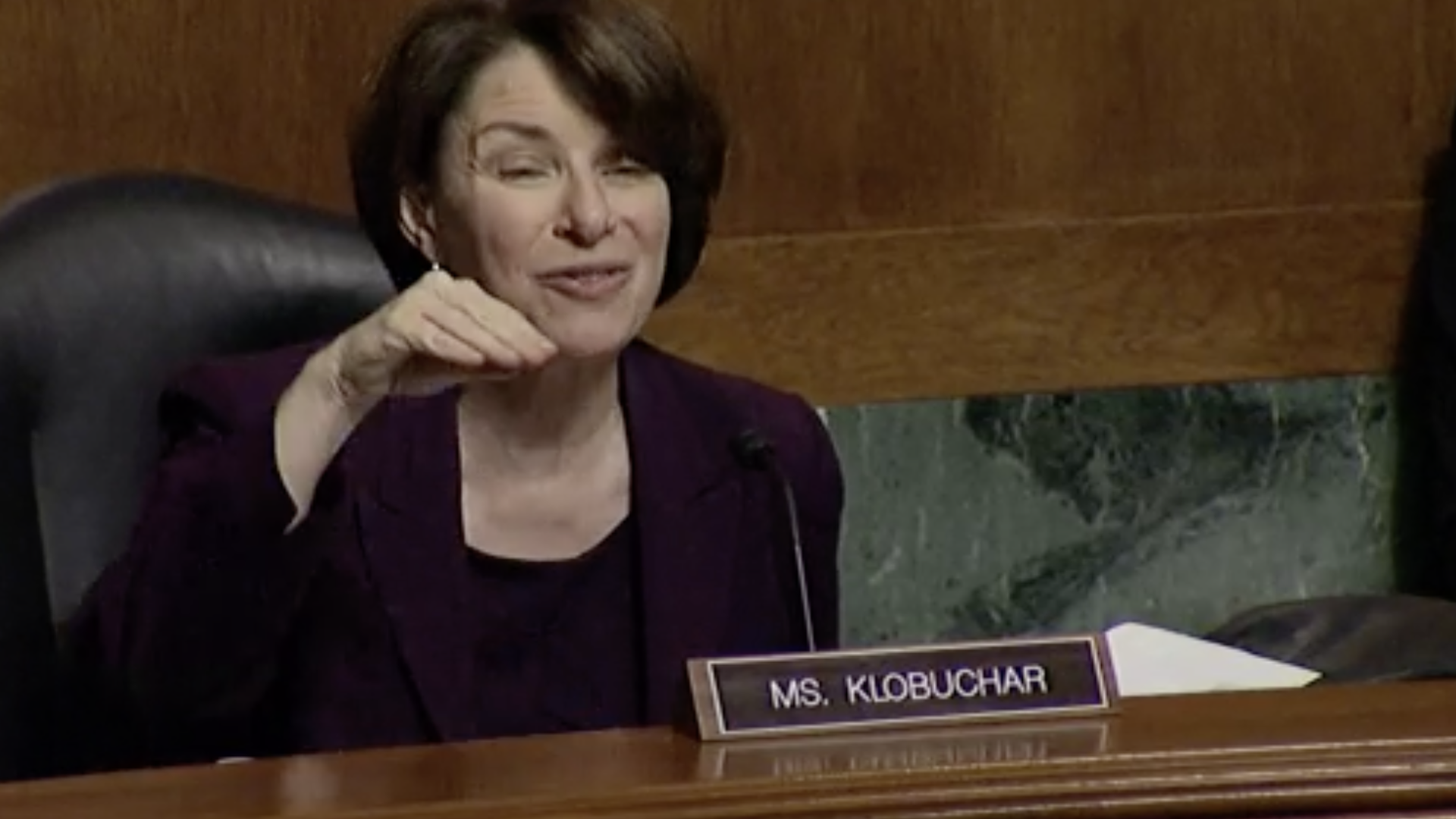
Senators from both parties united Wednesday in attacking Apple's and Google's ability to extract excessive app store commissions because of their control over their respective mobile ecosystems.
Why it matters: Past hearings on Big Tech have devolved into partisan squabbles, but the cross-aisle agreement on this issue suggests trouble for the companies, with members of both parties encouraging stronger enforcement of existing laws, greater funding for regulatory agencies and, potentially, new laws to address digital marketplaces.
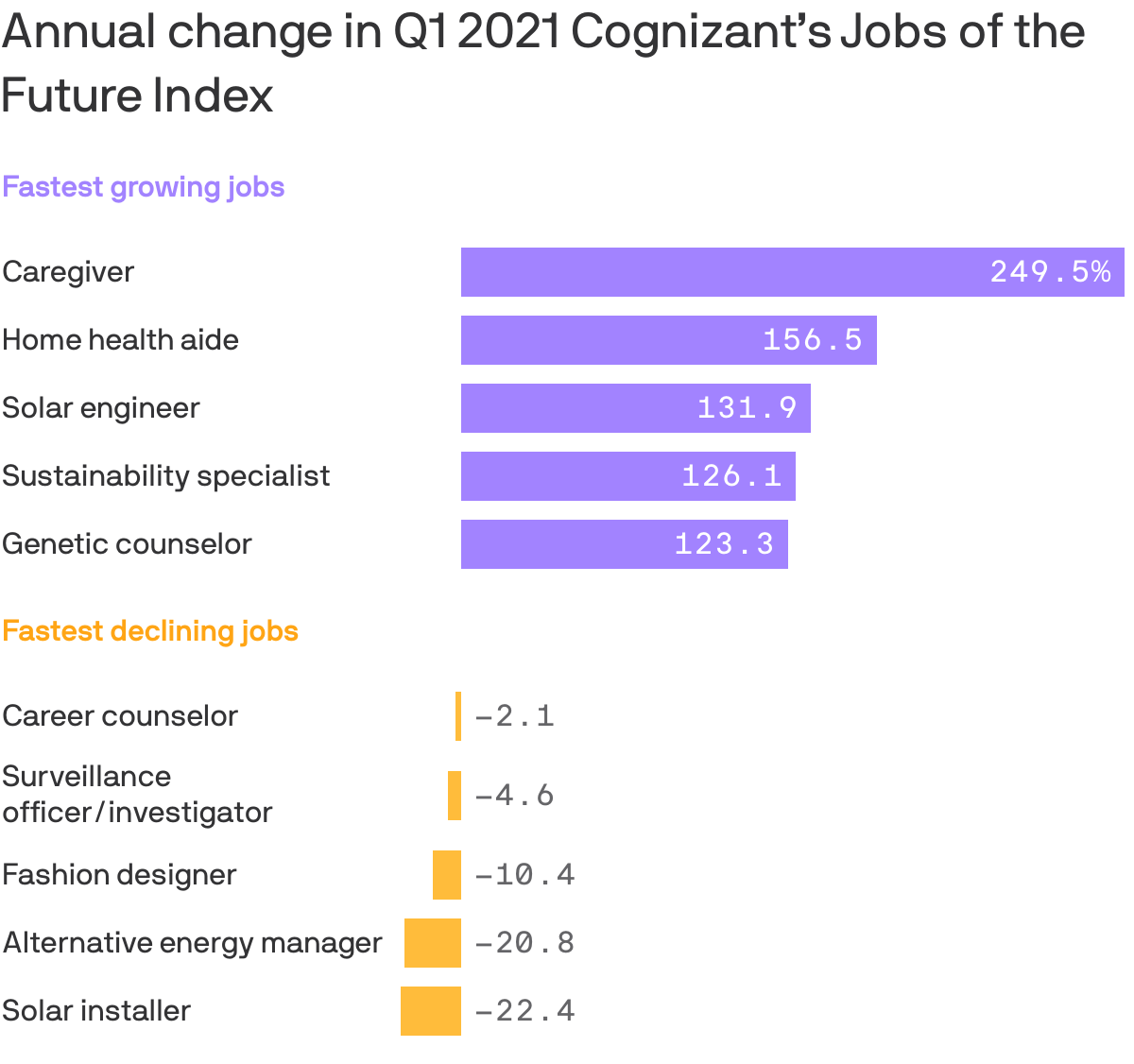
While digitally enabled "jobs of the future" are still below their pre-pandemic level, new data suggests they are on the way back.
The big picture: The U.S. labor market is recovering faster than expected thanks to a so-far successful vaccination program and massive stimulus spending. Future-focused jobs suffered even more during the pandemic than employment as a whole, but the category is set to take off later this year.
One of the pioneers of quantum computing warns that industry hype is getting ahead of actual performance.
Why it matters: Quantum holds the promise of revolutionizing computing. But there are still enormous hardware and software challenges that need to be overcome.
The debate over extremely rare side effects from the Johnson & Johnson COVID-19 vaccine highlights questions about how we should account for the unintended consequences of new technology.
Why it matters: AI algorithms, facial recognition, self-driving cars — the future will be full of technologies that will bring new benefits shadowed by new harms. But unlike in medicine, there isn't a clear framework for how to strike a balance between the two.
ATTN:, the digital media company that focuses on social change content, has landed a 7-figure deal with TikTok to produce videos for a new initiative called "TikTok for Good," ATTN: co-founder Matthew Segal tells Axios.
Why it matters: ATTN:'s sweet spot — tackling social issues through entertaining videos — has caught the attention of tech platforms looking to engage younger audiences that are more civically active than previous generations.
European Union officials proposed new regulations Wednesday for high-risk uses of artificial intelligence, like facial scanning.
The big picture: The EU wants to set rules for uses of AI that shape decisions made about people's lives and ban uses of AI that are deemed to be too risky.
Cisco is the latest tech giant to announce a big environmental push. The networking company said today that its foundation will invest $100 million over the next decade to fund projects that reduce carbon emissions as well as community awareness efforts.
With the need for mental health care for teens skyrocketing during the pandemic, the Federal Communications Commission wants to ensure they can reach a suicide prevention line by their preferred method of communication — texting.
Why it matters: The pandemic has taken a mental toll on American youth, with new data showing that teen medical claims for intentional self-harm nearly doubled in April 2020, compared to April 2019.
A day after a raft of glossy product debuts, Apple will move into a harsher spotlight as it defends its business practices before a Senate antitrust committee Wednesday.
Why it matters: Google, Amazon and Facebook have received more of Washington's regulatory attention in recent months. Now it's Apple's turn.



/2021/04/21/1619039156615.gif?w=3840)

/2021/04/21/1619034665548.gif?w=3840)