Apple on Tuesday launched a bevy of new hardware and software products, building on the strength of its homegrown M1 chip to retool its iMac and iPad lineups and also introducing the long-awaited AirTags item trackers.
Why it matters: Apple is getting a later-than-usual start this year on product launches, perhaps due to a mix of factors, including a global chip shortage.
Google is launching a new certification program for health insurance advertisers in the U.S. that will only allow government exchanges, first-party providers and licensed third-party brokers to run ads across its platform.
Why it matters: The policy is meant to curb any misinformation, confusion and fraud around health care being provided to consumers via ads.
The antitrust noose is continuing to tighten around Big Tech, with some bankers saying that the pressure is impacting deal-making.
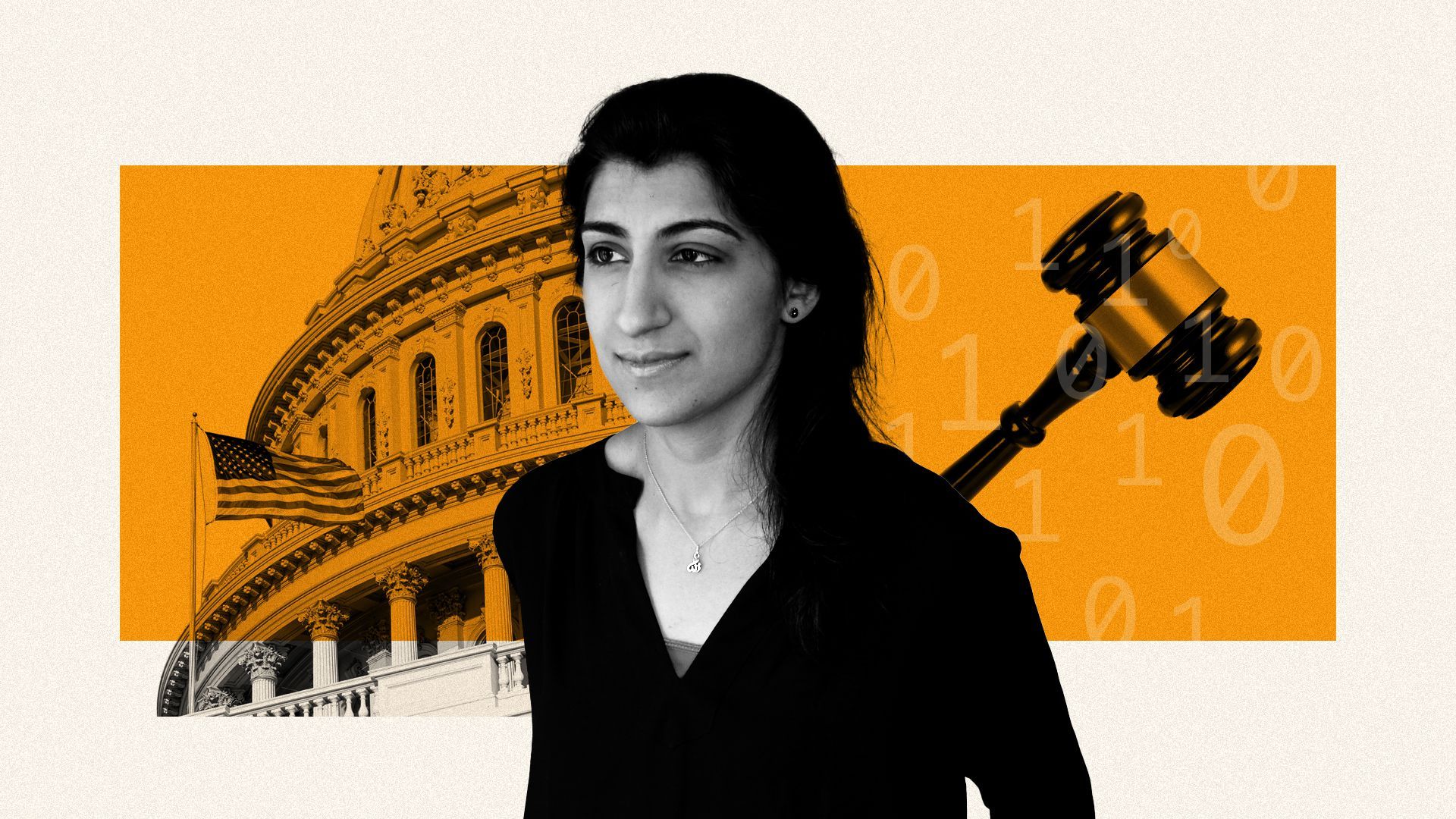
Driving the news: Lina Khan, a law professor who famously argued for breaking up Amazon, tomorrow will get a Senate confirmation hearing to become an FTC commissioner.
The jury is still deliberating in the trial of Derek Chauvin, but Facebook said Monday it has already designated Minneapolis as a temporary "high-risk" location and will take stronger action on inflammatory posts given the potential for real-world violence.
Why it matters: Passions are already running high as Chauvin faces murder charges for last year's death of George Floyd amid an increased law enforcement presence as well as additional incidents of police violence in Minnesota and elsewhere.
A Senate confirmation hearing Wednesday for Lina Khan's appointment to a commissioner's seat on the Federal Trade Commission will mark a watershed moment in federal efforts to rein in big tech companies.
Why it matters: Khan, who has helped define broad new ways to think about how antitrust law should apply to modern technology companies, has had temporary government roles before. But a seat on the FTC, which has the power to investigate and sue companies, would put her at the center of D.C.'s regulatory action.
The online stores for the PlayStation 3 and PlayStation Vita gaming platforms will not close down this summer after all, Sony announced today.
Why it matters: The shutdown would have made it impossible for people to legally obtain scores of video games that were only sold in the online shops of those early-2000s gaming machines. Instead, this about-face is mostly a win for video game preservationists.
Facebook CEO Mark Zuckerberg on Monday said Facebook was launching a suite of new tools and features designed to help users better connect with each other and their favorite creators through audio.
Why it matters: The digital audio craze has exploded during the pandemic, prompting several of the biggest tech and social media giants to double down on new audio features.
Apple will let Parler, a social media app popular with conservatives, back onto the App Store after Parler made attempts to improve its speech detection and moderation.
What's happening: Parler is getting access to Apple's massive App Store again after being suspended for inadequate hate speech policies following the January 6 Capitol riot, according to a letter Apple sent to Congress Monday.
Amazon Monday morning announced investments in several new utility-scale wind and solar projects and said it's now Europe's largest corporate renewable power buyer.
The big picture: Look for a burst of corporate clean energy and climate pledges this week as companies hope to show their bona fides alongside this week's White House global climate summit and Earth Day.
The social audio craze that exploded during pandemic-driven lockdowns looks like it is here to stay, thanks to big investments from Silicon Valley.
Driving the news: Clubhouse said Sunday it closed a new Series C funding, valuing the buzzy live audio app at $4 billion, sources tell Axios. That's an astonishing number for an app that's still in beta and has no revenue.
Some of the country's fastest-growing states are publicly attacking the tech industry's business practices on one hand while courting its investment on the other.
Why it matters: Attracting technology companies is a holy grail for economic development because they bring high-paying jobs and prestige to aspiring tech hubs. But that project is now colliding with some state leaders' efforts to rein in tech companies' growing power.