Graham Ivan Clark, who as a minor masterminded an attack on prominent Twitter accounts as part of a cryptocurrency scam last year, on Tuesday pleaded guilty to all state charges against him in exchange for a three-year sentence in a juvenile facility, the Office of the State Attorney 13th Judicial Circuit in Tampa announced.
Why it matters: Clark, now 18 years old, and his accomplices took control of popular, verified Twitter accounts — including those of Joe Biden, Barack Obama, Bill Gates and Elon Musk — and used those accounts to post a link to a bitcoin wallet, falsely claiming that those who contributed would be sent double their money back to them.
Uber announced on Tuesday it will reclassify over 70,000 drivers across the United Kingdom as workers who will receive benefits including a minimum wage, vacation pay and access to pension plans, effective Wednesday,
Why it matters: It's the first time the ride-hailing giant has agreed to classify its drivers accordingly, and it follows a landmark ruling from Britain's Supreme Court last month that said Uber drivers are entitled to greater protections.
Amazon's fulfillment center in Bessemer, Alabama, has become ground zero for the U.S. labor movement, with nearly 6,000 employees asked to vote on unionization by March 29.
Axios Re:Cap digs into what the Alabama situation means for Amazon, its workers and why it's happening now, with Alec MacGillis, author of the new book about Amazon called "Fulfillment, Winning and Losing in One-Click America."
Facebook will soon begin testing partnerships with a small group of independent writers for its new publishing platform, sources tell Axios.
Driving the news: The platform, which includes tools for journalists to build actual websites, in addition to newsletters, will be tested with a small group of writers, some of whom Facebook plans to pay to help get the tools off the ground.
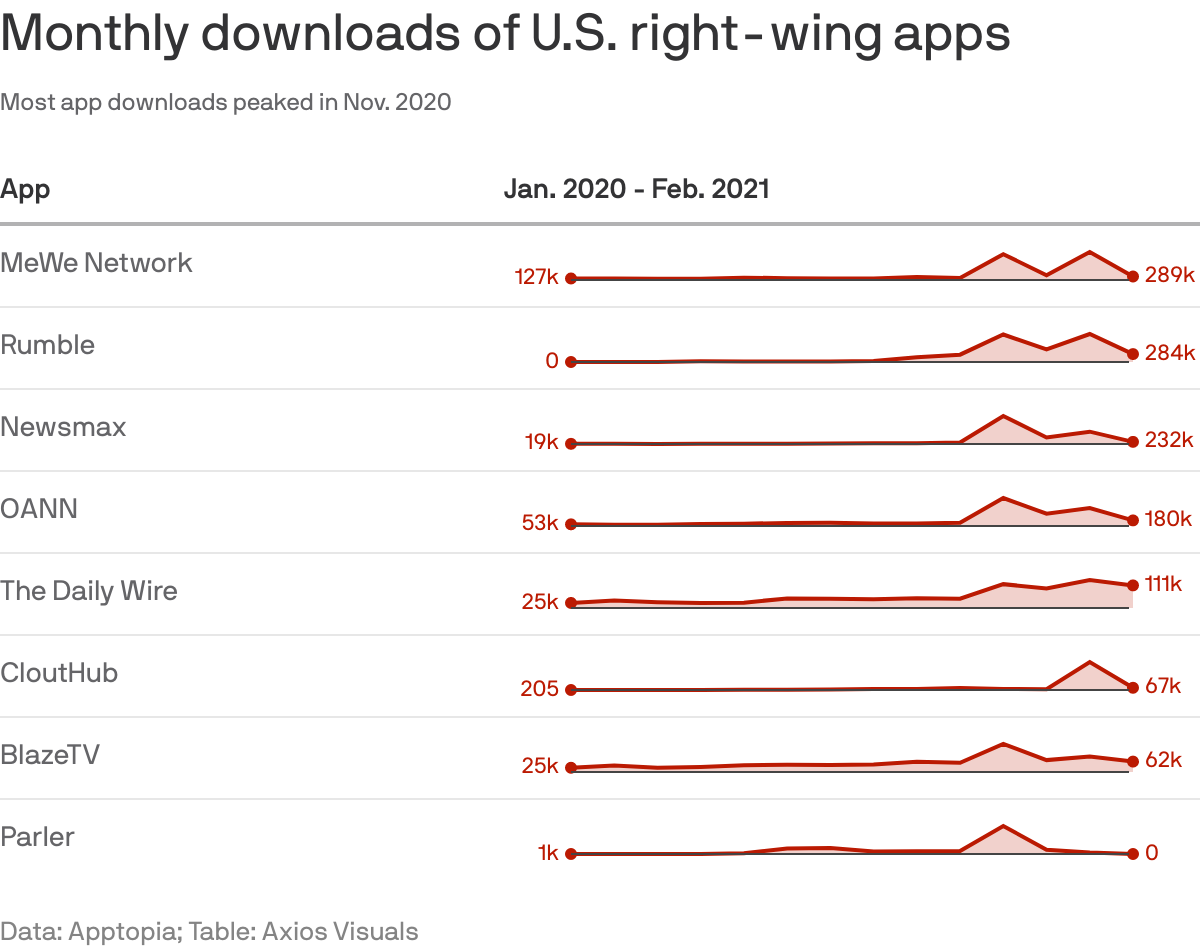
Over the past six months, apps catered to conservatives have hit new milestones, although they are starting to lose some of the traction they gained in the month following the aftermath of the Capitol siege.
Why it matters: Conservatives have long created their own media channels via print, radio and television to combat the perceived left-wing bias of mainstream outlets. The creation of new social media networks, streaming sites and digital media apps is the next iteration of that decades-long trend.
China is ramping up plans for government-sponsored satellites to beam internet from space, taking on U.S. rivals like SpaceX and Amazon in the race to own the next frontier of connectivity.
Why it matters: There's growing concern that China is trying to enter the space internet market with the same strategy it used on earth with Huawei and 5G — use a state-backed company to undercut competitors and spread global influence.
Media and tech giants are swarming the kids entertainment space, hoping to capitalize on the dramatic increase in screen time during the past year.
Why it matters: As streaming and digital gaming become more popular, new concerns are rising about kids' privacy and susceptibility to tactics designed to keep them hooked on screens.
Affluent urban areas saw the biggest uptick in telehealth usage over the past year, according to a new study from RAND.
Why it matters: Experts have hailed telemedicine, in part, for its potential to help rural patients who would have to travel long distances for an in-person appointment. But the study suggests that telehealth hasn't closed the rural-urban access gap even as its overall use has soared.