A year after warning startups that the pandemic will be a "Black Swan" event that upends everything, Sequoia Capital is nudging them to prepare for an economic comeback in the second half, according to a memo sent to its portfolio on Thursday.
Why it matters: While the pandemic ground certain sectors to a halt, much of the technology realm flourished as consumers had to dramatically shift much of their lives online. And despite a short adjustment early in the pandemic, venture capital has been backing startups at record levels.
Coinbase is opting for a question-and-answer session on online forum Reddit lasting through Friday evening and a series of explainer videos ahead of its public debut, in lieu of a more traditional roadshow or live-streamed presentations for investors.
Why it matters: Much about Coinbase's public listing is already unusual—it'll be the Nasdaq's first major direct listing, and it will be the first U.S. cryptocurrency company to become publicly-traded. It's also a nod to the cryptocurrency industry's roots in online forums and where many of its biggest enthusiasts still convene.
Facebook researchers are rapidly learning how to replace mouse clicks and screen taps with finger twitches. They're doing it by putting a band on your wrist that reads nerve impulses sent by your brain to your hand.
The big picture: Tech insiders widely expect the next generation of computing after the smart phone will be built around some combination of glasses, headphones and other worn devices. The challenge is figuring out how users navigate information and make choices in such a world.
The learning loss suffered by many students during the pandemic is real and debilitating, but targeted online EdTech and tutoring could help close the gap.
Why it matters: Losinga year or more of in-person education could have lifelong effects — especially for the most disadvantaged children — which puts a premium on efforts to get students back up to speed.
Venture capitalists Keith Rabois has teamed up with Atomic's Jack Abraham as founders of OpenStore, a stealthy company that plans to acquire a number of small e-commerce businesses, Axios has learned.
Why it matters: The last startup Rabois formed was Opendoor, a home buying and selling platform that was initially ridiculed by some top real estate industry execs. Then companies like Zillow copied the model and Opendoor eventually went public via SPAC, with a current market cap north of $15 billion.
Tech's burgeoning new labor movement has its own class divide — between a conventional organizing push among blue collar employees and an effort among white collar employees that's based on a different set of concerns and goals.
Why it matters: The tech industry rose to power and wealth largely union-free. But a recent wave of labor organizing catches tech's biggest companies at a vulnerable moment, when they're being challenged by antitrust suits, hostile regulators and doubts among their workforce.
Why it matters: With Silicon Valley homogeneity not changing very quickly, some are hopeful that emerging tech centers elsewhere will be more inclusive for workers.But this aspiration could be easily thwarted if local tech workers lack supportive laws.
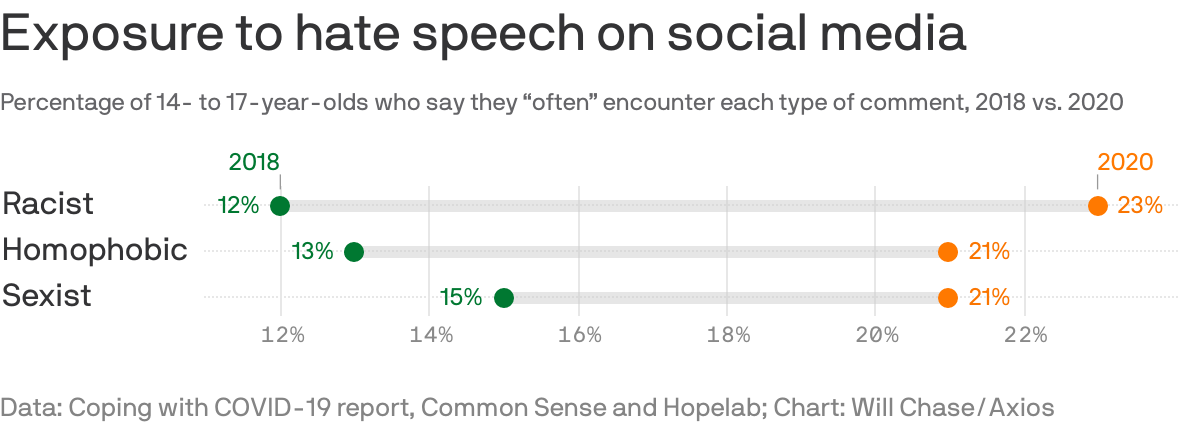
Young people are encountering far more hate speech on social media than they did just two years ago, according to new survey data out Wednesday from Common Sense Media.
Why it matters: Cooped-up teens and young adults are spending more time than ever on social media to cope with loneliness during the pandemic, the survey shows, but they are also met with a new wave of vitriol, including body shaming and racist, sexist and homophobic content.