Google plans to cut its marketing budgets by as much as 50% for the second half of 2020, CNBC reports, citing internal emails from the company.
The big picture, via Axios' Ina Fried: Google is doing what most big tech companies are or will be doing soon — looking for budget cuts that can mitigate the coronavirus fallout, with marketing expenses likely to be on the chopping block.
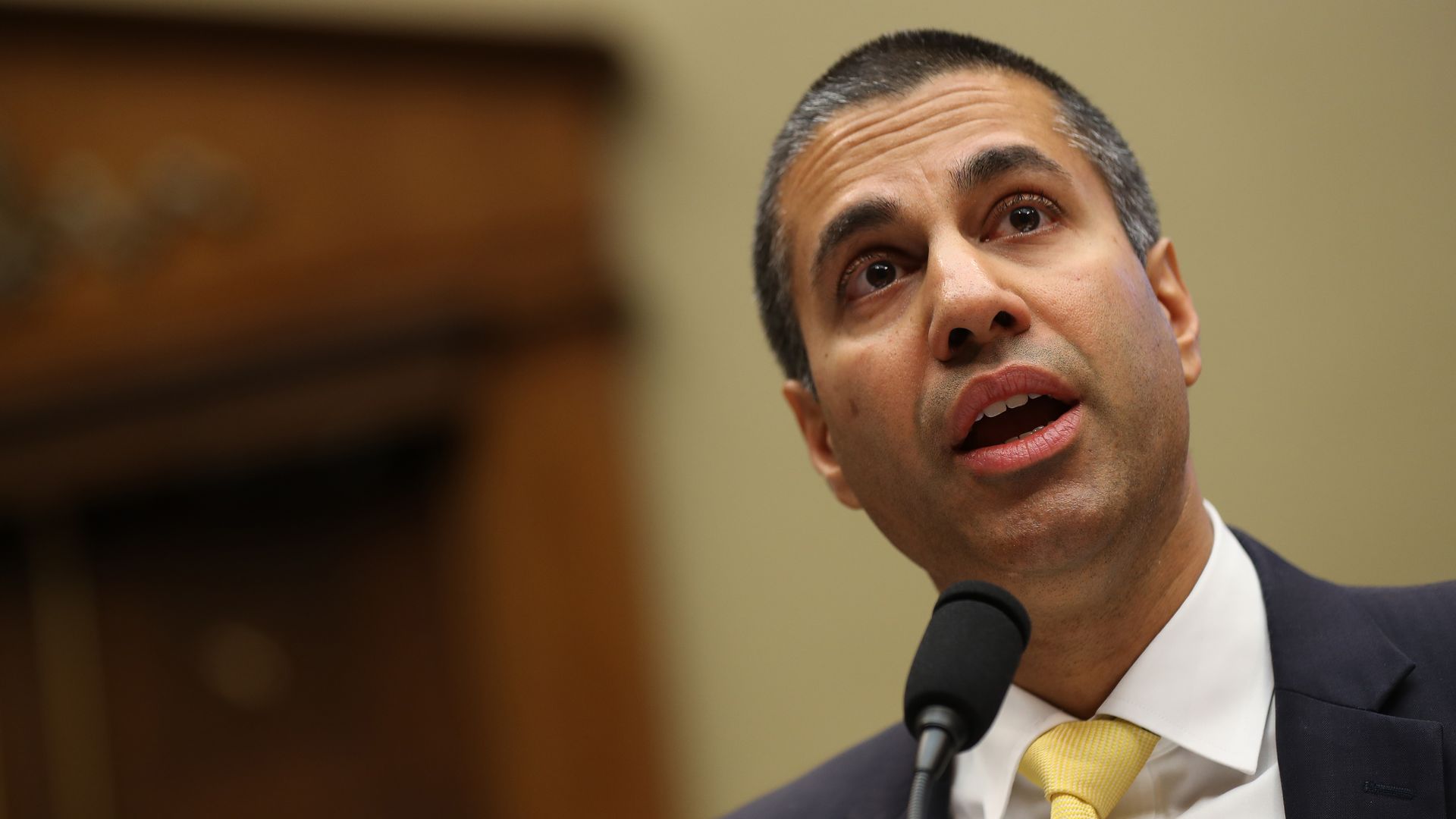
FCC Chair Ajit Pai said Thursday during an Axios virtual event that internet connectivity is "the glue" for many Americans' daily lives during the coronavirus pandemic.
Why it matters: Pai specifically cited both education and telehealth as reasons why internet access is so important in the age of social distancing. He added that he hopes that both Democrats and Republicans in Washington use this time to recognize the issue's importance in order to move to create more opportunities for access in underserved communities.
This week was to be the annual TED conference, with thousands of business leaders, celebrities, artists and scientists gathered in Vancouver to share ideas. Instead, Wednesday became the first step in the organizers’ effort to take their entire event online.
Why it matters: While many conferences have moved online, the shift is particularly tricky for luxury events, where much of the value is around in-person networking and socializing.
Americans are looking more favorably on the tech industry and are especially cheered by efforts to help track coronavirus cases, according to recent polling.
Why it matters: The industry's image was taking a beating over concerns around misinformation, privacy and other issues before the coronavirus pandemic, but sentiment has shifted as the virus has forced more Americans to rely on online services.
Google is deploying a new tool in its ongoing quest to eventually run its energy-thirsty data centers on carbon-free power around the clock.
The state of play: The company said in a blog post Wednesday that it's beginning to deploy a "carbon-intelligent computing platform" at its very large data centers. The goal is to align energy use to the time period when the supply is cleanest.
Snap announced Thursday that it is planning to raise up to $750 million through a private debt offering.
In a note to staff obtained by Axios, CEO Evan Spiegel says that the "proceeds from this offering will further bolster our balance sheet which will allow Snap the flexibility to continue to invest in the long-term growth of our business, even if challenging conditions continue."
Google has changed its advertising policies to require all advertisers, not just those with political affiliations, to complete an identity verification program to show ads on its platforms, which include Google Search, Google News, YouTube and more.
Why it matters: Verification tends to weed out spammy advertisers, including those that sell things like price-gauged hand sanitizer or fake coronavirus face masks.
A majority of Americans are willing to share their coronavirus test results with public health officials, but fewer are willing to download an app that tracks who they come in contact with, according to new poll by the Kaiser Family Foundation.
Why it matters: To lift social distancing measures without allowing the virus to spread rampantly again, we'll need to know in real time who has the virus, and who they could have potentially infected.
The coronavirus pandemic is creating cracks in the federal government's long-held opposition to conducting business online.
The big picture: Quarantines and social distancing are challenging the way legislators, judges and policymakers are used to operating — though some remain hesitant to upend centuries of tradition and rules.
Instagram co-founders Kevin Systrom and Mike Krieger recently launched Rt.live, which tracks the rate of the coronavirus infection spread in each state. Dan digs in with Systrom on what Rt.live can tell us, plus his thoughts on how Silicon Valley has responded to the crisis.
Magic Leap said Wednesday that it is significantly reducing its staff amid a further shift toward the enterprise side of virtual and augmented reality.
Between the lines: Magic Leap has gotten tons of money and buzz, but has yet to find a significant business for its VR/AR technology.
The rapid trajectory of videoconferencing service Zoom has entered a new phase: What started as a social lifeline during the pandemic, and then became an object of privacy and security concerns, has now become a grind.
Why it matters: Zoom is wearing a lot of usdown, and as our era of enforced online work and socializing drags on, we're all going to have to learn how to better conserve our physical and psychological energy.
Robert Blair, a senior White House official who played a key role under former chief of staff Mick Mulvaney, is moving to the Commerce Department to serve as director of policy, two sources familiar with his plans tell Axios and Commerce Secretary Wilbur Ross confirmed.
What we're hearing: Blair is expected to focus on 5G, rebalancing the relationship with China and reopening the economy after the coronavirus lockdowns, one of the sources said.
Facebook is spending $5.7 billion to become the largest minority shareholder of Indian telecom operator Reliance Jio, the company announced on Tuesday.
Why it matters, via Axios' Ina Fried: Facebook has long sought a way to get more people in India using its services. In the past it has looked to subsidize mobile traffic to its services, a move that drew the ire of net neutrality advocates and other critics.















/2020/04/22/1587517686385.gif?w=3840)