Sen. Chuck Grassley (R-IA) slammed President Trump on Twitter Thursday morning, firing off a series of tweets to fact check the president's math on his tax cuts, which Grassley insists doesn't add up:
When asked whether Facebook considers itself a media company, COO Sheryl Sandberg told Axios' Mike Allen, "At our heart we're a tech company... we don't hire journalists."
On privacy: "When you share on Facebook, you need to know that nobody is going to steal your data, nobody's going to get your data who shouldn't have it, we're not going to make money in a way you wouldn't feel comfortable with your data." She explained that although they use ads and target ads using the data from people's Facebook pages, they don't sell that data to advertisers.
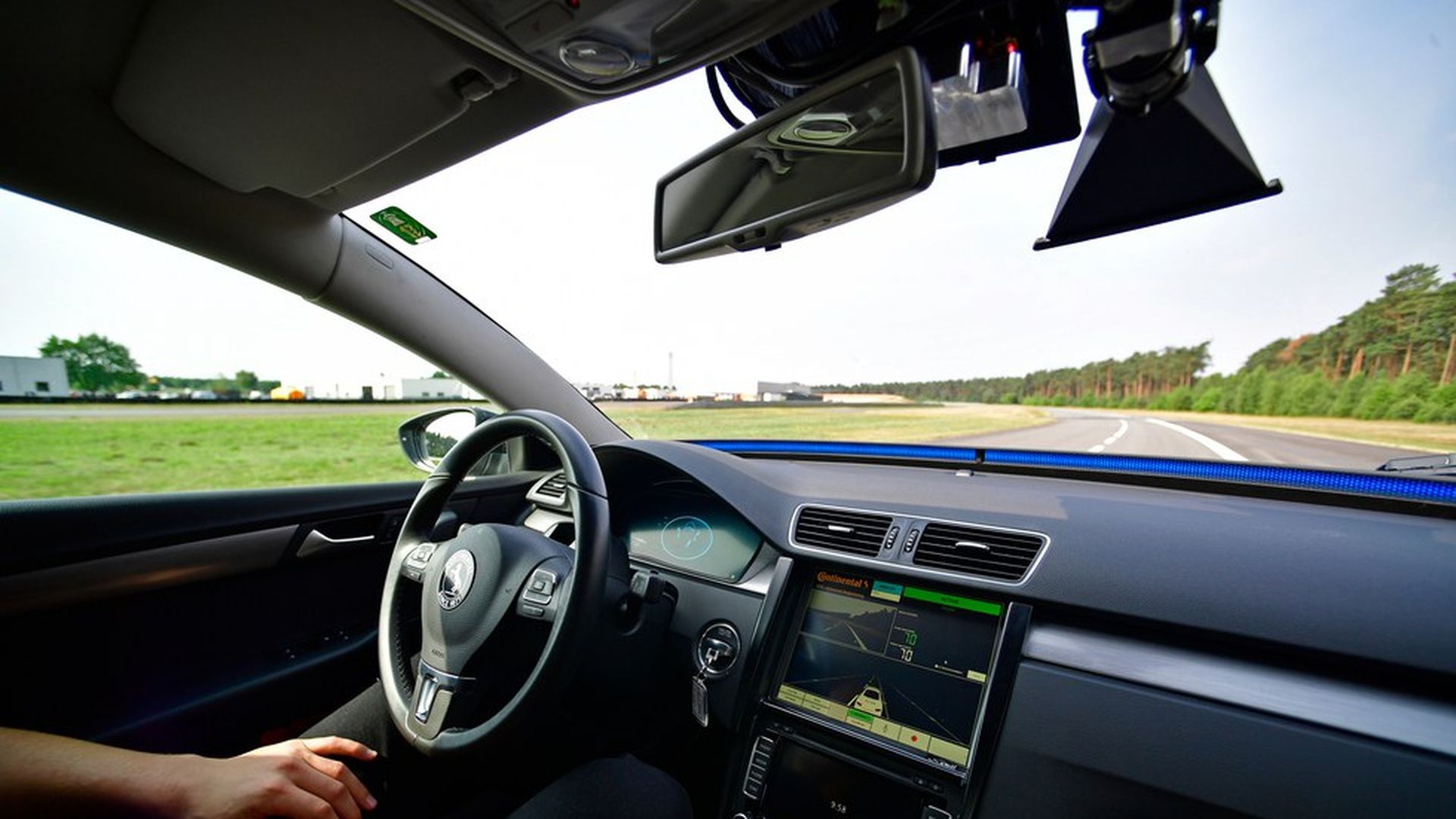
ANN ARBOR, Mich. — On the outskirts of the University of Michigan campus, there's a sight that instantly shows how much the area has changed: A sensor-connected car steered by an Xbox controller roams the streets of what is known as "M-City" to test self-driving and other connected-car technologies.
Why it matters: Michigan is known for its auto industry expertise but experienced a steep decline a decade ago when Detroit — its biggest city — lost half its population as manufacturing jobs left in droves. Detroit is fighting its way back to build a burgeoning tech scene. Ann Arbor, only 40 minutes away, is taking a complementary path: It's harnessing the university's high-tech talent factory and the state's auto factory history to be at the forefront of next-generation vehicle development.
Rep. Adam Schiff, the top Democrat on the House Intelligence Committee, said Wednesday that Facebook is "committed to providing" information related to the free content published by the same Russian pages that bought 3,000 ads focused on divisive issues before and after the election. A second source close to the situation confirmed Facebook had committed to providing the information.
Why it matters: The ads bought by the pages were one half of the puzzle. The "organic" content posted by the pages — and information on who saw and engaged with it — is the other. Some believe those posts may have been seen by far more people than the estimated 10 million that Facebook says viewed the ads.
At its annual conference focused on its Oculus virtual reality division, Facebook introduced its latest headset: Oculus Go. This is part of the company's ambitious goal of getting 1 billion people in virtual reality, as Facebook CEO Mark Zuckerberg said at the event.
The details: Starting at $199, the Oculus Go "is the most accessible VR experience ever," said Zuckerberg. It will begin to ship in 2018. Notably, it's binary compatible with Gear VR (the Oculus-based VR headset developed by Samsung), meaning that apps and content made for the Gear VR headset will also work with Oculus Go. Dev kits will begin to ship in November so that developers can get a start on creating apps for it. Here's more on the device.
Artificial intelligence is coming to your sportswear: Sensoria Health Powered by Genesis uses sensors in socks and shoes to detect pressure points and balance, and track and help prevent life-threatening falls. The partnership combines products from the smart garments company Sensoria and expertise on senior citizens from Genesis Rehab Services, per GeekWire.
Intel today released intelligent software that targets money-laundering — the methods that corrupt autocrats, narcotics traffickers, and sanctions-busters use to legitimize their illicit cash.
Why it matters: There's a broad commercial struggle going on between Intel and chip rivals like Nvidia, with which it is in a death grip for the rich future of enabling artificial intelligence. With the announcement, Intel is putting points on the board, showing off know-how in the serious and exotic space of tracking illicit cash, which is harder to detect amid the sea of data coursing through the global financial system.
Cyngn, a Silicon Valley startup that raised $115 million to build a more open flavor of the Android mobile operating system, has quietly changed course and is now working on autonomous driving technology.
New direction: Details are sparse, but Cyngn (formerly Cyanogen) appears to be developing self-driving car software and possibly hardware to match, based on its website and job listings. The company also recently received a permit to test self-driving cars on public roadways from California's Department of Motor Vehicles.