Ride-hailing services like Uber and Lyft may be adding more cars on the road, according to a new study published by the U.C. Davis Institute of Transportation Studies this week. Though the study found that 9% of car owners said they've disposed or one or more of them because of ride-hailing, it's unclear whether it's reduced their total vehicle miles traveled (VMT).
Ride-hailing users who also use public transit have higher personal ownership rates than those who only use public transit.
Ride-hailing has led to a net 6% reduction in public transit use by Americans in major cities (draws people away from buses and light rail, but complements commuter rails).
A majority (49% to 61%) of ride-hailing trips would have not been made at all, or by walking, biking, or public transit, likely adding to the total VMT.
Qualcomm is asking a Chinese court to ban Apple from selling or manufacturing iPhones in China that infringe on its patents, in a major escalation of the legal battle between the two tech giants, Bloomberg reports.
Why it matters: The two companies were already at war, legally, but had kept the battle from stopping the two companies from doing business. Despite the fight, Apple remains one of Qualcomm's biggest customers and Apple relies on Qualcomm for a key modem chip, although it gets some modem chips from Intel.
One of the key Russian Facebook pages was colored with hot-button words and phrases like "illegal alien," ''Sharia law" and "welfare state," AP's Ryan Nakashima and Larry Fenn find:
"'Being Patriotic' was among 470 pages and accounts that Facebook shut down ... in response to a congressional probe into Russian meddling in last year's election."
"While Facebook says it deleted the posts this week, the AP was able to perform a content analysis based on the 500 most popular posts on the page, which was one of six Russia-influenced Facebook pages examined by Jonathan Albright, research director at the Tow Center for Digital Journalism at Columbia University."
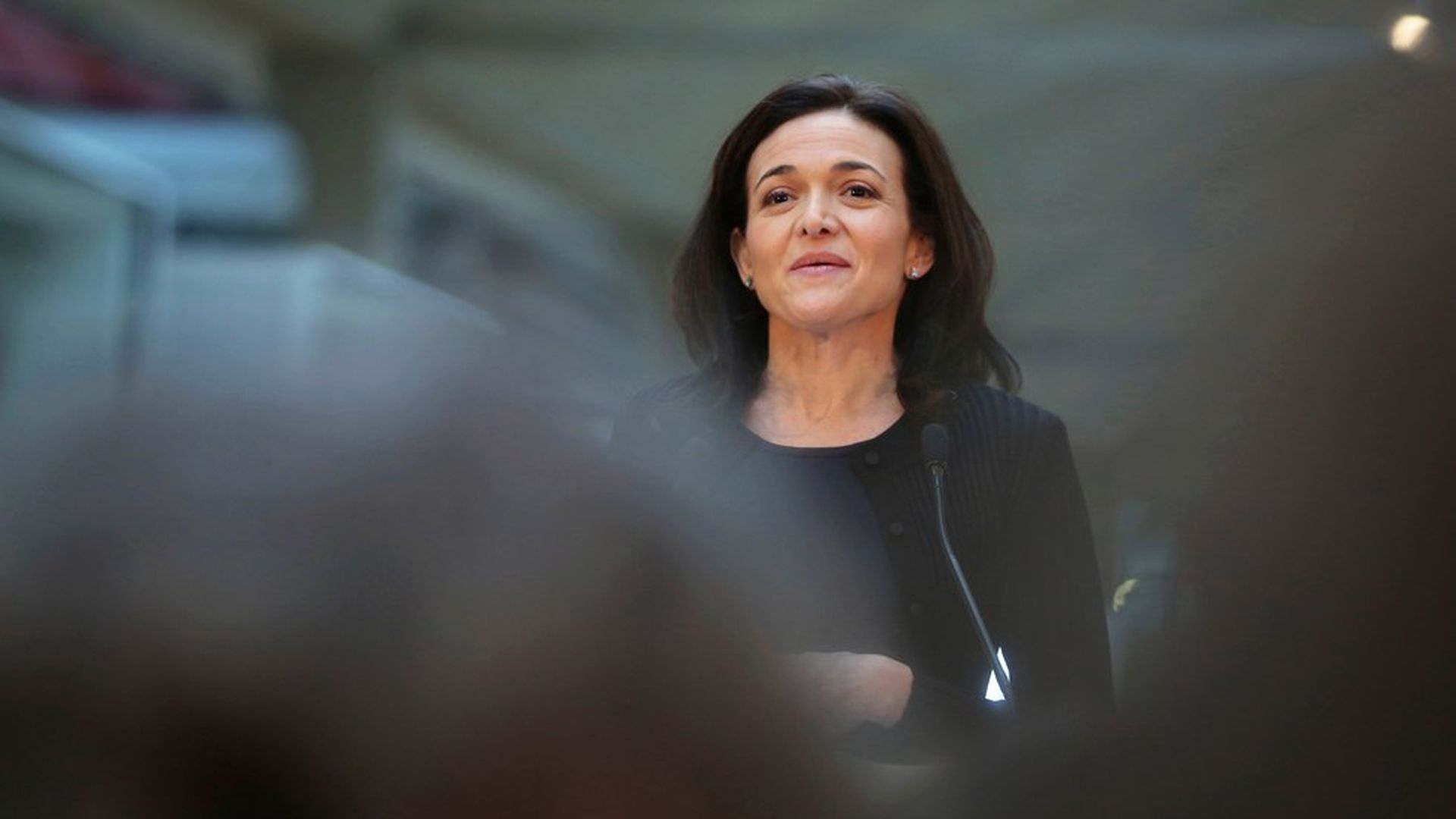
In her swing through DC (which included an interview with Axios), Sheryl Sandberg made the case that Facebook is ready to work with legislators. It seems that, at least so far, concerned lawmakers are willing to wait and see before pushing for major new legislation.
The bigger picture: In various meetings, Sandberg argued that while Facebook can remove some content from its platform, it needs to tread carefully to uphold broad values of free speech. Here's how that message was received by lawmakers: