Thursday's technology stories

Benchmark continues push for Kalanick removal from Uber board
Benchmark, the VC firm which recently filed a lawsuit against Uber ex-CEO Travis Kalanick, continues to push for his immediate removal from the company's board, according to new documents filed in Delaware Chancery Court. Recode was first to report the new court filing.
- Benchmark argues that Kalanick's response to its lawsuit doesn't dispute the fact that he deceived Uber's board by hiding certain information about the self-driving truck startup it acquired—which eventually led to a lawsuit from Waymo—when he took control of three board seats. It also reiterated its opposition to Kalanick's motion to move the lawsuit into private arbitration.
- Pushback: Since Benchmark filed its lawsuit, it's faced public opposition from Shervin Pishevar, another longtime Uber investor, as well as from the rest of the company's board, which said it's "disappointed" by the legal action.

Ex-Uber employee brings her story to SCOTUS
Susan Fowler, the former employee who exposed Uber's sexist behavior and helped push CEO Travis Kalanick out of his job, has filed an amicus brief with the U.S. Supreme Court to fight against unacceptable workplace behavior, per The Recorder. Fowler has asked SCOTUS to forbid companies from preventing employees, like herself, from joining together to sue over their work conditions.
Why it matters: Fowler's complaints extend beyond the inner politics of Uber. Many gig-economy companies that employ workers on a part-time basis use contract waivers like the one Fowler signed that bar employees from engaging in collective litigation. The high court has agreed to take up three cases surrounding this issue.
The petition: According to Bloomberg, Fowler's lawyer has petitioned SCOTUS in support of workers who have been "forced to forgo the right to pursue class-action lawsuits by contract provisions that require grievances to be resolved through one-on-one, closed-door arbitration."

An inside look at Waymo's autonomous cars
"Inside Waymo's Secret World for Training Self-Driving Cars: An exclusive look at how Alphabet understands its most ambitious artificial intelligence project," by The Atlantic's Alexis Madrigal:
- "At any time, there are now 25,000 virtual self-driving cars making their way through fully modeled versions of Austin, Mountain View, and Phoenix, as well as test-track scenarios."
- "As we pull into the parking lot, there are whiffs of Manhattan Project, of scientific outpost, of tech startup."
- "[E]ngineers ... cook up and stage rare scenarios that might allow them to test new behaviors in a controlled way."
- Worth the click.
What's new in the iPhone 8
"Due out this fall, ... this is the 10th anniversary of the original iPhone," Bloomberg's Mark Gurman writes. "[T]he new iPhone won't be a case-study of innovation, more a matter of perfecting features that are already out there in rival devices. Time and again, Apple has followed this 'best, not first' philosophy."

Demand for drones is exploding
Drone sales surpassed the $1 billion in revenue mark for the first time this year, as both hobbyists and companies are tapping into the flying devices for a growing number of uses — from taking selfies to inspecting railroads.
Google engineer fired over memo hires civil rights attorney
James Damore, the former Google engineer fired over a memo he wrote criticizing the company's diversity efforts, has hired civil rights lawyer Harmeet Dhillon, she confirmed to Bloomberg. Google said he was fired for violating the company's employee code of conduct. Damore claims it was for expressing political views that differ from Google's.
- Why it matters: Damore's memo set off wide backlash because of his assertions that women were biologically less inclined to pursue computer science professions and that Google doesn't tolerate conservative or minority viewpoints. Dhillon's firm is seeking other Google employees who believe they've been unfairly treated by the company, she posted on Twitter.
- Dhillon was rumored to be considered by President Trump to lead the Department of Justice's Civil Rights division.
- Damore has already filed a complaint to the National Labor Relations Board and has said he's exploring further legal actions.

Amazon-Whole Foods deal clears key hurdle
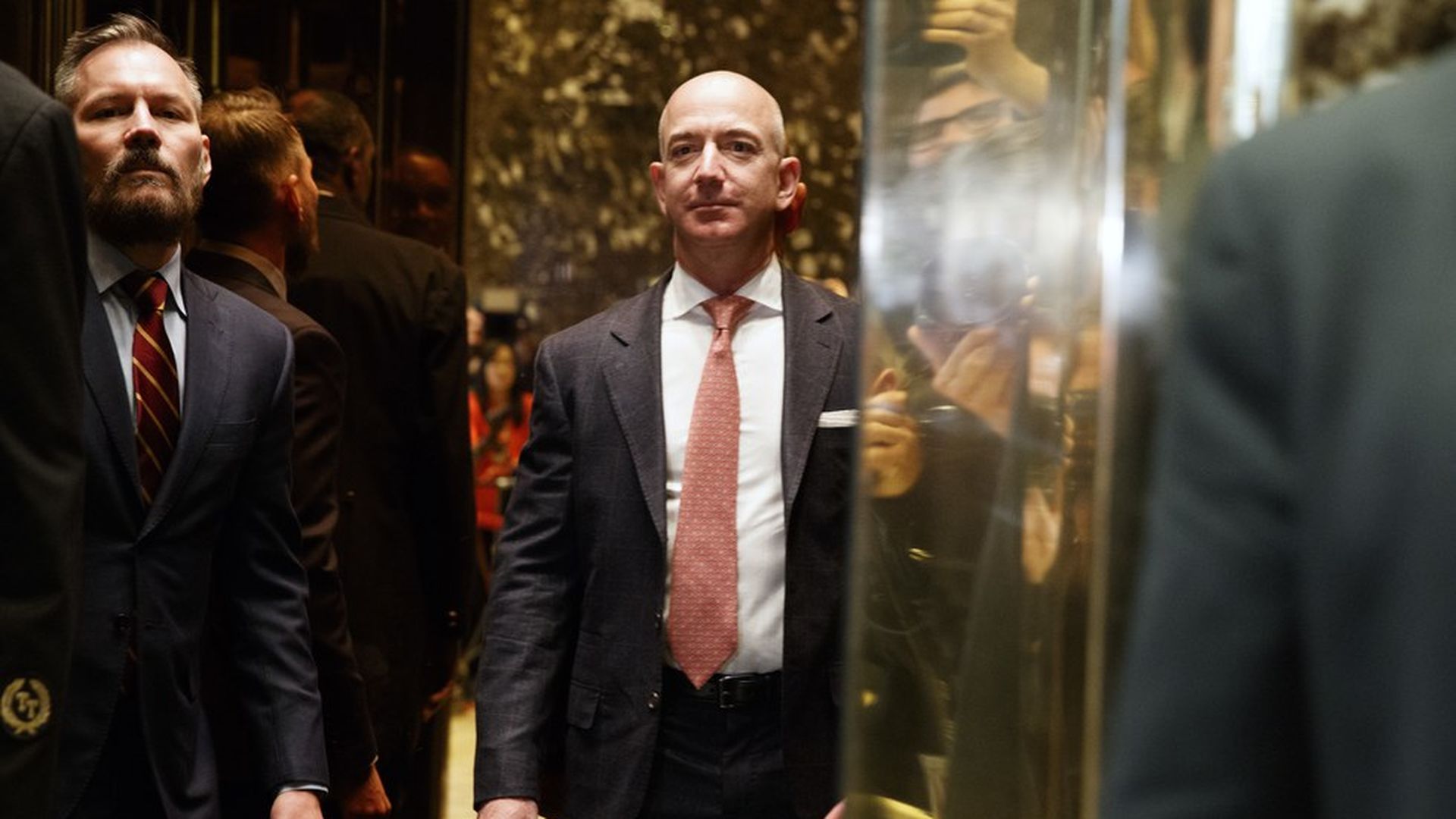
The Federal Trade Commission is done vetting Amazon's proposed acquisition of Whole Foods, it said Wednesday, allowing the $13.7 billion deal to clear a key a regulatory obstacle. The companies hope it will close this year; Whole Foods shareholders approved it earlier in the day.
"Based on our investigation we have decided not to pursue this matter further," said Bruce Hoffman, the acting director of the agency's Bureau of Competition, in a statement. "Of course, the FTC always has the ability to investigate anticompetitive conduct should such action be warranted."
Details: The agency evaluated whether the merger of the organic grocer and online retail powerhouse "substantially lessened competition" or "constituted an unfair method of competition."
Bigger picture: Critics of Amazon say it has gotten too big and should be subject to antitrust scrutiny. But it was always doubtful that this deal would be the field where that battle is fought.

What you need to know about Samsung's Galaxy Note 8
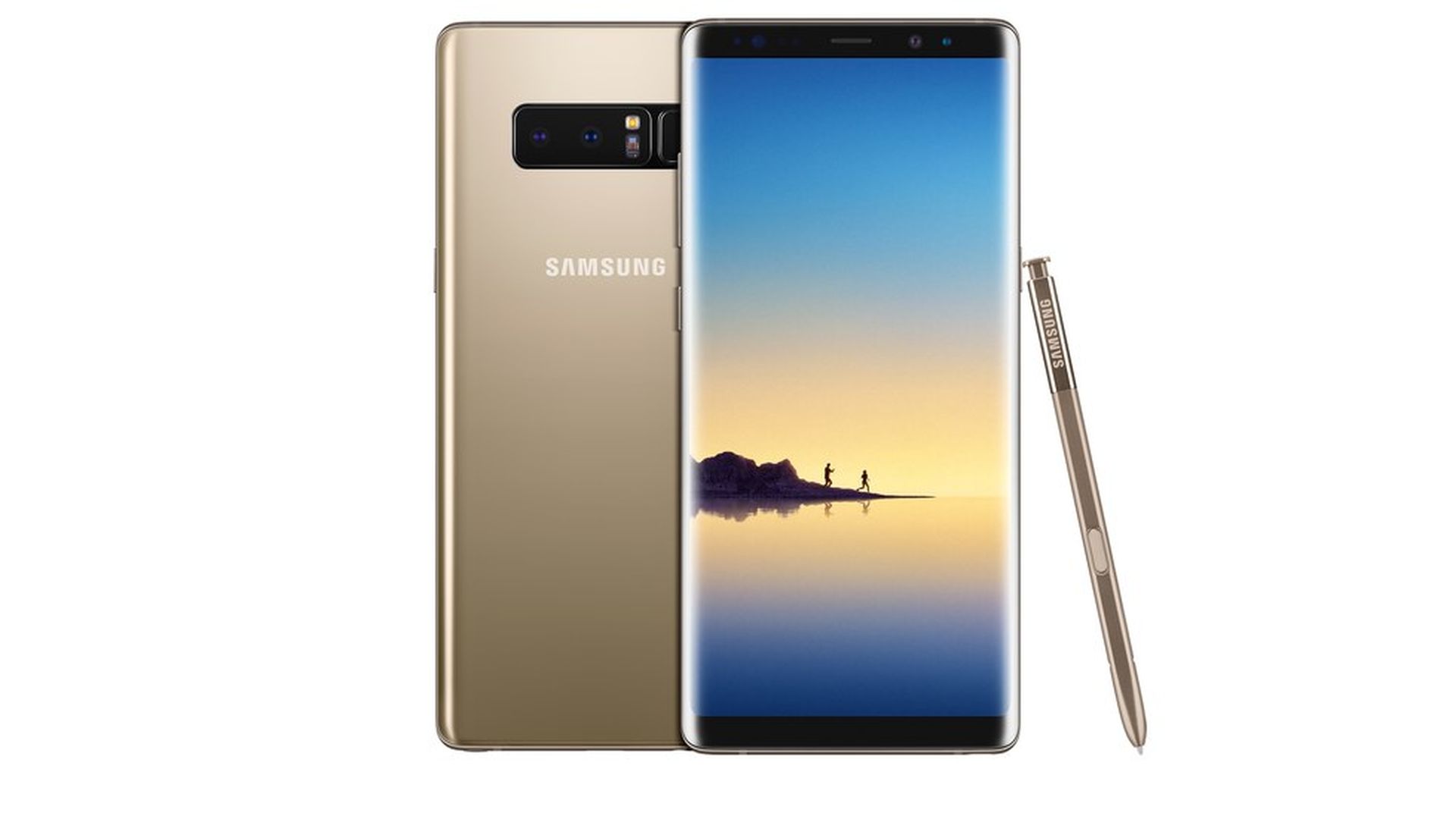
With the Galaxy Note 8, being unveiled in New York today, Samsung is looking to move past all of last year's problems and re-establish its signature phablet. The device closely resembles the Galaxy S8 with its curved edges and infinity display, with the addition of a digital pen and dual rear cameras.
The bottom line: Despite the fiasco with the Note 7 and subsequent recalls, Samsung has bounced back with the well regarded Galaxy S8. Barring any new issues, Samsung seems to have emerged relatively unscathed. The big question is how the Note 8 will stack up against the next iPhone.
Trump attacks “weak” Jeff Flake the day after Phoenix rally
President Trump snuck in a dig at GOP Senator Jeff Flake, calling him "weak" on crime and border security, while thanking Phoenix for the "amazing" crowd that came out to watch his speech last night.
This isn't the first time Trump has gone after Flake on Twitter. Last week, Trump tweeted that he was "toxic" and signaled his support for Flake's opponent in the 2018 Senate race, Dr. Kelli Ward.
The Trump-Flake ongoing feud initially began when Flake openly opposed Trump during his presidential campaign. He also sharply criticized Trump and condemned the Republican Party for enabling Trump's rise to the presidency in his book, "The Conscience of a Conservative." Trump's recent flurry of tweets attacking Flake is the president's way of retaliating.

Google and Walmart in a joint offensive against Amazon
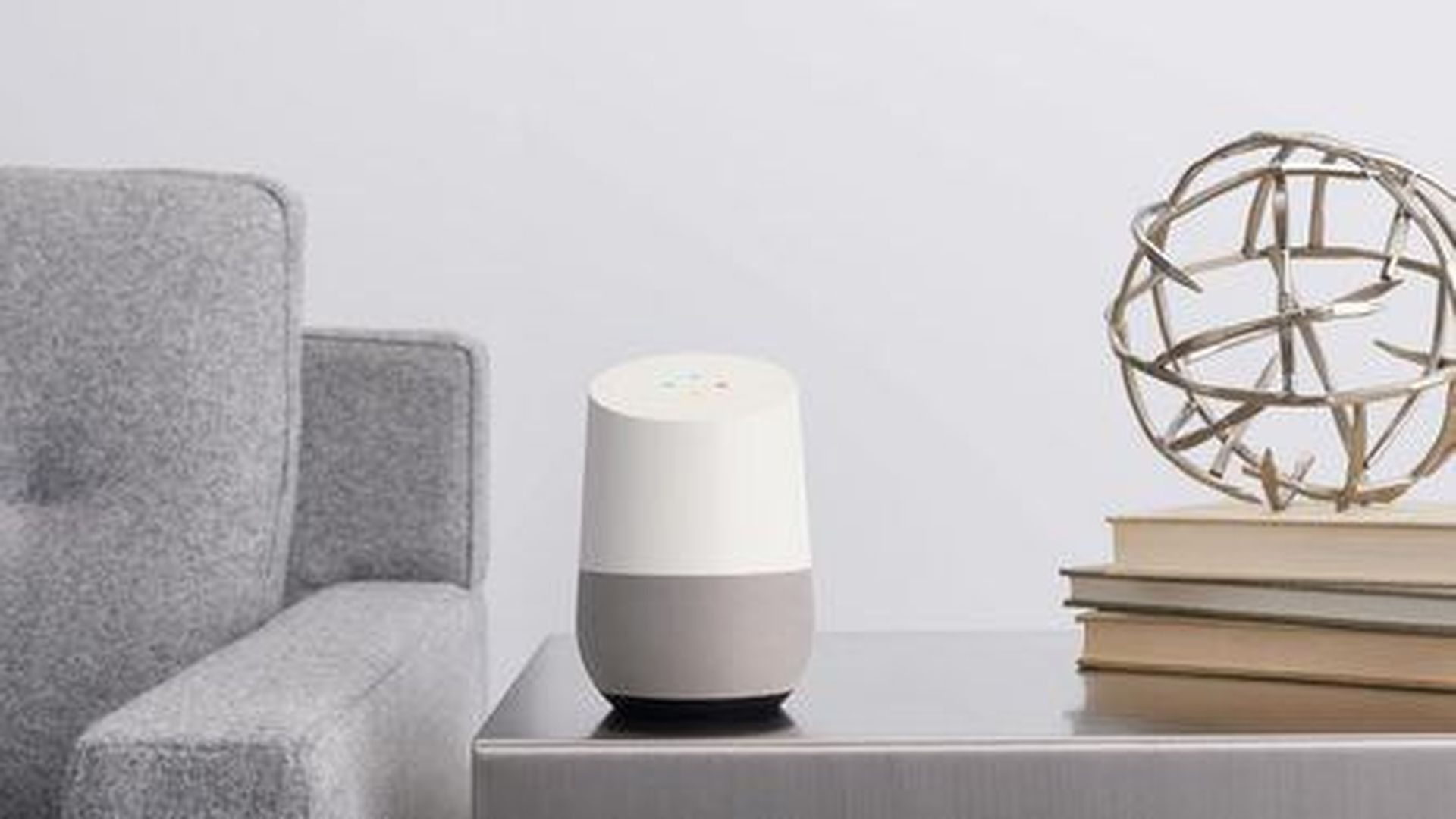
Walmart and Google are escalating a fierce battle to own virtual assistant shopping, jointly challenging Amazon's towering dominance over the already-lucrative new space in retail, per the WSJ's Jack Nicas and Laura Stevens.
Google is offering up its Home virtual assistant (photo above) and Walmart its vast inventory. As of next month, they will team up on Google Express, the internet giant's e-commerce marketplace. In doing so, they are going against Amazon's Echo.
- The mountain is steep: As of July, Amazon raked up 45 cents of every dollar spent on-line, up from 43 at the start of the year. Walmart earns just 2 cents. Google's House personal assistant is 26% of the market; Echo is the rest.
- But the prize is too large to ignore: Amazon has already decimated whole swaths of brick-and-mortar retail, and now has an early grip on the new voice-activated virtual assistant market. Walmart does not want to end up like Macy's and Barnes & Noble, and Google is not satisfied to be an also-ran in e-commerce.
- So big players are aligning: Walmart is also doing test runs using Uber and Lyft in an attempt to speed the delivery of fresh produce bought through Google Home.
Read the original Uber pitch deck
To mark the ninth anniversary of the original Uber idea (then called "UberCabs"), co-founder Garrett Camp posted online the company's first pitch deck. Back then, Uber's business was all about providing private car rides to its members in a more efficient (thanks to smartphones and tech) and affordable way.
- The deck claimed customers shouldn't have to wait for more than five minutes to get picked up, and predicted early on that passengers would want to share rides.
- The original service was focused on premium rides, but the original deck mentioned eventually turning to less expensive cars like the Toyota Prius. Uber's first UberX cars, in 2012, were in fact Priuses.
- Today, countless companies describe themselves as "the Uber of X." Back in 2008, Uber compared its concept to another existing company: NetJets, a Berkshire Hathaway subsidiary that sells part ownership or shares of private business jets.