A growing number of anecdotes about COVID-19 vaccines affecting a person's menstrual cycleis spurringattention and research funding.
Why it matters: Efforts to halt the pandemic are being stymied by continued vaccine hesitancy, in part due to disinformation about side effects. A CDC scientist tells Axios "there is absolutely no evidence" that the altered periods reported by some are causing infertility, a common refrain among anti-vaxxers.
Data: National Foundation for Infectious Diseases; Chart: Axios Visuals
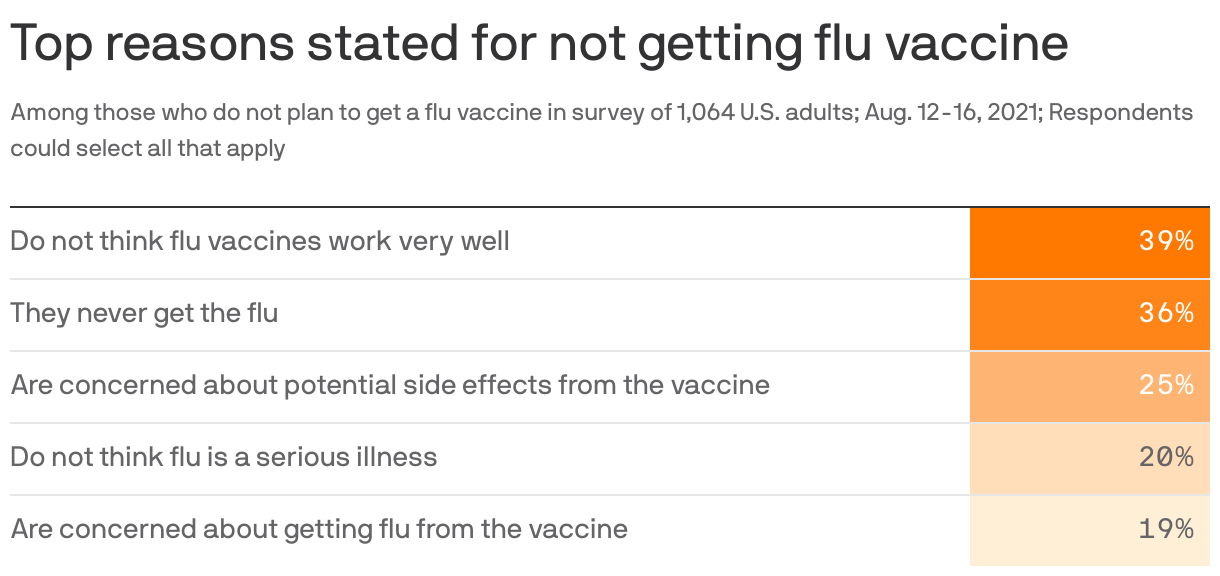
A "potentially severe" flu season could be on the way the CDC warned this week, as public health officials once again urge the public to get its flu shot.
Why it matters: Americans may now have reduced immunity against the flu after cases reached an all-time low last year.
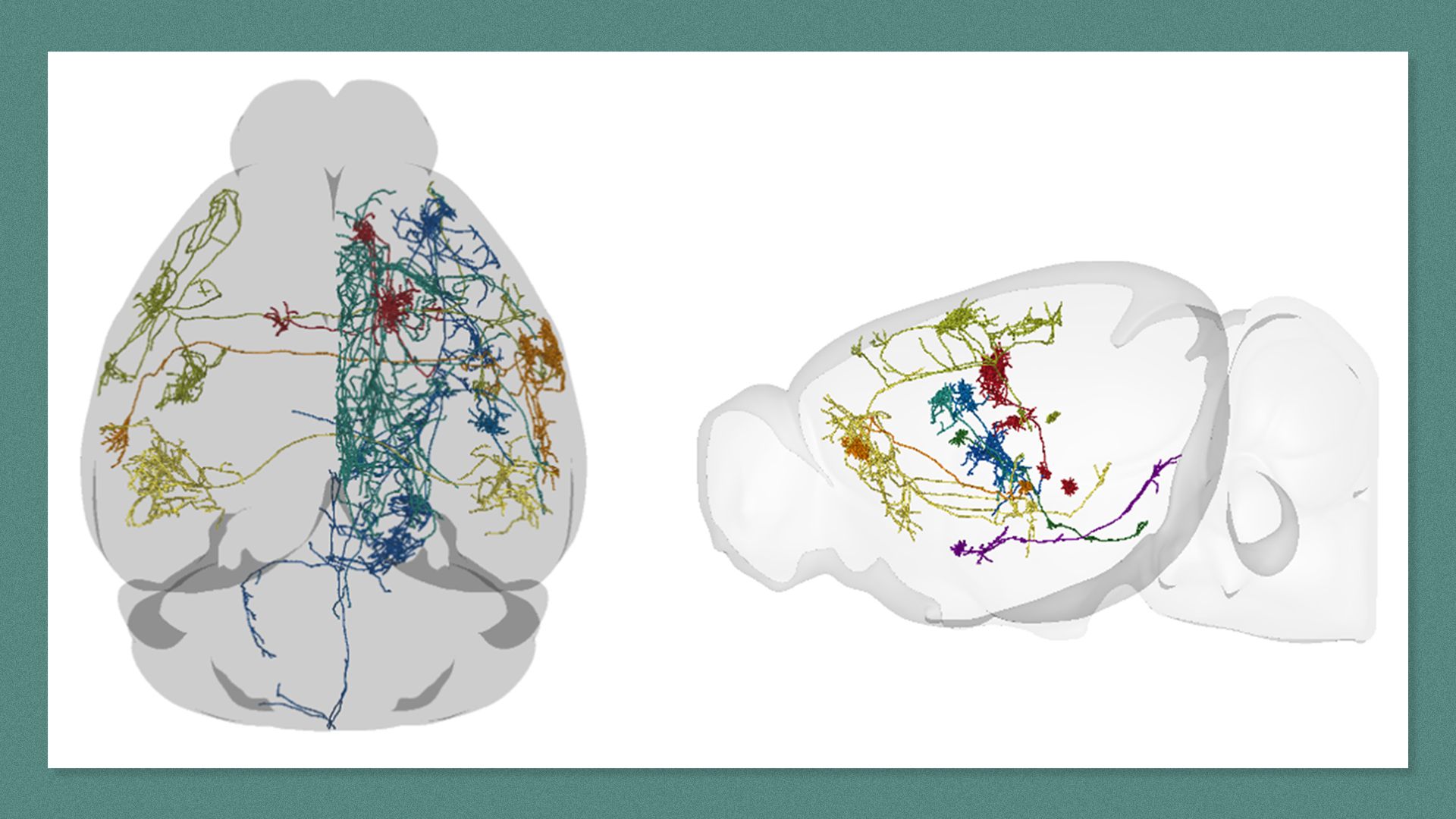
Scientists have created a catalog of the cells in the brain's movement control center — a first step toward deciphering the circuits of the brain's nearly 90 billion neurons that underpin our movements, thoughts and emotions.
Why it matters: Cells don't operate in isolation. Determining the circuits that connect neurons could help researchers understand processes in the brain and what happens when they go awry from disease.
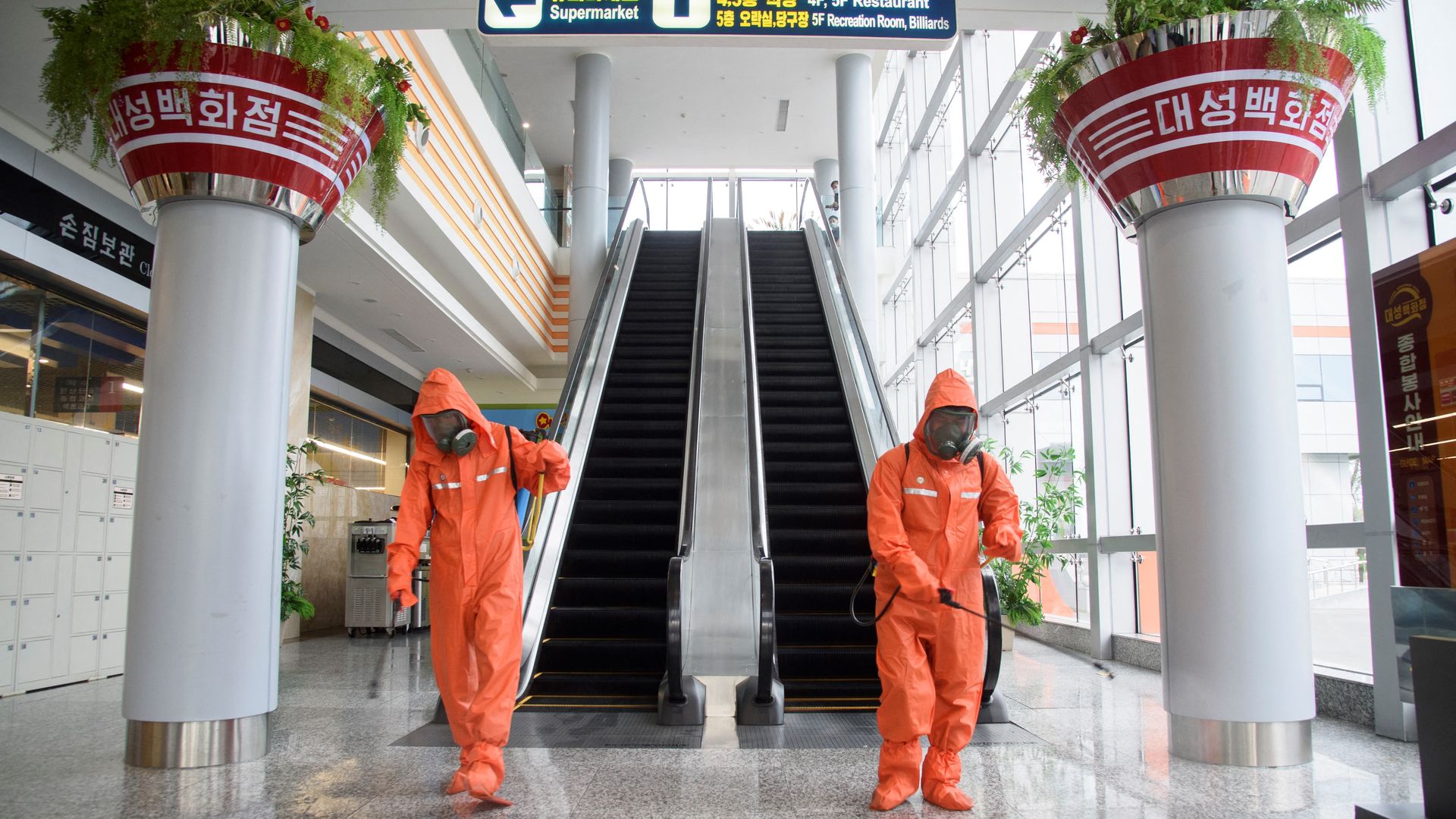
The World Health Organization said it's sending COVID-19 medical supplies to North Korea.
Why it matters: It's an indication that North Korea may be loosening one of the "world's strictest pandemic border closures to receive outside help," notes AP, which first reported the news. North Korea has never publicly confirmed a coronavirus case, though experts doubt it's been untouched by infection.
A 5.7 magnitude earthquake hit southern Pakistan on Thursday, causing killing at least 20 people and wounding more than 200 others, officials said, per Reuters.
The big picture: The shallow quake caused buildings to collapse as it struck about 3am local time, officials reported. Its epicenter was just over 6o miles east of Quetta, a city near the border with Afghanistan. The region is prone to quakes as it's situated where the Indian and Eurasian tectonic plates meet.
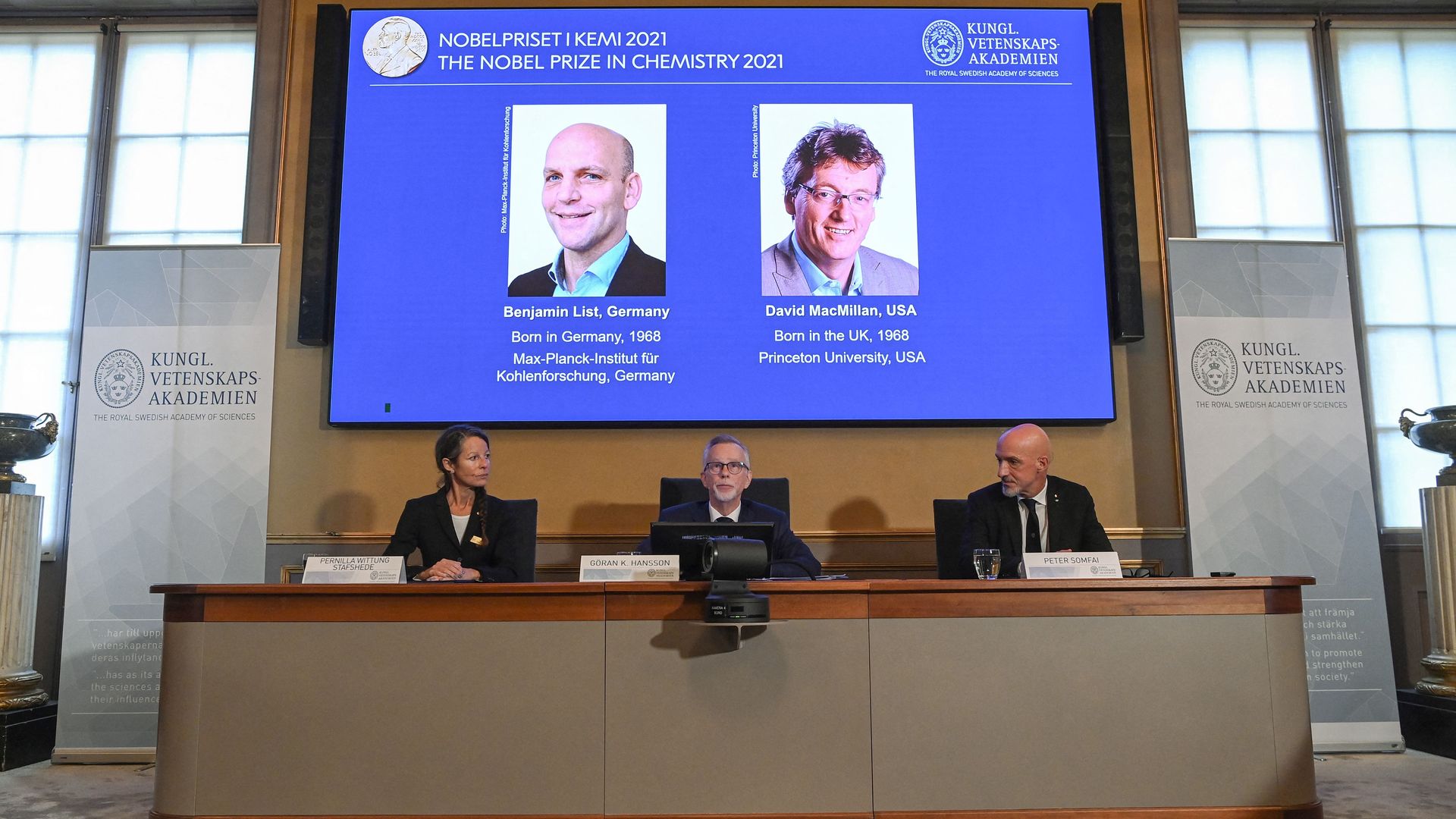
Benjamin List and David MacMillan won the Nobel Prize in chemistry for their development of asymmetric organocatalysis, an "ingenious tool" to build molecules, the Nobel Foundation announced Wednesday.
Why it matters: Catalysts are used to accelerate chemical reactionsand are crucial to producing many commercial products, especially pharmaceuticals. Before List's and MacMillan's discoveries, researchers believed that there were just two types of catalysts available: metals and enzymes.
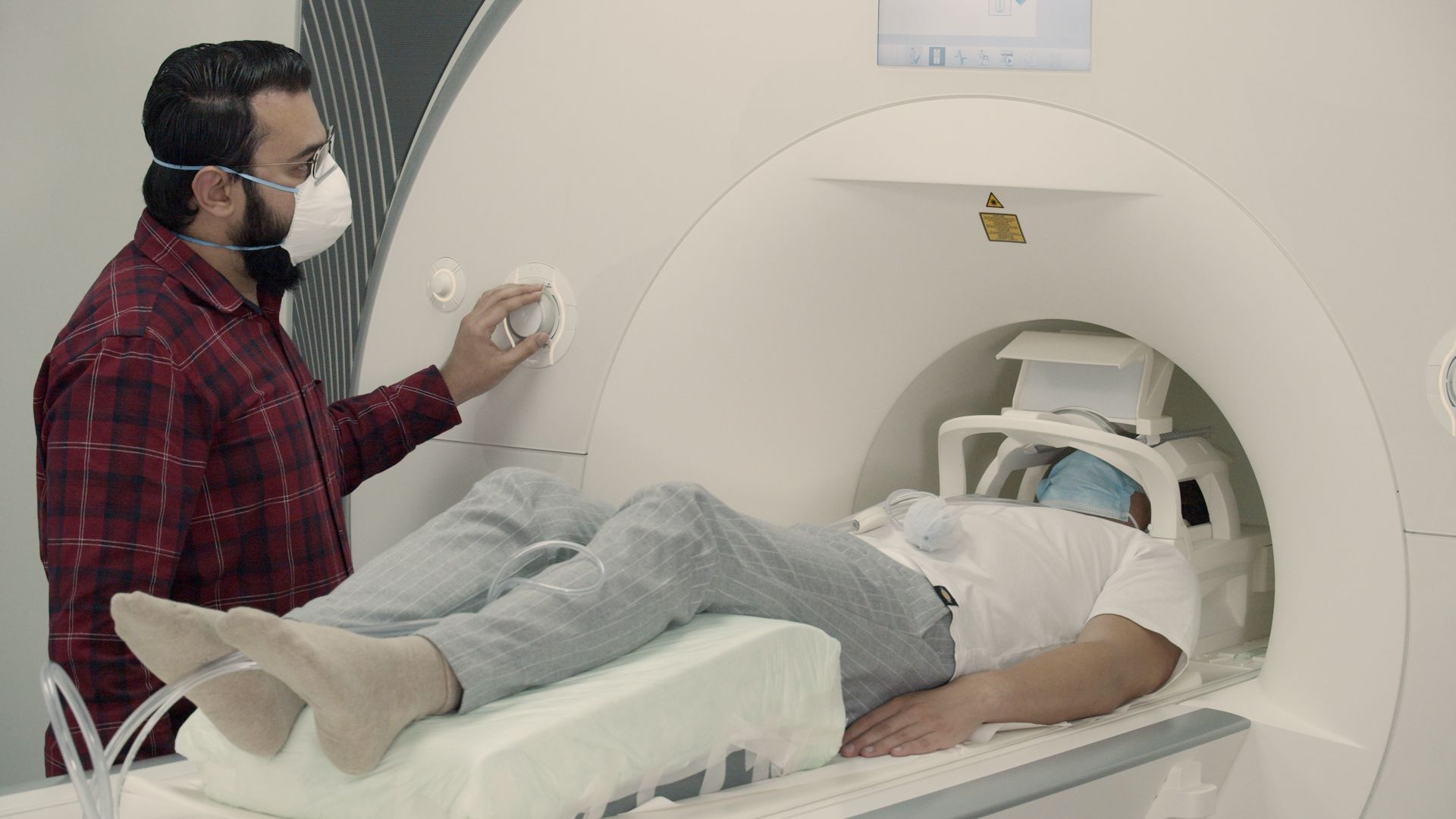
Ford is working with neuroscientists to develop brain-scanning technology that can more quickly detect when drivers are getting tired or distracted.
Why it matters: It's crucial that drivers stay engaged behind the wheel, even as cars become more automated. But there's mounting evidence that people get complacent using driver-assistance features like Tesla Autopilot, which is why federal safety regulators are investigating the systems.
“The brain processes huge amounts of information when we are driving, but that may change as driver assistance technologies do some of the driving for us," said Stefan Wolter, research engineer, Research and Advanced Engineering, Ford of Europe.
"Drivers also get tired and their minds can wander. Identifying more quickly when this happens could be of critical importance," he added.
Driving the news: Ford scientists in Europe are working with medical researchers at Uniklinik RWTH Aachen in Germany to map brain patterns to driver’s reactions.
Ford hopes that by identifying the brain responses that reveal lapses in concentration, it may then be possible to match the scans to physical changes in heart rate or breathing, for example.
A change in heart rate detected via wearable technology, for example, could then trigger an alert for the driver to pay attention.
How it works: Study participants complete a driving simulation while their brain activity is scanned by an MRI machine. A mirror allows them to see the simulation on a screen inside the MRI machine.
The scenario, designed using gaming technology, involves a three-lane highway at night where a vehicle in the middle lane brakes suddenly and the participant has to take over and move the car to the left or right, using a handheld device.
The MRI machine scans the brain before and during these actions, while the researchers measure how quickly the participant reacts and if they make the right decision.
They also monitor changes to heart rate, breathing rate and other physiological measures.
What they're saying: "We believe that by capturing this data we could one day be able to generate unique physiological driver fingerprints so that drivers of the vehicles of the future can be prepared to react and to intervene immediately in case it is required," said Professor Klaus Mathiak M.D. Ph.D., head of Psychoneurobiology and lead consultant for Psychosomatic Medicine, Uniklinik RWTH Aachen.