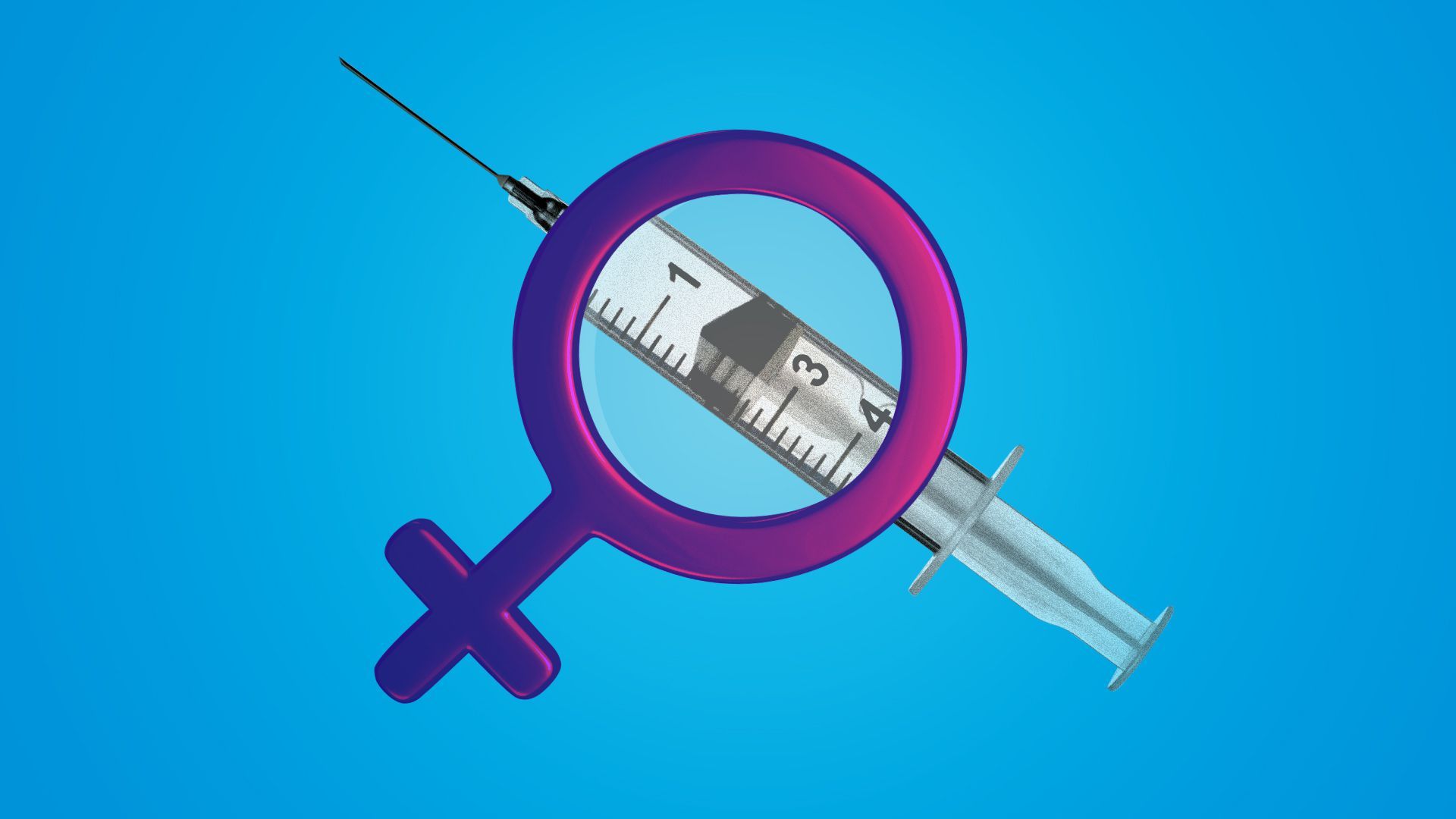
A growing number of anecdotes about COVID-19 vaccines affecting a person's menstrual cycleis spurringattention and research funding.
Why it matters: Efforts to halt the pandemic are being stymied by continued vaccine hesitancy, in part due to disinformation about side effects. A CDC scientist tells Axios "there is absolutely no evidence" that the altered periods reported by some are causing infertility, a common refrain among anti-vaxxers.
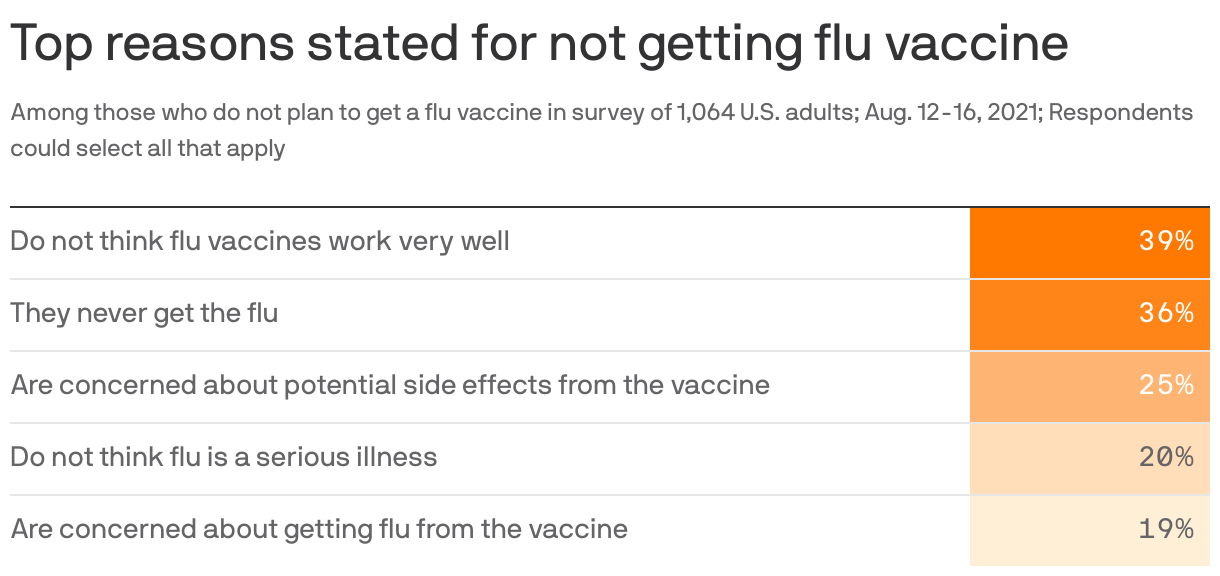
Data: National Foundation for Infectious Diseases; Chart: Axios Visuals
A "potentially severe" flu season could be on the way the CDC warned this week, as public health officials once again urge the public to get its flu shot.
Why it matters: Americans may now have reduced immunity against the flu after cases reached an all-time low last year.
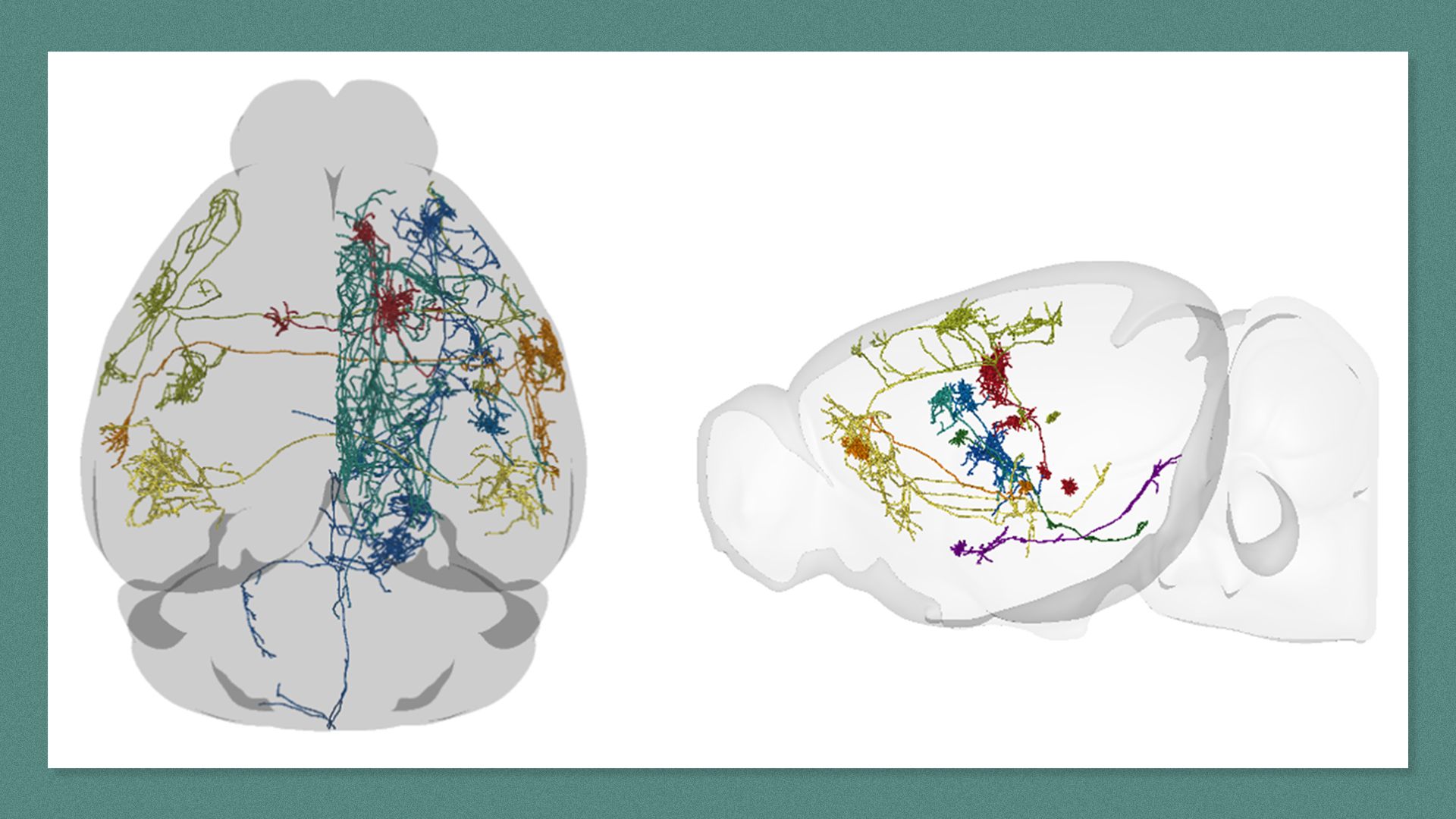
Scientists have created a catalog of the cells in the brain's movement control center — a first step toward deciphering the circuits of the brain's nearly 90 billion neurons that underpin our movements, thoughts and emotions.
Why it matters: Cells don't operate in isolation. Determining the circuits that connect neurons could help researchers understand processes in the brain and what happens when they go awry from disease.
The World Health Organization said it's sending COVID-19 medical supplies to North Korea.
Why it matters: It's an indication that North Korea may be loosening one of the "world's strictest pandemic border closures to receive outside help," notes AP, which first reported the news. North Korea has never publicly confirmed a coronavirus case, though experts doubt it's been untouched by infection.
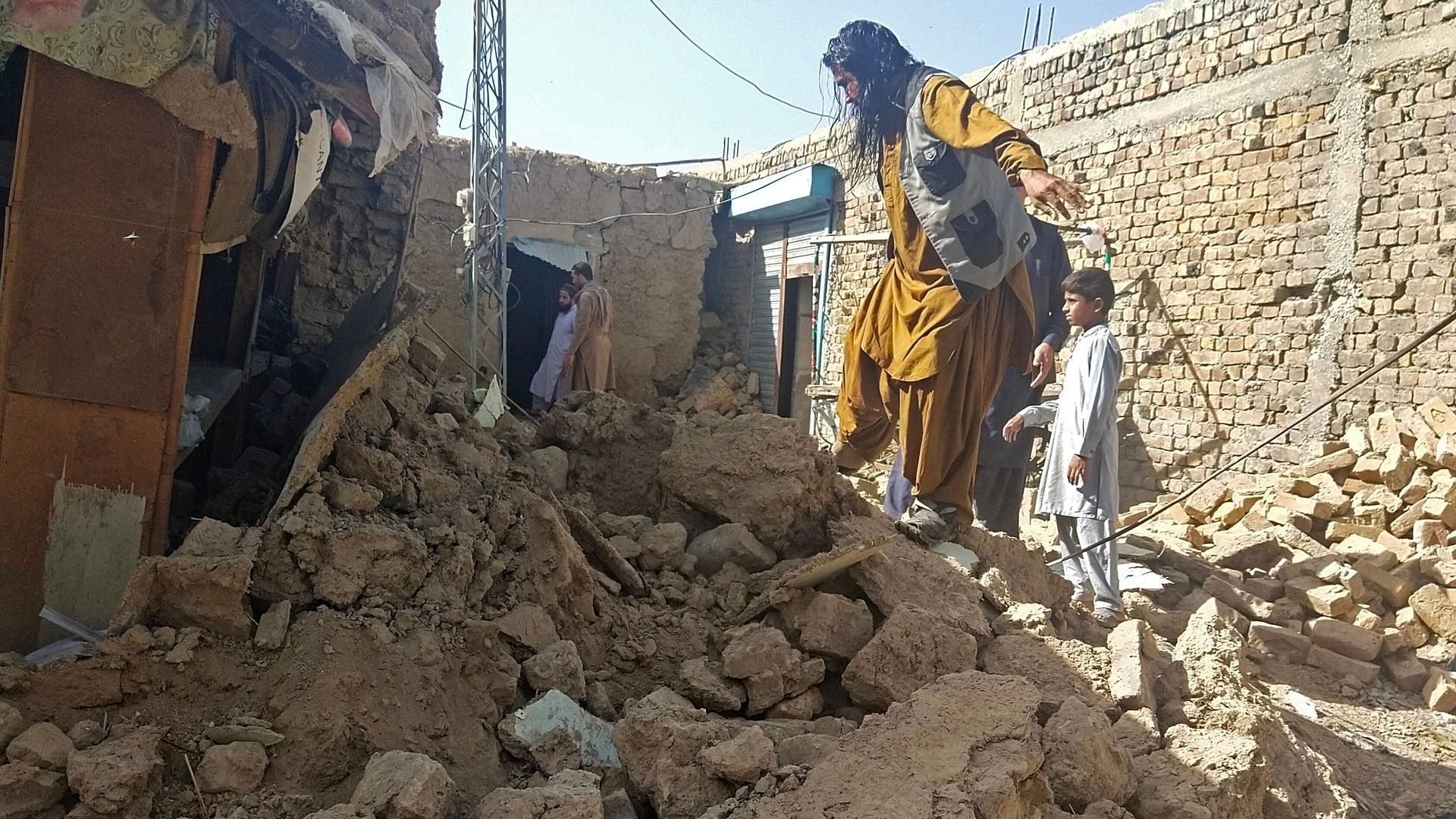
A 5.7 magnitude earthquake hit southern Pakistan on Thursday, causing killing at least 20 people and wounding more than 200 others, officials said, per Reuters.
The big picture: The shallow quake caused buildings to collapse as it struck about 3am local time, officials reported. Its epicenter was just over 6o miles east of Quetta, a city near the border with Afghanistan. The region is prone to quakes as it's situated where the Indian and Eurasian tectonic plates meet.