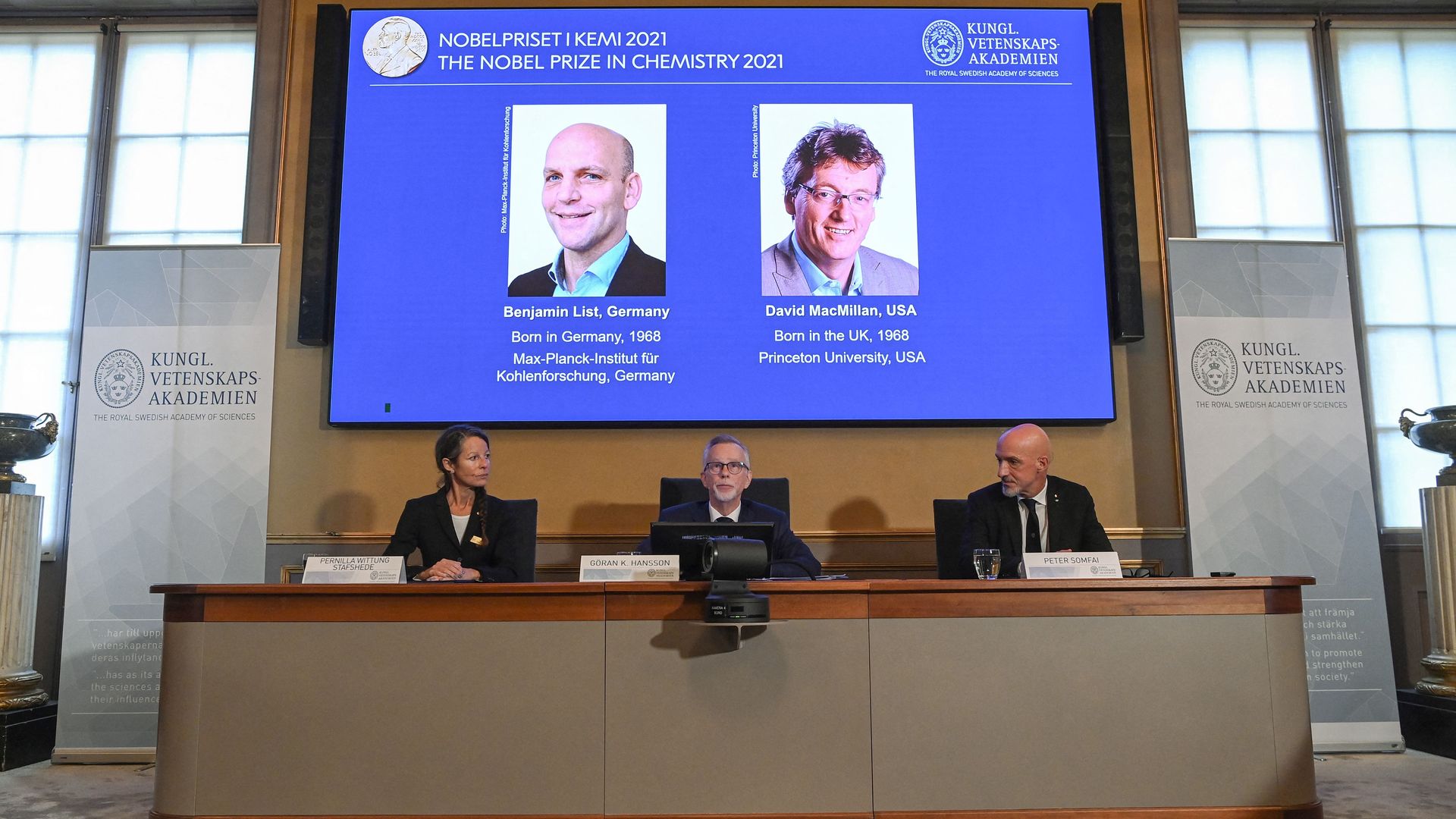
Benjamin List and David MacMillan won the Nobel Prize in chemistry for their development of asymmetric organocatalysis, an "ingenious tool" to build molecules, the Nobel Foundation announced Wednesday.
Why it matters: Catalysts are used to accelerate chemical reactionsand are crucial to producing many commercial products, especially pharmaceuticals. Before List's and MacMillan's discoveries, researchers believed that there were just two types of catalysts available: metals and enzymes.
Ford is working with neuroscientists to develop brain-scanning technology that can more quickly detect when drivers are getting tired or distracted.
Why it matters: It's crucial that drivers stay engaged behind the wheel, even as cars become more automated. But there's mounting evidence that people get complacent using driver-assistance features like Tesla Autopilot, which is why federal safety regulators are investigating the systems.
“The brain processes huge amounts of information when we are driving, but that may change as driver assistance technologies do some of the driving for us," said Stefan Wolter, research engineer, Research and Advanced Engineering, Ford of Europe.
"Drivers also get tired and their minds can wander. Identifying more quickly when this happens could be of critical importance," he added.
Driving the news: Ford scientists in Europe are working with medical researchers at Uniklinik RWTH Aachen in Germany to map brain patterns to driver’s reactions.
Ford hopes that by identifying the brain responses that reveal lapses in concentration, it may then be possible to match the scans to physical changes in heart rate or breathing, for example.
A change in heart rate detected via wearable technology, for example, could then trigger an alert for the driver to pay attention.
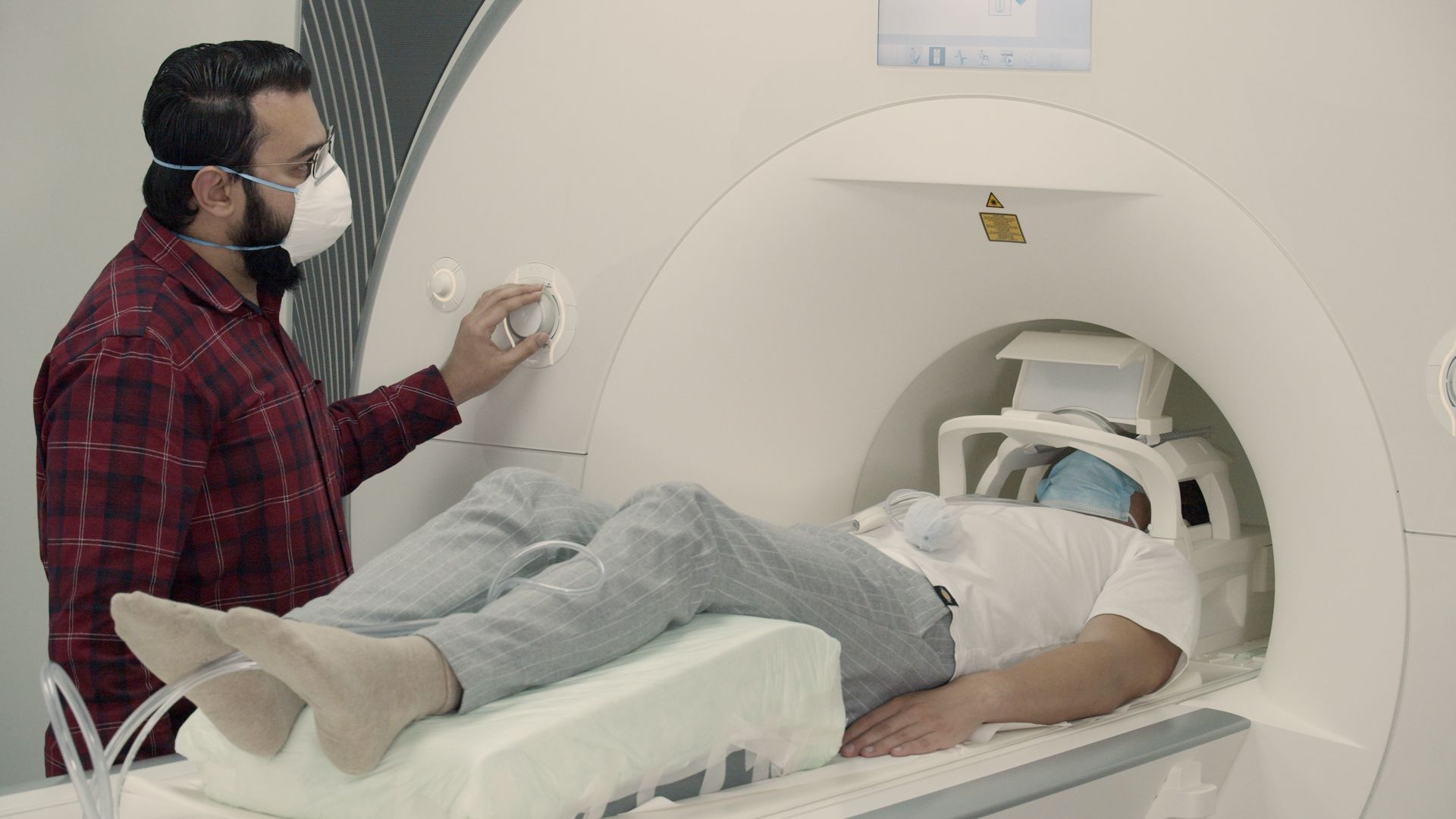
How it works: Study participants complete a driving simulation while their brain activity is scanned by an MRI machine. A mirror allows them to see the simulation on a screen inside the MRI machine.
The scenario, designed using gaming technology, involves a three-lane highway at night where a vehicle in the middle lane brakes suddenly and the participant has to take over and move the car to the left or right, using a handheld device.
The MRI machine scans the brain before and during these actions, while the researchers measure how quickly the participant reacts and if they make the right decision.
They also monitor changes to heart rate, breathing rate and other physiological measures.
What they're saying: "We believe that by capturing this data we could one day be able to generate unique physiological driver fingerprints so that drivers of the vehicles of the future can be prepared to react and to intervene immediately in case it is required," said Professor Klaus Mathiak M.D. Ph.D., head of Psychoneurobiology and lead consultant for Psychosomatic Medicine, Uniklinik RWTH Aachen.
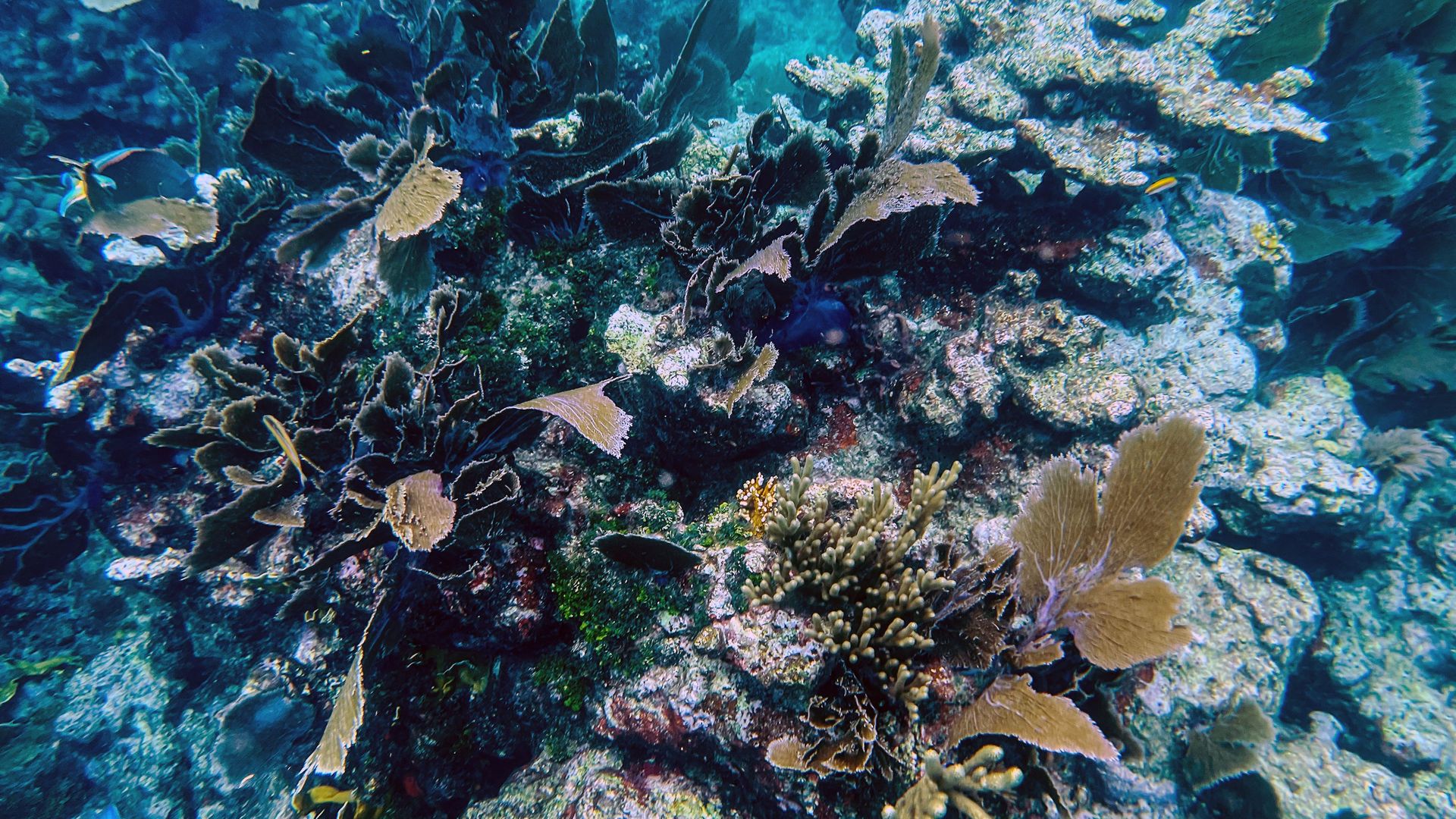
Why it matters: Coral reefs play a critical role in ecosystems, supporting at least 25% of marine species and roughly $2.7 trillion per year in goods and services, according to the project's network of scientists.
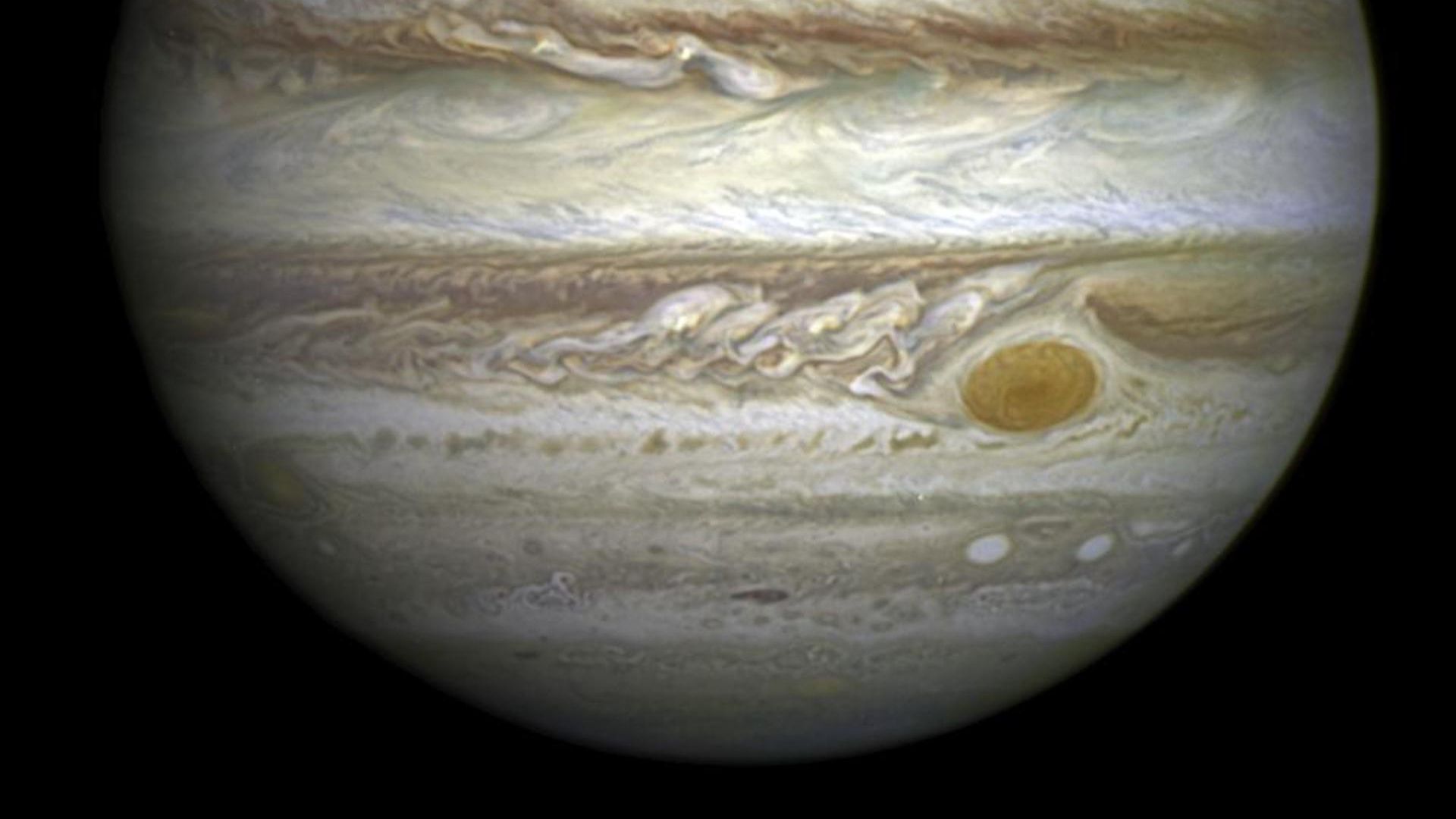
The winds of one of the most recognizable storms in the solar system — Jupiter's Great Red Spot — are speeding up.
Why it matters: This weather report for another world is possible because the Hubble Space Telescope has been keeping a close eye on the storm for more than 10 years.
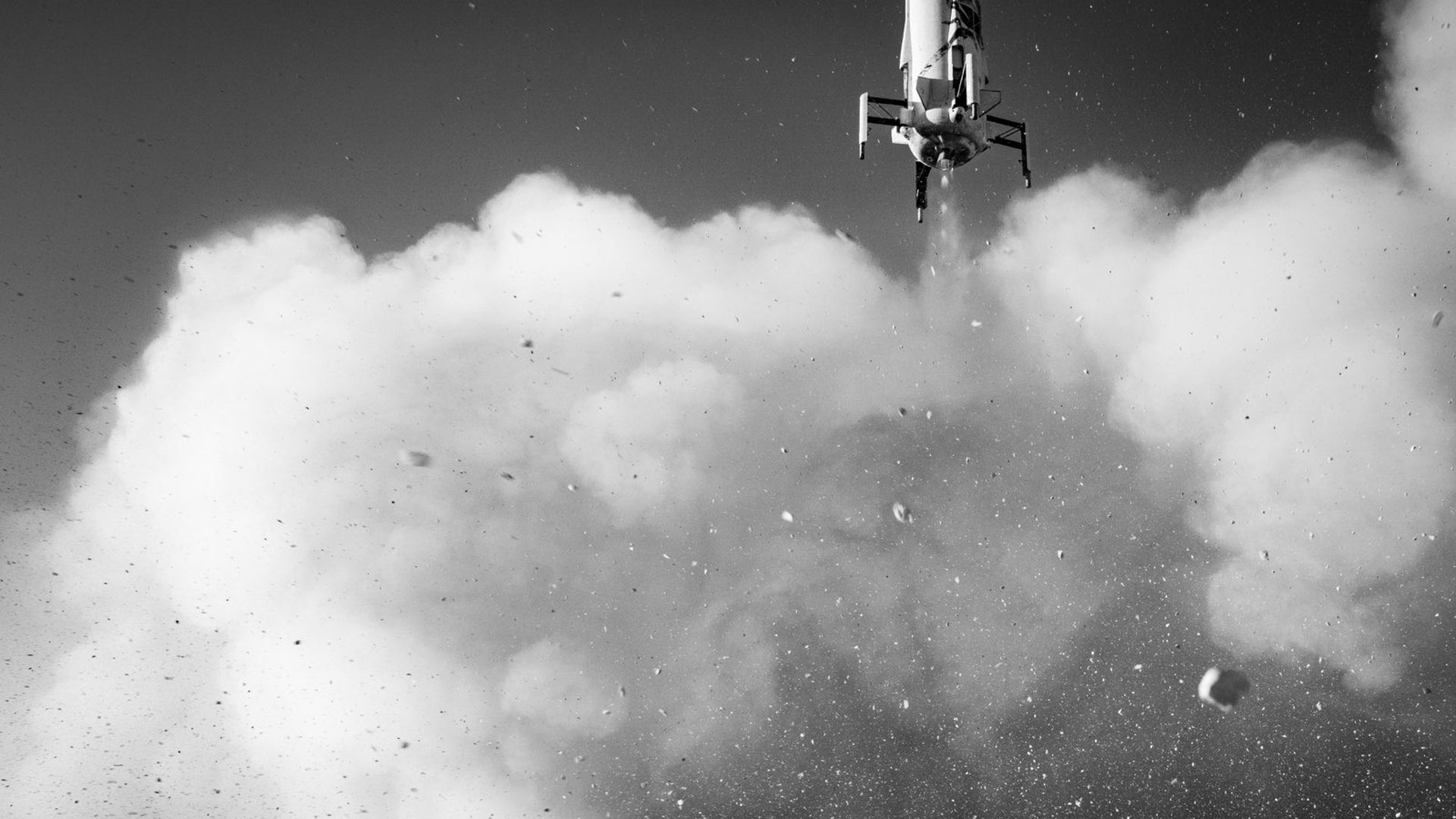
A letter signed by 21 current and former employees of Jeff Bezos' Blue Origin accuses the company of mishandling harassment allegations and raises questions about its culture.
The big picture: Blue Origin is trying to compete with SpaceX and others for lucrative government contracts but it's facing employee attrition rates as high as 20%, according to a report from CNBC.
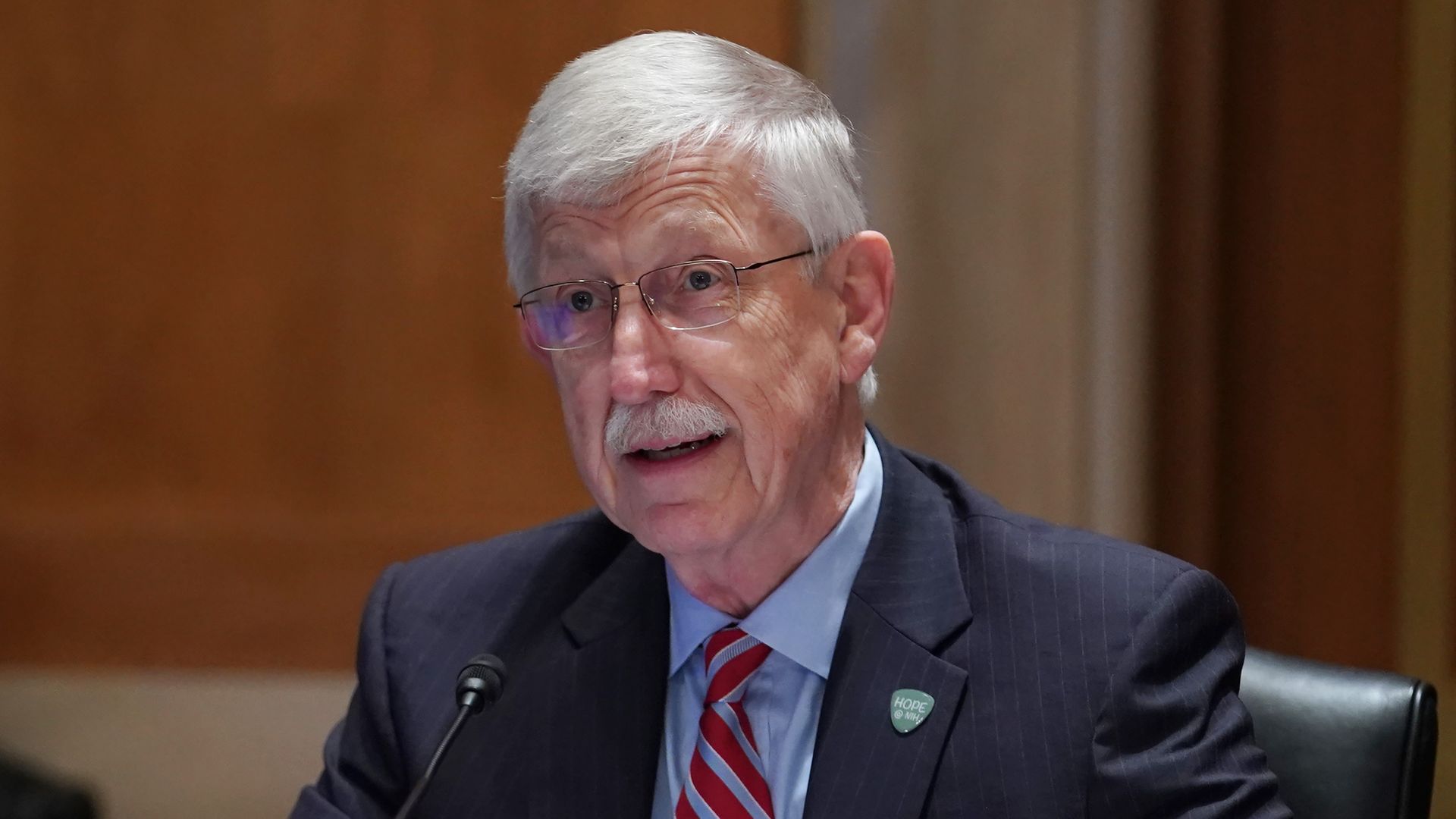
National Institutes of Health director Francis Collins on Tuesday announced he will step down from his post by the end of the year.
Why it matters: The 71-year-old pioneering physician-geneticist is the only presidentially appointed NIH director to serve in more than one administration. Collins has served in the role for 12 years, longer than anyone else, and has been at the forefront of the U.S. COVID-19 pandemic response.
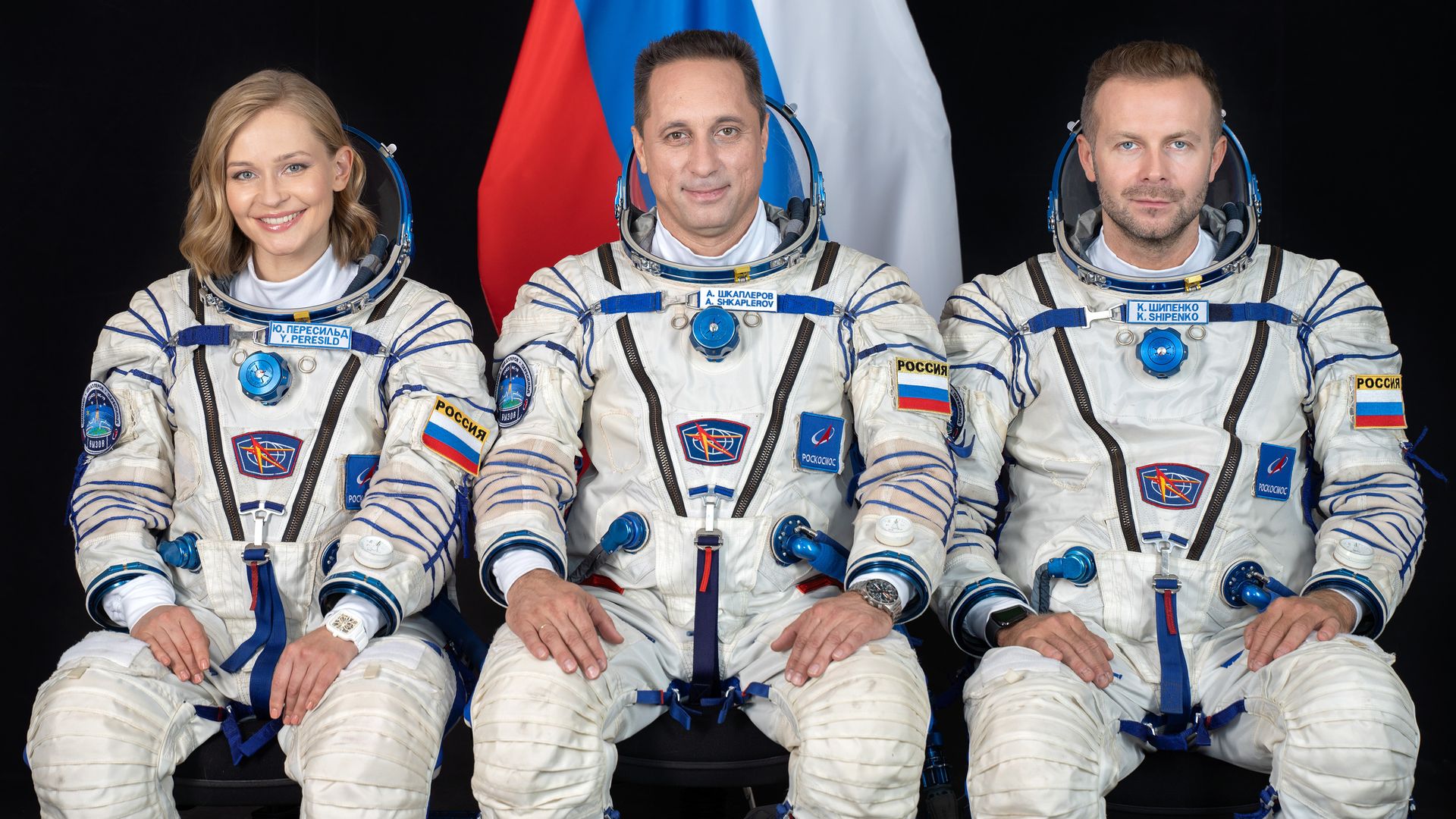
A Russian director and an actor blasted off into space on Tuesday to film the world's first movie in orbit, AP reports.
State of play: Director Klim Shipenko and actor Yulia Peresild took off to the International Space Station along with cosmonaut Anton Shkaplerov. They are set to stay in orbit for 12 days filming segments for their movie, "Challenge."
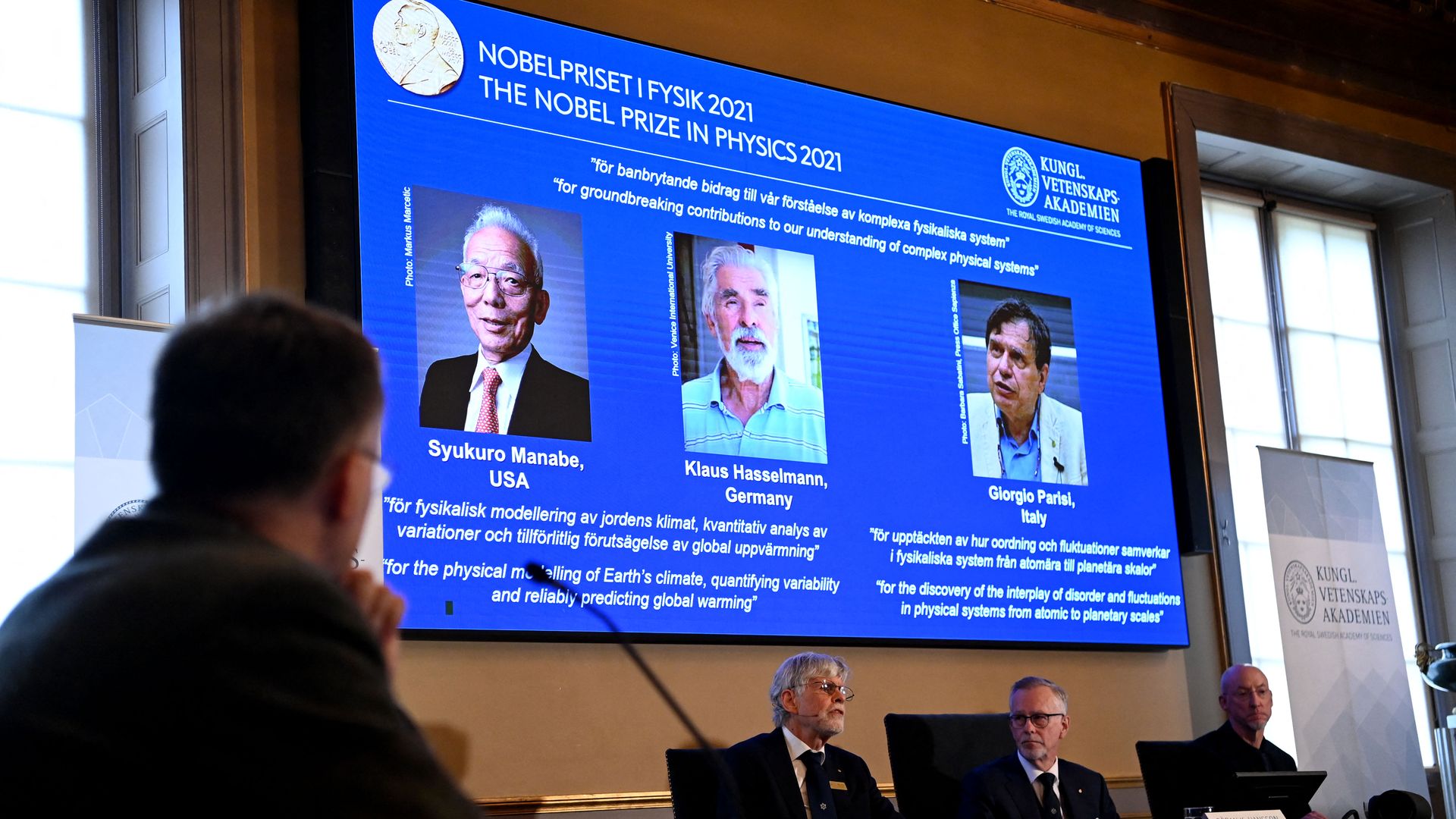
Scientists Syukuro Manabe, Klaus Hasselmann and Giorgio Parisi received the Nobel Prize in physics on Tuesday for their work in predicting global warming and the understanding of complex physical systems.
Why it matters: These researchers helped describe and predict the long-term behavior of complex systems, like the Earth's climate, which are characterized by randomness and disorder and are difficult to understand.