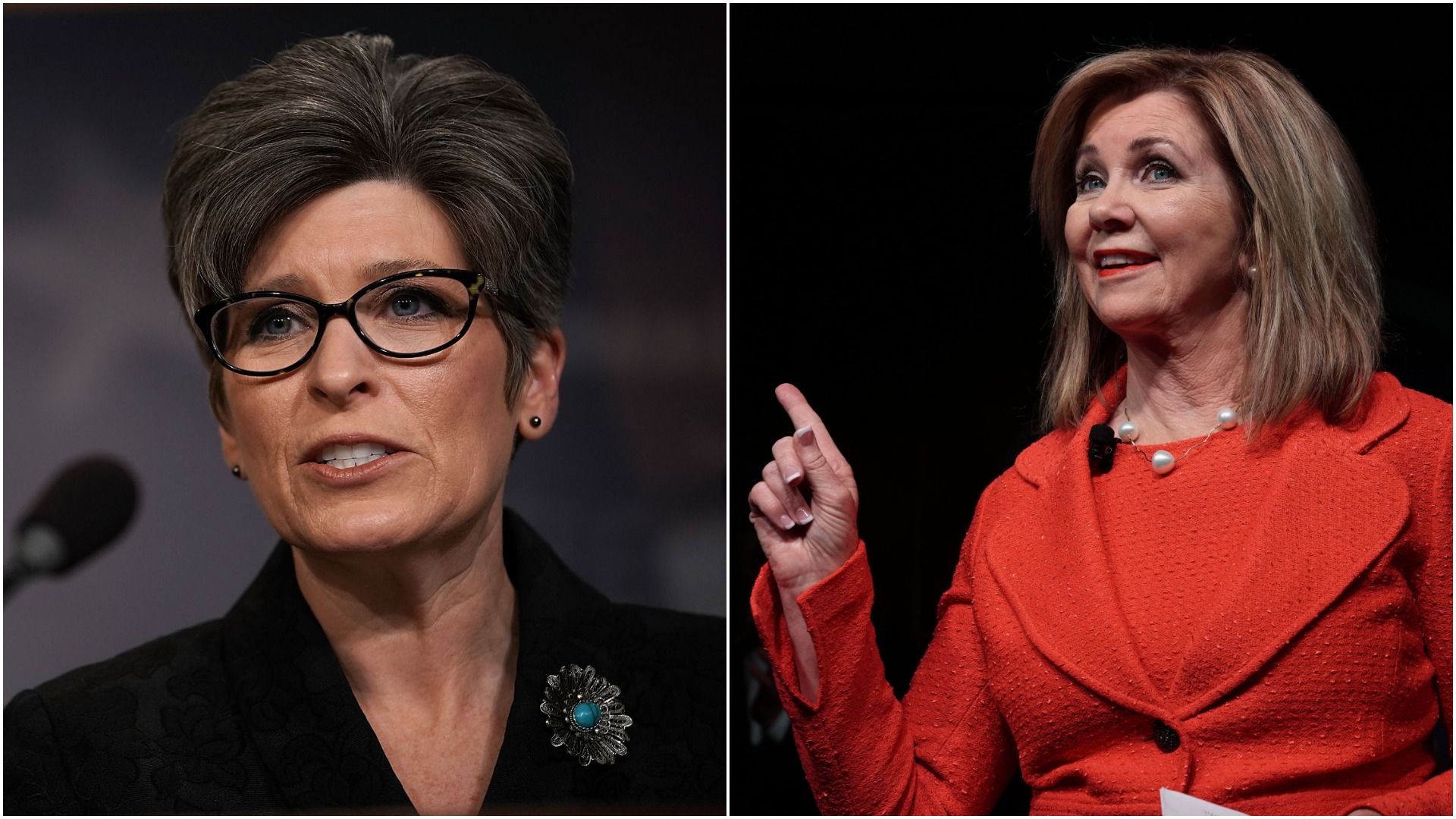
Senate Republicans announced on Thursday that Sens. Joni Ernst (R-Iowa) and Marsha Blackburn (R-Tenn.) will be added to the Judiciary Committee for the 116th Congress.
Why it matters: There were previously no Republican women serving on the committee. This became a source of controversy during the confirmation hearings for now-Supreme Court Justice Brett Kavanaugh, when Republicans were forced to hire a female prosecutor to question Christine Blasey Ford, who had accused Kavanaugh of sexually assaulting her as a teenager.
Top Senate Republicans kicked off the first session of Congress on Thursday by introducing a bill to impose sanctions on the Syrian government and enhance security cooperation with neighboring countries Jordan and Israel, NBC News reports.
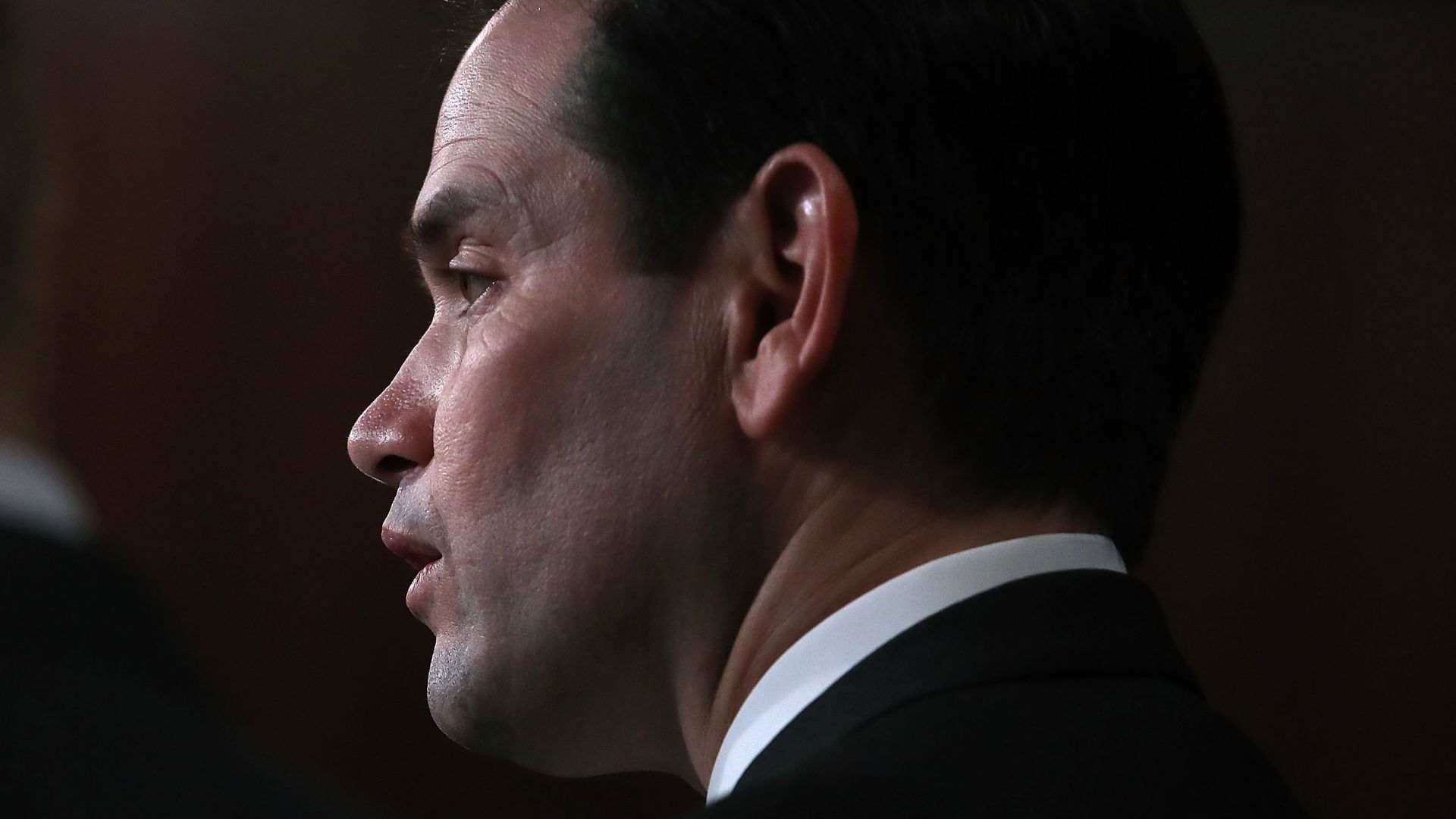
The big picture: President Trump's order to withdraw troops from Syria has prompted backlash from Republicans and Trump allies, many of whom believe the move will allow ISIS to regain strength and leave a power vacuum to be filled by adversaries Russia and Iran. The bill was introduced by Sen. Marco Rubio and co-sponsored by Majority Leader Mitch McConnell and Senate Foreign Relations Committee Chairman Jim Risch.
The White House has formally threatened to veto the spending bills proposed by House Democrats that would end the partial government shutdown.
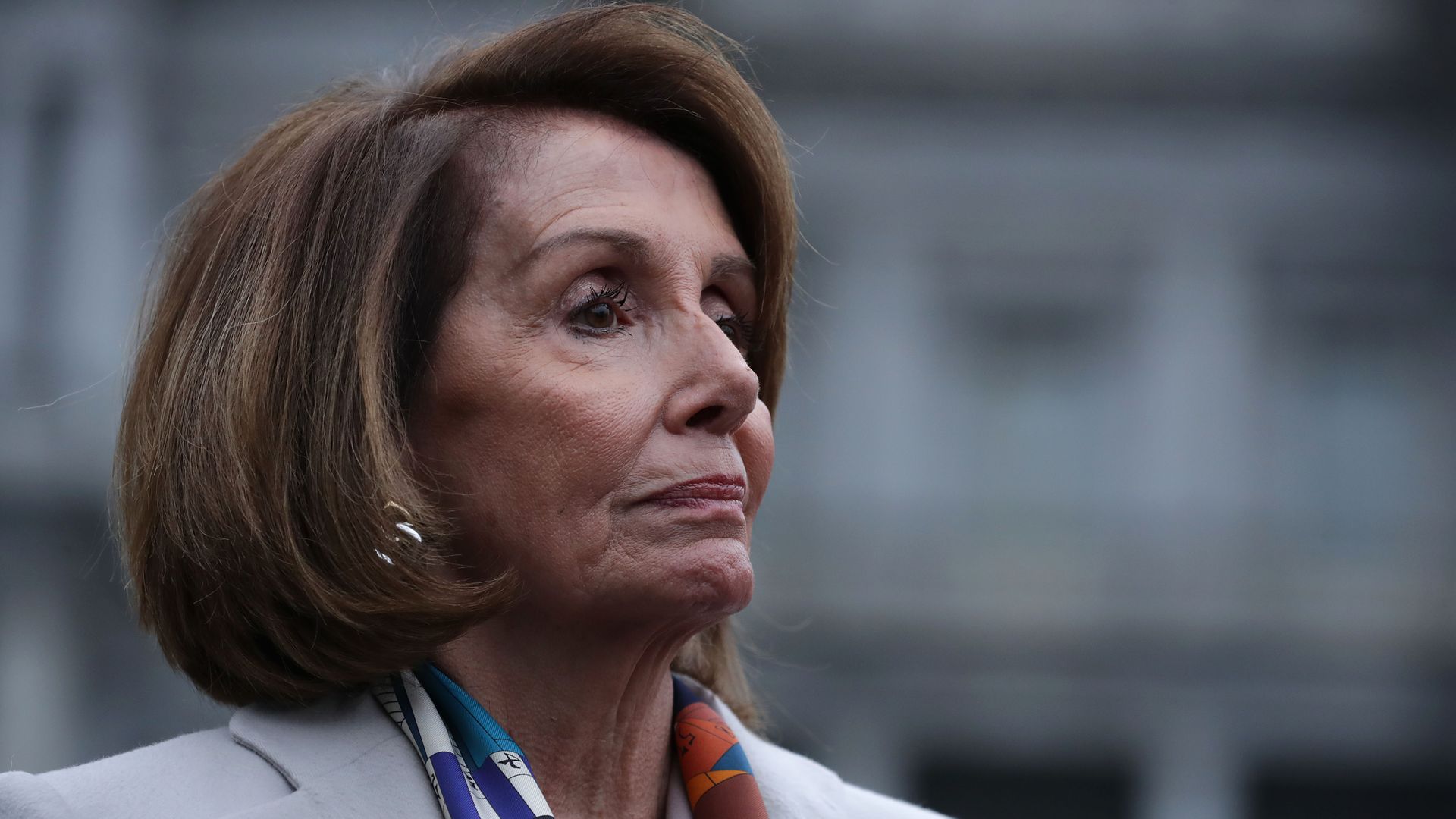
Why it matters: This is not a surprise, but it’s the 13th day of the shutdown and President Trump’s ability to leverage congressional support just got a lot harder now that Democrats officially control the House. New House Speaker Nancy Pelosi has said the Democrats will not approve border wall funding, while President Trump has said he won't sign a bill without it — meaning negotiations will stay at an impasse for the foreseeable future.
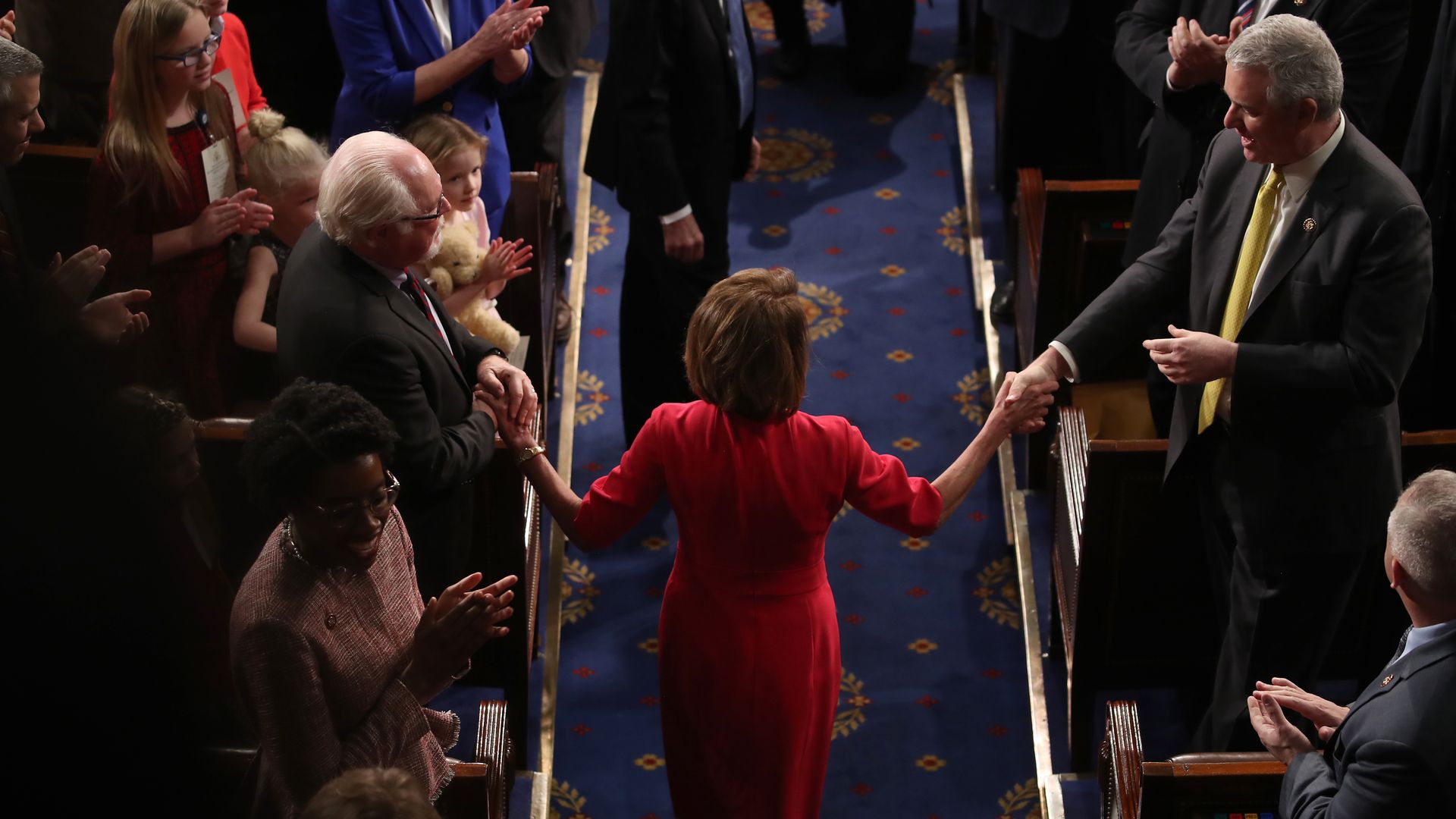
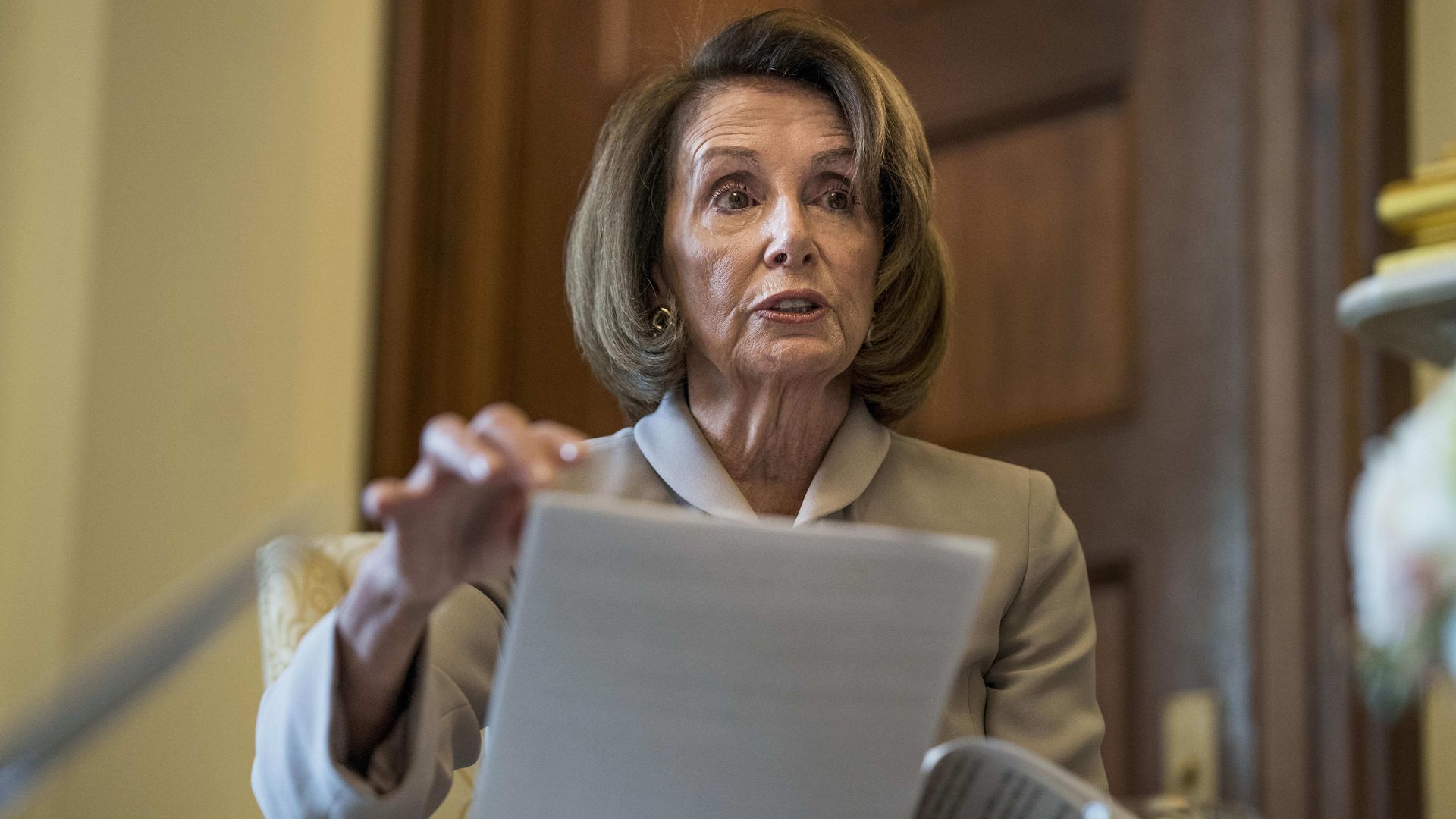
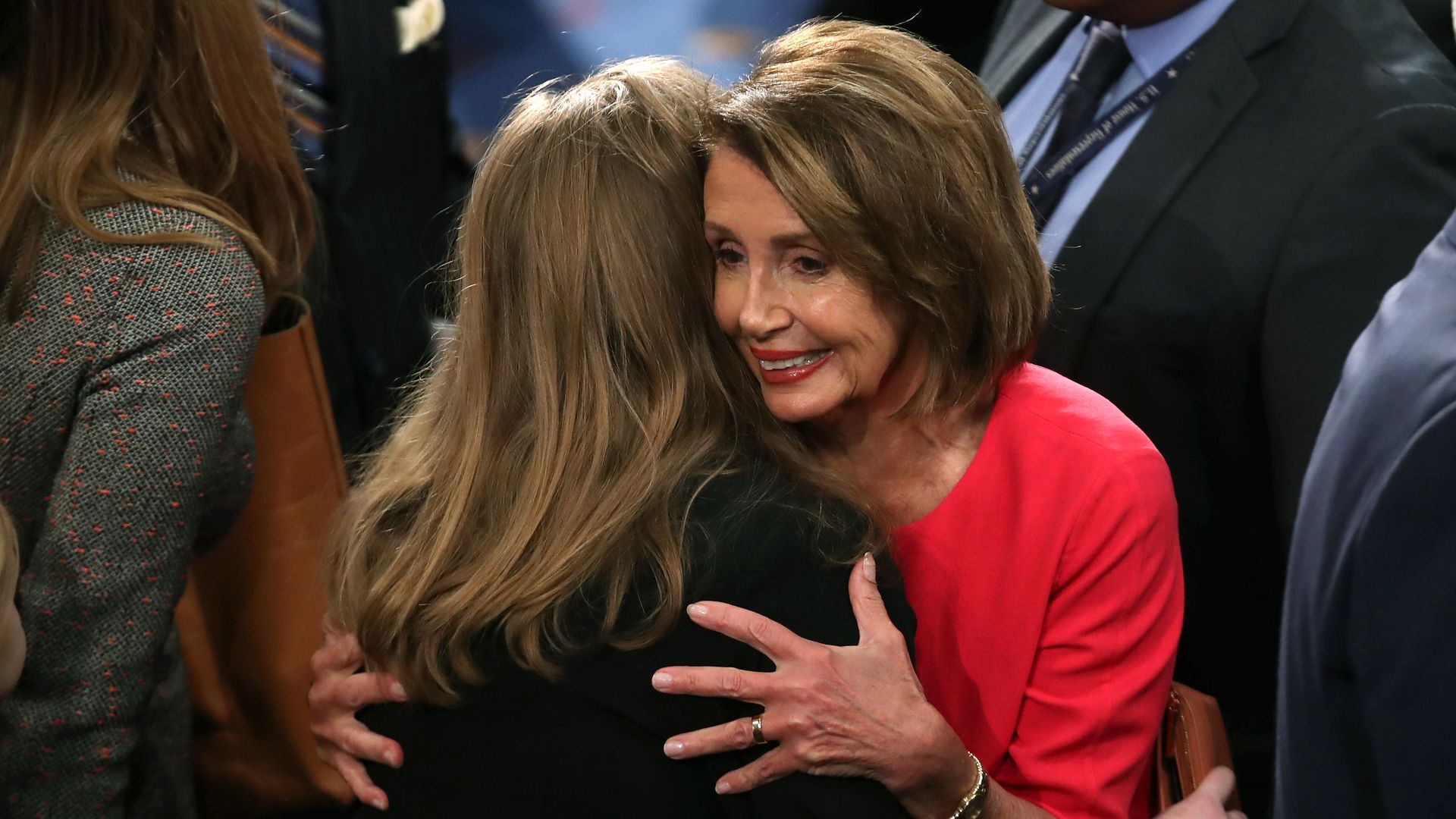
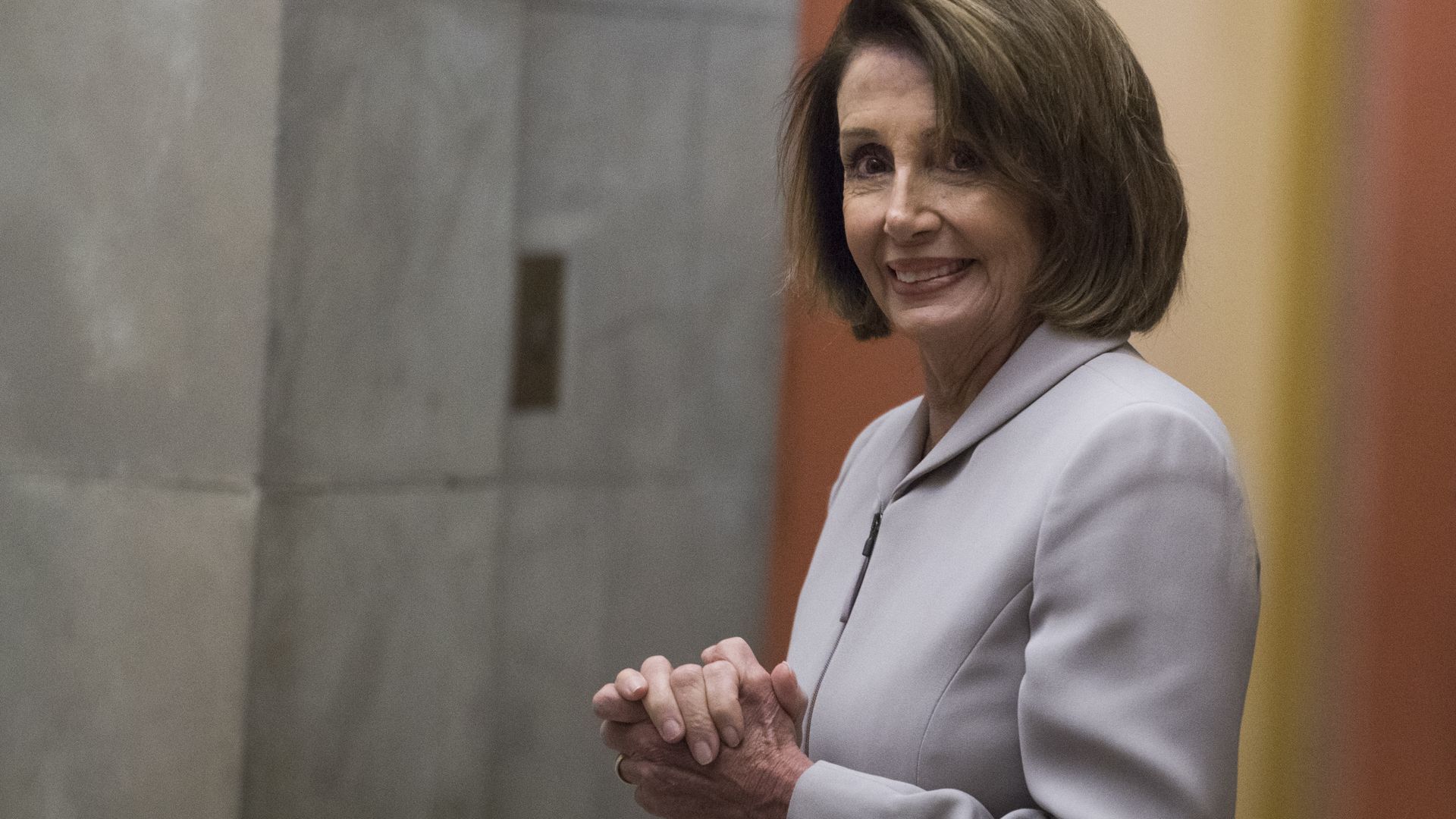
Rep. Nancy Pelosi (D-Calif.) reclaimed the gavel as speaker of the House Thursday, despite 13 House Democrats voting against her and two voting "present" — a procedural option that is not a vote for or against.
Why it matters: The split between Democrats who see Pelosi as the best possible foil to President Trump and those who sought a new generation of leadership threatened to upend her speaker bid in the immediate aftermath of the 2018 midterms. In the end, 21 Democrats who said they would support a different candidate ended up voting for Pelosi.
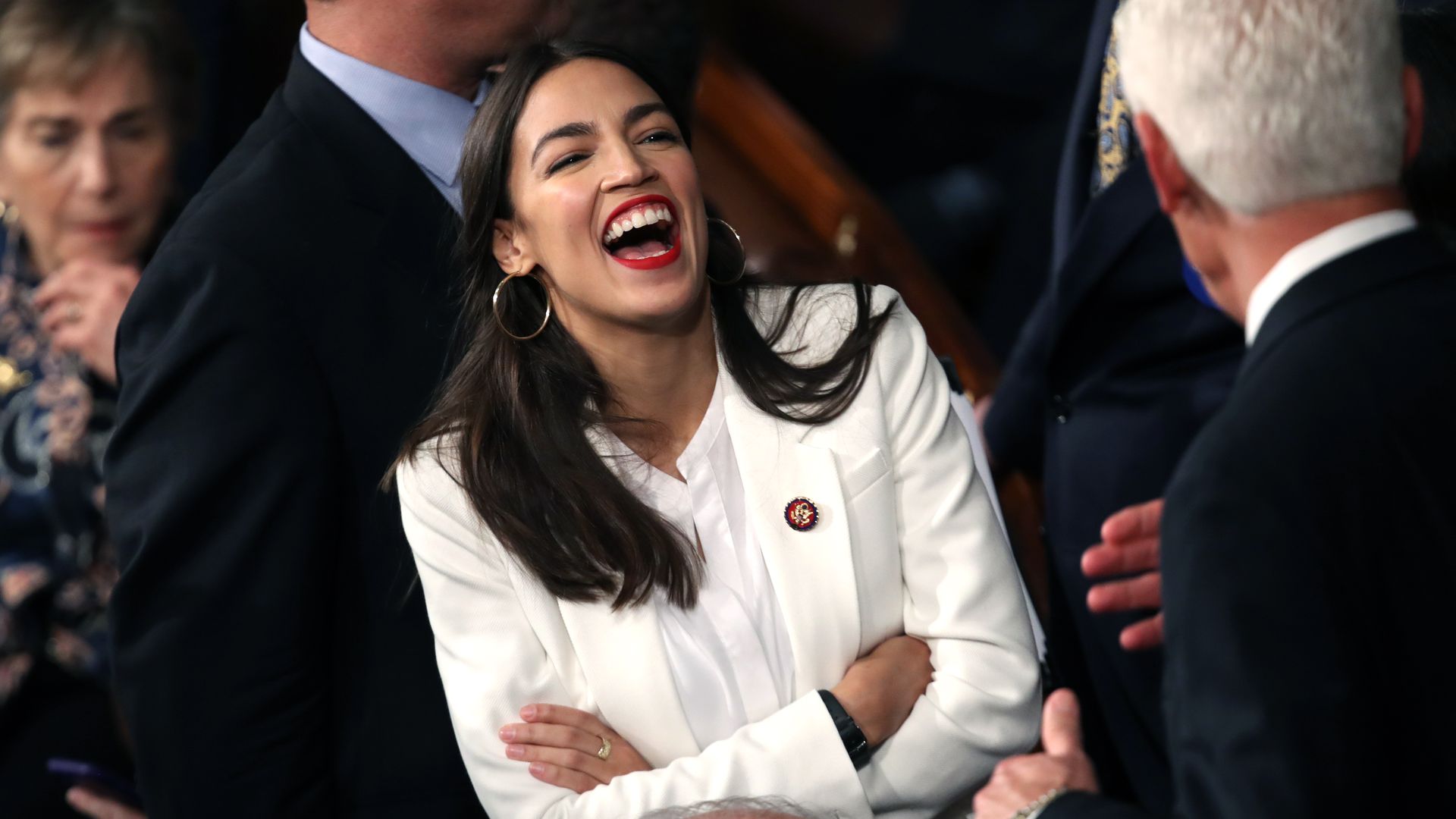
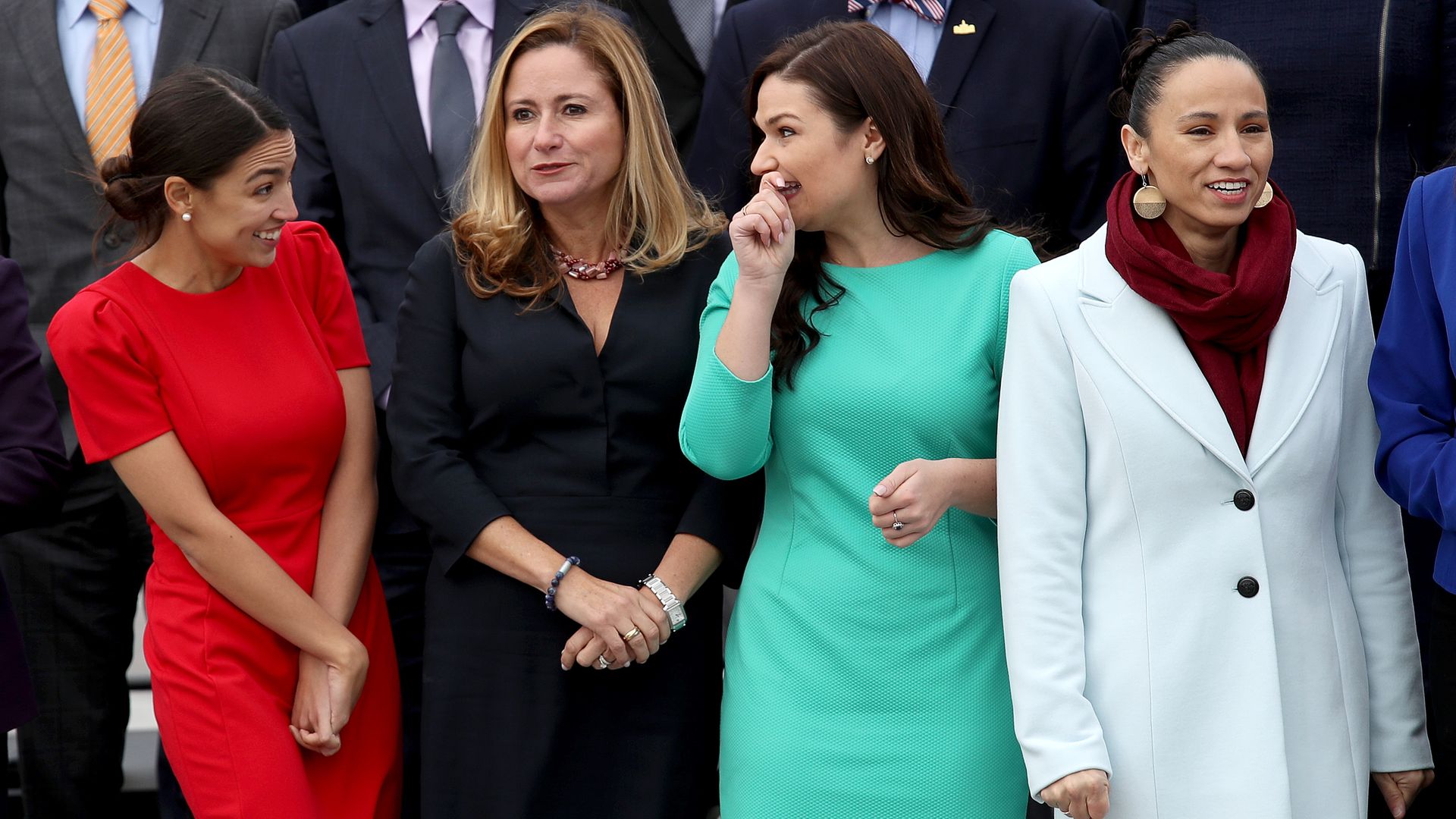
Members of the 116th Congress were sworn in on Thursday, officially becoming the most racially diverse and female-strong Congress in U.S. history.
The big picture: The freshmen class includes 24 people of color, the first Native American congresswomen, the first Muslim congresswomen, 42 new female members and the youngest person ever elected. Nancy Pelosi become the first person since 1955 to reclaim the speaker's gavel.
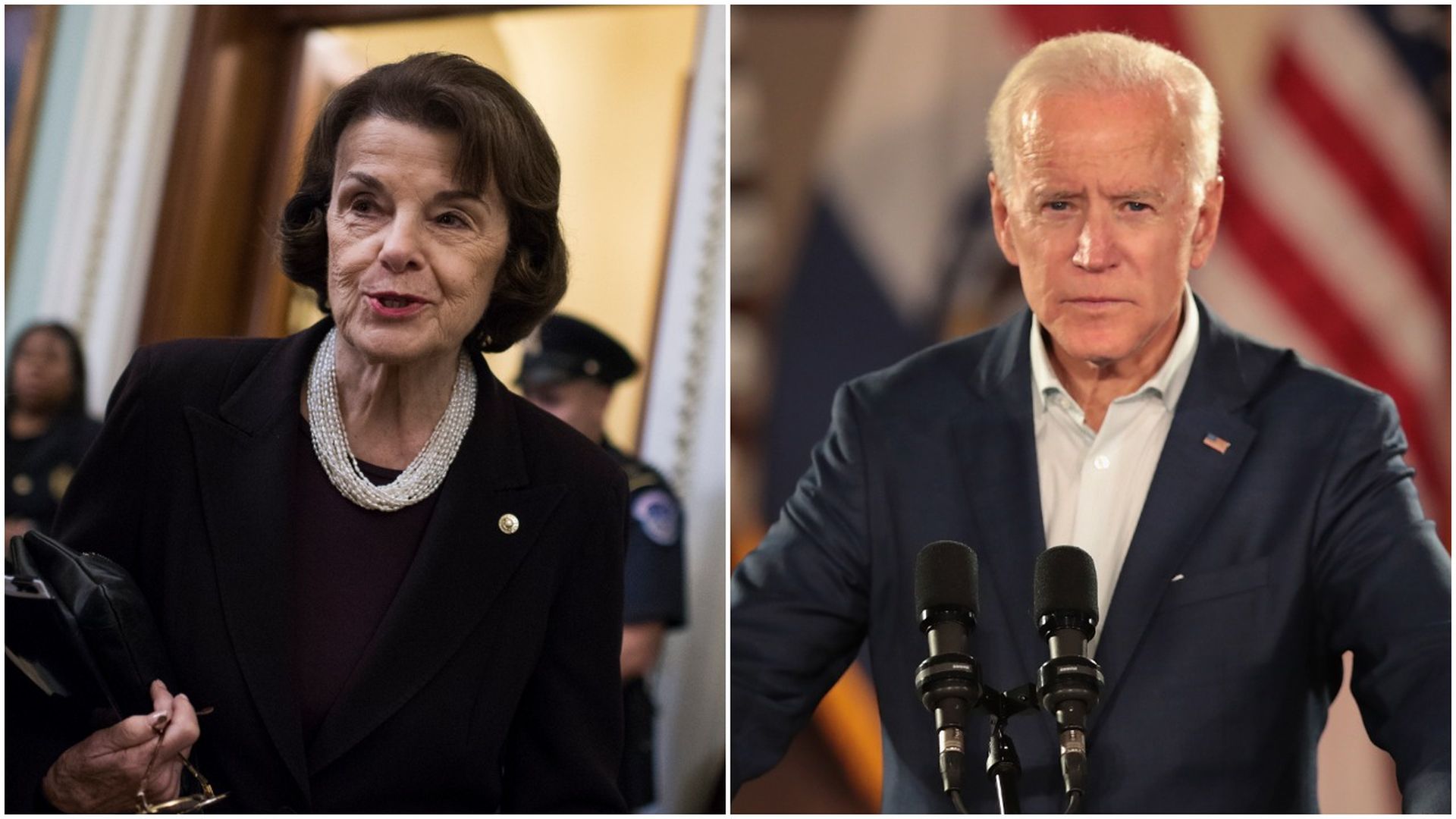
Sen. Dianne Feinstein (D-Calif.) told Politico Thursday that she believes former vice president and Delaware senator Joe Biden would be the ideal Democratic nominee to run against President Trump in 2020.
Why it matters: As more people announce their intent to run, endorsements like Feinstein's — who was elected to the Senate in 1992 — will only highlight the schism between the establishment and progressive wings of the Democratic Party. Biden has still yet to announce whether he he plans to run for president.
H.R. 1, the gargantuan first bill the new House Democratic majority will unveil Friday, is an anti-corruption grab bag that most prominently tackles campaign finance, sexual harassment and voting rights. But election cybersecurity will quietly play a major role in the bill, too.
The big picture: This bill will likely clear the House and then die in the Senate. "These are things [Senate] Majority Leader McConnell has spent his entire career fighting," noted a source familiar with the final content of the bill. Beyond the Senate, President Trump is unlikely to welcome a provision requiring presidential candidates to release tax returns.
A split Congress was officially sworn in on Thursday afternoon, with Democrats taking control of the House and Republicans adding to their majority in the Senate.
Why it matters: The first item on the 116th Congress' agenda is to reopen the government, with Democrats in the House planning to pass legislation to do just that — though it likely won't get far in the Senate. Up next will be a slew of House investigations into President Trump and his administration. Follow along for the key moments of the new Congress' first day.
The 535 members of the 116th Congress are set to take their oaths on Thursday afternoon as the most diverse congressional class in history.
The big picture: Women will comprise almost a quarter of this Congress, according to the Center for American Women and Politics at Rutgers University. And more than 100 women will serve in the House of Representatives, which is set to be led by Nancy Pelosi, the first and only woman to become speaker of the House and the first speaker to regain the gavel in more than 50 years.
A job posting by Republicans on the House Judiciary Committee says it all about the party's new reality beginning today. The committee is seeking an Investigative Counsel — "an attorney with several years of investigative or litigation experience," according to the listing on Tom Manatos Jobs, a popular Capitol Hill jobs board.
Between the lines: "Litigation experience" is at least partly in anticipation of the possibility of impeachment proceedings, a Hill source tells me.
Look at this slide in how activist Congress was in 2010 and 2018 —both second years of presidential terms, with the president's party controlling both chambers.
What's happened: Dr. Robert Browning, executive director of the C-SPAN archives and a Purdue University professor, found in his end-of-year congressional statistics that Congress is meeting less, taking fewer votes and passing fewer laws.
In an interview to air on NBC's "Today," co-anchor Savannah Guthrie asks Nancy Pelosi, who will become House speaker at around 1:30 pm Thursday: "Do you believe the special counsel should honor and observe the Department of Justice guidance that states a sitting president cannot be indicted?"
The big picture: Pelosi replied, according to an excerpt from NBC: "I do not think that that is conclusive. No, I do not." With that response, she becomes the highest ranking official to suggest President Trump could be indicted while in office.
Most Americans think the economy is growing now, but they're worried that a recession could be coming this year, according to a new Axios/SurveyMonkey poll.
Between the lines: Democrats are more pessimistic than Republicans and independents, but majorities across the board say a recession could happen, including a slight majority of Republicans. That suggests an emerging economic anxiety that President Trump hasn't had to deal with until now.
Sen. Elizabeth Warren (D-Mass.), who has announced an exploratory committee for a 2020 presidential run, voiced support for the idea of withdrawing troops from Syria and Afghanistan during an interview with MSNBC's Rachel Maddow Wednesday night.
The big picture: The decision by the Trump administration to withdraw troops from Syria has drawn heavy criticism from the national security sector. Warren said that the answer from the foreign policy establishment to the situation in the Middle East seems to be, "Stay forever. That is not a policy. We can't do that." She does, however, believe the plan should be coordinated with allies and disagrees with President Trump conducting "foreign policy by tweet."
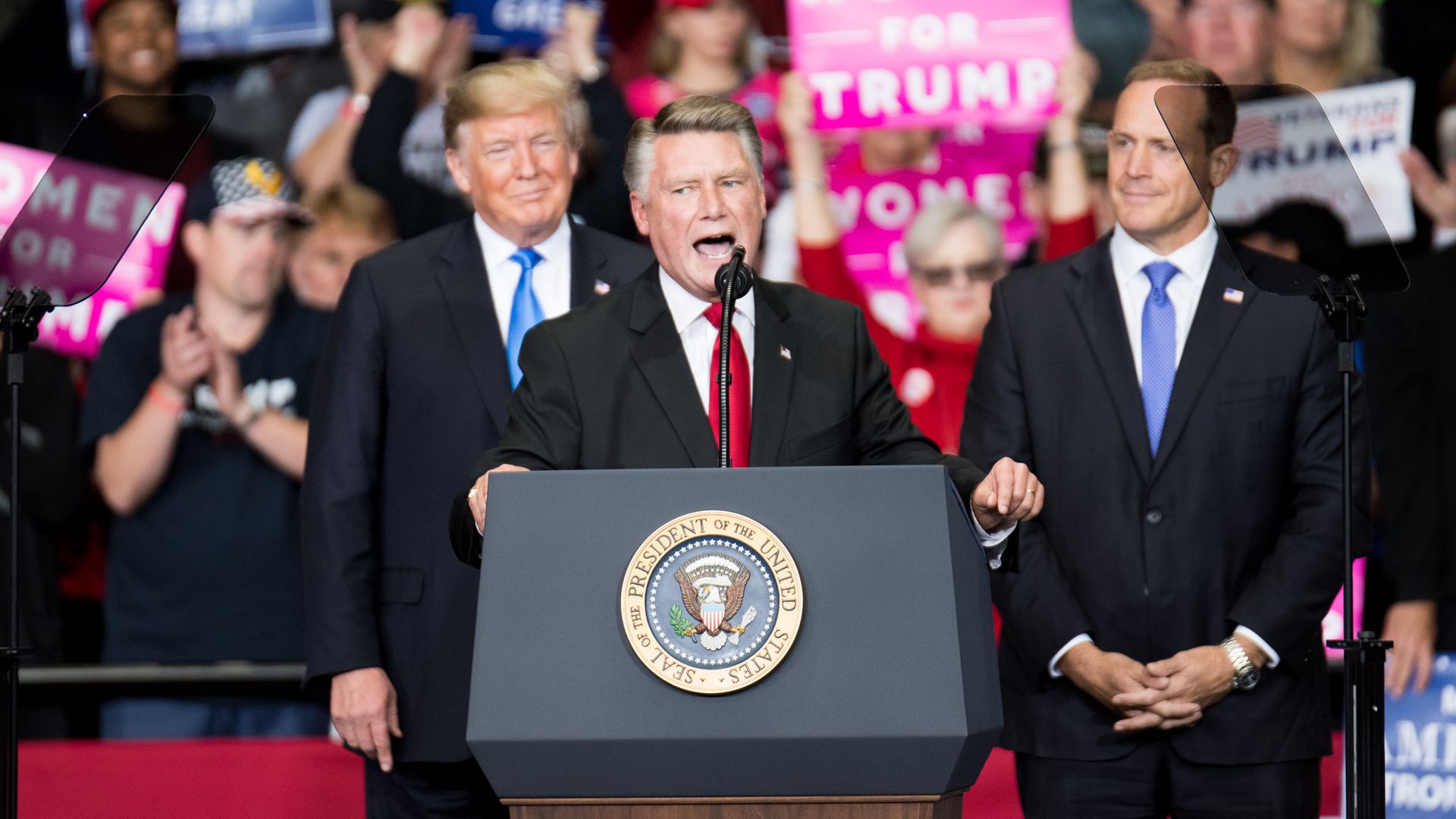
The backdrop: Harris' decision to take legal action comes hours after election staffers said they would postpone a scheduled Jan. 11 hearing on the ongoing fraud investigation. The official State Board of Elections was forced to dissolve last week in response to an unrelated state court decision, leaving the investigation and House seat in limbo.
The Senate confirmed the fifth member of the Federal Communications Commission, Democrat Geoffrey Starks, and gave Republican Brendan Carr another term on Wednesday.
Why it matters: It brings the agency to full capacity as it plays a key role in the development of 5G wireless and vets T-Mobile's merger with Sprint.
Sen. Bernie Sanders apologized for allegations of sexual harassment and sexism lodged against his 2016 campaign, telling CNN's Anderson Cooper Wednesday night that if he runs for president in 2020, his team will "do better."
The big picture: The New York Times reported on Wednesday that a strategist on Sanders' 2016 campaign complained of sexual harassment by a campaign surrogate to her supervisor, Bill Velazquez, who made light of the allegations by saying she "would have liked it if he were younger." Sanders acknowledged that that the complaints were "not dealt with as effectively as possible," but said he was not aware of the allegations at the time: "I was a little bit busy running around the country trying to make the case."