Wednesday's politics & policy stories


Hackers are rushing to archive government science data
Wired has a look at eclectic groups of coders organizing hackathons around the country to archive science data from publicly available government datasets.
The problem: There's a worry that the Trump administration might direct huge dumps of environmental and scientific data. And it's already started — for example, coders discovered that some of NASA's atmospheric carbon dioxide datasets were empty.
The work: It could be as simple as tagging websites to be saved for posterity in the Internet Archive or as difficult as building algorithms to manage downloading gigabytes worth of datasets from the DOE.
The goal: Compiling the data and monitoring changes or deletions on government websites is a huge task, so automation is the key. Ideally, the groups can compile a huge network of volunteers in every state working 24/7 to code and archive data as quickly as possible.

Only five countries meet NATO military requirements
The issue
NATO countries are supposed to spend 2% of their GDP on defense.
The facts
The NATO agreement to have member countries fund their own military with 2% of GDP is in place so that each country can defend itself without relying too much on other members — but of 28 NATO members, only five meet this requirement.
Romania pledged an increase in defense spending that is expected to bring it above 2%. Poland, which already meets the 2% line, pledged in October to increase the country's defense spending to at least 2.5% of GDP. NATO expects Latvia to meet the threshold by next year. Denmark expects to increase its spending to 1.3% of its GDP by 2023. Hungary expects to meet the 2% threshold by 2026. Canada is set to increase its defense budget to 1.4% by 2025. Slovenia said this year it would start increasing defense spending for the first time since 2010.
Why it matters
Donald Trump has criticized NATO as being "obsolete," though since becoming president he's softened his tone. Defense Secretary Mattis on his first trip to Europe warned NATO countries to meet their defense spending goals or the U.S. might "moderate its commitment" to the alliance.
Trump loses his first Cabinet nomination
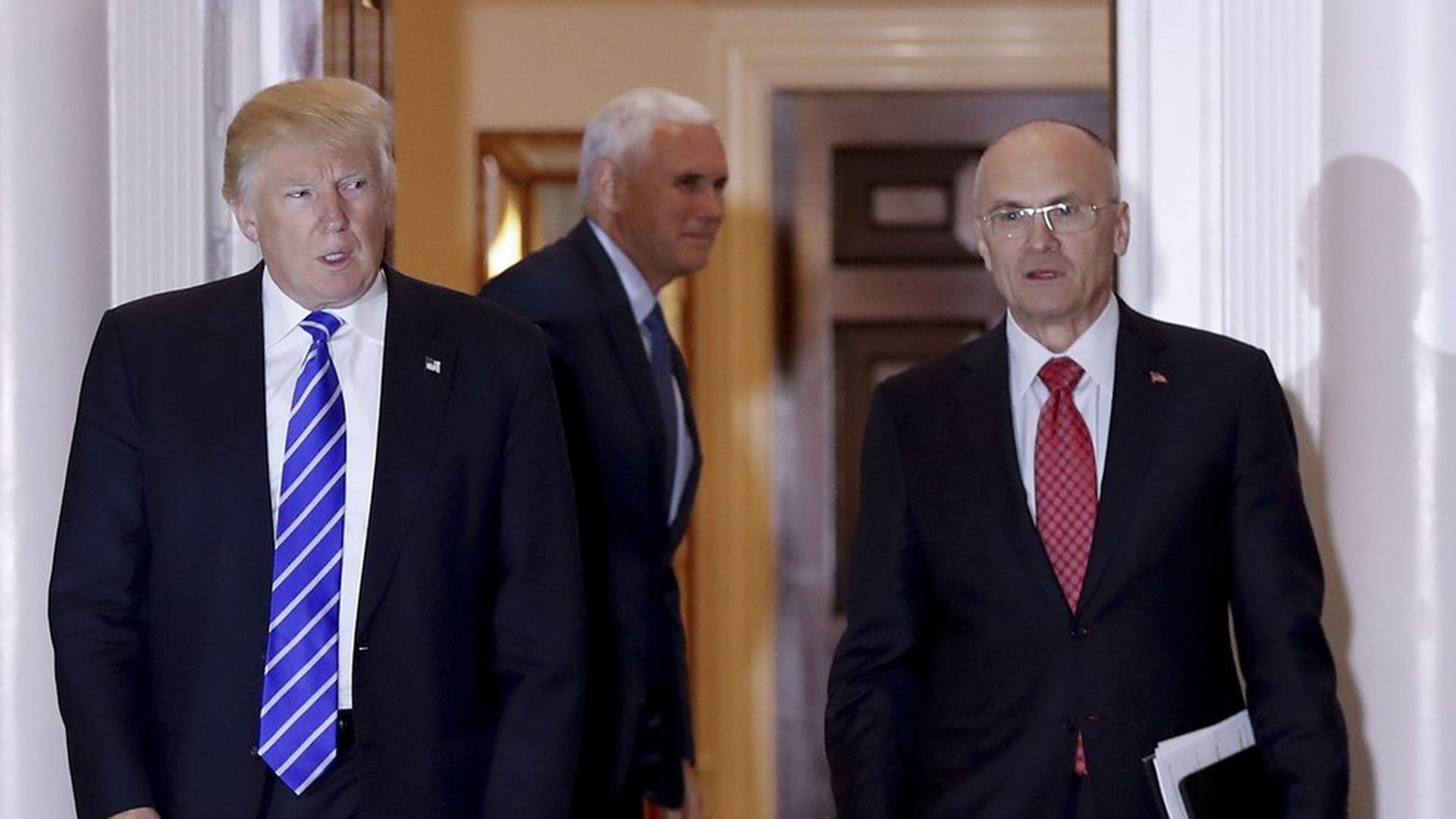
Andrew Puzder, the nominee for Labor Secretary, is toast. He withdrew his candidacy today, according to multiple media reports. Puzder is Trump's first Cabinet secretary to be knocked from contention.
The day got off to a bad start for him, as Politico reported that it had a 1990 taping from Oprah that featured Puzder's ex-wife saying he'd "vowed revenge" against her.
CNN reporter Manu Raju then reported this afternoon that Republicans asked Trump to withdraw the nomination, as they lacked the votes to clear him through the Senate.


Trump to Netanyahu: Hold back on settlements "for a little bit"
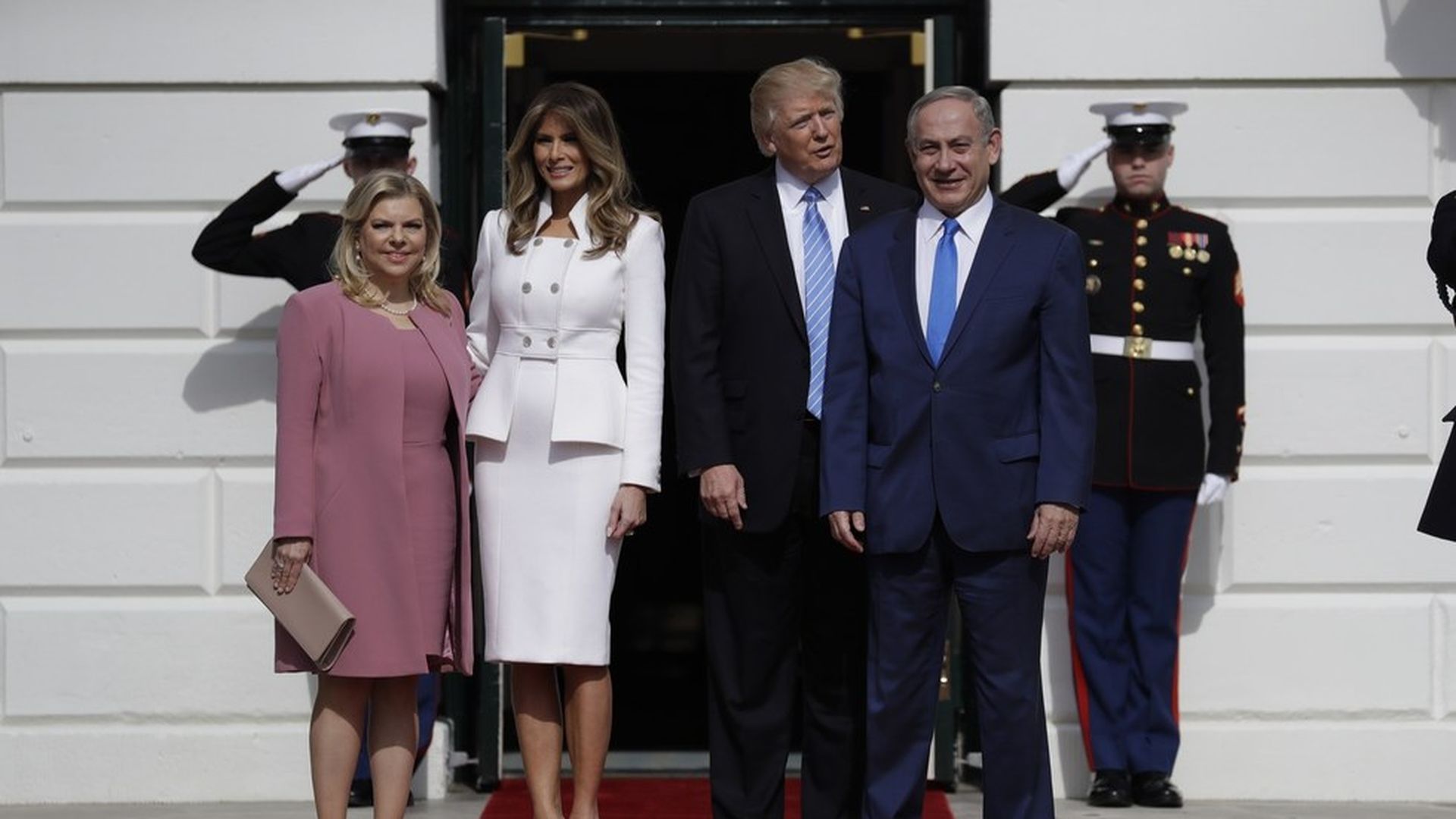
President Trump addressed some of the biggest questions hanging over his administration's Middle East policy during a joint press conference with Israeli PM Benjamin Netanyahu...
- Trump to Bibi: "I'd like to see you hold back on settlements a little bit."
- Trump's preferred peace plan: "I'm looking at one-state and two-state and I like the one that both parties like."
- Embassy to Jerusalem? "I'd like to see that happen...we're looking at that with great care and we'll see what happens."
That other stuff: Trump only took questions from friendly outlets, like the Christian Broadcasting Network and Townhall, and avoided reporters — like CNN's Jim Acosta — who shouted questions about his campaign's contact with Russia as he left the room. But he did briefly touch on Flynn, saying: "It was very very unfair what happened to him." More highlights below:

The head of the CIA's secret meeting with Abbas
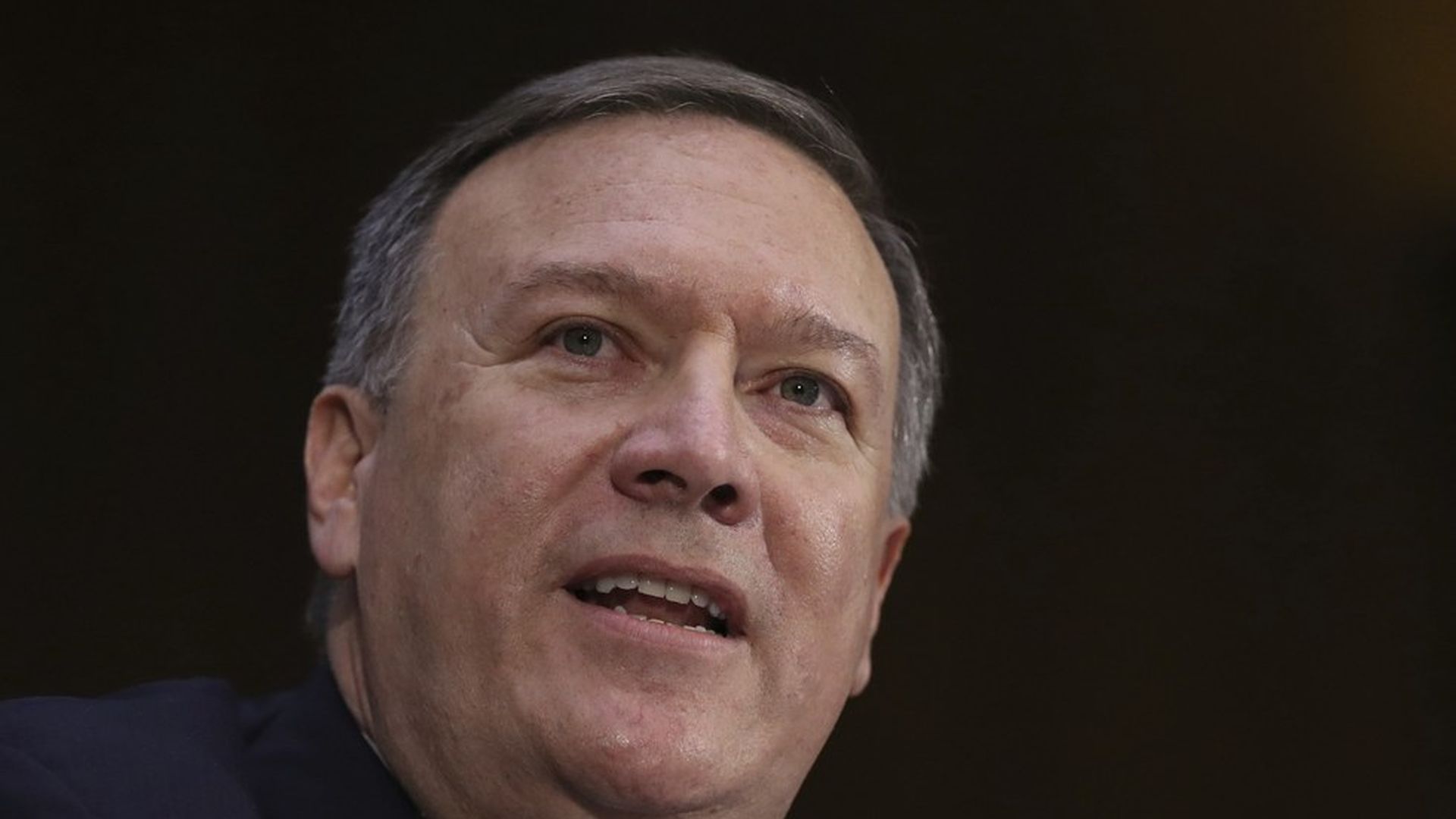
On the eve of President Trump's visit from Israeli Prime Minister Benjamin Netanyahu, CIA Director Mike Pompeo met secretly with Palestinian Authority President Mahmoud Abbas in the West Bank, per the AP.
The meeting came as the Trump administration signaled an openness to pursue a peace process in the Middle East that does not involve a two-state solution — a goal mutually endorsed by the United States, Israel, and the Palestinian Authority.
The Palestinian Authority's chief negotiator: "We believe undermining the two-state solution is not a joke, it is a disaster and tragedy for Palestinians and the Israelis and the whole region."
Facts Matter: Read more about Trump and the two-state solution.

Trump may upend U.S. policy on Israel/Palestine
The issue
The United States has long advocated for a two-state solution to the conflict between Israel and the Palestinians.
The facts
The creation of an independent Palestinian state alongside Israel has been the official policy of the United States through successive Republican and Democratic presidential administrations. Israeli settlements in Palestinian territory, the division of Jerusalem, and the security of both states have made this a difficult goal to achieve.
President Trump has indicated he may make sweeping pro-Israel changes to U.S. foreign policy. Most significantly, his pick for ambassador to Israel, David Friedman, supports moving the United States embassy in Israel to Jerusalem and the continued expansion of Israeli settlements on occupied land — two moves that may drastically inflame tensions in the region.
Why it matters
On February 14, ahead of Israeli Prime Minister Benjamin Netanyahu's visit to the United States, a senior Trump official said that Middle East peace is the goal but indicated that it might not come in the form of a two-state solution.
That's significant because Trump administration has presented a muddled view of its Middle East policy in recent weeks, previously signaling its support for a two-state solution, pushing back on Israel over settlements, and demurring on its pledge to move the U.S. embassy to Jerusalem. Anything other a two-state solution would be a radical change to decades of U.S. — and indeed, international — policy.

Under Armour CEO recants calling Trump an asset
Under Armour CEO Kevin Plank today published a response to the criticism he received for calling President Donald Trump "an asset to the country" last week. The comment "did not accurately reflect" his beliefs, Plank said in The Baltimore Sun.
He said the company opposes Trump's travel ban, stands for equal rights and believes "immigration is a source of strength" for companies based in the U.S.
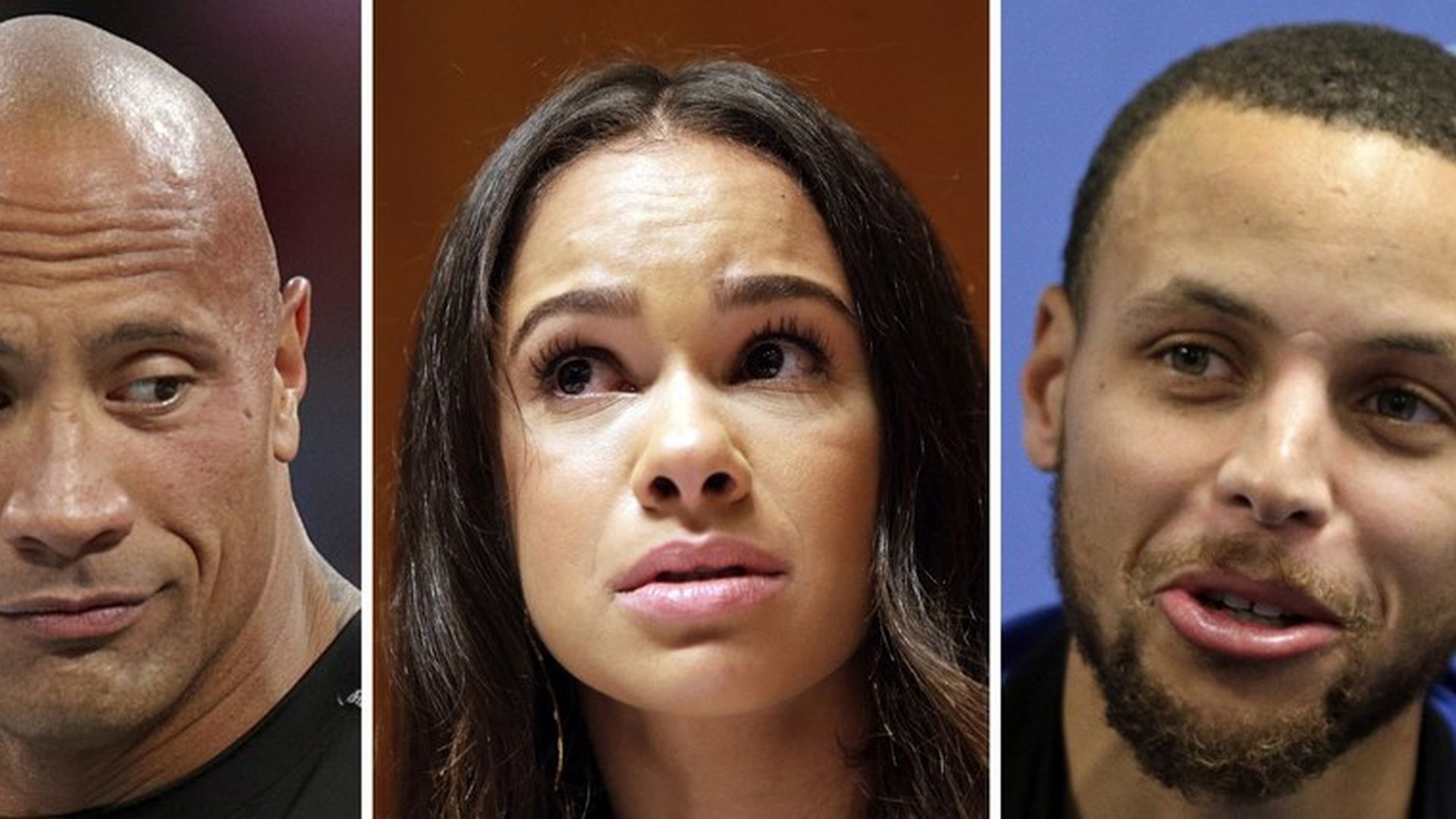
Why Plank is "clarifying" his comments: Some of Under Armour's biggest celebrity promoters — Stephen Curry, Dwayne "The Rock Johnson" and ballerina Misty Copeland — spoke out against Trump's travel ban and questioned Plank's comment.

Trump lashes out at the media on Russia chatter
In true Trump fashion, the president took to Twitter today to condemn last night's media reports that his administration has been in close contact with Russian officials, claiming the "fake news media is going crazy with their conspiracy theories and blind hatred."
The targets: Trump called out CNN and the NYTimes, claimed that the stories are an effort to deflect attention from Hillary Clinton's loss, and endorsed Fox & Friends over MSNBC and CNN. He then pivoted to how the leaks are illegally being given out to these "failing" news organizations "like candy" by the intelligence community, suggesting that the leaks are the real problem. He also publicly wondered why more scrutiny wasn't given to Obama when Putin took Crimea from Ukraine.
The puzzler: Trump also thanked Eli Lake, the Bloomberg View columnist, for telling Sean Hannity last night that "The NSA & FBI...should not interfere in our politics...and is [a] 'Very serious situation for USA.'"
It was clear he didn't read Lake's column, which includes this quote:
The point here is that for a White House that has such a casual and opportunistic relationship with the truth, it's strange that Flynn's "lie" to Pence would get him fired. It doesn't add up.

White House staff in "survival mode ... scared to death"
Here's a twist that has top GOP sources buzzing:
- On Jan. 26, Sally Yates, then the acting attorney general, tells the White House that national security adviser Mike Flynn — who has just been grilled by FBI agents — had, in fact, discussed sanctions with the Russian ambassador during the transition, despite denying it, and therefore is vulnerable to Russian blackmail.
- Four days later, on Jan. 30, Trump fires Yates, citing her unwillingness to enforce his border order.
- Two weeks after her heads-up to the White House, the Flynn secret explodes.
"They had to know she was radioactive, and that there would be consequences," said a West Wing confidant. "It was either reckless, or total incompetence. It leads back to the fact that nobody is in charge."
A top source described "borderline chaos" in the White House.
"Some staff is in survival mode ... scared to death," the source said.

CNN: Trump and Obama briefed on contacts between campaign and Russians
The NYTimes and CNN dropped new stories on Trump-Russia contacts while you were asleep. We've sorted through them to identify what's new, and what to look for next:
- President Obama and then President-elect Trump were both briefed on the findings (CNN). Two of the three reporters on this story were the same as on CNN's story that put the now-infamous "dossier" into the public view.
- The communications stood out because of "the frequency, the volume and the level of the Trump advisers involved." (CNN)
- Russians thought they had "special access" to Trump, per CNN. The report stressed the Russians could be exaggerating.
- Those involved included both senior Trump advisers and Russian intelligence officials, per both reports, in addition to other Russians and Trump business associates. Both reports were vague on exact details, but CNN says it has the names and will release them once it's sought comment.
- Officials have found no evidence of collusion between Trump/Russia on the election, per NYT: "so far, they had seen no evidence of such cooperation."
What to watch next: The sourcing on both stories has similarities to the way the Michael Flynn story was re-introduced to the national conversation on Friday. Combine that with reporters from legacy media chasing each other to get the names and details confirmed first, and this story could get hot fast.

Trump’s campaign had “repeated contacts” with Russia
Four current and former U.S. officials confirmed Trump's election aides and associates in the year leading up to the election had "repeated contacts" with Russian intelligence officials and other Russian government officials, the NYT reports. The investigation includes banking and travel records and interviews.
Timing: American intelligence officials intercepted these communications around the same time as they found evidence Russia was hacking the Democratic National Committee. (Note these are different from the calls between Trump's former National Security Advisor Mike Flynn and the Russian Ambassador to the U.S.)
The caveat: However, the officials said they see no evidence of cooperation between Trump's campaign aides and Russian hacking.
Who's involved? Since the Federal Bureau of Investigation's probe is ongoing, the officials did not disclose the identity of those implicated — except Paul Manafort, Trump's former campaign chairman. Tuesday Manafort said: "I have never knowingly spoken to Russian intelligence officers."

Pence found out about General Flynn by reading the Washington Post
We knew the Vice President felt he'd been misled by Michael Flynn over the former national security advisor's phone calls with the Russian ambassador. Now we know the extent to which Mike Pence was operating in the dark.
Pence's spokesman Marc Lotter confirmed to us in an email that Pence only learned of Flynn's misleading statements — that the General had in fact discussed sanctions with the Russians — after reading about it in the Washington Post.
What we've been told about the timeline: On January 26, the Justice Department briefed the White House counsel Don McGahn about Flynn's misleading statements. President Trump was immediately informed of the situation, according to Press Secretary Sean Spicer. Spicer has said the White House has "been reviewing and evaluating this issue on a daily basis for a couple of weeks," and Trump ultimately decided he couldn't trust Flynn.
The problem: Why did it take so long for the President to request Flynn's resignation? And why did the Vice President — the man Flynn sent out on national TV with a categorical falsehood — have to get his information from a newspaper?