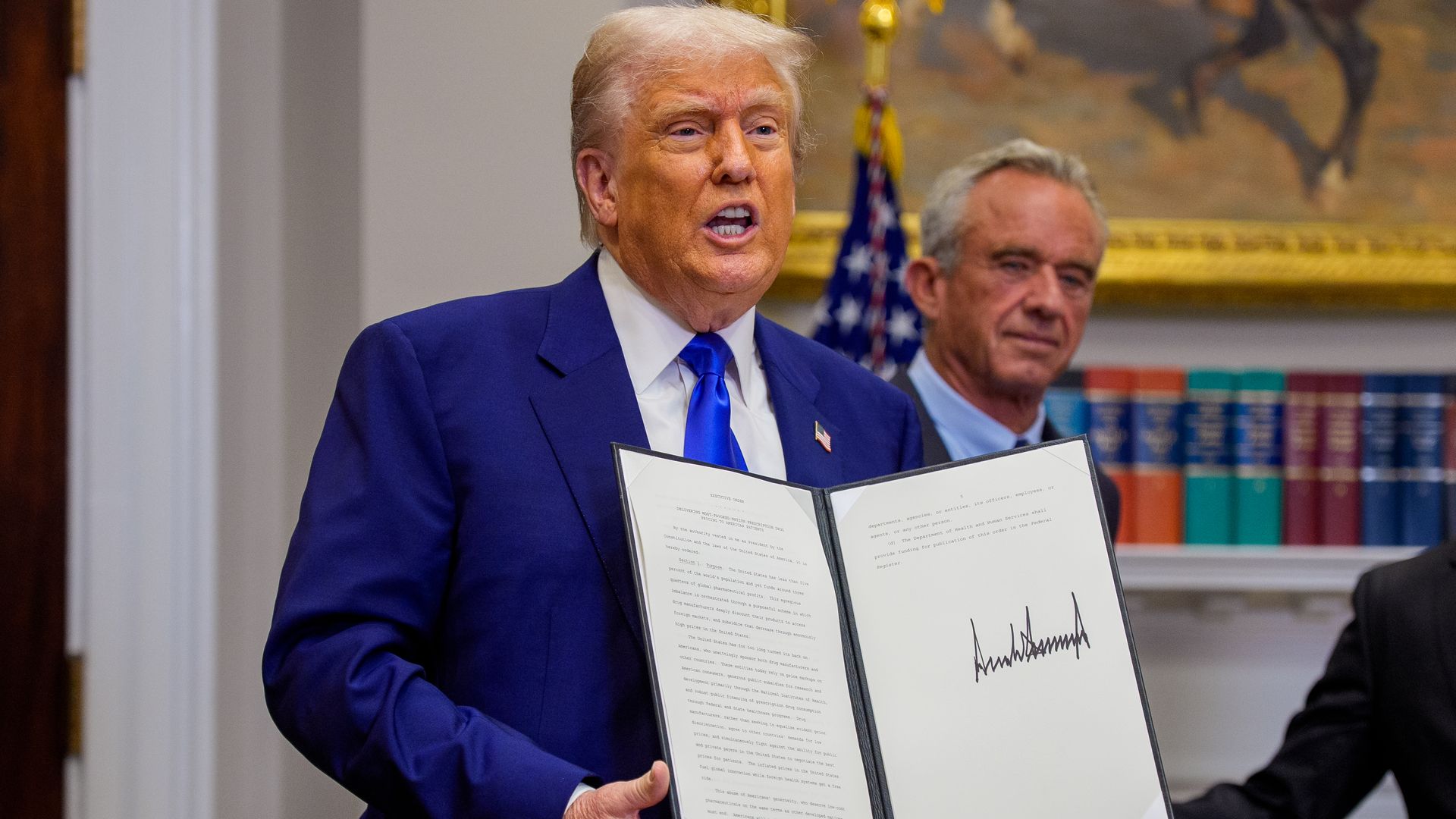
President Trump announced "TrumpRx" Tuesday, a government-run website with Pfizer as its first partner, offering select drugs at discounts.
Why it matters: TrumpRx is the administration's latest move to bring down U.S. drug prices, but it's unlikely to save much for the 92% of Americans with health insurance.
Premiums will more than double for millions of Affordable Care Act enrollees next year if Congress does not renew enhanced marketplace subsidies by year's end, according to a new analysis.
Why it matters: The tax credits that help people afford premiums are at the center of the showdown over government funding, and the latest findings underscore the stakes if they are not renewed, as Democrats insist they must be.
The government shutdown left some seniors without access to telehealth, while others receiving hospital-level care at home are being discharged or sent back to inpatient units.
The big picture: Congress only authorizedMedicare to pay for expanded telehealth care and the Acute Care Hospital at Home initiative through Sept. 30 — meaning additional legislation is required to restore the services.
Pfizer's decision to announce a deal with the Trump administration on drug prices Tuesday caused an uproar within much of the pharmaceutical industry, most of which was caught off guard by the announcement.
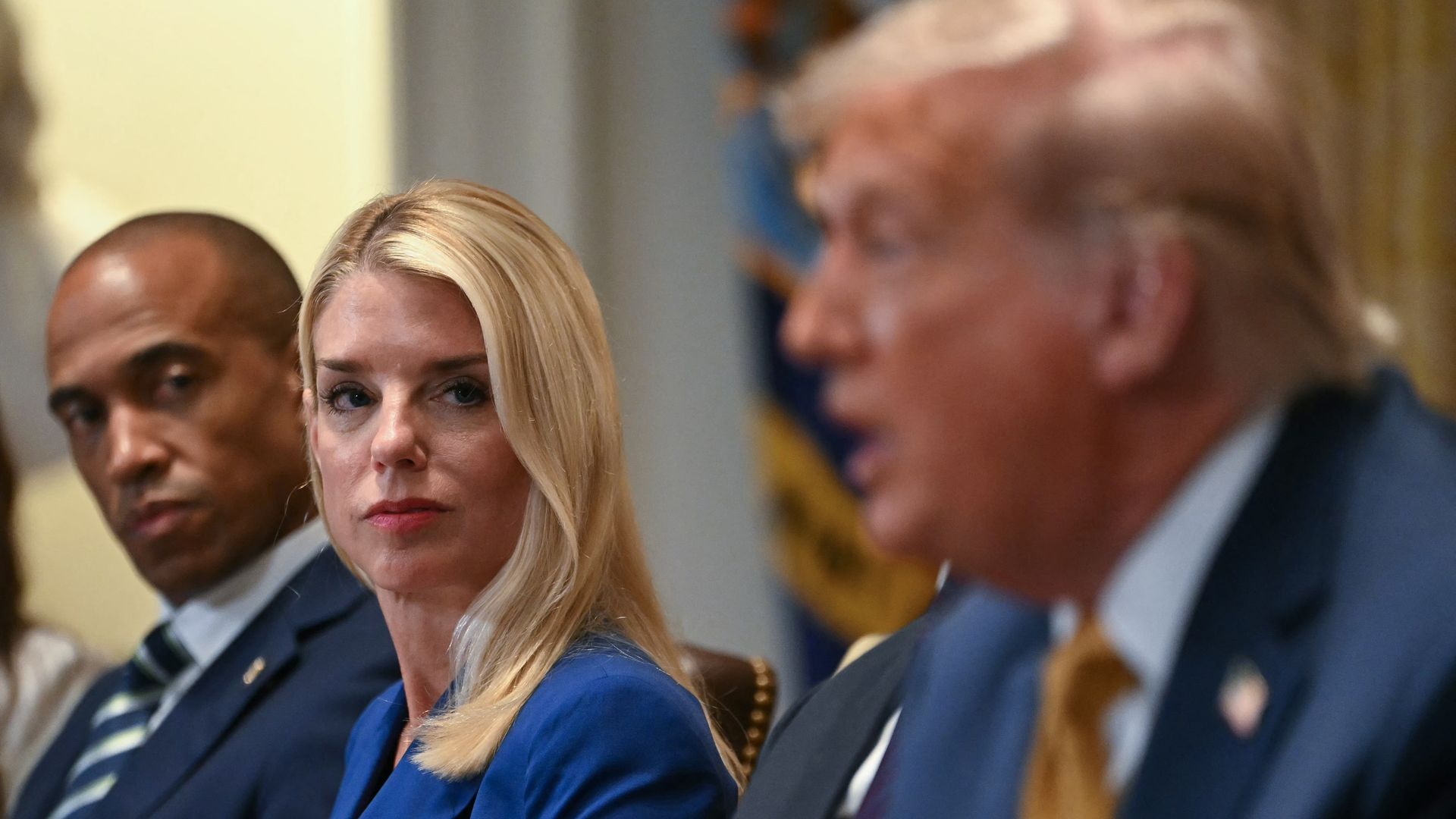
Why it matters: Pfizer CEO Albert Bourla's acquiescence to President Trump's demands — broadcast live from the Oval Office as the two men stood side by side — puts much more pressure on other drug companies to fall in line after months of unified resistance to Trump's "most favored nation" pricing plan.
Scientists have turned DNA from human skin cells into "functional" eggs that are capable of producing early-stage embryos, according to a new study that cautions more research is needed as they're not yet usable.
Why it matters: "In addition to offering hope for millions of people with infertility due to lack of eggs or sperm, this method would allow for the possibility of same-sex couples to have a child genetically related to both partners," said study co-author Paula Amato, professor of obstetrics and gynecology at Oregon Health & Science University, in a statement Tuesday.
The website for the Department of Housing and Urban Development is greeting visitors with a pop-up message that blames the "Radical Left" for the looming government shutdown Wednesday morning.
Why it matters: This marks a new turn in how the Trump administration is willing to use taxpayer-funded resources to advance political messaging.
President Trump signed an order Tuesday directing his administration to invest $50 million in AI-driven pediatric cancer research.
Why it matters: The move is part of a broader embrace of artificial intelligence across federal agencies but comes as the administration is slashing biomedical research spending and pausing grants.
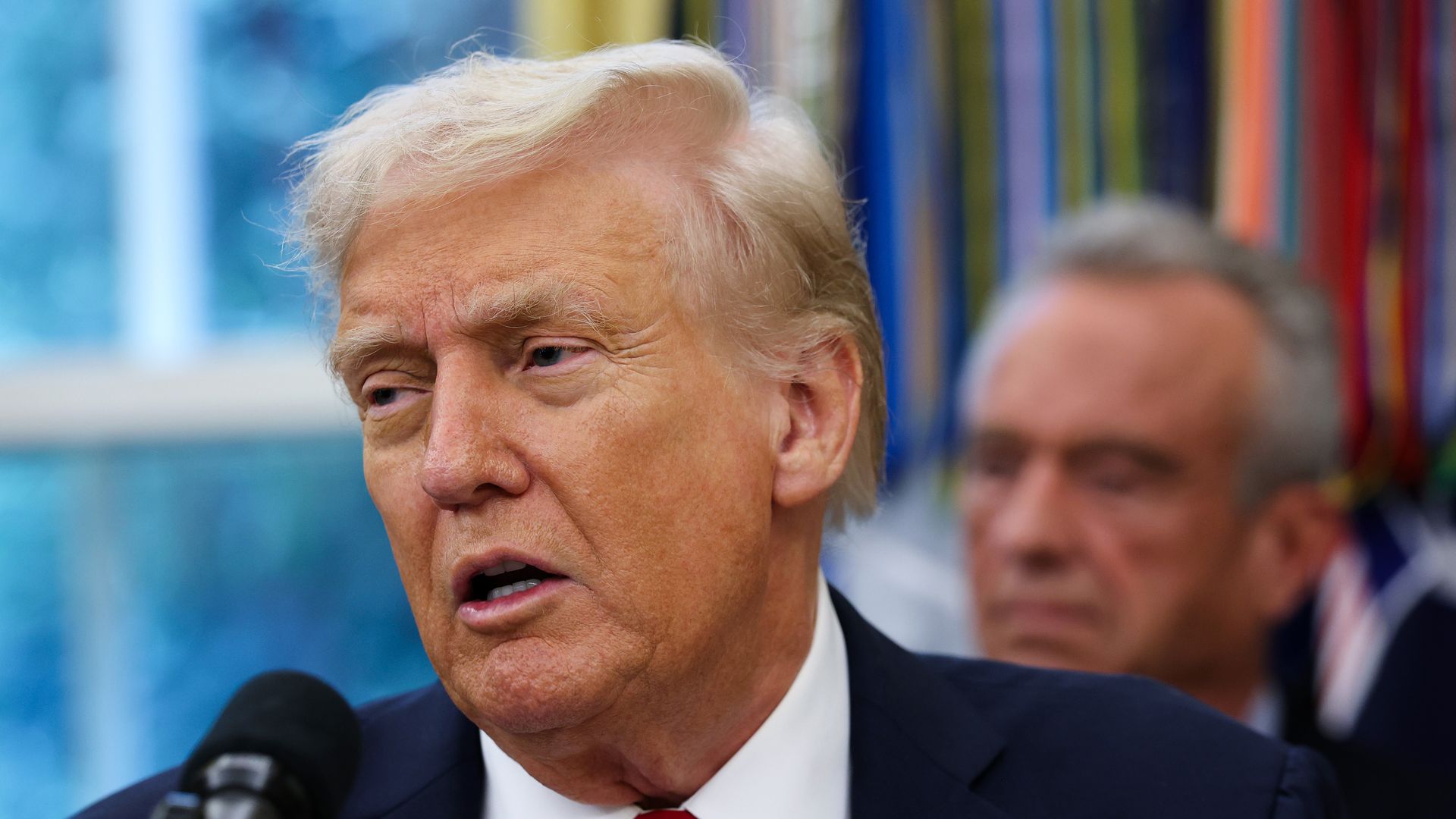
President Trump and Pfizer announced a deal on Tuesday to lower certain drug prices and move towards the president's "most-favored nation" pricing plan.
Why it matters: Trump has been pushing prescription drug manufacturers to lower U.S. prices, and the commitment from Pfizer could prompt more companies to sign on.
On the book cover above is Leland Vittert — a scrappy, aggressive prime-time NewsNation anchor — when he was nearly 2, being cradled by his dad, Mark Vittert, at their lakefront summer home in Leland, Michigan.
In the photo at right, Leland and Mark — now best friends, and decades-long partners in a battle no one outside their family knew about — play golf in Naples, Florida.
The story in between — including painful years when his dad was the young Leland's only friend — is told in the anchorman's memoir, "Born Lucky: A Dedicated Father, a Grateful Son, and My Journey with Autism," out Tuesday.
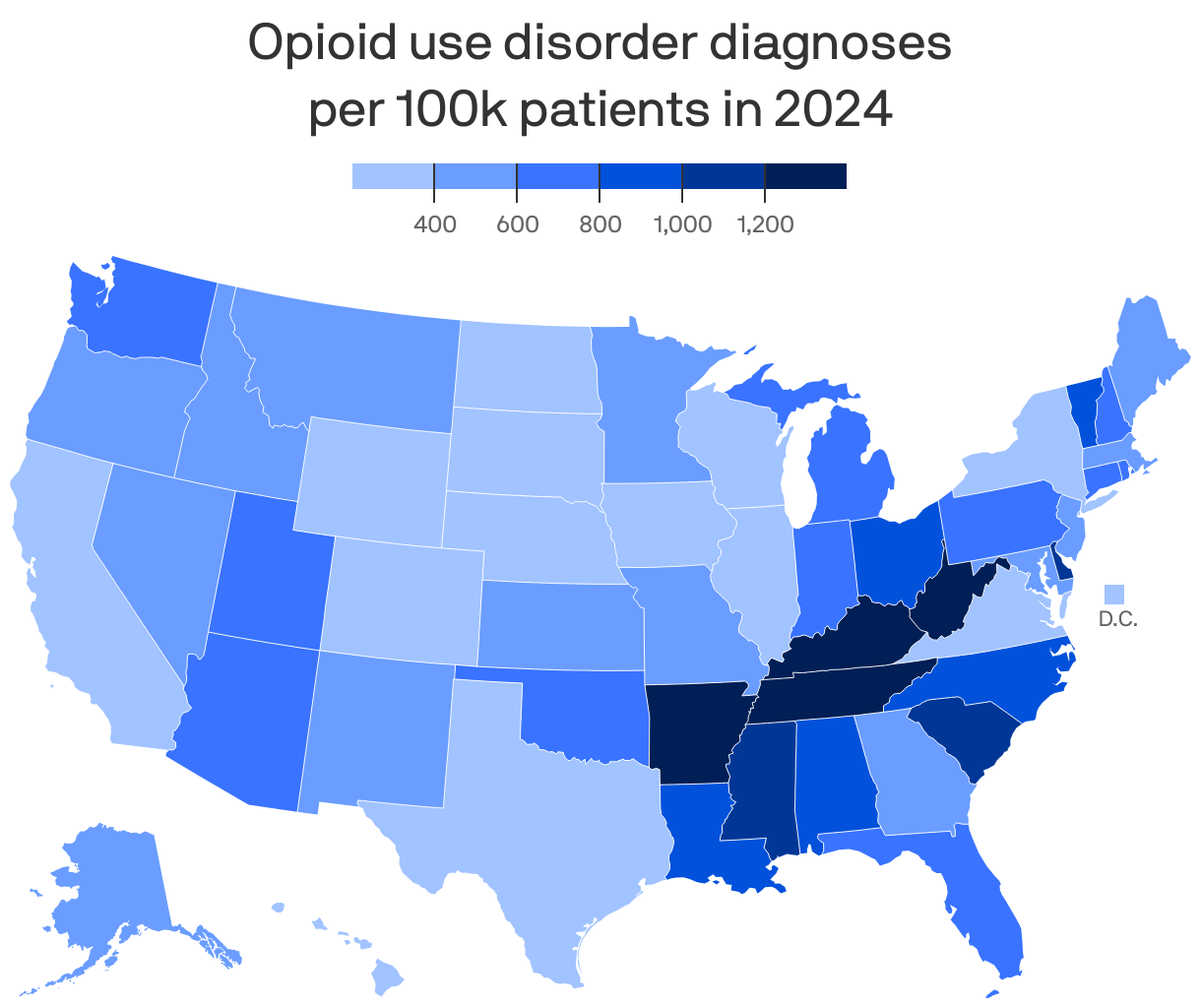
Diagnoses of opioid use disorder among the commercially insured jumped nearly 40% nationwide between 2021 and 2024, according to data from FAIR Health's Opioid Tracker shared first with Axios.
Why it matters: The finding suggests the opioid crisis cuts across demographics and income levels, putting health systems and insurers coming out of the pandemic under mounting pressure to manage addiction treatment.
President Trump's deadline for drug price concessions has come and gone. And so far the pharmaceutical industry's expanding list of commitments has included everything but what Trump really wants.
Why it matters: Not committing to lower U.S. drug prices will test how much Trump is willing to throw behind his threat of regulations.