Trump is tested on drug price threat

Add Axios as your preferred source to
see more of our stories on Google.
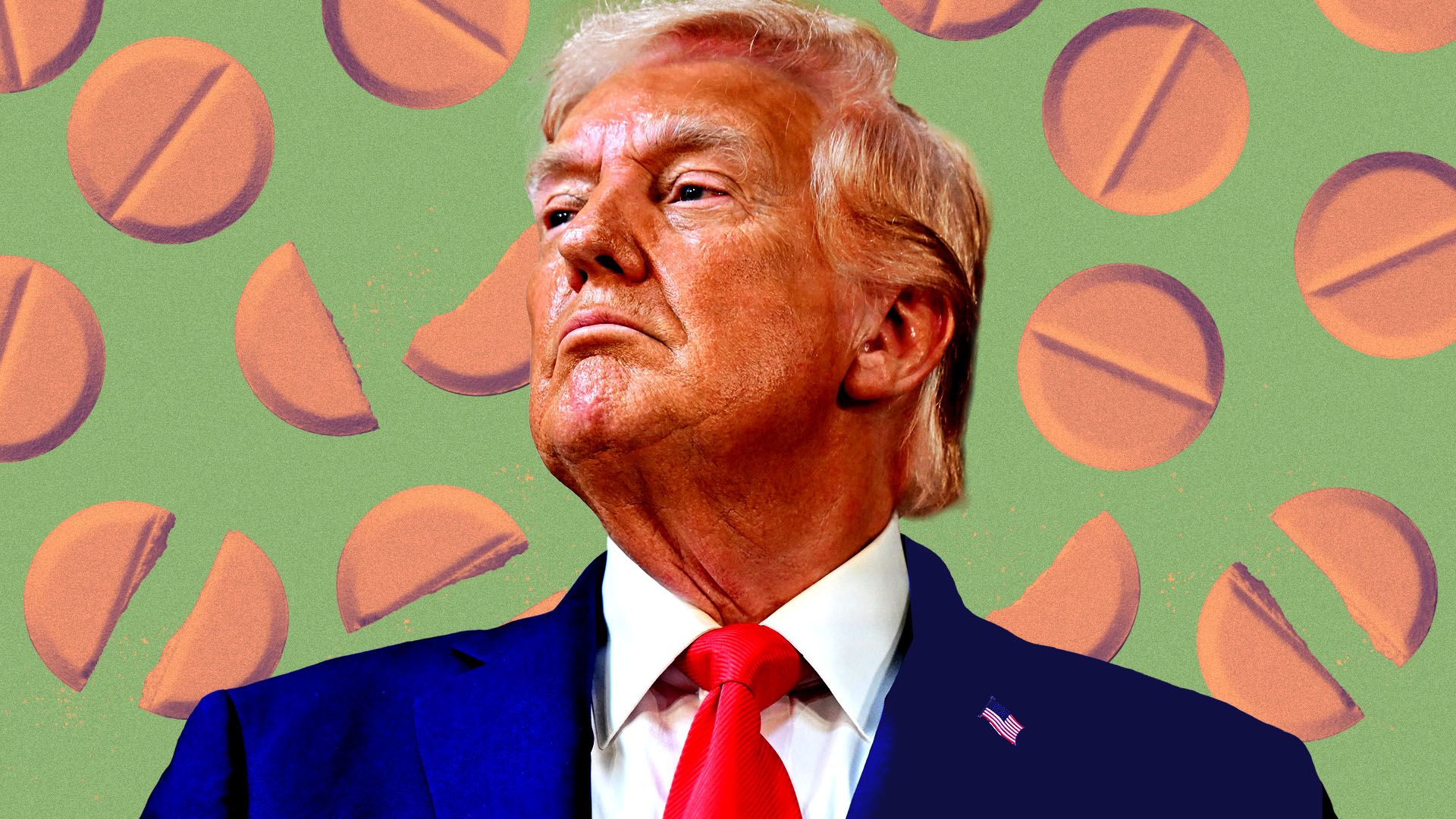
Photo illustration: Sarah Grillo/Axios. Photo: Leon Neal/Pool/AFP via Getty Images
President Trump's deadline for drug price concessions has come and gone. And so far the pharmaceutical industry's expanding list of commitments has included everything but what Trump really wants.
Why it matters: Not committing to lower U.S. drug prices will test how much Trump is willing to throw behind his threat of regulations.
Driving the news: PhRMA, the drugmakers' top trade group, yesterday announced several actions it's taking or has already taken to answer Trump's "call to put America first," as CEO Stephen Ubl put it in a press release.
- It highlighted the $500 billion that member companies have committed to spending on U.S.-based infrastructure, financial assistance programs they're providing to patients and the launch of a new website that will connect patients with drug companies' direct-purchasing programs.
- Some companies, including AstraZeneca and Bristol Myers Squibb, have already announced that they'll let patients buy certain drugs directly, cutting out the middlemen that the drug industry blames for high patient costs.
- Companies have also announced price increases abroad, without lowering U.S. prices.
Between the lines: PhRMA's latest offer seems unlikely to satisfy the administration enough to forestall executive action.
- PhRMA "is definitely making an effort to align their efforts to Trump's executive order on drug pricing," said David Mansdoerfer, a Health and Human Services official in Trump's first administration.
- "At the end of the day, though, the White House still holds all the cards and I'd expect to see something pretty significant out of the administration to fulfill the president's promise to the American people."
- Just last week, HHS sent a proposed rule titled "Global Benchmark for Efficient Drug Pricing" to the White House Office of Management and Budget, an action interpreted by some as a shot across the industry's bow.
- Also last week, the administration threatened to impose 100% tariffs on imported branded drugs made by companies that haven't committed to building new U.S. facilities by Oct. 1 — though most large drugmakers would likely duck the tariffs, as the NYT reported.
Catch up quick: Over the summer, Trump sent letters to 17 drug companies saying that the "only thing" he'd accept from them was "immediate relief" for Americans "from the vastly inflated drug prices and an end to the free ride of American innovation" by other wealthy countries.
- That specifically meant the companies would provide all of their drugs sold to Medicaid patients at "most favored nation" rates, meaning the lowest price offered within certain developed countries.
- It also demanded drug companies offer most-favored-nation prices to Medicare, Medicaid and commercial payers in the U.S. for all new drugs moving forward, and to allow for direct purchasing of "high-volume, high-rebate" drugs at "the same low MFN prices that manufacturers already offer to third-party payers."
- It concludes that while collaboration — or voluntary dealmaking — would be the best way forward, "if you refuse to step up, we will deploy every tool in our arsenal to protect American families" from "abusive" pricing.
Reality check: Trump's tough talk papers over the legal questionability of mandating most-favored-nation pricing through regulation.
- His first administration's attempt to do so was blocked by courts for procedural reasons, but the underlying legality of the policy was never decided. The Biden administration rescinded the rule.
- The White House didn't respond to requests for comment about the drug industry's actions so far and whether the administration will be taking further regulatory action.
The bottom line: Though Trump is armed with executive power, serious questions about the threat of that power may be keeping the drug industry from meeting his demands.
- The next step in this high-stakes face-off could well be proposed regulation that could cost the industry billions — the fate of which would undoubtedly be decided in court.
