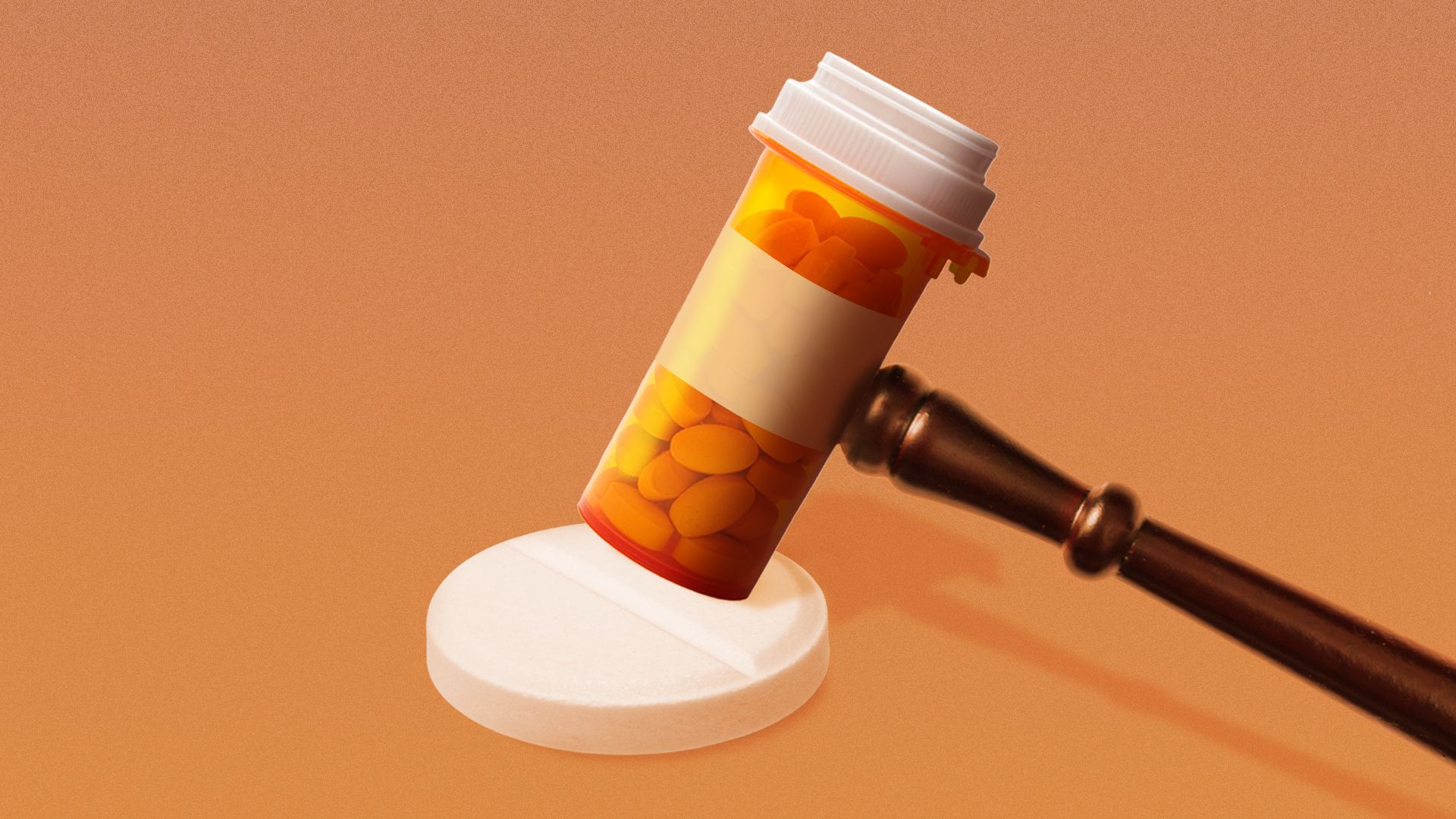
The Supreme Court on Thursday froze a bankruptcy reorganization plan for OxyContin maker Purdue Pharma that would have shielded members of the Sackler family, who own the company, from civil claims in exchange for paying up to $6 billion to address the U.S. opioid crisis.
Justices will review the agreement and hear arguments in the case in December.
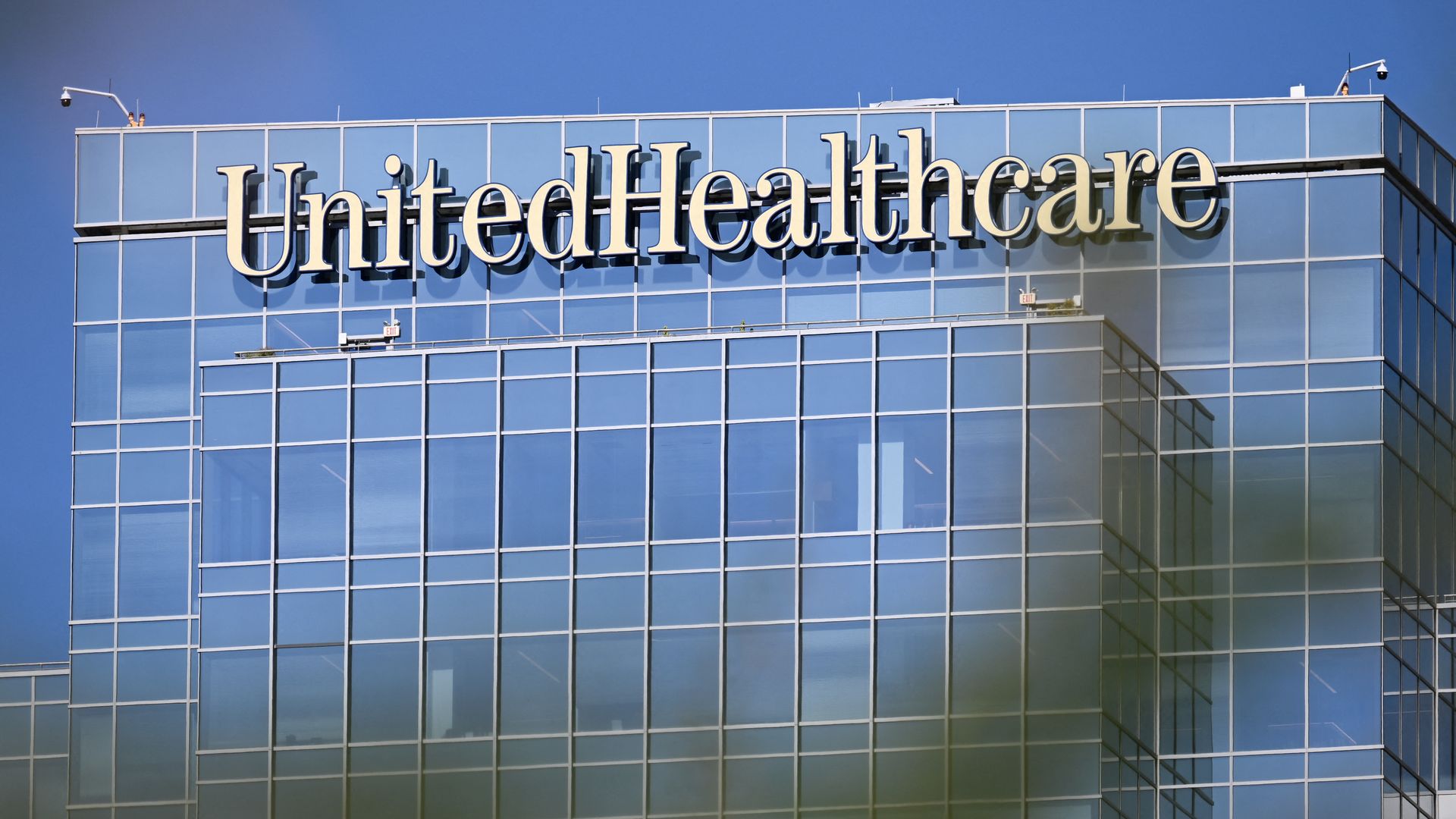
Starting next month, UnitedHealthcare says it will move forward with plans to drop prior authorization requirements for a range of procedures, including dozens of radiology services and genetic tests, among others.
Why it matters: UnitedHealth is among the health insurance giants who have announced plans to cut back on prior authorization as federal regulators consider tougher curbs on the practice.
Danish drugmaker Novo Nordisk has agreed to buy Inversago Pharma, a Montreal-based developer of anti-obesity drugs, for upwards of $1.1 billion in cash.
Why it matters: Novo isn't content to rest on its weight loss laurels, despite the popularity of its Ozempic and Wegovy products.
Why it matters: The principles outlined by the American Psychedelic Practitioners Association aim to bring structure to the field amid rapidly growing interest in incorporating psychedelics like psilocybin and MDMA into mental health treatment.
Health insurers are failing to adequately inform consumers about preventive services they are entitled to receive at no additional cost, according to a new report from consumer representatives to the national trade group for state insurance regulators.
Why it matters: Free coverage of preventive services has been linked to increased cancer screenings, contraceptive use and vaccinations, HHS reported last year.
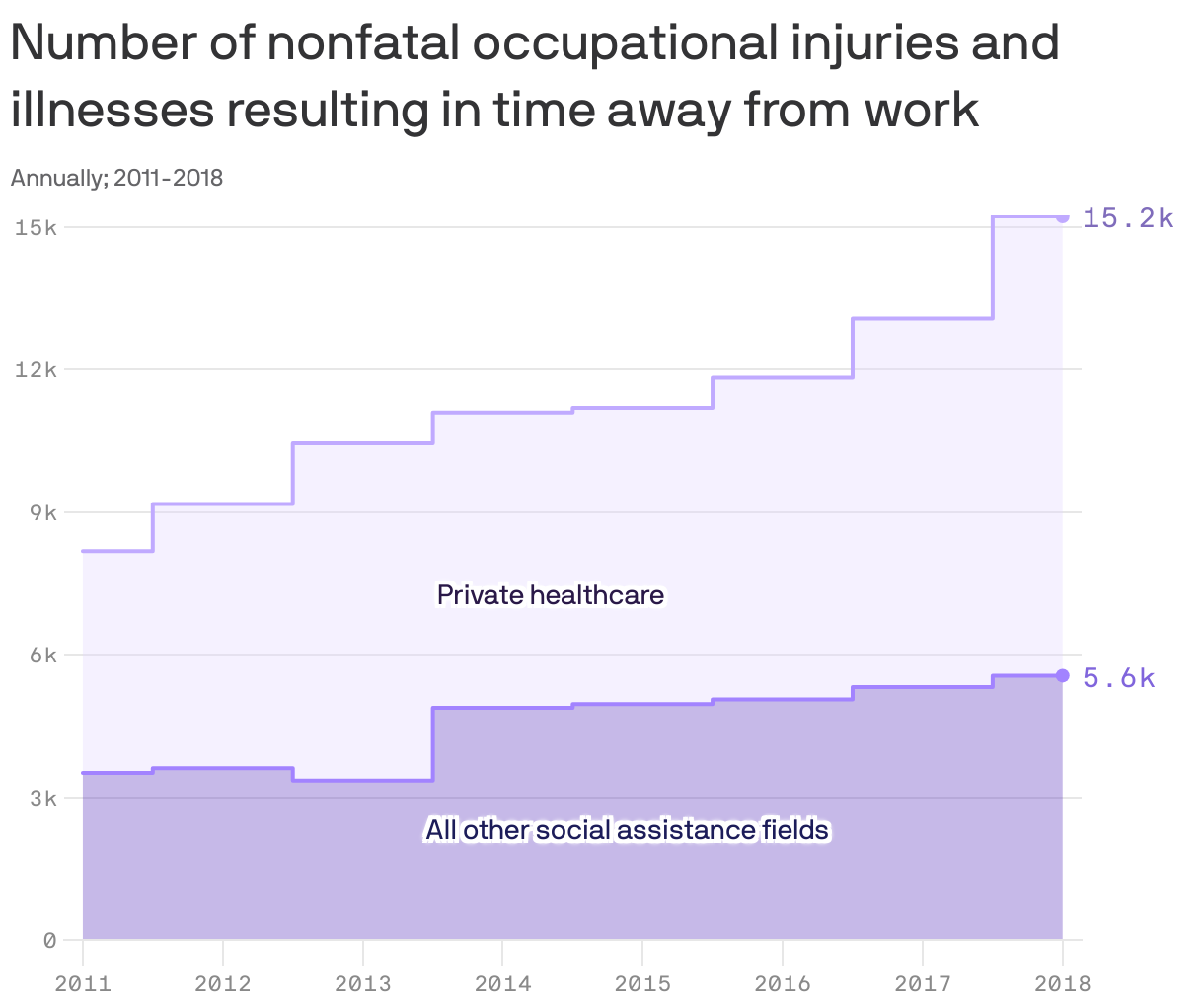
Data: Bureau of Labor Statistics; Chart: Tory Lysik/Axios Visuals
Health care workers are increasingly being assaulted or shot on the job, making hospitals and clinics among the most dangerous workplaces in America.
The big picture: Violence was a serious problem before COVID-19 — the field suffered more nonfatal injuries from workplace assaults than any other profession, even law enforcement, per the Associated Press — and pandemic stressors like backlash against public health measures have made matters worse.
The defeat of a closely watched Ohio ballot measure that would have made it more difficult to preserve abortion rights in the state will likely embolden efforts to safeguard access to the procedure in other conservative strongholds.
Driving the news: By a wide margin, Ohio voters Tuesday night rejected an initiative that would have raised the threshold for amending the state's constitution from a simple majority to 60%. Though the measure known as Issue 1 did not specifically mention abortion rights, it was largely seen as an effort to prevent a proposed amendment protecting abortion access from succeeding in another ballot initiative set for November.
Black pregnant people and pregnant individuals below the poverty line are less likely to access medication abortion, according to surveys of more than 4,700 patients by the Guttmacher Institute.
Why it matters: It's evidence of how race and economic status can disadvantage some groups, especially in areas where medication abortion is the only option available.



/2023/08/09/1691600186428.gif?w=3840)