The big picture: Nearly a month after the FDA made a regulatory change allowing retail pharmacies to offer abortion pills, the attorneys general told the big pharmacy chains that selling mifepristone — which is used in medication abortions — is "unsafe and illegal," per a press release.
About a quarter of U.S. states have banned or restricted abortion since Roe v. Wade was overturned. But elsewhere, lawmakers are moving to ensure that access to the procedure remains guaranteed, and to accommodate out-of-state providers and patients.
The big picture: There are currently at least 25 states and Washington, D.C., which have measures in place to protect abortion access.
The FTC on Wednesday filed a court order against GoodRx for failing to notify users that it shared their personal, identifiable health data with Facebook and Google and said it would permanently ban the company from sharing such information for ads, should the court order be federally approved.
Why it matters: The court order is the firstFTC action under the Health Breach Notification Rule, which requires companies to notify users when their health data is infringed upon, and includes several safeguards aimed at protecting consumer data.
Why it matters: There are plenty of good reasons why health care providers use guidelines and rules of thumb to guide their health care recommendations.
The planned end of the COVID public health emergency on May 11 could cause major disruptions for some health care providers while barely creating a ripple in other segments of the industry — at least for now.
Why it matters: Congress and the executive branch have already decided the fate of some key regulatory flexibilities that are tied to the emergency declaration.
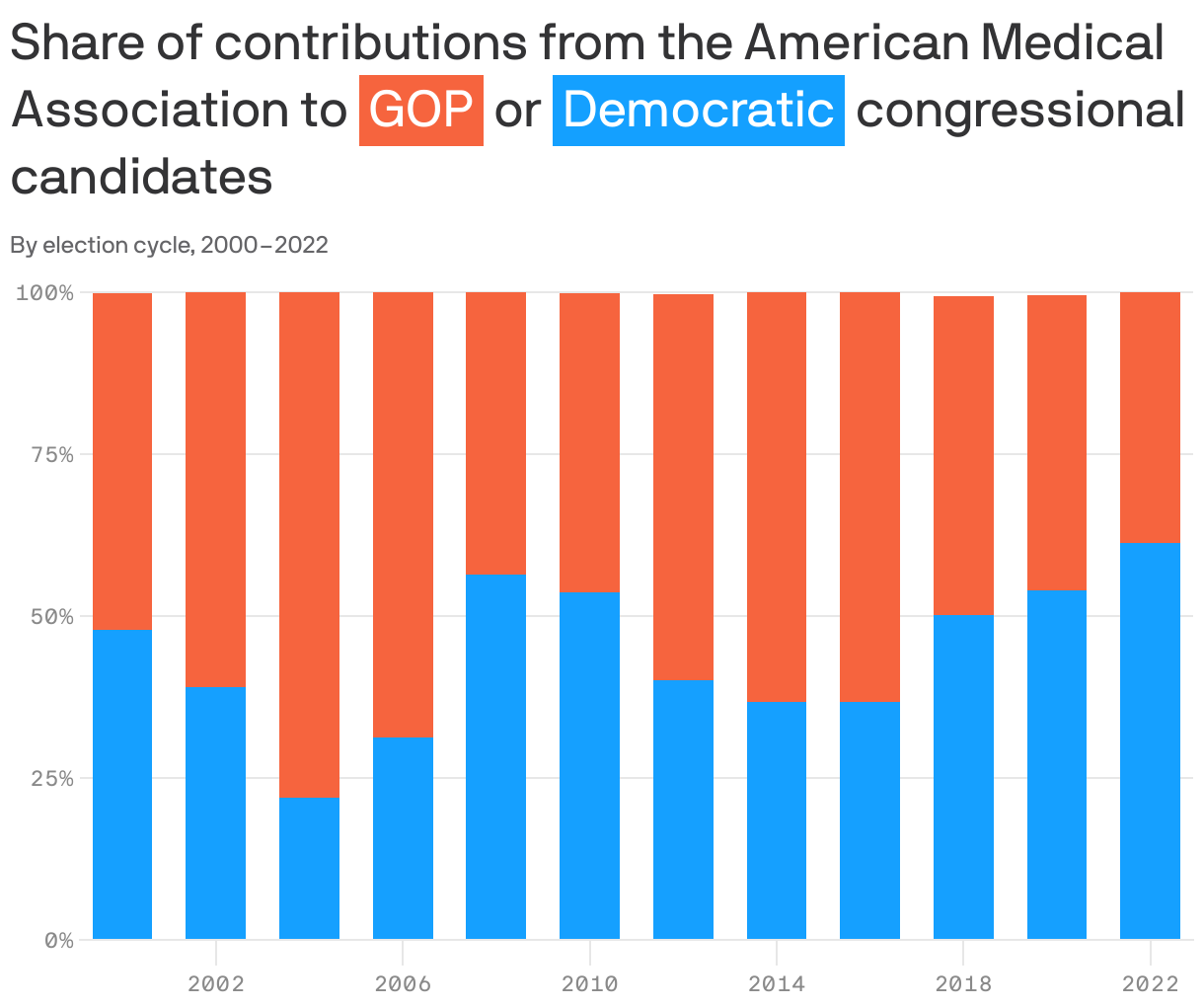
Republicans' historical alliance with the nation's leading physicians' group has deteriorated to the point where several elected doctors are openly critical of the organization and what they refer to as its "woke" policies.
Why it matters: The fractured relationship, similar to the GOP's relationship with the U.S. Chamber of Commerce, points to a substantial change in Washington's power dynamics under a newly empowered GOP House.
State of play: The White House announced Monday that after three years, it will end the COVID-19 public health emergency and national health emergency designations on May 11, bringing about policy changes, new health care costs and existential questions about the nation's pandemic response.
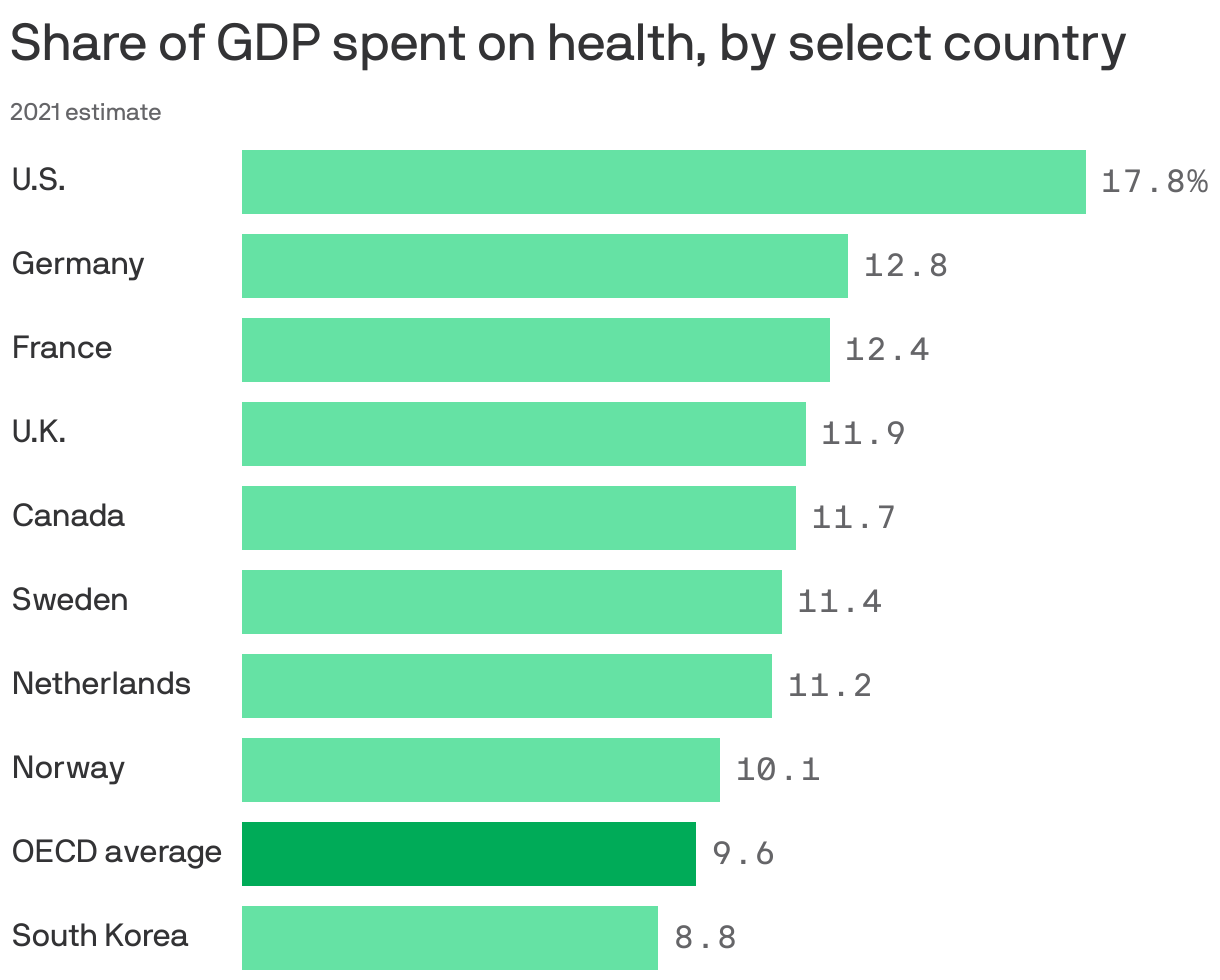
Data: Gunja, et al., 2023, "U.S. Health Care from a Global Perspective, 2022: Accelerating Spending, Worsening Outcomes," OECD Health Statistics 2022; Chart: Axios Visuals
The U.S. continues to far outspend other developed nations while seeing worsening health outcomes.
Driving the news: A report from the Commonwealth Fund today shows poorer U.S. health outcomes — such as Americans being more likely to suffer from multiple chronic illnesses, die from avoidable causes including maternal mortality and assault, and having a shorter life expectancy — all while America pays the most per capita for those outcomes.
The Biden administration is weighing additional actions to help people access abortions, which may include a public health emergency declaration.
The big picture: Both abortion rights advocates and Democratic lawmakers have urged the Department of Health and Human Services and President Biden to take such a step in response to the overturning of Roe v. Wade, which they say has created a "full-scale reproductive health crisis" across the U.S.
Americans are staying healthier longer than ever before — and they're transforming what older age looks like.
The big picture: "We have essentially created a new stage of life. Americans retire, on average, by their early to mid-60s, yet many now remain vibrant into their mid-80s," David Brooks writes in The Atlantic.
The Biden administration on Monday finalized an oft-delayed plan to step up audits of Medicare Advantage insurers in order to identify and recover overpayments.
Why it matters: Studies and audits have identified billions of dollars of excess payments to health plans that weren't supported by patients' medical records, but federal officials in the past backed off many repayment demands.
The Biden administration plans to end the COVID-19 public health emergency and national health emergency designations on May 11, the White House announced Monday.
The state of play: The move shifts the debate around GOP resolutions ending the two emergencies, which were set to be voted on in the House this week as a referendum on the incompatibility between President Biden’s statements on the pandemic and the administration’s policy.
Mental health professionals are seeing an increase in requests from companies for trauma support training.
Why it matters: From self-care practices to recognizing the physiological impacts of trauma, more organizations have realized that workers can't just be expected to handle the trauma on their own, according to Ruth Yeo-Peterman, a resilience programming trainer with the Center for Victims of Torture.