Medicare Advantage plans are in line for a 2.09% rate increase in 2024, the Centers for Medicare & Medicaid Services said in a notice on Wednesday.
Why it matters: The adjustment is driven by growth in Medicare fee-for-service costs. But analysts said the bump is offset by other policy changes that would translate into a net reduction of 2.27%.
The notice comes as private Medicare plans continue to draw enrollees away from traditional Medicare with promises of capped out-of-pocket costs, vision and dental benefits, and perks like fitness classes.
The average change in revenue for Medicare Advantage plans will be 1.03% next year, CMS said.
Yes, but: Plans are concerned about the notice, and the final rates that will be published no later than April 3
"CMS should not finalize payment policies that increase costs and/or reduce benefits for MA enrollees, especially when health care cost and inflationary pressures remain high," Matt Eyles, president and CEO of AHIP, the insurer trade group, said in a statement.
"There is no real way to sugar coat this as anything other than a bad rate update for MA plans," Raymond James & Associates' note on the policy says.
Cowen analysts predicted plans will reduce benefits to protect their margins.
Go deeper: Beyond the rate adjustment, CMS will implement changes brought by the Inflation Reduction Act, including a cap on out-of-pocket spending on insulin and the elimination cost-sharing for recommended preventive vaccines.
It also reflects changes the IRA brought to Medicare's Part D drug program, such as the elimination of cost-sharing for Part D prescription drugs in the catastrophic phase expanded eligibility for premium subsidies.
Between the lines: CMS in the notice proposed a series of technical updates to the Medicare Advantage risk adjustment model, to improve payment accuracy.
The moves comes the same week the agency finalized a plan to increase audits of Medicare Advantage insurers and claw back about $4.7 billion in overpayments.
Of note: CMS again proposed to use the minimum required rate for adjusting diagnostic coding in the Medicare Advantage program.
Experts, including the Medicare Payment Advisory Commission, say increasing the adjustment factor would ease coding abuse problems in Medicare Advantage that have cost the federal government billions of dollars.
Families with kids fighting cancer in the U.S. will soon have clinical and patient navigation supportto help them findoptimal care, connecting with research trials and more portable, shareable health records under a partnership being launched by the National Cancer Institute.
Why it matters: It's among a series of actions directed at cancer care and prevention the Biden administration plans to announce today to mark the first anniversary of the revived Cancer Moonshot, the White House shared first with Axios.
Public school districts that received a windfall of COVID relief funds for mental health services are confronting a new dilemma: How to sustain counseling, screenings, teletherapy and other programs when the money runs out.
Why it matters: The youth mental health crisis is not getting better, and schools are increasingly being pressed into service as first responders amid rising rates of suicidal ideation, overdoses and gun violence.
The big picture: Nearly a month after the FDA made a regulatory change allowing retail pharmacies to offer abortion pills, the attorneys general told the big pharmacy chains that selling mifepristone — which is used in medication abortions — is "unsafe and illegal," per a press release.
About a quarter of U.S. states have banned or restricted abortion since Roe v. Wade was overturned. But elsewhere, lawmakers are moving to ensure that access to the procedure remains guaranteed, and to accommodate out-of-state providers and patients.
The big picture: There are currently at least 25 states and Washington, D.C., which have measures in place to protect abortion access.
The FTC on Wednesday filed a court order against GoodRx for failing to notify users that it shared their personal, identifiable health data with Facebook and Google and said it would permanently ban the company from sharing such information for ads, should the court order be federally approved.
Why it matters: The court order is the firstFTC action under the Health Breach Notification Rule, which requires companies to notify users when their health data is infringed upon, and includes several safeguards aimed at protecting consumer data.
Why it matters: There are plenty of good reasons why health care providers use guidelines and rules of thumb to guide their health care recommendations.
The planned end of the COVID public health emergency on May 11 could cause major disruptions for some health care providers while barely creating a ripple in other segments of the industry — at least for now.
Why it matters: Congress and the executive branch have already decided the fate of some key regulatory flexibilities that are tied to the emergency declaration.
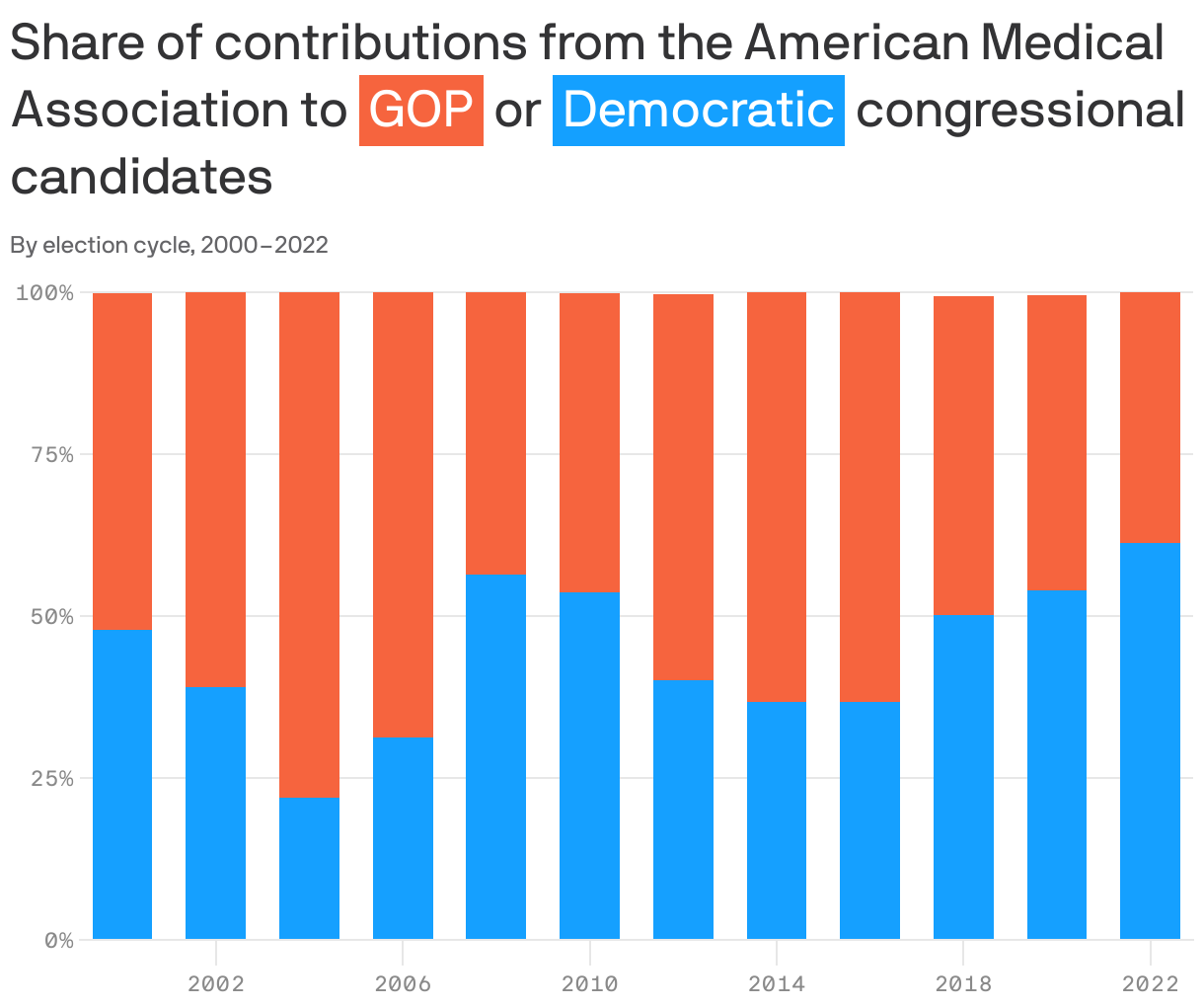
Republicans' historical alliance with the nation's leading physicians' group has deteriorated to the point where several elected doctors are openly critical of the organization and what they refer to as its "woke" policies.
Why it matters: The fractured relationship, similar to the GOP's relationship with the U.S. Chamber of Commerce, points to a substantial change in Washington's power dynamics under a newly empowered GOP House.