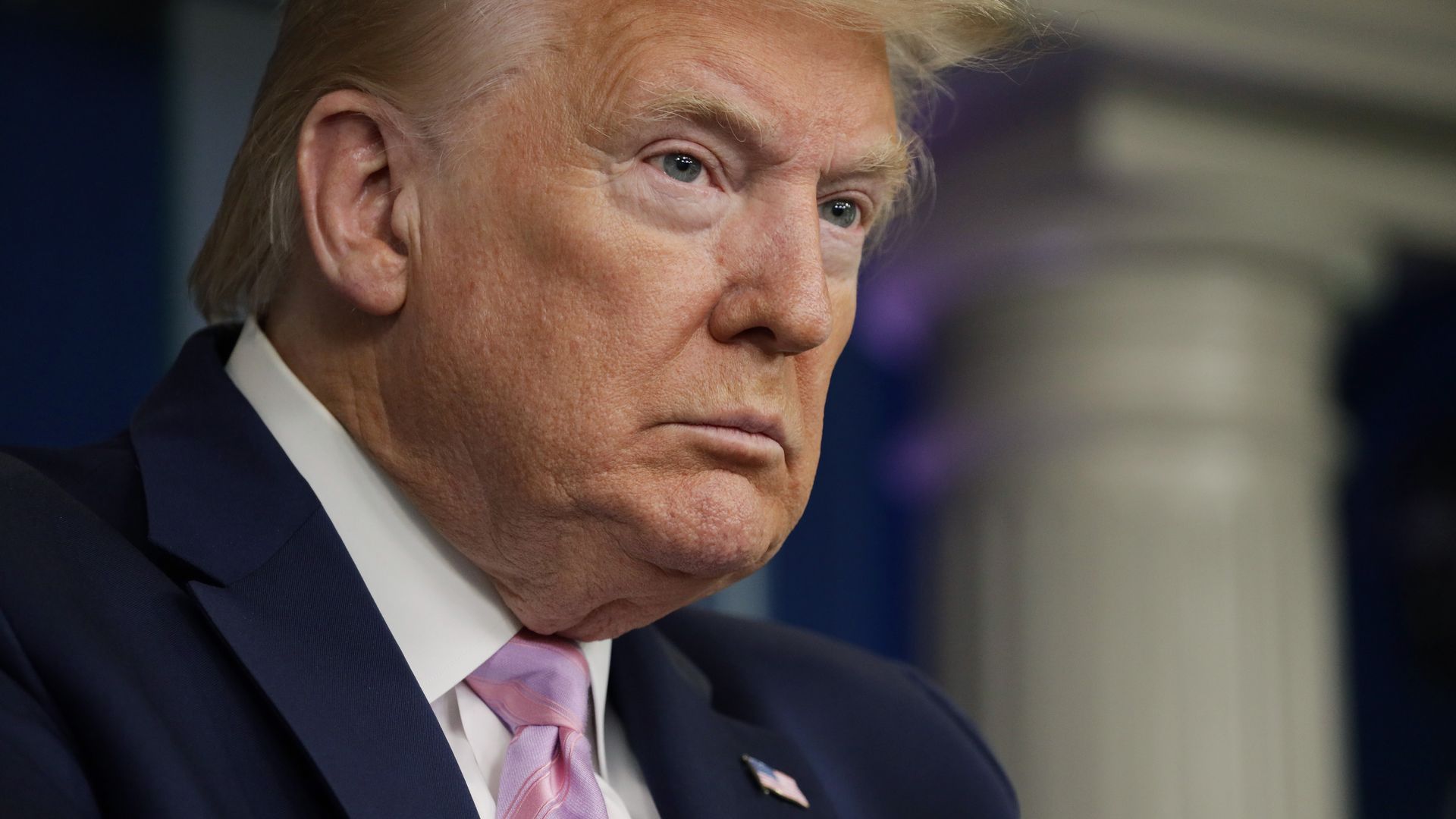
President Trump was informed in late January of a memo from White House economic adviser Peter Navarro that warned the novel coronavirus could kill up to half a million Americans and cost trillions of dollars, the New York Times reports.
Why it matters: Trump has repeatedlydenied seeing January and February memos that Navarro sent, while insisting he did "more or less" what his adviser suggested by banning non-U.S. citizens from traveling from China effective Feb. 2.
Niche activities like marble racing, table tennis and Swedish trotting are gaining popularity among gamblers forced to drop mainstream sports due to the coronavirus, the Financial Times reports.
Why it matters: Sports betting, which was set for a banner year before the COVID-19 crisis, is expected to take an 11% hit in overall gambling revenue this year, per estimates from H2 Gambling Capital.
Families and communities around the globe are adapting their religious observance of Passover and Holy Week to the global pandemic that has put half the planet's population on lockdown.
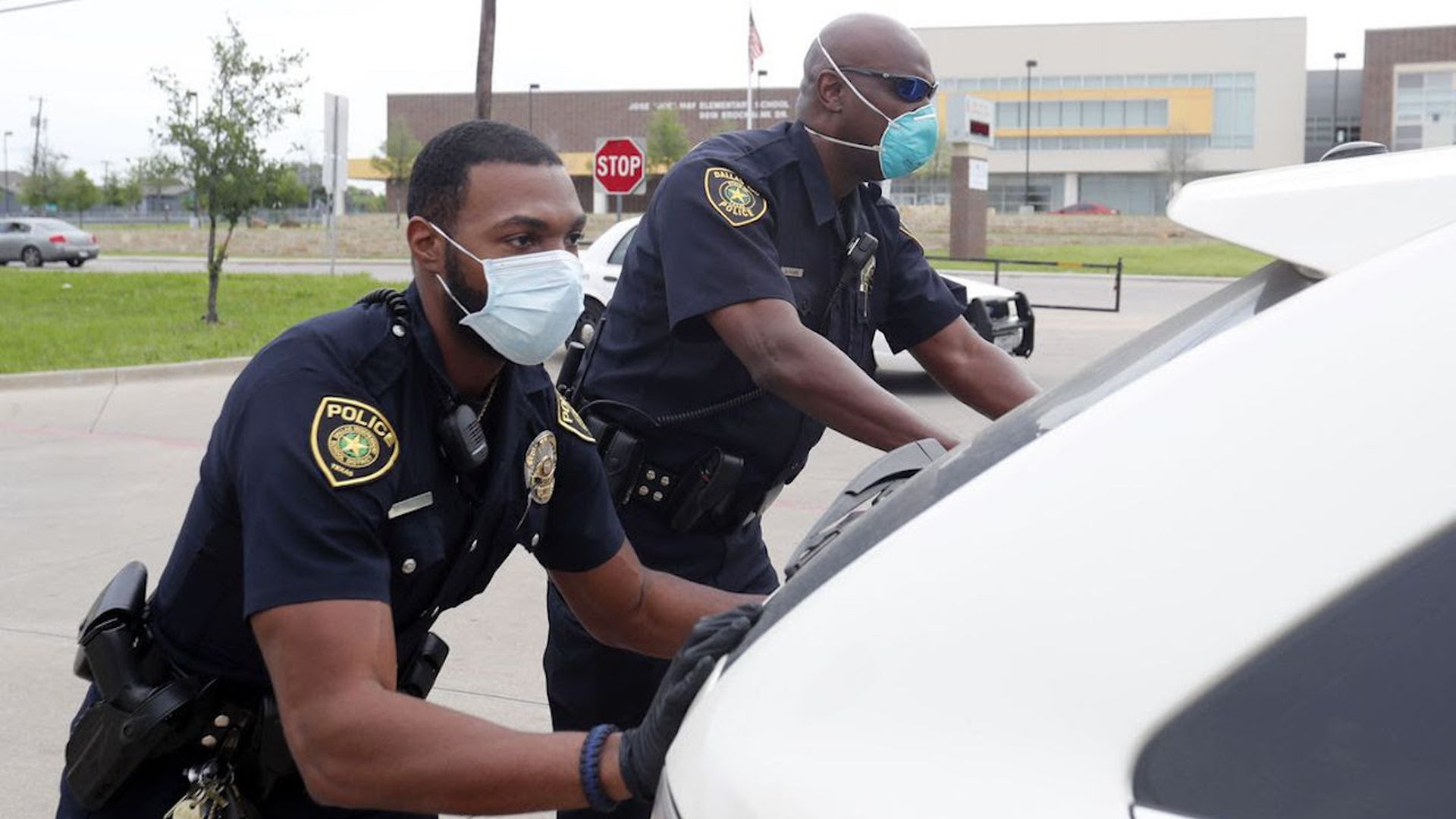
Driving the news: Police are taking extra efforts to enforce social distancing over Easter weekend, as officials say the practice is beginning to flatten the COVID-19 curve in crucial areas across U.S. and Europe.
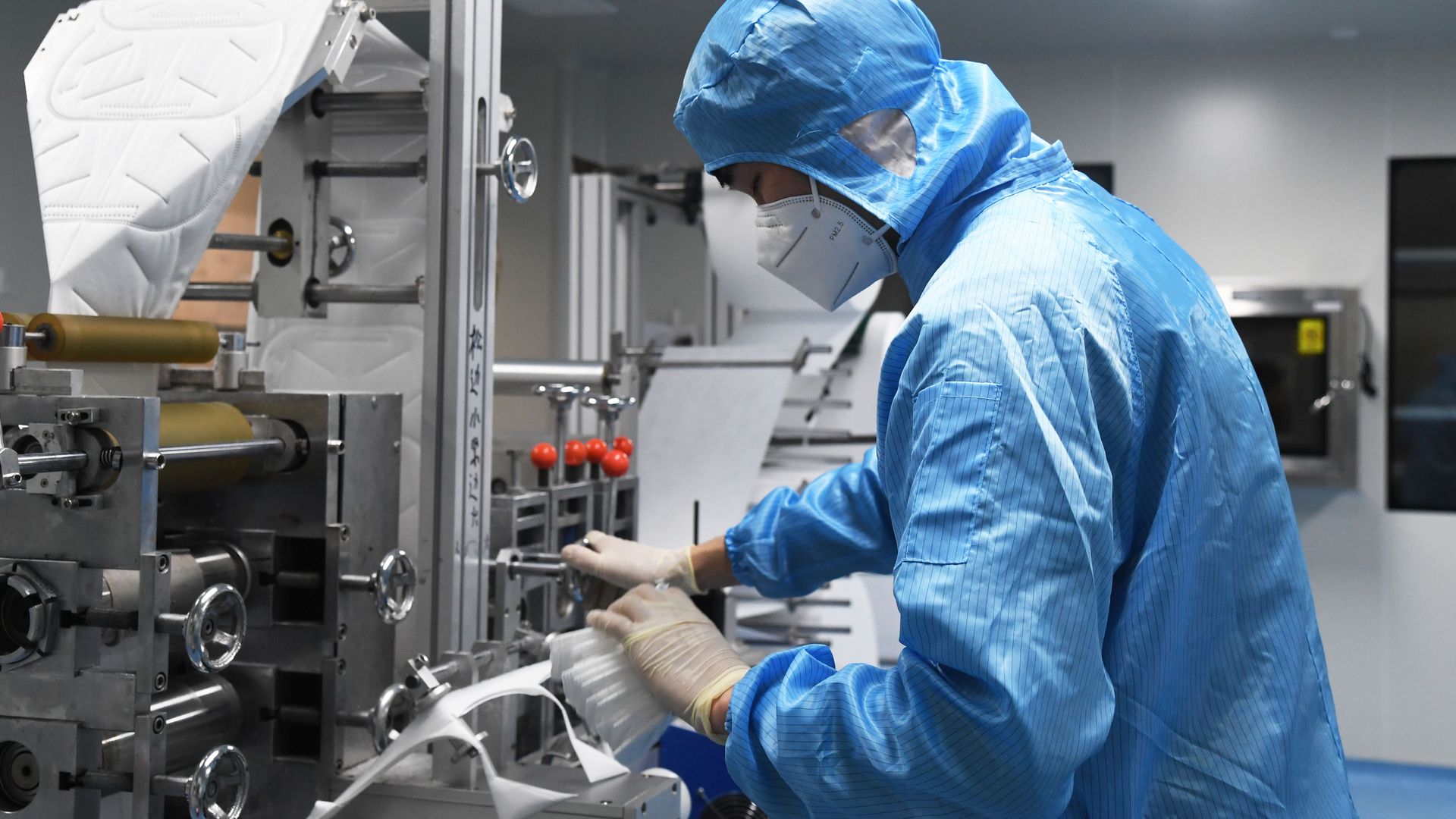
The Pentagon plans to award $133 million to companies to ramp up domestic production of more than 39 million N95 face masks, the Department of Defense announced Saturday.
Why it matters: The federal government began the process of deploying 90% of its stockpiled medical equipment this week to fight the coronavirus pandemic — which isn't enough to meet current state demands.
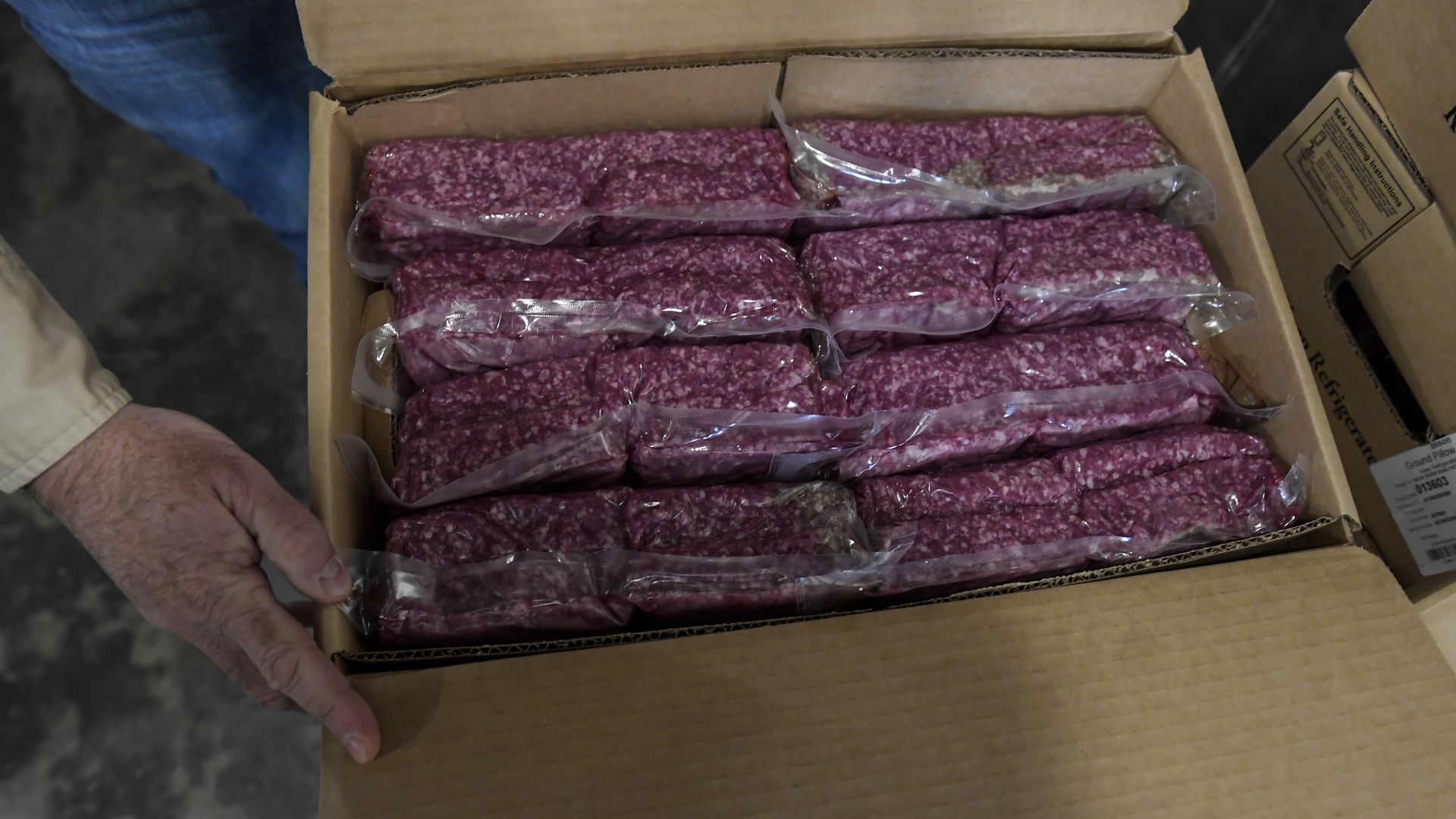
Hundreds of workers at meat plants across the United States have reported they contracted the coronavirus this past week, Bloomberg reports.
Why it matters: Concerns over worker safety continue to rise across the country, but the uptick in confirmed cases also raises questions about the fragility of the food supply chain.
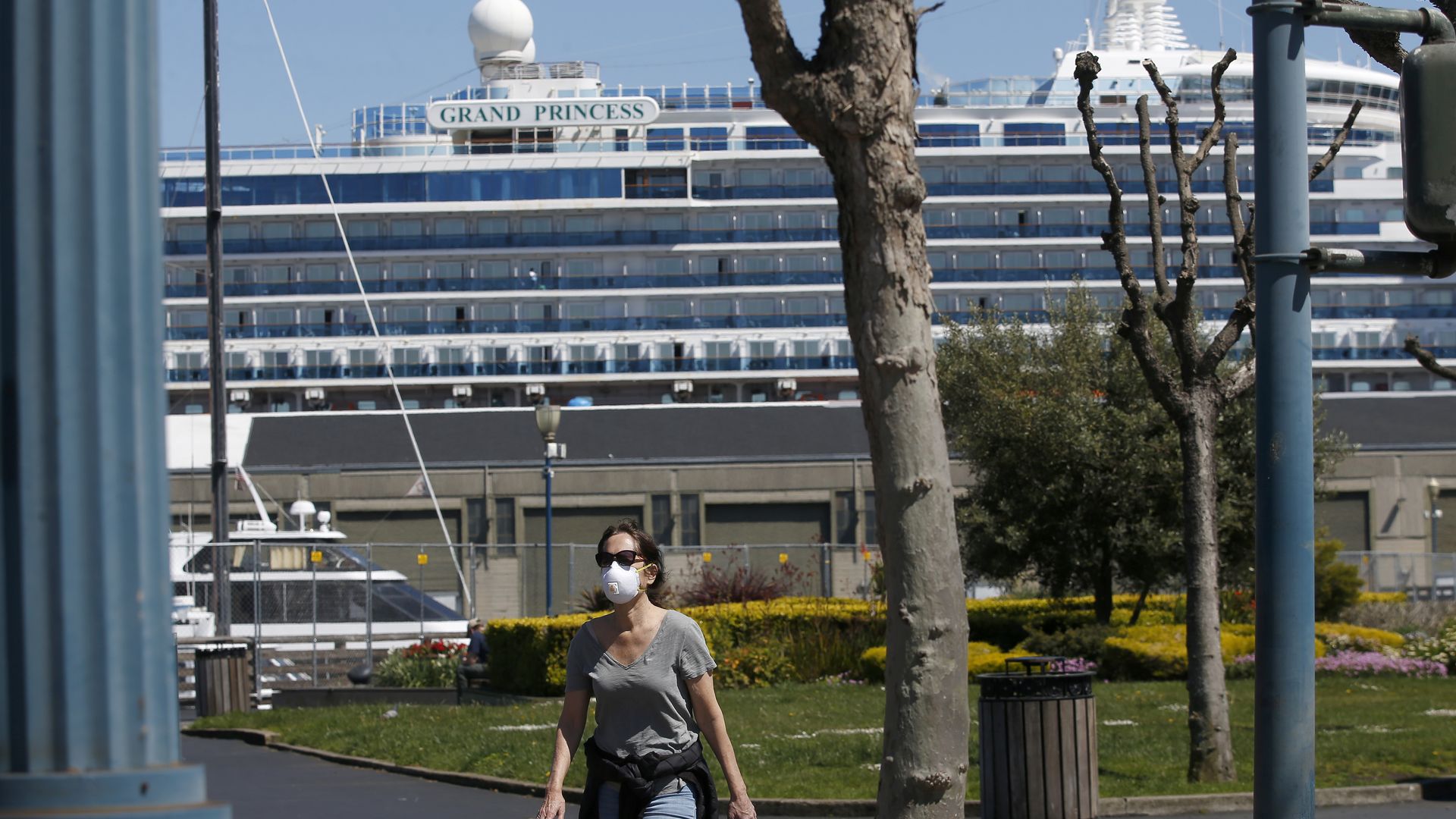
Bookings for 2021 cruises have risen 40% compared to 2019 on CruiseCompete.com in the last 45 days, The Los Angeles Time reports.
Why it matters: The coronavirus outbreak has left dozens of ships stranded at sea and unable to dock over fears. International cruise lines have had viral outbreaks nine to 12 times a year for the last 5 years, according to the Centers for Disease Control and Prevention.
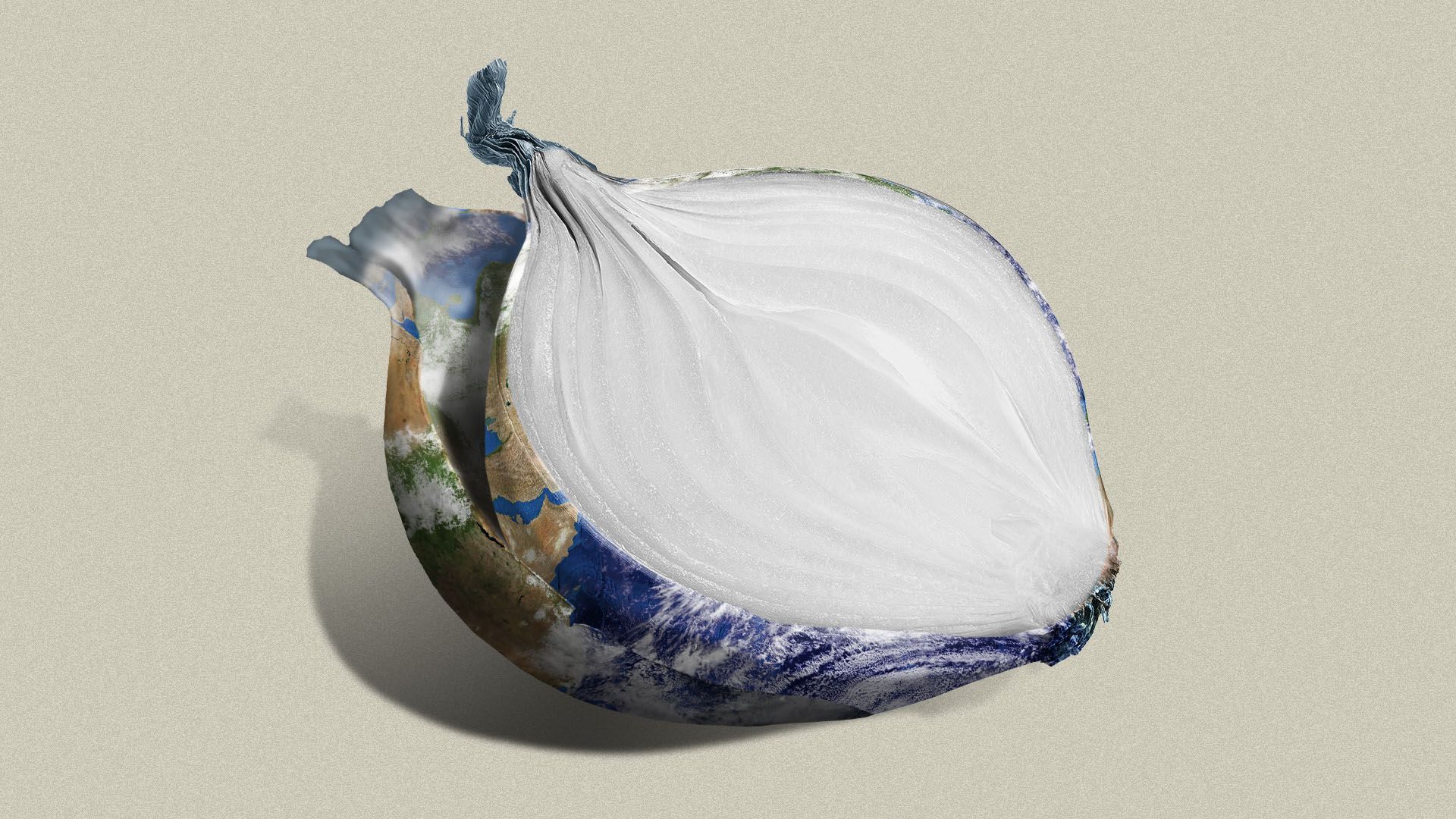
The journey from field to plate has been interrupted in our locked down world.
Why it matters: With some crops rotting in fields and others subject to export bans, the coronavirus crisis could cause shortages in richer countries and hunger in poorer ones.
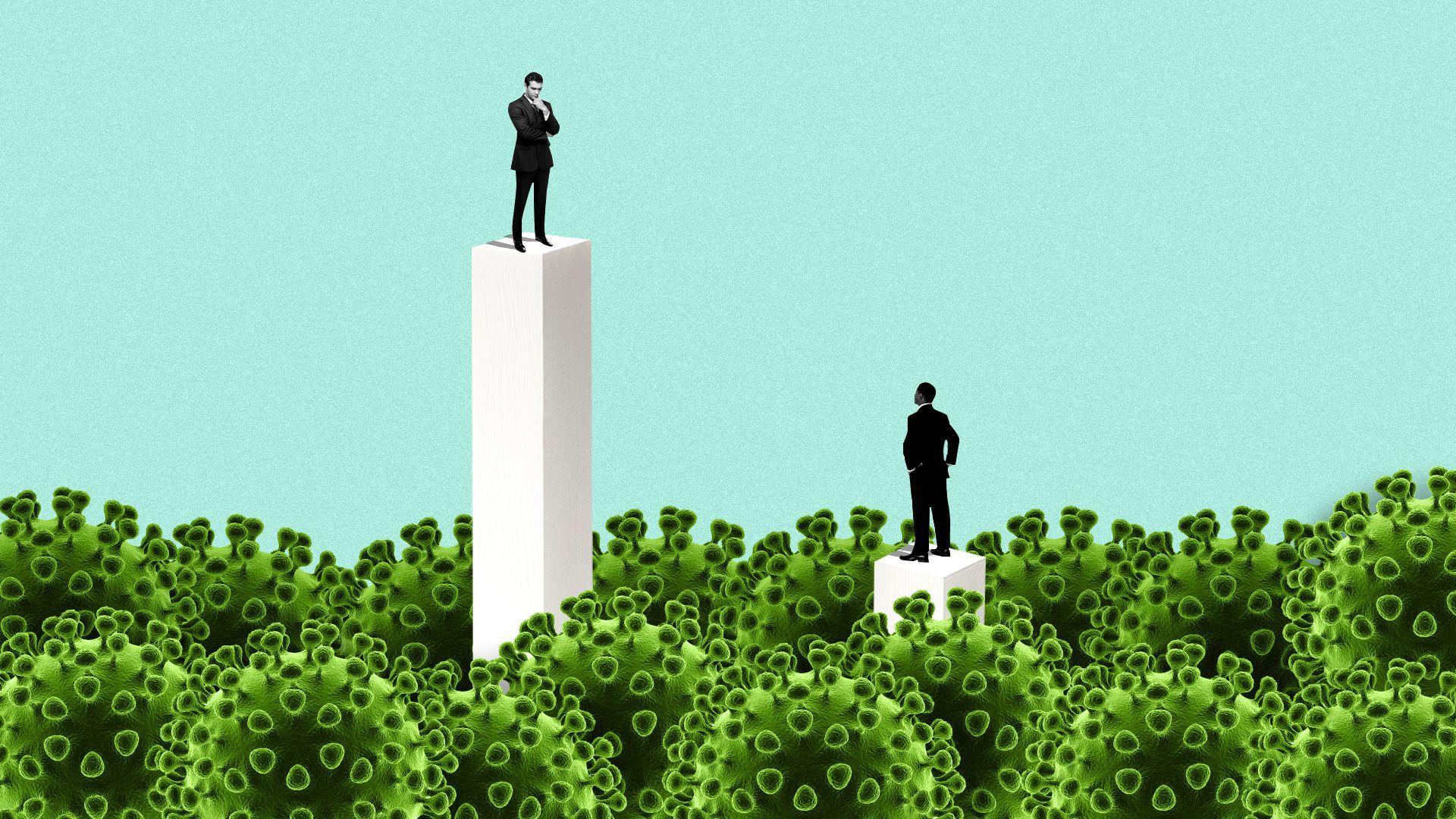
America is facing what feels like a Darwinian moment where the strong in business, wealth and health are more likely to survive, while many others will sadly wither.
Why it matters: The pandemic is exposing — and deepening — many of the nation's great divides.
Drugmaker Gilead is set to release clinical trial data in the next couple of weeks for a potential coronavirus treatment — the next big benchmark in a breakneck race to develop a drug that will help arrest the global pandemic.
Why it matters: The only way to truly get back to normal is through a treatment or, ideally, a vaccine. And the World Health Organization has said Gilead's drug, called remdesivir, is the "most promising candidate."
As the coronavirus continues to spread throughout the U.S., Axios is answering readers' questions about the pandemic — how it spreads, who's at risk, and what you can do to stay safe.
What's new: This week, we answer questions on exercising outside, safely doing laundry, soaps and disinfectants, and the pneumonia vaccine.
Many L.A. residents, including those over 60, can have their groceries delivered by taxi free of charge. In Smyrna, Georgia, police officers are dropping off groceries.
Why it matters: Senior citizens, people with disabilities, and people with compromised immune systems face additional challenges in safely getting groceries during this coronavirus pandemic, and some communities are redirecting resources to deliver necessities.
Dr. Anthony Fauci, director of the National Institute of Allergy and Infectious Diseases, has maintained his position through six administrations by emphasizing facts and candor in his conversations with politicians, the New Yorker's Michael Specter reports.
Why it matters: "Americans have come to rely on Fauci’s authoritative presence," Specter writes. "Perhaps not since the Vietnam era, when Walter Cronkite, the avuncular anchor of the 'CBS Evening News,' was routinely described as the most trusted man in America, has the country depended so completely on one person to deliver a daily dose of plain talk."
Police around the globe are taking extra efforts to enforce social distancing over Easter weekend.
Why it matters: Officials say that mitigation efforts like social distancing are beginning to flatten the coronavirus curve in crucial areas across U.S. and Europe, like New York and Lombardy in Italy. Large Easter Sunday gatherings would mean some of that crucial progress is squandered.
People are able to see blue skies for the first time in years as India's three-week coronavirus lockdown has drastically cut air pollution across the country, The Washington Post writes.
Why it matters: India is notorious for its air pollution — among the worst in the world. The speedy drop in the level of particle pollution by nearly 60% in capital city New Delhi has surprised experts, but the clean air has come at a cost for the country.
Chicago drug arrests are down 42% in the weeks since the city shut down — a trend playing out globally as cities report stunning crime drops, AP reports.
The big picture: Even among regions that have the highest levels of violence outside a war zone, fewer people are being killed and fewer robberies are taking place.
The U.S. reported the highest coronavirus death toll in the world as of Saturday, per Johns Hopkins data. 18,860 Americans have died.
The big picture: More than 1,000 people in the U.S. have died every day from COVID-19 since April 1. China has reported fewer infections and deaths, but its reporting is encountering considerable skepticism.
The Food and Drug Administration has released new guidelines on best practices for supermarkets and food retailers with an emphasis on protecting employees in the workplace.
Why it matters: The FDA's new guidelines come days after major supermarkets started reporting their first employee deaths since the coronavirus outbreak began, per The Washington Post. Some critics blame major chains for not allowing workers to use protective gear from the get-go.
Gov. Gavin Newsom offered President Trump praise about the federal government's efforts in helping California combat the coronavirus pandemic.
What Newsom told CNN: "Every single direct request that [Trump] was capable of meeting, he has met. We have the USNS Mercy in California because of his direct intervention and support."
Chinese shipments of N95 respirators, ventilators, hospital gowns and other products face new delays after the government announced Friday it will perform more quality inspections, The New York Times reports.
Why it matters: Numerous complaints have emerged in Europe about problems with medical supplies from China, the world's lead manufacturer of medical supplies. Exporting these goods is key during the coronavirus pandemic. China has not indicated how long the quality testing might take, per the Times.
The coronavirus may be a defining experience for Generation Z that shapes its outlook for decades to come — disrupting its entry to adulthood and altering its earning potential, trust in institutions and views on family and sex.
The big picture: Demographers have observed lasting impacts from national crises — like the AIDS epidemic, 9/11 and the Great Recession —on the political, economic, health and societal aspects of Americans who came of age at the time.
Battelle, an Ohio nonprofit research and development firm, has employees working to disinfect thousands of face masks used by health care workers during the coronavirus pandemic, The New York Times reports.
Why it matters: There is a shortage of personal protective equipment, even as companies from fashion and tech industries are stepping up to manufacture masks.