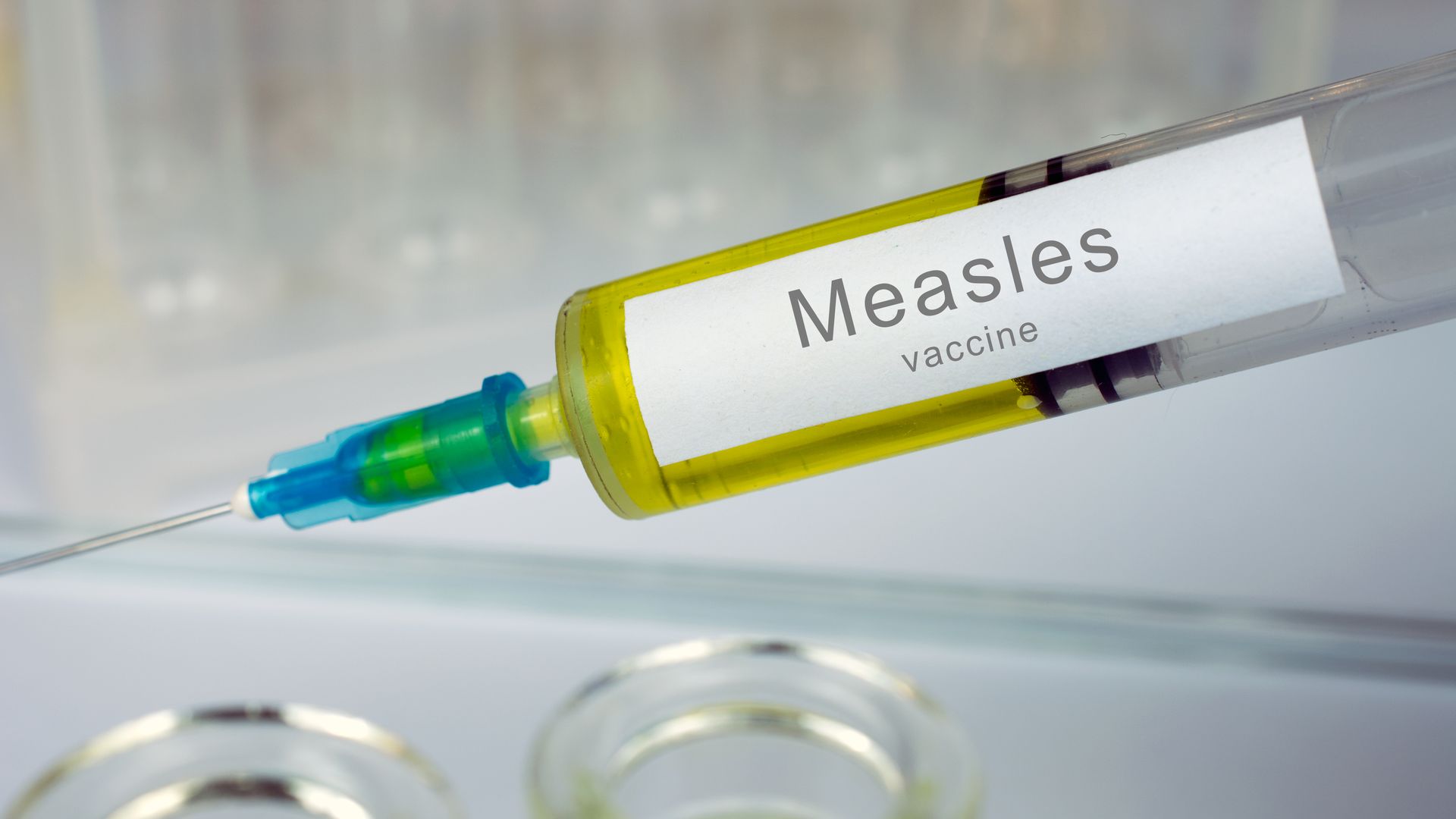
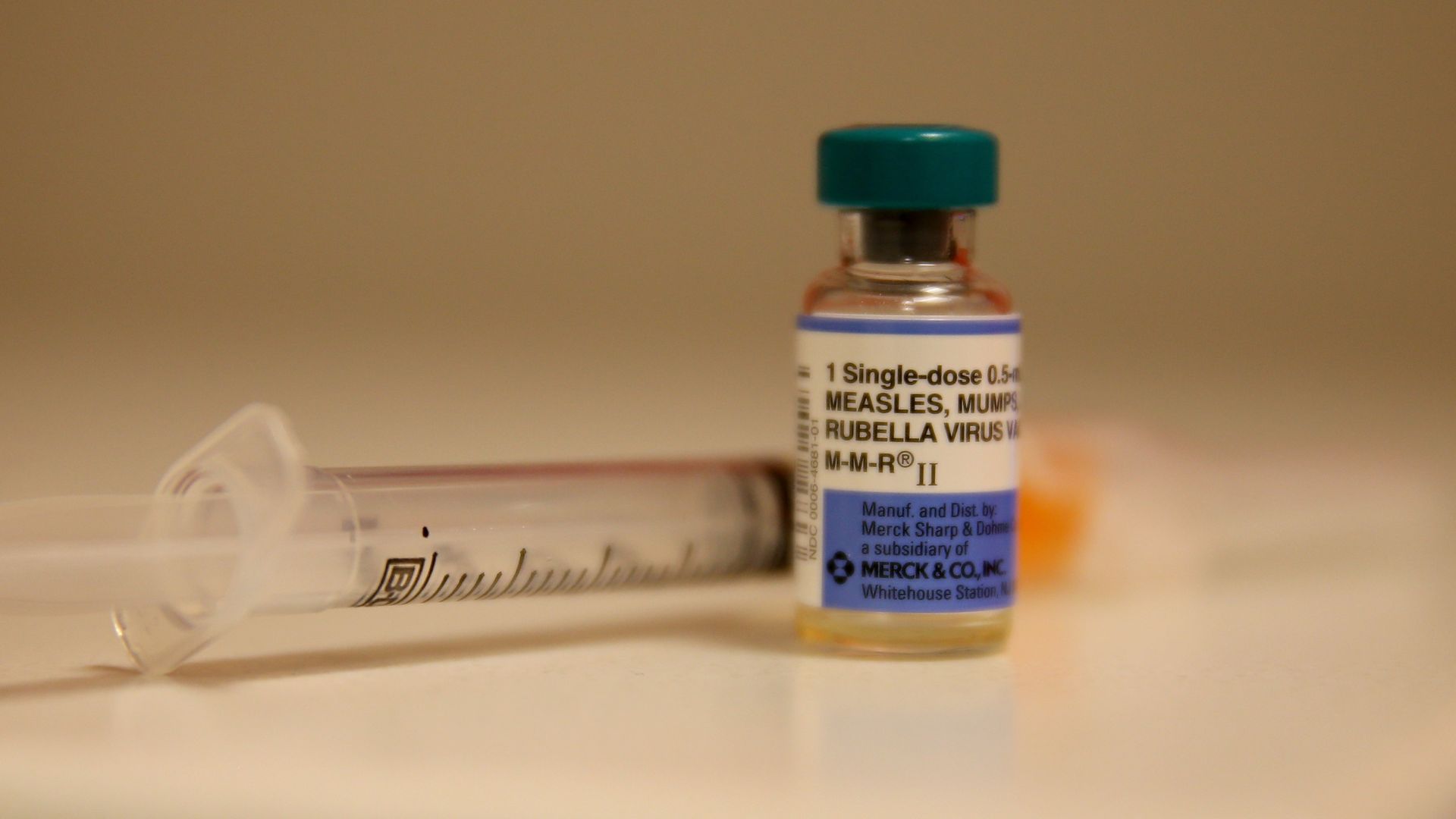
Dan talks with Axios Science editor Andrew Friedman about the growing number of measles cases in the U.S., nearly 20 years after the disease was officially eradicated, including the role of anti-vaxxers and what the Trump administration should be doing — but isn't.
It’s not unusual for work to be part of the equation in addiction recovery — a job can provide access to health insurance, and some business owners want to help. But a company called the Cenikor Foundation is turning recovery into unpaid labor, often in unsafe conditions.
Driving the news: Reveal, a project of the Center for Investigative Reporting, pulled back the curtain on Cenikor's practices, which many experts say are likely illegal.
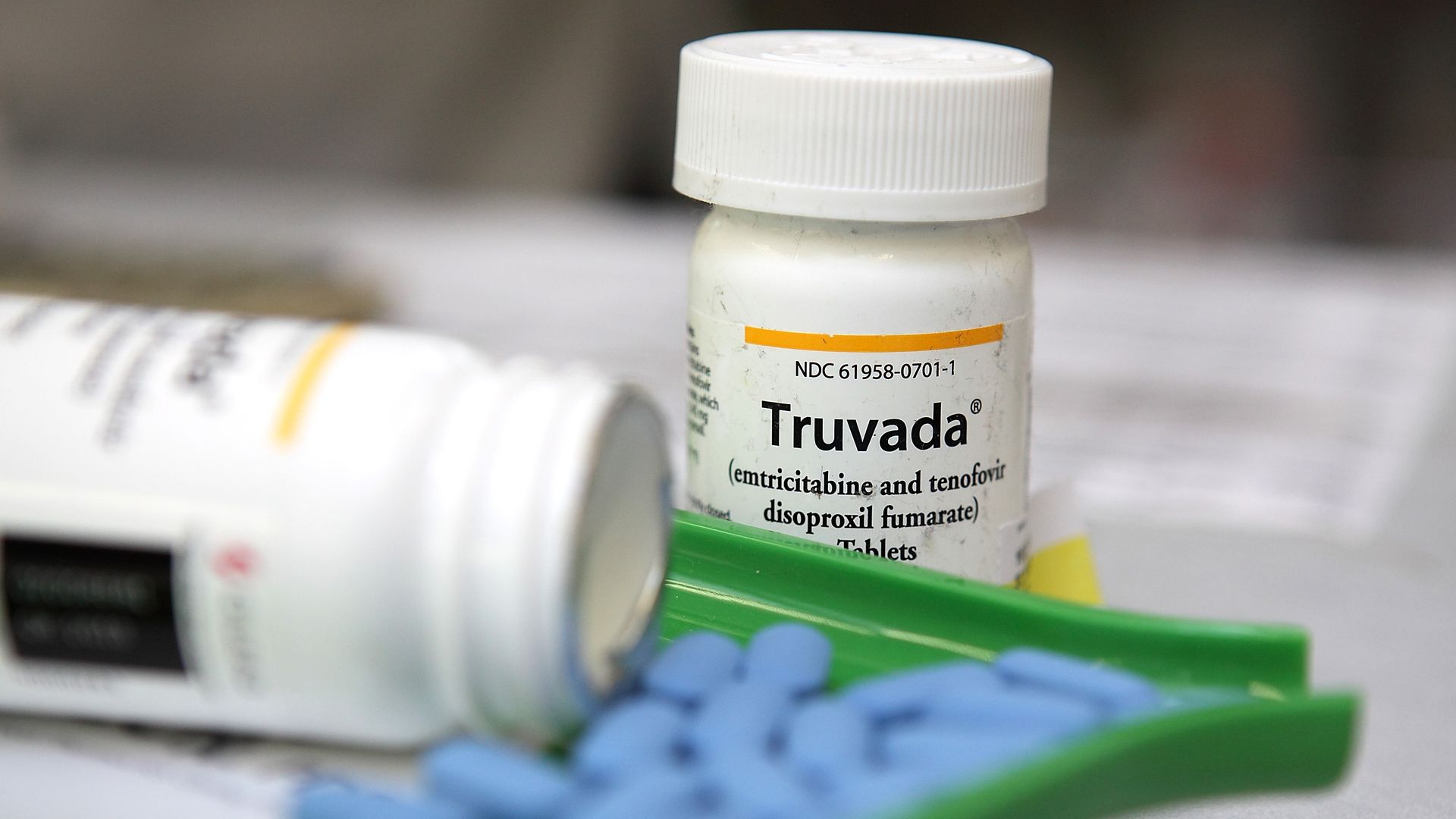
The Justice Department is reviewing the government patent for use of an HIV prevention drug, potentially signaling that it's considering action against the drugmaker that sells it, the Washington Post reports.
The bottom line: The drug, Truvada, is owned by Gilead, which sells it for between $1,600 and 2,000 a month.
Measles — declared eradicated in the U.S. in 2000 — has roared back at a record pace this year.
Why it matters: Most Americans have no firsthand experience with measles and that lack of familiarity, along with the online success of the anti-vaccine movement, is giving a deadly but easily preventable virus an opening to spread.
The Trump administration is set to propose new rules that would roll back health care protections for transgender people, making it easier for doctors, hospitals and insurance companies to deny them coverage by invoking religious reasons, reports the Washington Post.
Details: The administration signaled its intention earlier this month in an ongoing legal challenge in Texas, which seeks to invalidate the Obama-era, anti-discrimination rule that listed gender identity and transgender people as protected classes. Trump’s Health and Human Services Department said in a court filing that the word "sex ... does not refer to gender identity."
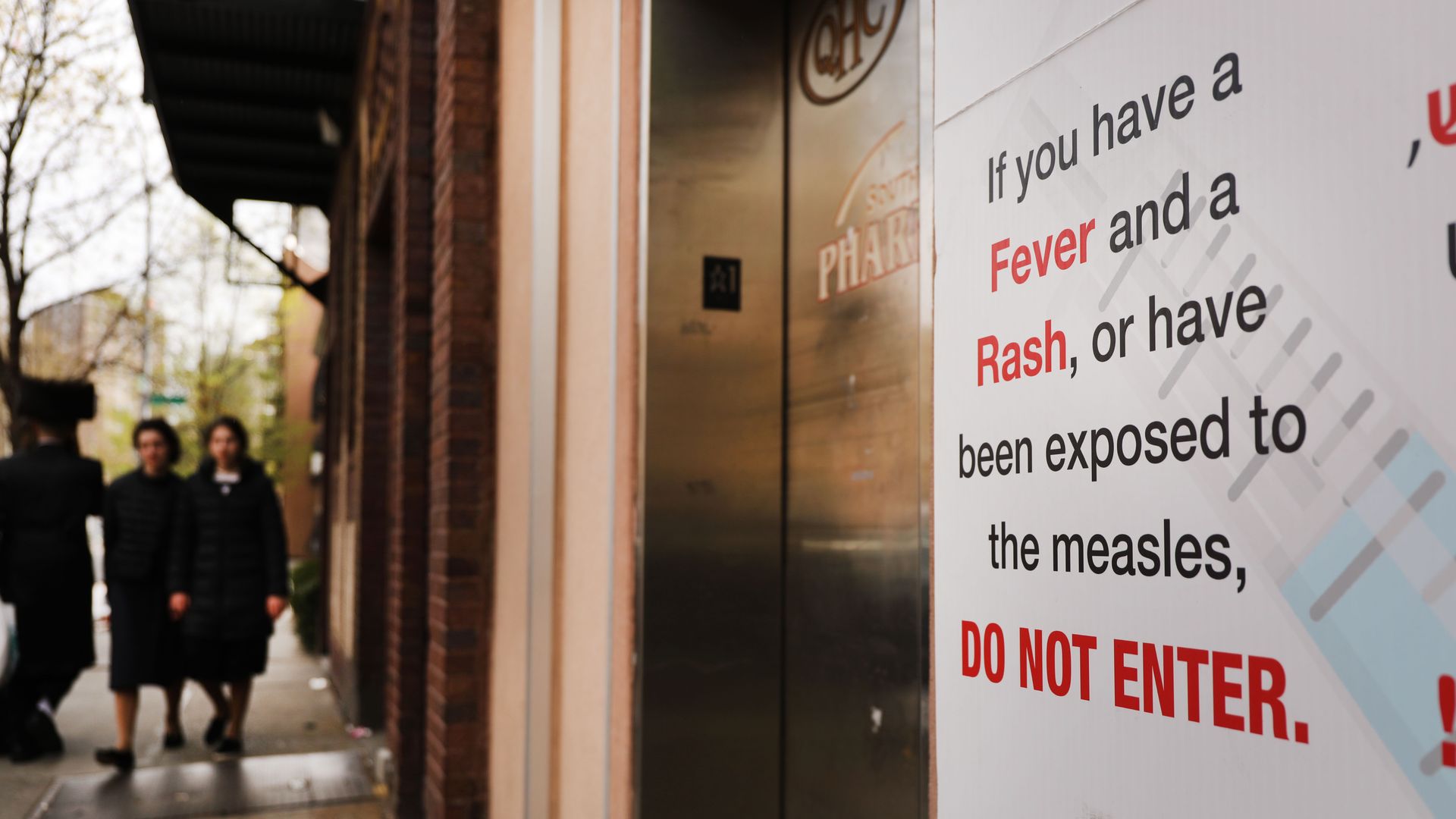
Measles outbreaks in 22 states so far in 2019 have now eclipsed levels seen in any year since the virus was declared eradicated in 2000, according to the Centers for Disease Control and Prevention.
Details: The CDC released a statement on Wednesday afternoon saying the U.S. has seen 695 measles cases so far in the year, which beats the previous record of 667 cases during 2014. "The high number of cases in 2019 is primarily the result of a few large outbreaks – one in Washington State and two large outbreaks in New York that started in late 2018," the CDC said.
Hundreds gathered in Sacramento to oppose legislation that would allow California state public health officials to decide which children can skip vaccines before going to school, taking the power to grant exemptions away from local doctors, the AP reports.
Details: Democratic state Sen. Richard Pan, the primary sponsor of the bill, said the legislation would help prevent future outbreaks, according to AP. Opponents of the bill argue that it takes away parental rights and isn't necessary for preventing outbreaks. There have been at least 20 confirmed cases of measles in California this year.
The Centers for Medicare & Medicaid Services issued a proposed rule yesterday addressing Medicare hospital payments in 2020, including how hospitals will be reimbursed for CAR-T therapies.
The big picture: These are medical procedures that use a patient's own cells to fight cancer — a treatment that also comes with a high price tag.
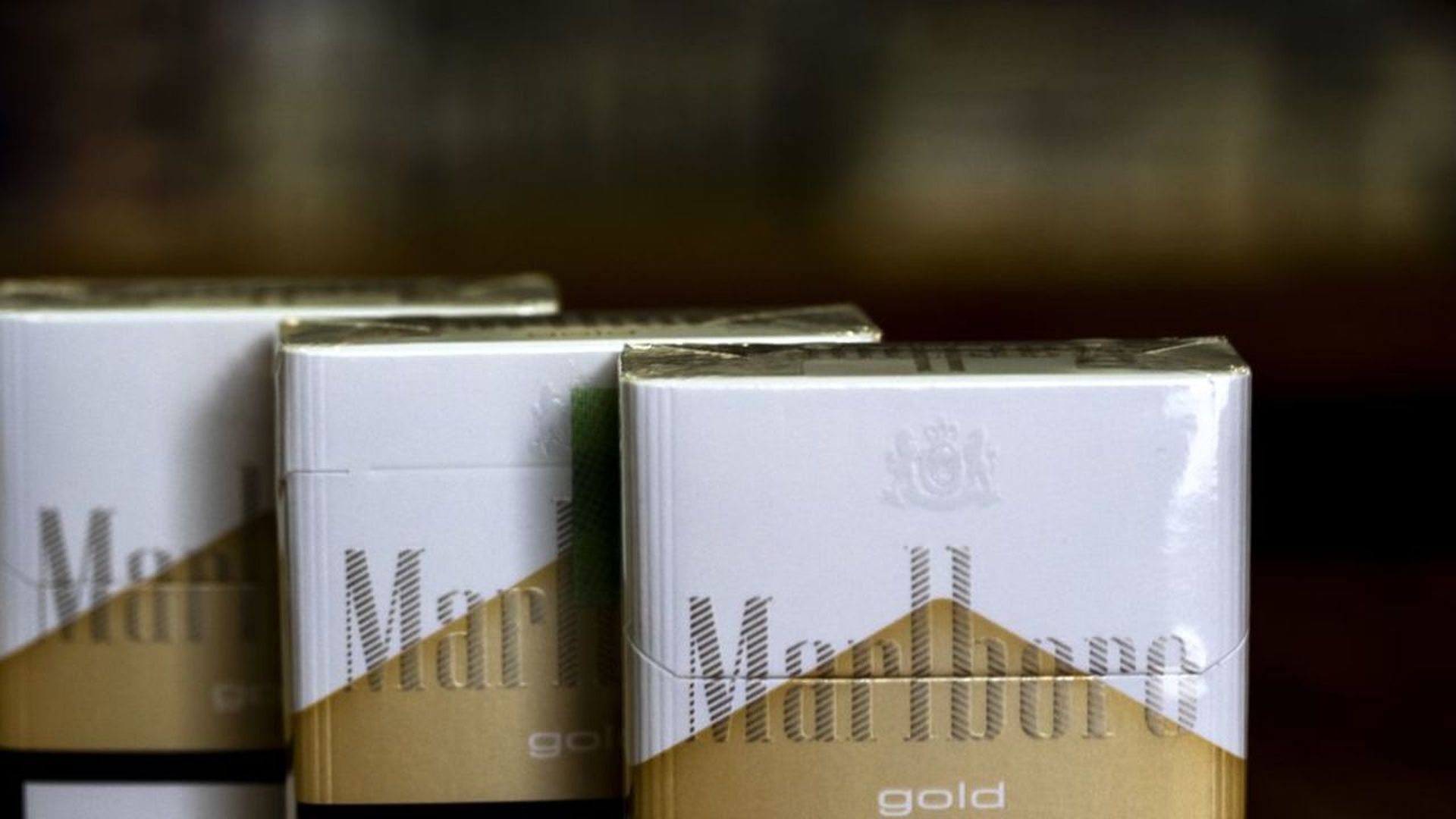
Walgreens announced yesterday that it won't sell tobacco products to anyone younger than 21, beginning in September — a response to the FDA's crackdown on its sales to young people, Forbes reports.
Why it matters: The rise in teen vaping has alarmed public health officials, prompting strong regulatory action and, increasingly, support of a higher smoking age in response.
Health officials say that college students' close quarters, and their status as the age group least likely to be vaccinated, leave their campuses vulnerable as breeding grounds for the current measles outbreak, the L.A. Times reports.
Why it matters: People in this age group were "infants in 1998 when British scientist Andrew Wakefield published a now discredited paper claiming that vaccines cause autism," leaving a large pool of people in their early 20s, part of what's known as the 'Wakefield generation,' more vulnerable to infections.
Expensive prescription drugs that treat complex conditions often are dispensed through specialty pharmacies, and that "specialty" label is lucrative — especially when those pharmacies are owned by the same companies that manage drug benefits.
Why it matters: State Medicaid programs and private insurance plans are paying steep markups on specialty drugs, according to industry analysts. Those costs are passed on through the taxes and premiums we all pay.
Some e-cigarette products popular in the U.S. are contaminated with bacterial and fungal toxins, Harvard T.H. Chan School of Public Health researchers found in tests for a new study.
Details: Researchers tested 75 products, including single-use cartridges and refillable e-liquids — 27% contained traces of endotoxin, a microbial agent found on Gram-negative bacteria, and 81% had traces of glucan, found in most fungi. Endotoxin concentrations were higher in fruit-flavored products, indicating raw materials used in flavor production may be a contamination source.




/2019/04/24/1556138450331.gif?w=3840)