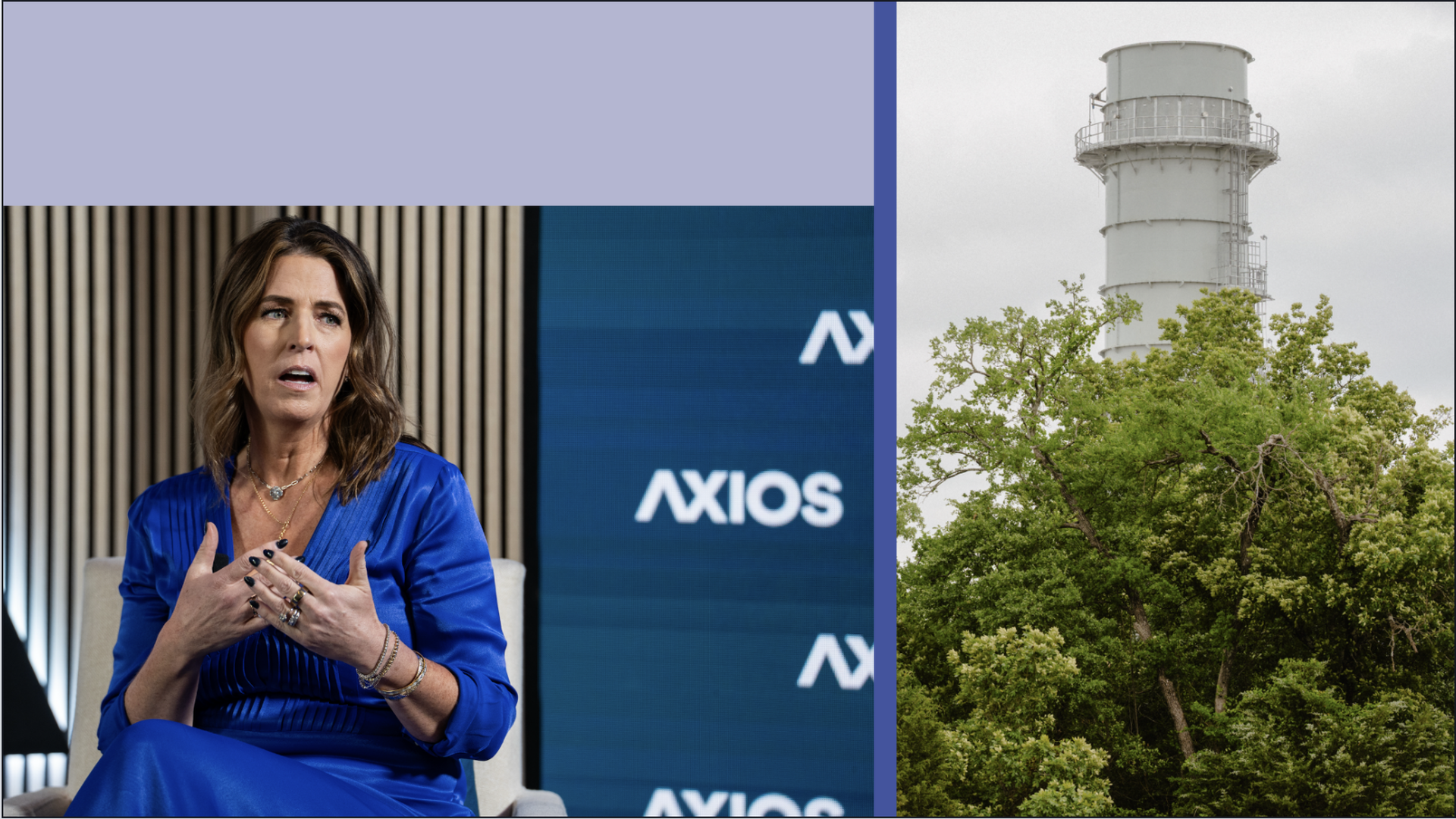
Thursday's energy & climate stories

Axios House: The business case for taking water seriously
NEW YORK — Water has moved beyond solely a sustainability conversation to become a business strategy.
Why it matters: Industries such as food and beverage, manufacturing and agriculture need a union between responsibly sourced supplies and ongoing sustainable water practices.
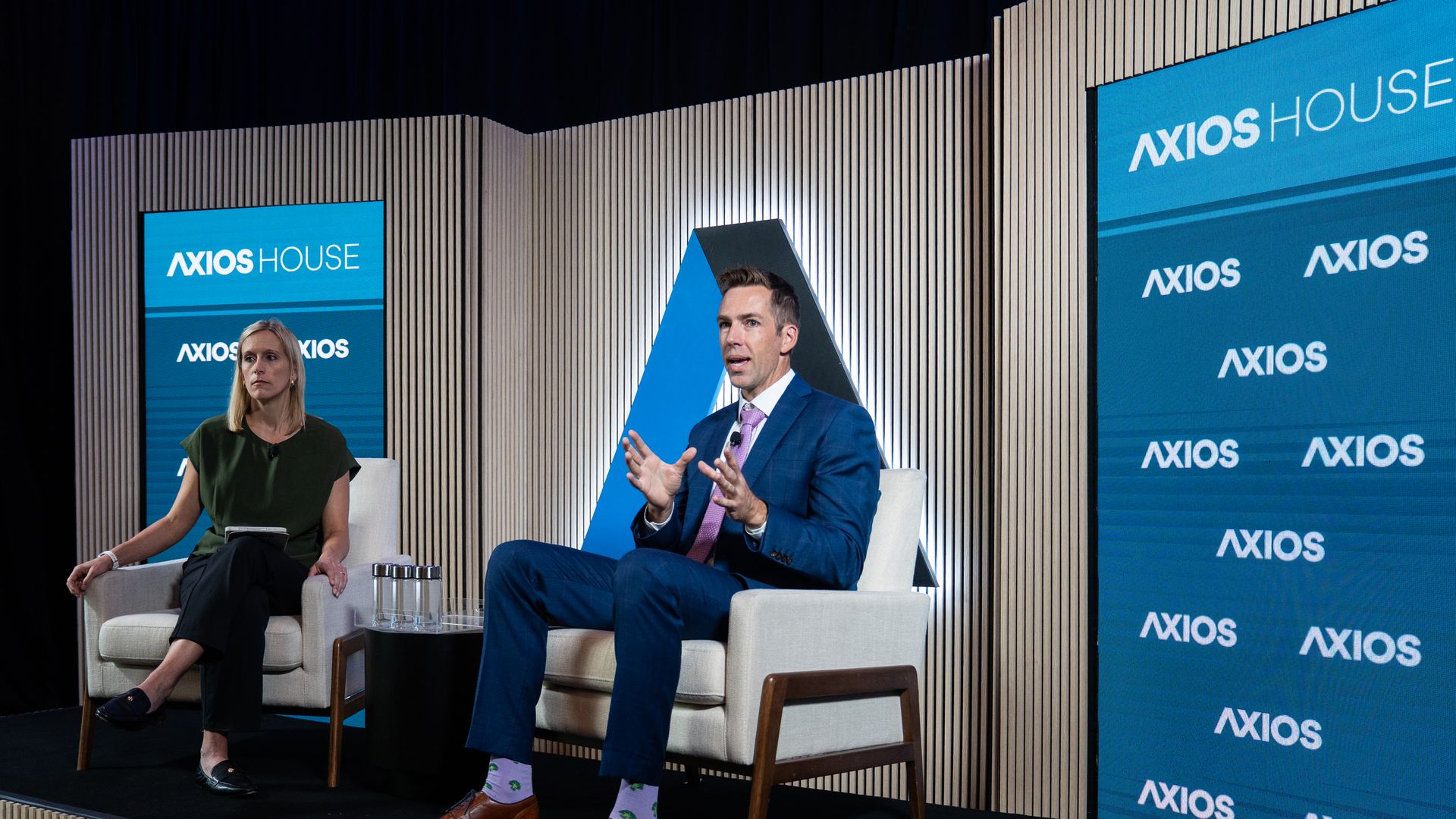
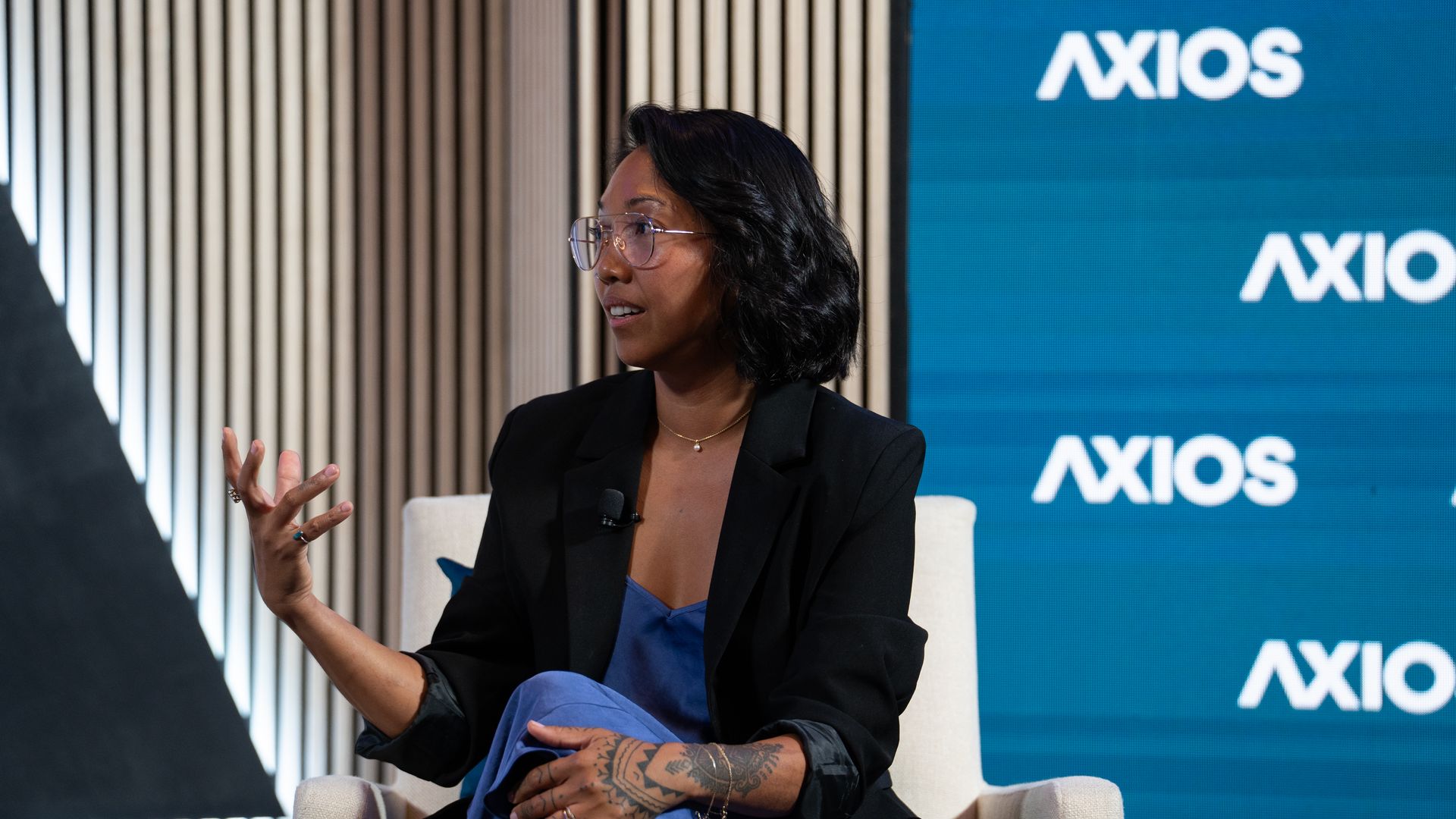
Axios Pro Climate Deals reporter Alan Neuhauser spoke with Jim Andrew, executive vice president and chief sustainability officer at PepsiCo, and Ria Montes, executive chef at Fish Shop, at Axios House at Climate Week. Suntory sponsored the Sept. 22 event.
Zoom in: Because Montes wants the freshest fish quickly for her D.C. restaurant, she chooses to source it from the North Carolina-to-New York area.
- As water ecosystems change, the availability and location of certain fish — like rockfish, which she said are starting to migrate farther north — change their migration patterns and seasonality.
- Warming waters caused tuna and mackerel, typically available in the summer, to be sourced in her defined access area in early spring.
What they're saying: Sustainability can come at a premium for restaurants, which factor into their menu pricing costs like diesel for shipping food and supplies.
- "We do little things like only getting whole fish in and, sure, is it more on labor? Is it more time-consuming to butcher a whole fish versus just getting a filet, which is what everybody wants?" said Montes. "Absolutely, but in this way, we can utilize the whole fish instead, and that way we have more insurance on the quality of the fish as well."
Zoom out: For a large food and beverage company like PepsiCo, water scarcity is a business risk.
- Water is used as a beverage ingredient, and since PepsiCo is 60% a food company, it also needs water to grow crops like oats, potatoes and corn.
- Additionally, water is vital for factory sanitation and clean packaging, Andrew said, adding that membrane bioreactors take the water used at 21 plants and make it drinkable.
What's next: When looking to enter a new market, a water risk assessment determines the viability of this shared resource, he said.
- "Sustainability at scale is a team sport," said Andrew.
Content from the sponsor's segment:
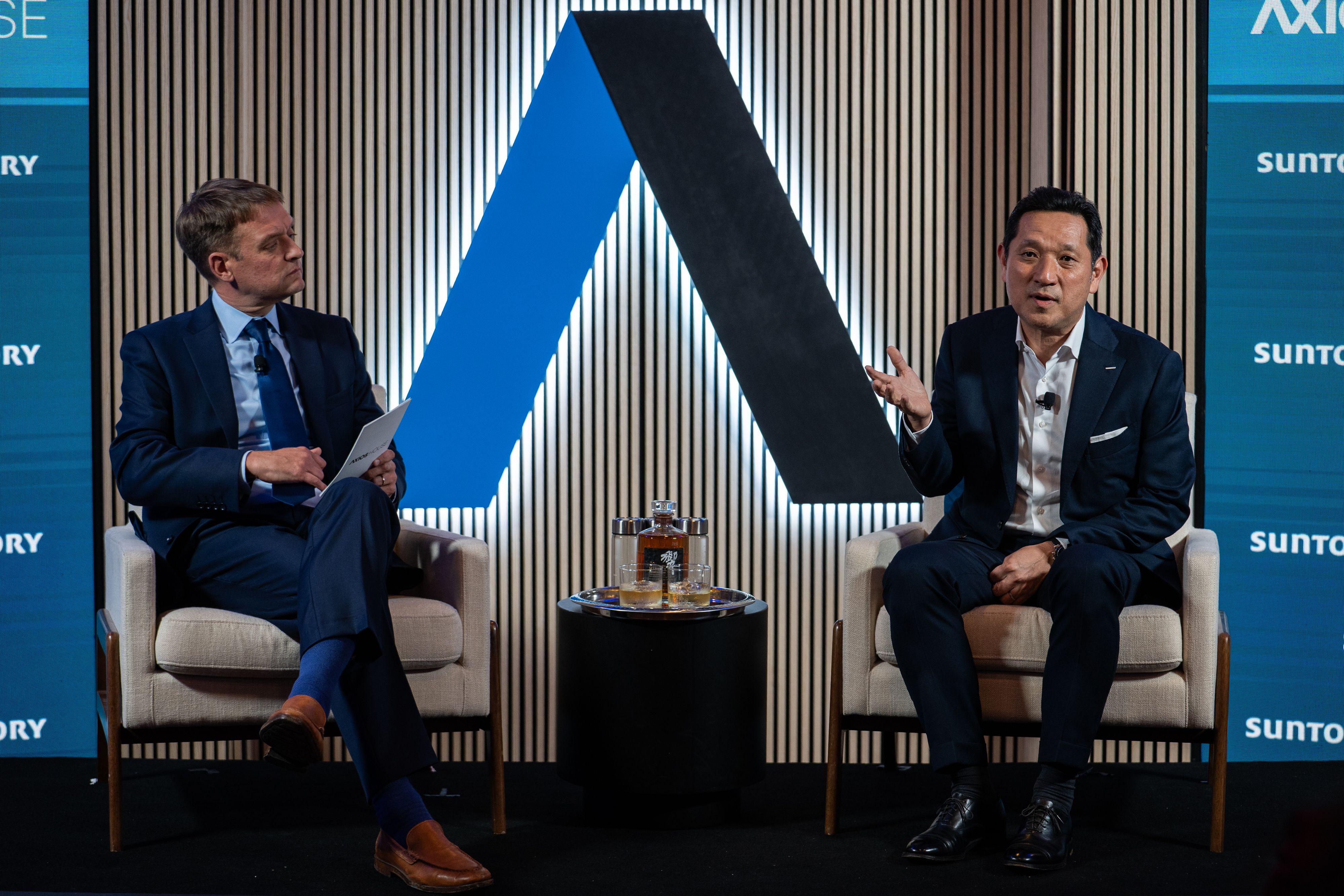
In a View From the Top conversation, Suntory Holdings chief sustainability officer Jun Asaki said collective actions, even involving competitors, are essential when it comes to watersheds, because they are shared.
- "When you realize that we're lacking or [there is] a shortage of water, then it's too late," Asaki said.
Go deeper: Watch the full conversations here.
Axios House: Politics complicates U.S. ambitions in energy race
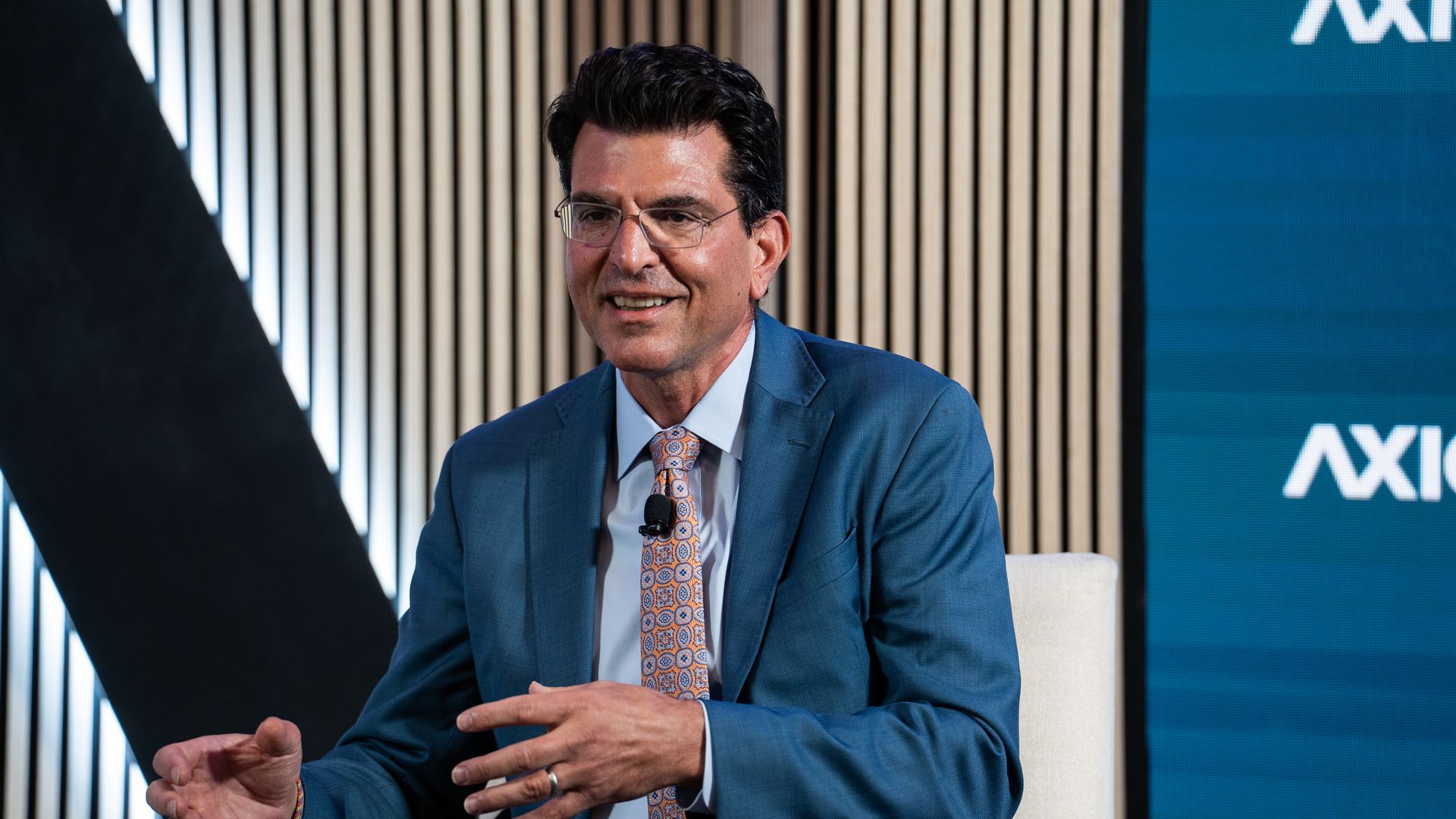
NEW YORK — Politics is an obstacle to the country's competitive energy and climate efforts at a critical time, industry leaders say.
Why it matters: The Trump administration's position that renewables are too expensive has stuck a bipartisan wedge between innovation and progress.
Axios' Amy Harder and Ben Geman spoke with American Clean Power Association CEO Jason Grumet and Commonwealth Fusion Systems CEO Bob Mumgaard at Axios House at Climate Week. Siemens sponsored the Sept. 22 event.
Between the lines: Grumet said that while the clean energy industry has been heavily subsidized, the 2025 GOP federal budget bill that became law phased out Biden-era wind, solar and electric vehicle incentives.
- He said the idea that wind and solar aren't valuable because they don't run around the clock is inaccurate. "The strongest grids are grids that have a significant amount of natural gas, nuclear and renewables."
- Batteries, solar and wind, specifically onshore, are typically the cheapest solutions in most of the country, Grumet said.
State of play: There's an energy boom for electricity because of the AI race, which Grumet called "the best of times and the worst of times."
- "We have the best market fundamentals you could ever have for building clean energy. 90% of the electrons that came on the grid last year were coming from clean sources," he said.
- "It's the worst kind of obstructionist politics that you can imagine in an administration that used to be about not picking winners and losers and letting the marketplace go forward."
Yes, but: Mumgaard said that even if all the tools are in place to fight climate change, innovation would still be critical.
- He compared views of today's fusion energy work to the Wright brothers pushing forward their aviation ideas and designs in spite of naysayers convinced it would never happen.
- "So [CFS' Massachusetts campus] is a full-on facility that you can go and you can push a button and you literally have a star in a bottle, and there is no longer a debate of 'Can you do it?'"
- Knowing that humans can create fusion opens up more options, and "we're talking a year, maybe a little longer, but like that type of time frame" for a Kitty Hawk moment in fusion, he said.
What's next: To be globally competitive, the U.S. has to treat fusion as an energy project with supportive funding, not a science project, said Mumgaard.
- He said China, specifically, has moved beyond academically studying the details of plasma and on to how to make it, build a supply chain for it, construct industrial policy and deployment.
- The U.S. is "the place where the science is, you know, frankly the best," Mumgaard said. "But it's lacking at the policy level."
Content from the sponsor's segment:
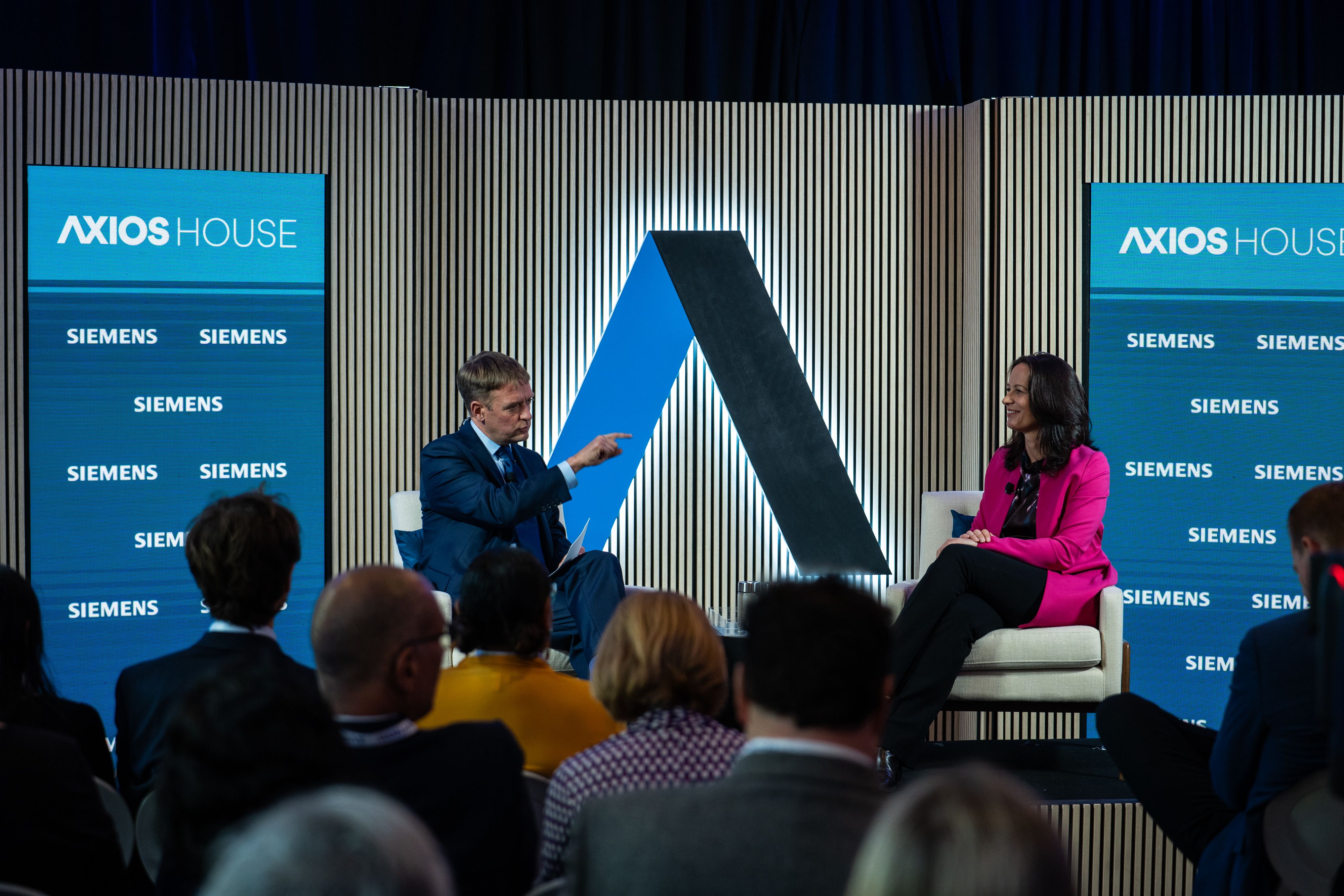
In a View from the Top conversation, Siemens global head of sustainability Eva Riesenhuber said the biggest obstacle when organizations have environmental sustainability goals is calculating the return on investment and bridging the time gap between that investment and the gains.
- "We don't have the time anymore to afford to just optimize for the past," Riesenhuber said. "We need to anticipate the future, and that only goes through software and AI."
Go deeper: Watch the full conversations here.
Axios House: Leaders tackle barriers to water security
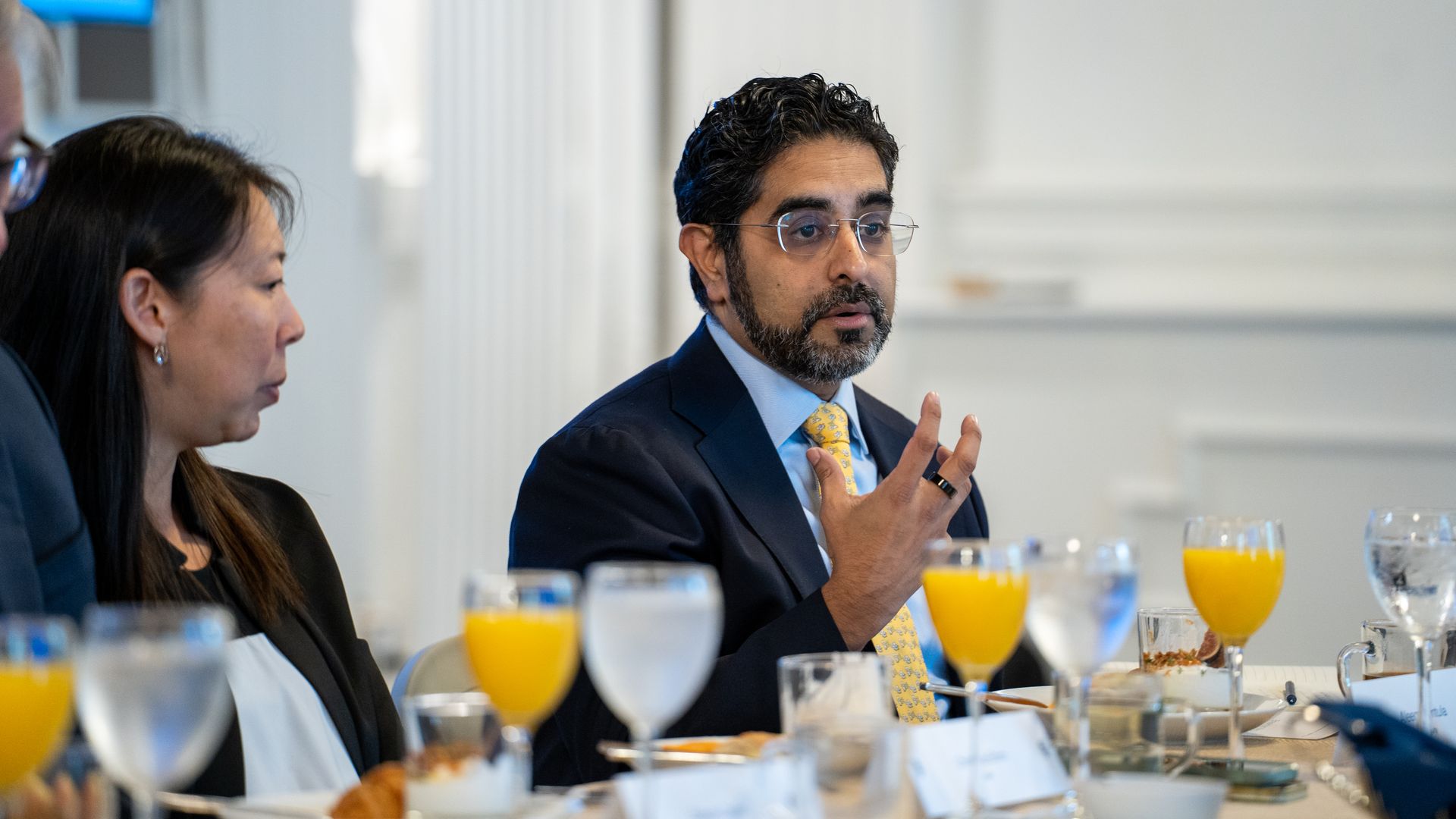
NEW YORK — Access to water depends on reliable infrastructure, sufficient investment, and strategic conservation, leaders said at an Axios House roundtable at Climate Week and the UN General Assembly.
Why it matters: Water has joined energy as a flashpoint in the AI era, and businesses increasingly see it as a factor in whether or not they can grow.
Axios' Ben Geman and Amy Harder moderated the Sept. 23 roundtable discussion. The event was sponsored by Schneider Electric.
5 big takeaways from the conversation:
- Water is a "fundamental economic input," said Aleem Remtula, WaterEquity managing director of private equity and infrastructure. "A drought in Kenya for a farmer is not an environmental issue; it's an income generation issue. It's a food security issue."
- AI can be an "enabler" for smarter water use, said Brandon Oyer, Amazon Web Services head of energy and water for the Americas. "I see it as an opportunity from an infrastructure perspective, on top of the software that can be enabled."
- Water risk is intensely local, making community-specific investment and messaging critical, according to Mission North head of energy and infrastructure practice Julia Kelson and Salesforce senior vice president of impact Sunya Norman.
- Aging water systems face a large investment gap, said U.S. Water Alliance CEO Mami Hara. "The federal government provides around 7% of the need for water infrastructure funding," she said, and "we are not seeing the kind of support for water that is needed."
- Businesses tend to recognize water's financial influence only after disruption hits, Pacific Institute president and CEO Jason Morrison said. When it becomes a "supply chain disruption or operational disruption … then it becomes understood at a board level as being strategic and important."
Content from the sponsor's remarks:

In opening remarks, Andre Marino, Schneider Electric North America SVP of Industrial and Process Automation, said there's more to water than just the AI debate.
- "We have onshoring manufacturing coming, we have population growing, coupled with the climate challenge that we are facing … [and] although we have all these challenges, we have the technology to support us."


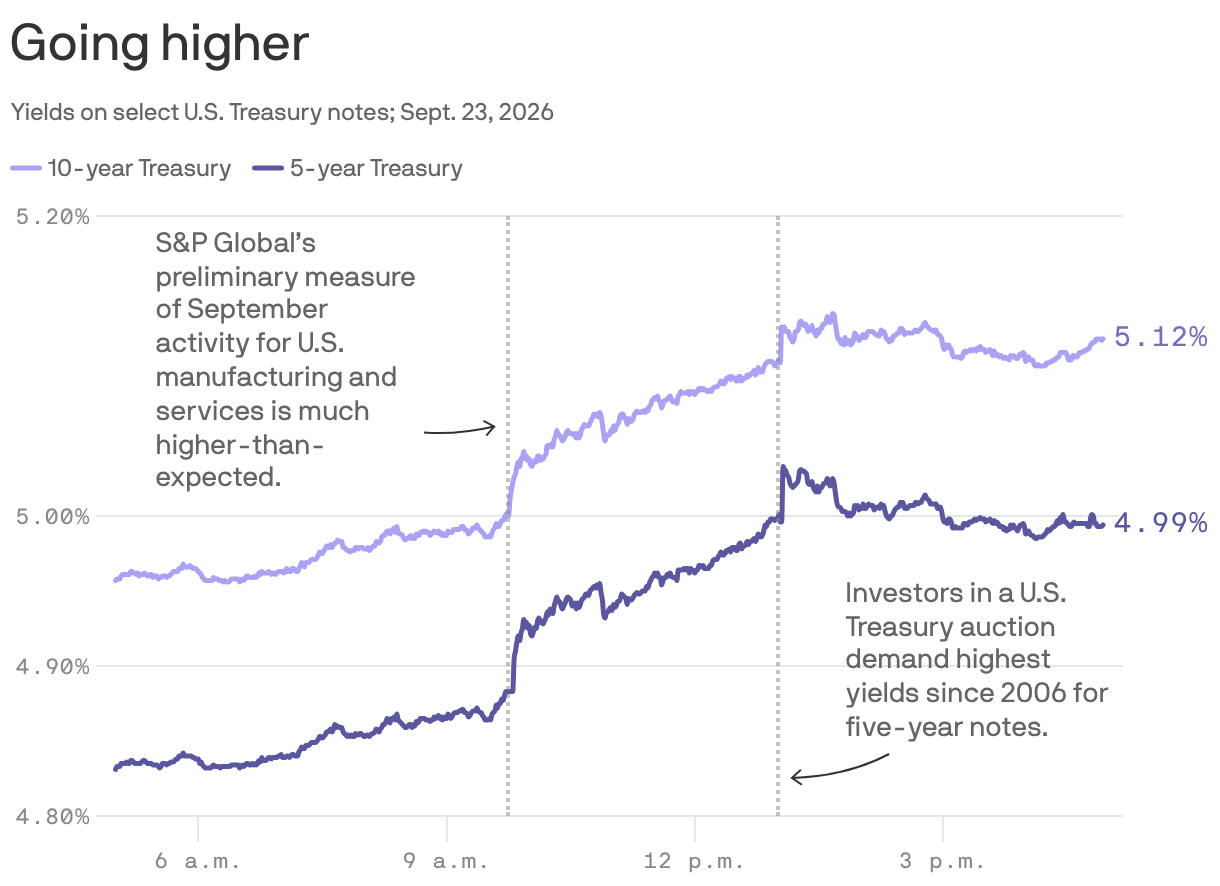
Treasury yields rip higher on renewed inflation fear


Axios House: Sustainable travel goals are a "team" sport, transportation leaders say
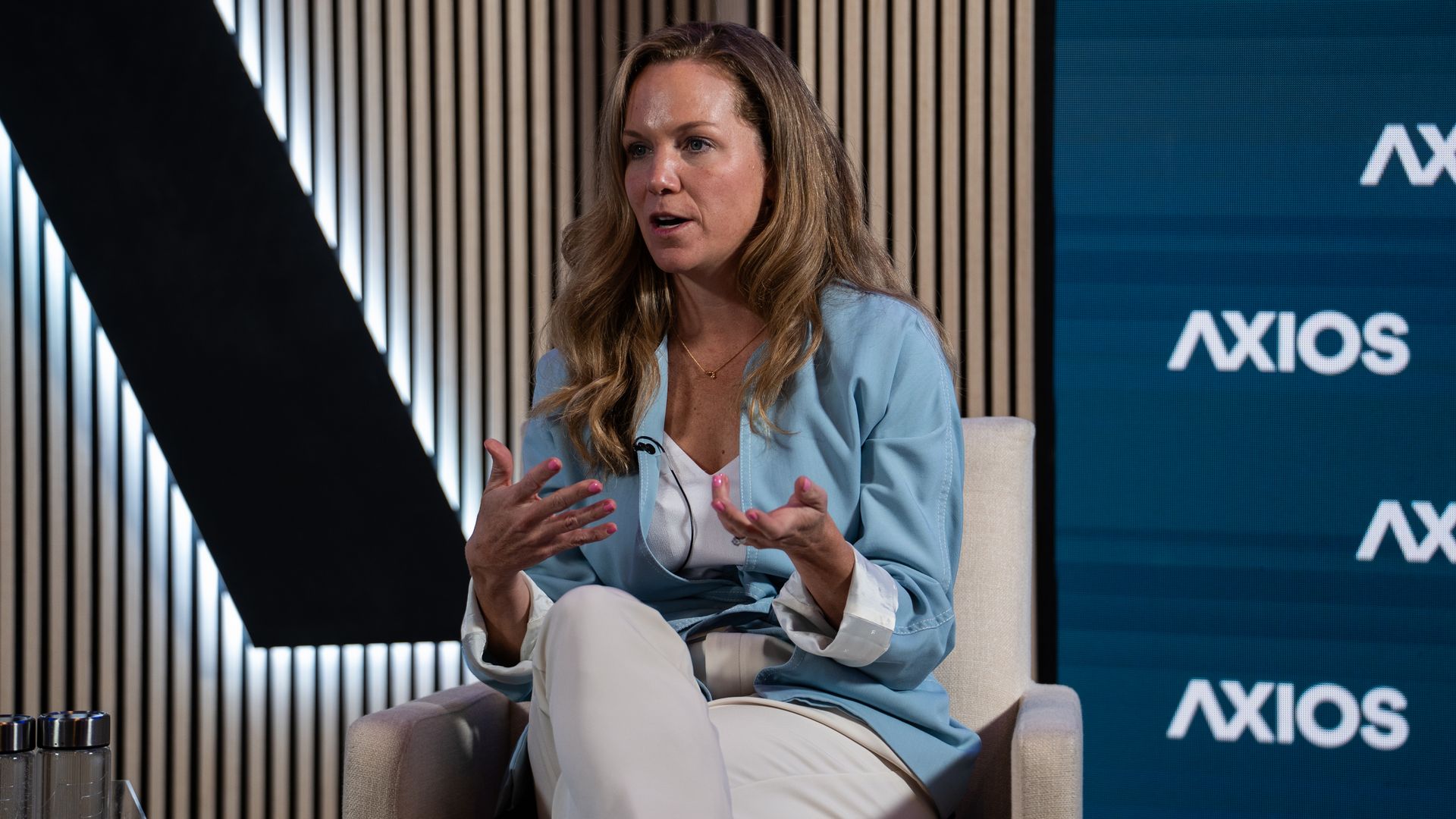
NEW YORK — Companies will need coordinated action from the government, suppliers and customers to meet sustainability goals, Delta Air Lines and Uber leaders said at Axios House at Climate Week and the UN General Assembly.
Why it matters: The push to make travel more sustainable is colliding with the costs of adaptation and lack of supporting infrastructure.
Axios' Alan Neuhauser moderated conversations with Delta Air Lines chief sustainability officer Amelia DeLuca and Uber global head of mobility sustainability Santosh Rao. The Sept. 22 event was sponsored by Hilton.
State of play: Delta recently reframed its 50% net-zero target by 2050 as an "aspiration" after previously describing it as an "ultimate goal." The company remains committed to its 10% sustainable aviation fuel target by 2030.
What they're saying: Partnerships are the core of a successful sustainable travel strategy.
- Delta has a "multiyear, long-term strategic partnership with Shell," DeLuca said, and "they're helping us with the logistics and the infrastructure, the sourcing of that sustainable aviation fuel."
- "There needs to be continued government support — federal, state and internationally," DeLuca added. "We are sure going to try" to meet the SAF threshold, "but it's really a team effort."
- "This is going to be a team sport," Rao said. "We're not going to be able to do it alone."
Zoom in: Government subsidies will be necessary "for quite some time" to help sustainable aviation fuel compete with conventional jet fuel, DeLuca said.
What we're watching: A recent survey showed that charger access is the biggest barrier to electric vehicle adoption. To address this, Uber launched a pilot in France this week allowing drivers to find and pay for charging directly in the app, Rao said.
- "We're looking forward to rolling that [out] to more markets globally," Rao said.
Content from the sponsor's segment:
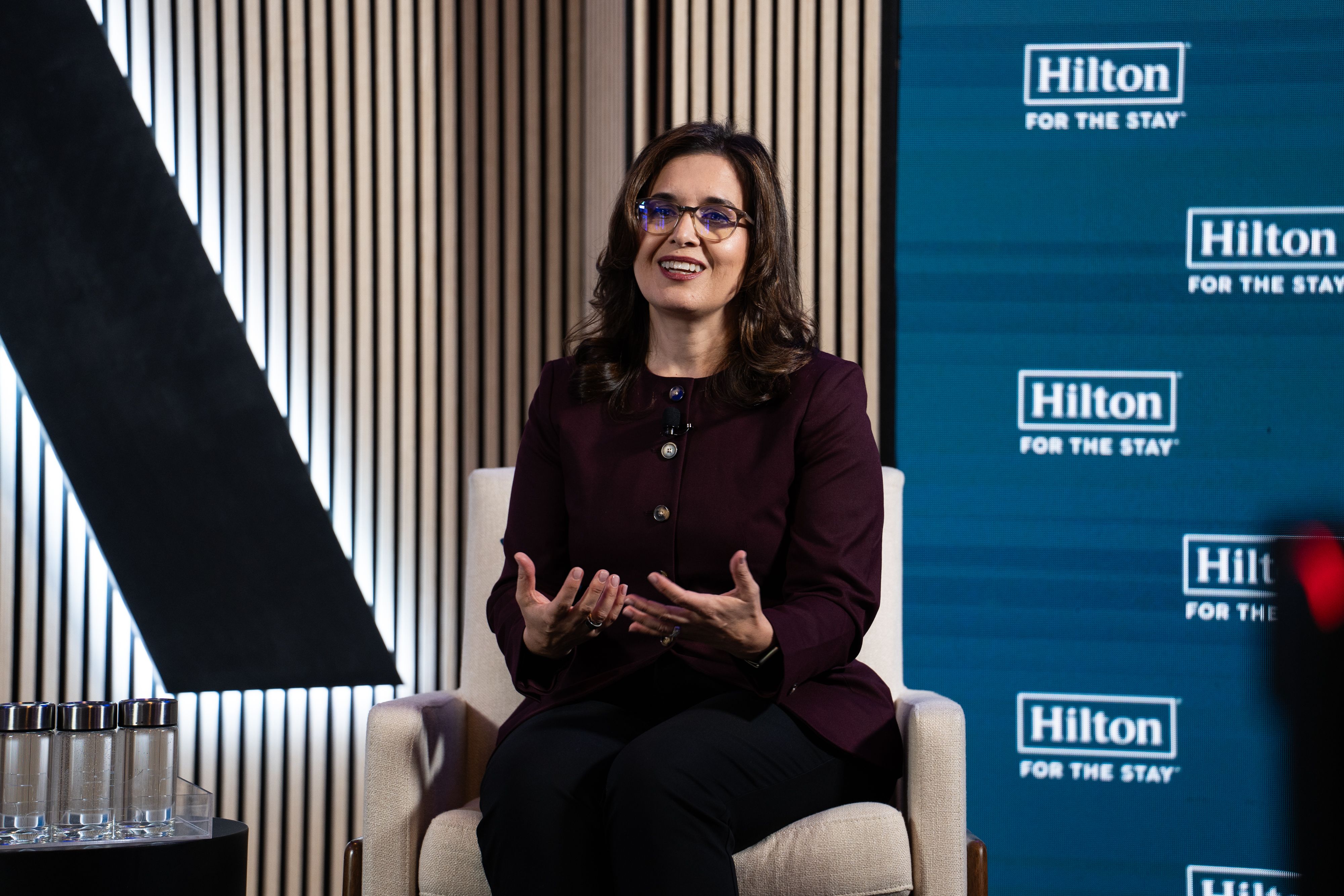
In a View From the Top conversation, Jean Garris Hand, Hilton VP and global head of sustainability and responsible business, says the company aims to build a sustainable travel strategy that benefits guests, properties and communities.
- "The future of travel and the future of our business go hand in hand," she said. "We must preserve those destinations all around the world so that they will be vibrant and they will be accessible for travelers for future generations."
Go deeper: Watch the full event.