At New York Climate Week, Amazon defends massive natural gas plant

Add Axios as your preferred source to
see more of our stories on Google.
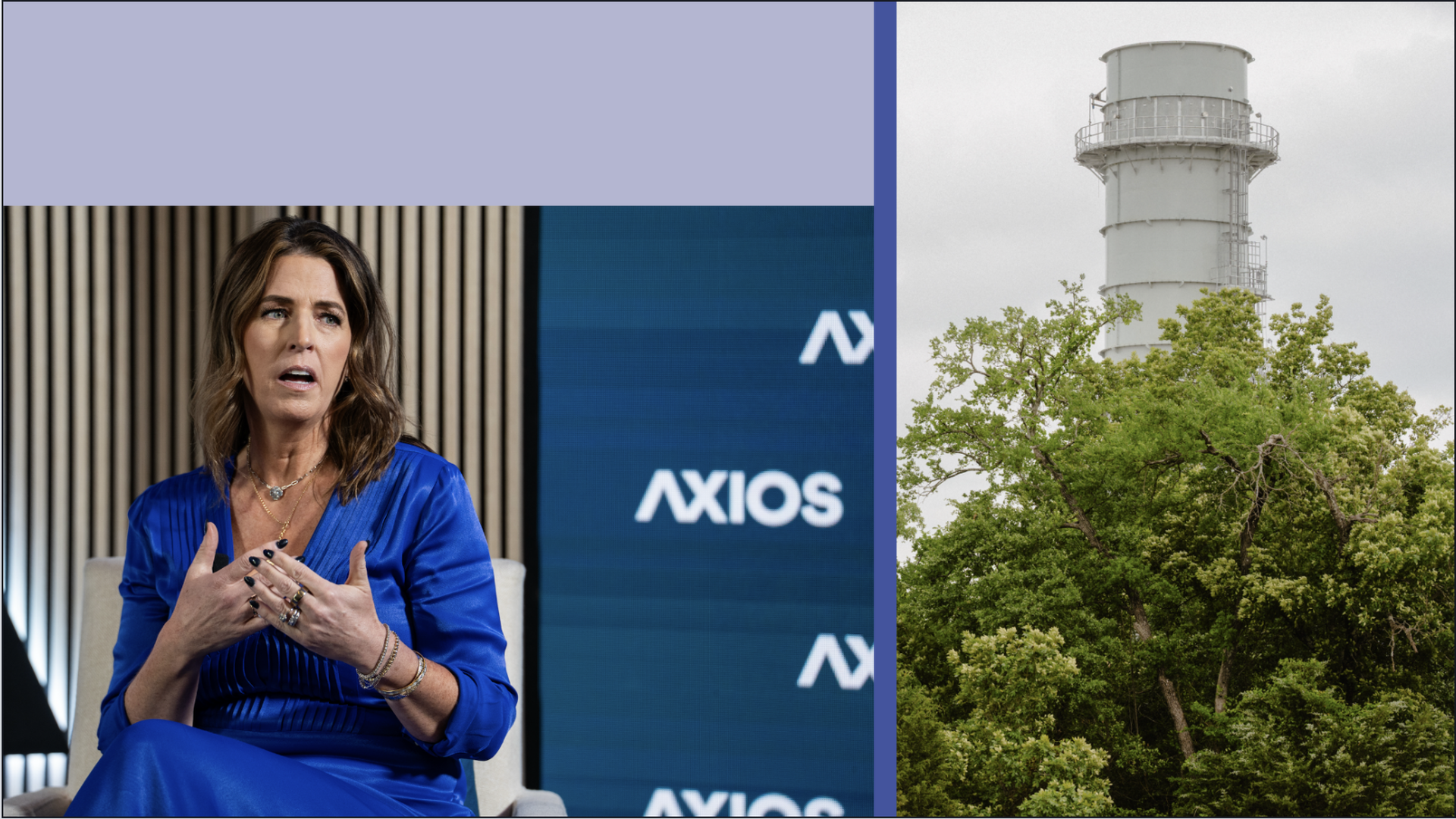
Photo collage: Ben Geman/Axios. Photo of Amazon's Kara Hurst courtesy of Sam Popp for Axios. Photo of the Pin Oak Creek Energy Center in Fairfield, Texas courtesy of Jake Dockins/Bloomberg via Getty Images.
NEW YORK — Amazon's chief sustainability officer said the tech giant is still committed to its climate goals despite moving ahead with what would be one of the country's biggest natural gas plants.
Why it matters: The comments lay bare the tension between tech giants' race to build the vast energy infrastructure needed for AI and climate goals they set years before the AI boom.
Catch up quick: Amazon plans to power a massive AI data center campus in West Texas with up to 7.65 gigawatts of on-site natural gas generation, along with solar and batteries.
- The campus would initially operate independently from the Texas power grid, though Amazon says it is designed to eventually connect as protracted connection timelines allow.
- Amazon has said the approach means it will pay the full cost of powering the campus rather than raising electricity costs for Texas consumers, though that argument is contested.
Driving the news: "We are still committed to our climate pledge," Kara Hurst, Amazon's top sustainability official, said on stage at Axios House in New York Monday. "We will procure clean energy where and whenever possible…and we will continue to grow our business."
Hurst's comments were her first public remarks on the project since it was reported. She also acknowledged Amazon doesn't yet know all the ways it will reach its goal of net-zero carbon emissions by 2040.
- "I'm not going to sit here and say we know all the ways that we're going to do this, and it's not going to be an easy, linear path. It is not."
- "It is challenging, but we are going to do everything we can to strive to go at that timeline with speed and with intention, and to hit it."
Flashback: Amazon made its climate pledge in 2019. Hurst said the company's business then nearly doubled during the pandemic, followed by supply-chain disruptions and now the AI boom.
- "So there is always something that is going to change our ability, how we think about that goal, potentially our ability to meet it.
Context: Hurst was in New York to announce Amazon would commit $20 million to a new corporate initiative seeking to mobilize $100 million for water conservation in the stressed Colorado River Basin.
The big picture: New York Climate Week, running for nearly 20 years, has evolved into a sprawling, city-wide affair. Corporations have become a more prominent part of the week and, while many have grown quieter on climate issues in recent years, they still use it to announce climate-related initiatives, such as the Colorado River effort.
State of play: The plant's plan to operate independently from the grid, at least initially, illustrates one of the starkest debates in the energy industry right now: whether data centers should build their own power supplies or remain connected to the broader grid.
The other side: Varun Sivaram, co-founder and CEO of startup EmeraldAI, argues that AI data centers should remain connected to the grid — and become flexible enough to reduce their electricity use when the system is strained.
- His argument, which he also made at Axios House Monday, is that building isolated power systems for data centers could ultimately raise costs for everyone by competing for the same turbines, switchgear and other equipment needed by utilities.
"It's bad, frankly, for the AI companies because it's expensive to run your own private utility," Sivaram said. "You suddenly raise the prices of all the inputs: the turbines, the switchgear that the public power system needs."
Between the lines: When asked about the argument that off-grid projects could raise costs across the power system, Hurst said: "The grid needs a lot of work."
- "We need a more stable, more reliable grid, and so we are also investing in grid reliability."
How it works: A new alliance spearheaded by Sivaram — with backing from Nvidia and Google — aims to make AI data centers more flexible power users and convince regulators to reward them for it.
What we're watching: Amazon isn't a member, but Sivaram said it would be "fantastic" if the company joined. An Amazon spokesperson didn't comment on the prospect of joining.
